

Tetramorium pullulum
- Scientific Name
- Tetramorium pullulum
- Tribe
- Crematogastrini
- Subfamily
- Myrmicinae
- Author
- Santschi, 1924
- Distribution
- Found in 7 countries
Tetramorium pullulum Overview
Tetramorium pullulum is an ant species of the genus Tetramorium. It is primarily documented in 7 countries , including Congo, Democratic Republic of the, Central African Republic. Detailed taxonomic data and occurrence records can be further explored via authoritative databases such as AntWeb or the Global Biodiversity Information Facility (GBIF).
Tetramorium pullulum
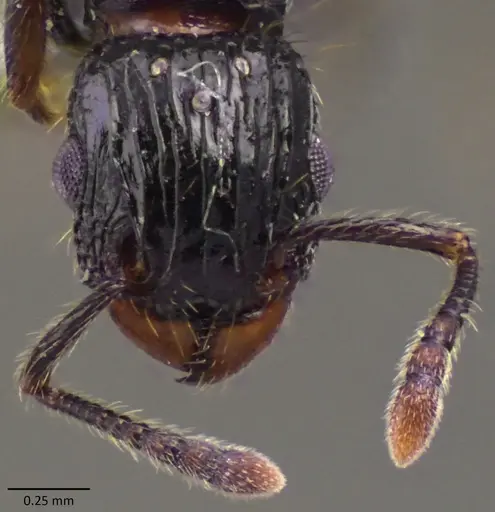
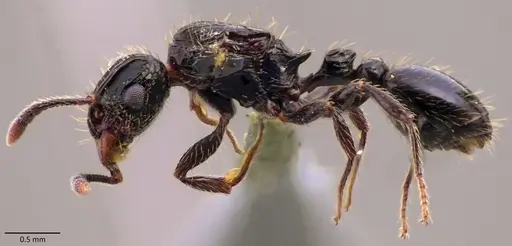
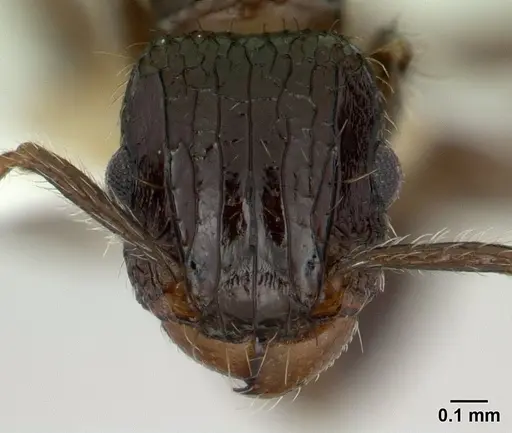
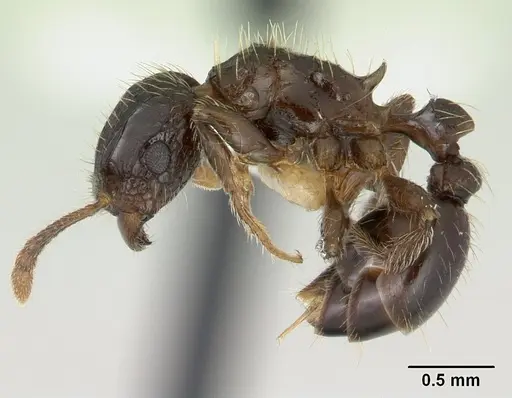
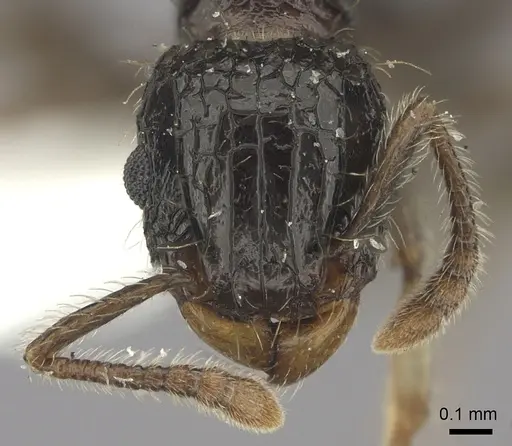
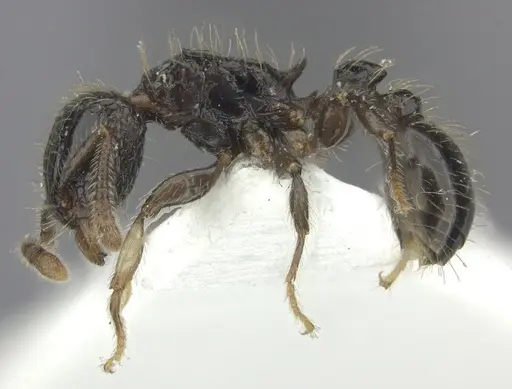
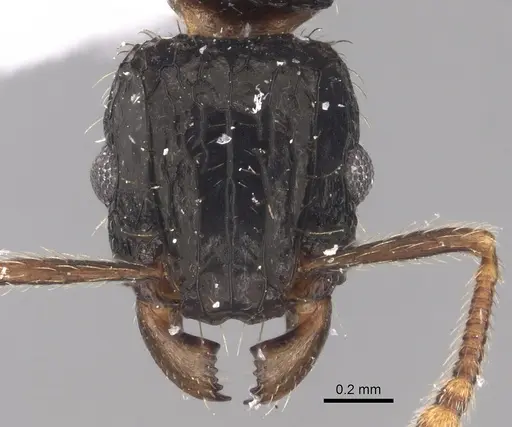
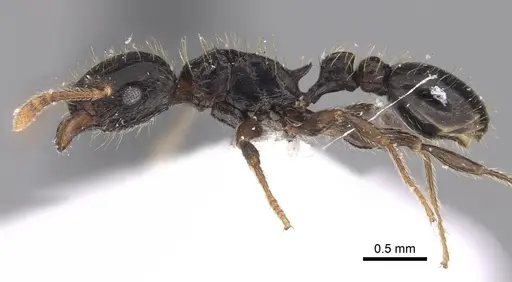
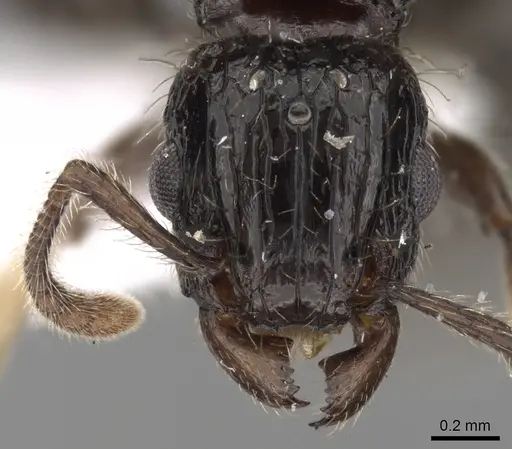
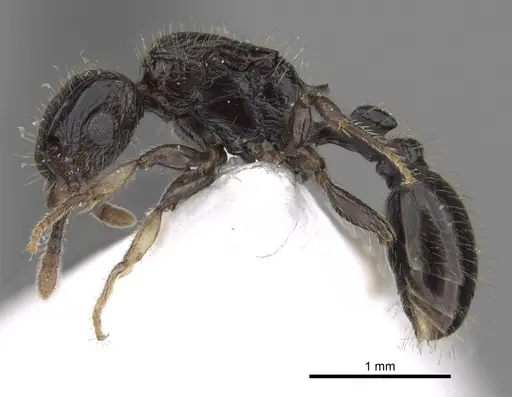
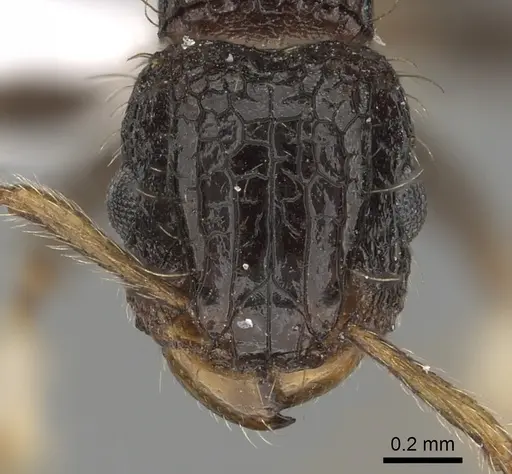
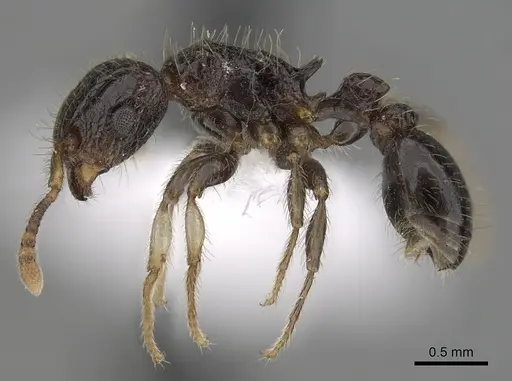
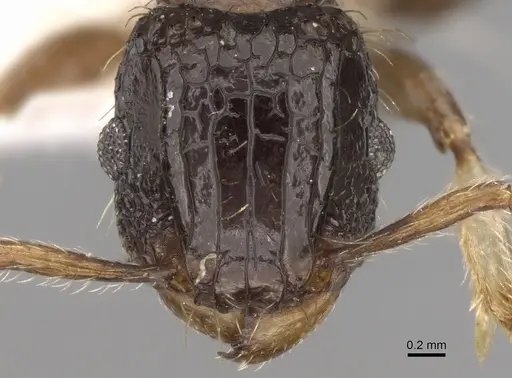
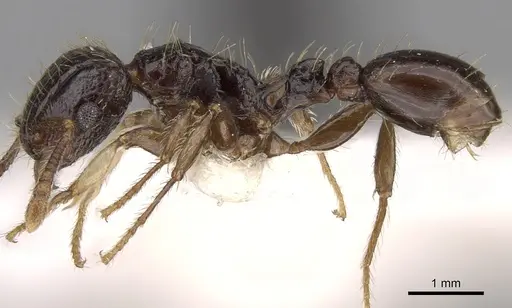
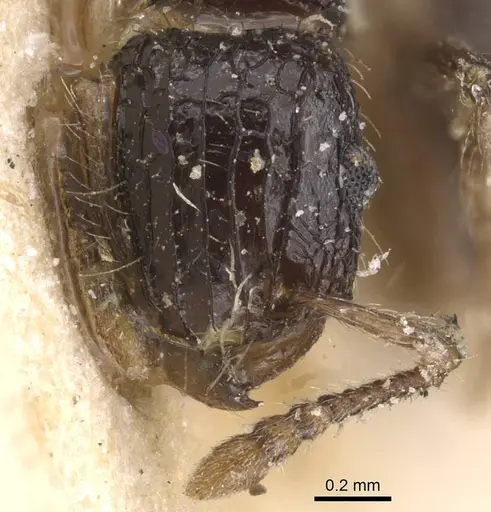
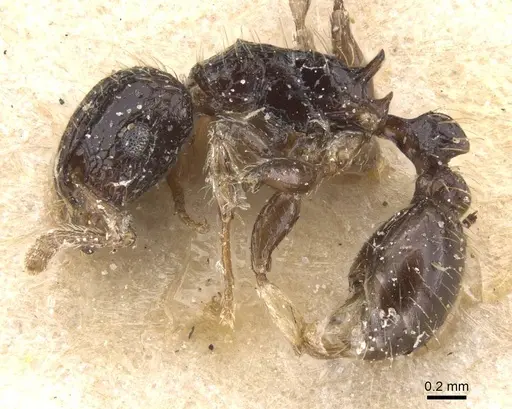
Tetramorium pullulum is a small to medium-sized ant measuring 3.2-4.0mm in worker length, with a distinctive uniform blackish-brown to black coloration. This species belongs to the Tetramorium bicarinatum species group and is found across the Afrotropical region, including Angola, Cameroon, Central African Republic, Democratic Republic of Congo, Kenya, Sudan, Uganda, and Zambia [1]. The species is an opportunistic nester that thrives in moist forest environments including moist evergreen forest, wet forest, and rainforest habitats. Workers are characterized by their smooth and shining mandibles, three strong longitudinal carinae on the clypeus, and propodeal spines that are typically slightly upcurved. A notable trait of this species is its flexibility in nesting locations, colonies have been found in rotten logs, dead twigs above ground, rotten pockets in trees, live stems, and leaf litter [1].
Quick Summary
- Difficulty: Medium
- Origin & Habitat: Afrotropical region, moist evergreen forest, wet forest, and rainforest across central and eastern Africa including DRC, Kenya, Uganda, Zambia, Cameroon, and Angola [1]. This species requires consistently moist conditions and is typically found in forest floor microhabitats.
- Colony Type: Monogyne (single queen) colonies, typical for Tetramorium species. No specific data on ergatoid replacement reproductives for this species.
- Colony: Monogyne
- Founding: Claustral
- Size & Growth:
- Queen: Estimated 7-9mm based on related Tetramorium species
- Worker: 3.2-4.0mm
- Colony: Unknown for this specific species, related Tetramorium species typically reach several hundred workers
- Growth: Moderate, estimated based on genus patterns
- Development: 6-10 weeks estimated based on related Tetramorium species (Development time is estimated from related species in the genus. Temperature will significantly affect development speed.)
- Antkeeping:
- Temperature: Keep at 24-28°C, this is a tropical forest species that prefers warm, stable conditions. A slight gradient allowing cooler areas is beneficial.
- Humidity: High humidity is essential, this is a moist forest species. Keep the nest substrate consistently damp but not waterlogged. Think damp forest floor conditions.
- Diapause: No true diapause, as a tropical species, reduce feeding and slightly lower temperature (around 20-22°C) during winter months rather than a full hibernation.
- Nesting: Opportunistic nester that accepts various nest types. Y-tong (AAC), plaster nests, or test tube setups work well. Provide moist substrate and avoid drying out. They will nest in wood-based materials and can adapt to various captive setups.
- Behavior: Workers are active foragers that search for food on the forest floor. They are not particularly aggressive but will defend their nest. As a small species, escape prevention is important, they can squeeze through small gaps. They likely feed on small insects and honeydew like other Tetramorium species.
- Common Issues: high humidity maintenance is critical, drying out causes colony failure, small size means escape prevention must be excellent, use fine mesh barriers, tropical species cannot tolerate cool temperatures below 20°C for extended periods, wild-caught colonies may carry parasites that can decimate captive colonies, slow initial colony growth can lead to overfeeding and mold problems
Housing and Nest Setup
Tetramorium pullulum adapts well to various captive nest types. Y-tong (AAC) nests work excellently as they provide the darkness these forest-floor ants prefer while allowing you to observe colony activity. Plaster nests or test tube setups are also suitable, particularly if you maintain consistent moisture levels. The key requirement is keeping the nest substrate damp, these ants come from moist forest environments and quickly decline in dry conditions. Provide an outworld (foraging area) connected to the nest where workers can hunt for prey and collect sugar sources. Use a water tube or cotton wick system to maintain humidity within the nest. Escape prevention is important given their small size, ensure all connections are tight and use fine mesh on any ventilation holes. [1]
Feeding and Diet
Like other Tetramorium species, T. pullulum is an omnivore that accepts both protein and sugar sources. Offer small insects such as fruit flies, pinhead crickets, and mealworms as primary protein. They will also consume honey water, sugar water, or diluted honey as sugar sources. In their natural habitat, they forage on the forest floor for small arthropods and likely tend aphids for honeydew. Feed small prey items twice weekly and keep a constant sugar source available. Remove uneaten prey after 24-48 hours to prevent mold. A varied diet helps ensure healthy colony development. Young colonies should receive smaller prey items that workers can easily manage. [1]
Temperature and Humidity Management
This species requires warm, humid conditions reflecting its moist tropical forest habitat. Maintain temperatures between 24-28°C with minimal fluctuations. A heating cable on one side of the nest can create a gentle gradient, allowing workers to self-regulate their temperature preference. Humidity is arguably more critical, keep the nest substrate consistently moist but avoid standing water. The substrate should feel damp to the touch. Mist the outworld occasionally but avoid directly misting the nest as this can create mold issues. Poor humidity quickly leads to colony decline, with workers becoming sluggish and brood development halting. Room temperature housing is possible if your home stays in the 24-28°C range, otherwise supplemental heating is necessary. [1]
Colony Founding and Growth
Queens are claustral, they seal themselves in a chamber and raise the first brood alone without foraging. The queen uses stored fat reserves to survive until her first workers (nanitics) emerge. This typically takes 6-10 weeks depending on temperature. After the first workers (nanitics) arrive, the colony enters a slow growth phase as more workers are produced. Mature colonies can reach several hundred workers. Growth rate is moderate, faster than some slow-growing Camponotus species but slower than tropical ants like many Pheidole. Founding colonies should be kept in a dark, quiet location with minimal disturbance. Do not feed the founding queen, she will not eat during claustral founding. Once workers emerge, you can begin offering tiny food items.
Seasonal Care and Winter Management
As a tropical species from Africa's rainforests, T. pullulum does not require true hibernation. However, you may notice reduced activity during cooler months. In winter, you can reduce temperatures slightly to around 20-22°C and reduce feeding frequency. Do not feed heavily during this period as the colony's metabolism slows. Avoid temperatures below 18°C as prolonged cold exposure can be fatal. This species is adapted to year-round warmth and humidity. If your room temperature drops significantly in winter, consider using a small heater or heating mat to maintain appropriate conditions. The key is consistency, sudden temperature swings stress the colony. [1]
Frequently Asked Questions
How long does it take for Tetramorium pullulum to raise first workers?
From egg to first worker (nanitics), expect approximately 6-10 weeks at optimal temperature (24-28°C). This is typical for Tetramorium species. The exact timing depends on temperature, warmer conditions speed development while cooler temperatures slow it down.
What size colony does Tetramorium pullulum reach?
Colony size is not well documented for this specific species, but related Tetramorium species typically reach several hundred workers. Expect moderate growth over 1-2 years to reach a established colony of 100-300 workers.
Do Tetramorium pullulum ants sting?
Tetramorium belongs to the Myrmicinae subfamily, which includes ants with functional stingers. Workers can sting if threatened, though their sting is not particularly potent compared to some other ants. Handle gently and avoid provoking them.
What humidity level do Tetramorium pullulum colonies need?
High humidity is essential, keep the nest substrate consistently damp but not waterlogged. This species comes from moist rainforest environments, so think damp forest floor conditions. The substrate should feel moist to the touch. Poor humidity quickly causes colony decline.
Can I keep Tetramorium pullulum in a test tube setup?
Yes, test tube setups work well for founding colonies and even established colonies. Ensure the cotton provides consistent moisture and the tube is kept in a warm, dark location. As the colony grows, you may need to add additional test tubes or transition to a larger nest setup.
What temperature range is ideal for Tetramorium pullulum?
Keep them at 24-28°C, this tropical forest species prefers warm, stable conditions. A slight gradient allowing cooler areas is beneficial but avoid temperatures below 20°C for extended periods. Use a heating cable if your room temperature runs cooler.
Is Tetramorium pullulum good for beginners?
This species is rated as Medium difficulty. While not the easiest species, it is manageable for intermediate antkeepers. The main challenges are maintaining high humidity and providing appropriate warmth. Beginners should focus on getting humidity levels right before acquiring this species.
What do Tetramorium pullulum eat?
They are omnivores that accept small insects (fruit flies, pinhead crickets, mealworms) as protein and sugar sources (honey water, sugar water). Feed small prey twice weekly with a constant sugar source available. Remove uneaten prey after 24-48 hours.
Do Tetramorium pullulum queens need to forage during founding?
No, like most Tetramorium species, T. pullulum queens are claustral. The queen seals herself in a chamber and raises the first workers alone using stored fat reserves. Do not offer food to a founding queen, she will not eat and may become stressed.
Why is my Tetramorium pullulum colony dying?
The most common causes are low humidity (drying out is fatal), temperatures below 20°C, mold from overfeeding or poor ventilation, and parasites from wild-caught colonies. Ensure humidity is high, temperatures are warm (24-28°C), and feed appropriately sized prey in small amounts.
When should I move Tetramorium pullulum to a formicarium?
You can keep them in test tubes or a simple setup for quite some time. Consider moving to a larger nest (Y-tong, plaster, or naturalistic setup) when the colony reaches 50+ workers and the test tube shows signs of drying out quickly or becoming cramped.
Does Tetramorium pullulum need hibernation?
No, this is a tropical species that does not require true hibernation. You may reduce temperatures slightly (to around 20-22°C) in winter and reduce feeding, but do not attempt full hibernation as this can be fatal for tropical species.
References

This caresheet is licensed under CC BY-SA 4.0 .
ANTWEB1060157
View on AntWeb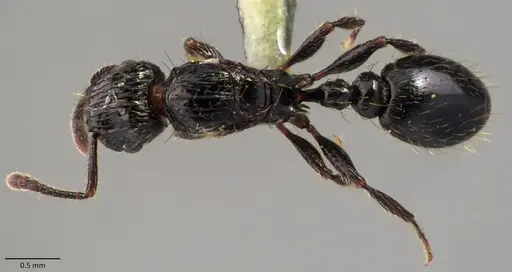
CASENT0178338
View on AntWeb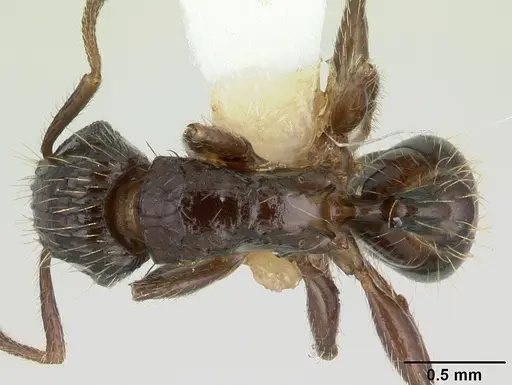
CASENT0217076
View on AntWeb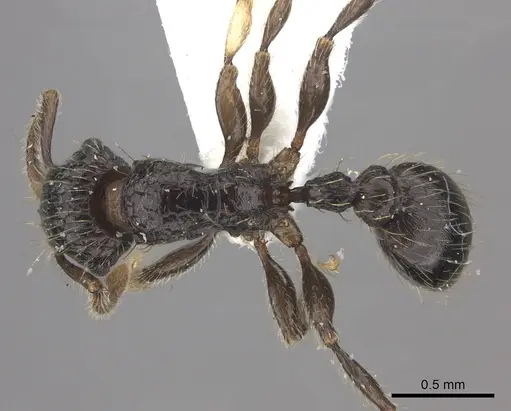
CASENT0217223
View on AntWeb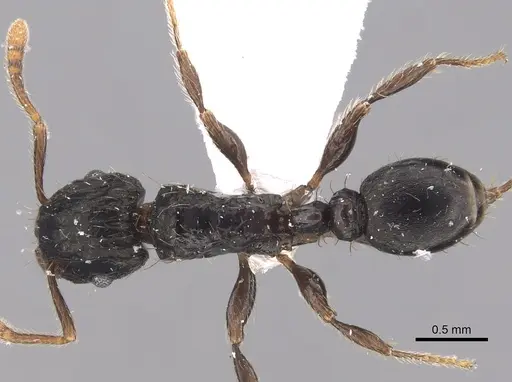
CASENT0217224
View on AntWeb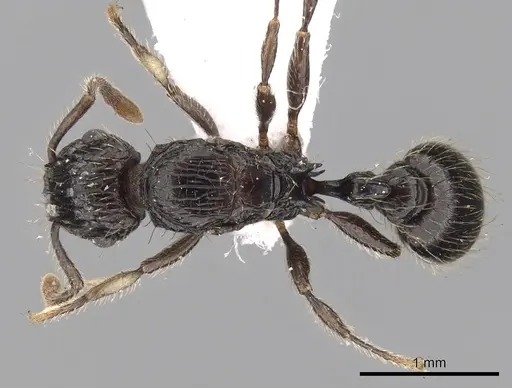
CASENT0371300
View on AntWeb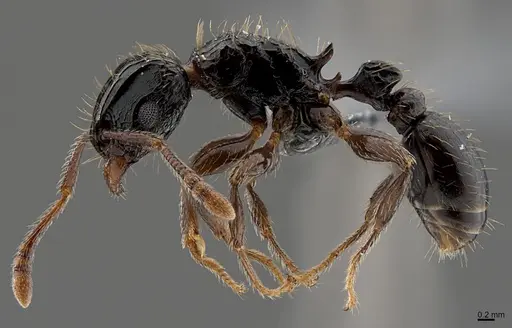
CASENT0412029
View on AntWeb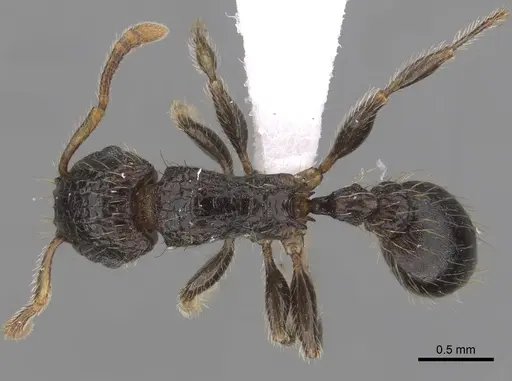
CASENT0906124
View on AntWeb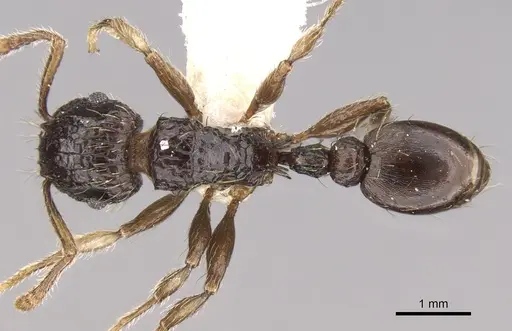
RMCAENT000017791
View on AntWeb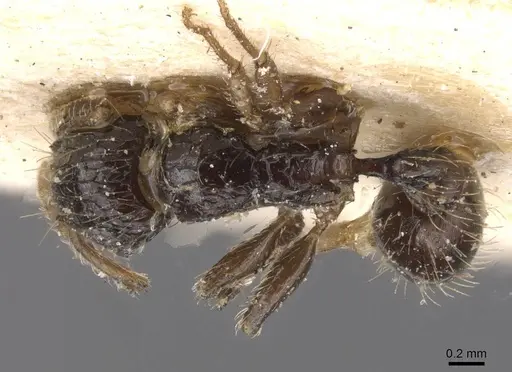
Literature
Loading...Loading products...