

Tetramorium notiale
- Scientific Name
- Tetramorium notiale
- Tribe
- Crematogastrini
- Subfamily
- Myrmicinae
- Author
- Bolton, 1980
- Distribution
- Found in 3 countries
Tetramorium notiale Overview
Tetramorium notiale is an ant species of the genus Tetramorium. It is primarily documented in 3 countries , including South Africa, Zambia, Zimbabwe. Detailed taxonomic data and occurrence records can be further explored via authoritative databases such as AntWeb or the Global Biodiversity Information Facility (GBIF).
Tetramorium notiale
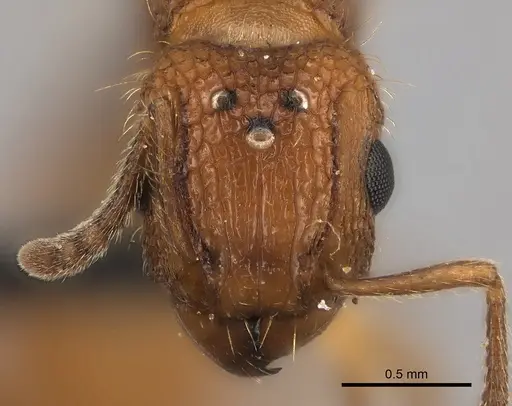
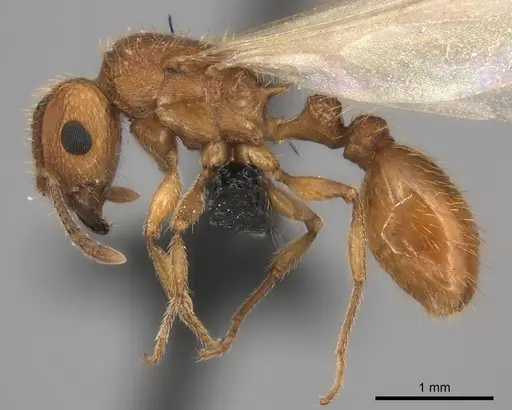
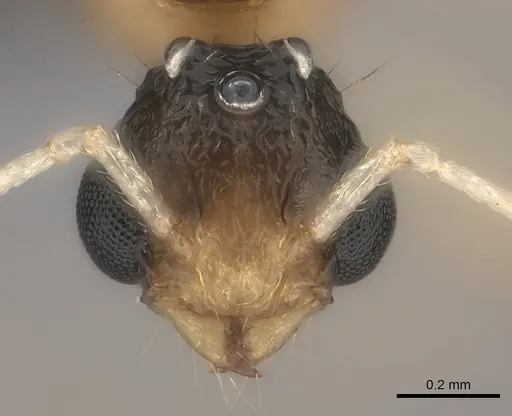
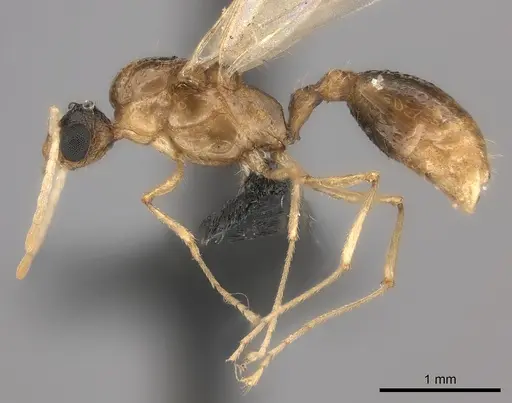
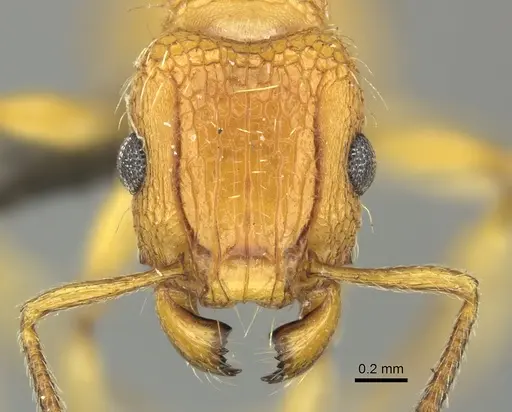
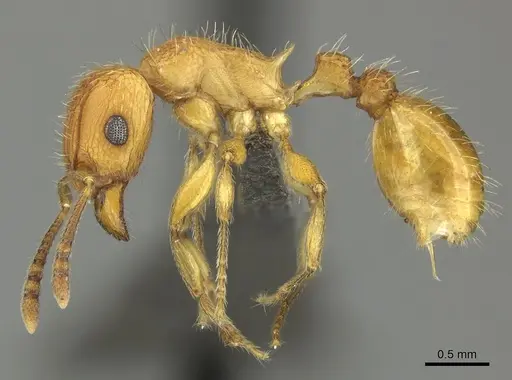
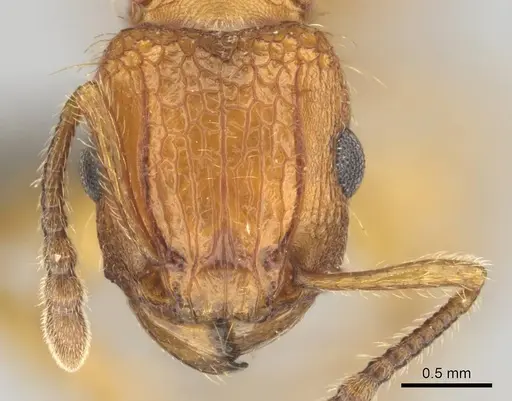
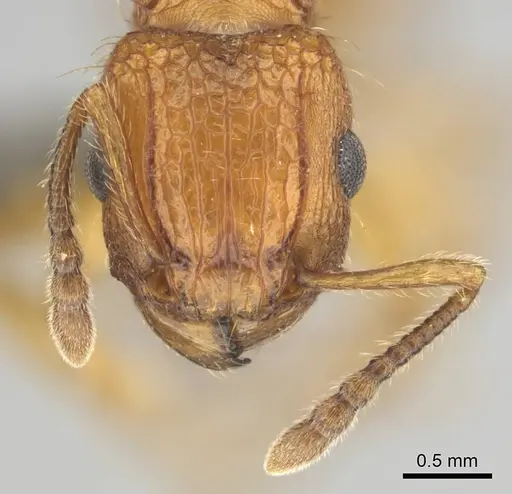
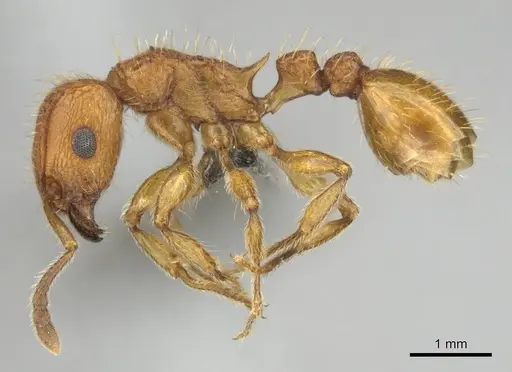
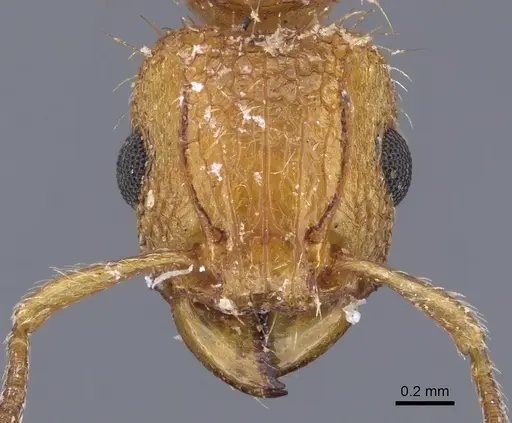
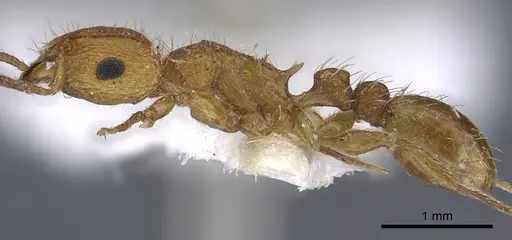
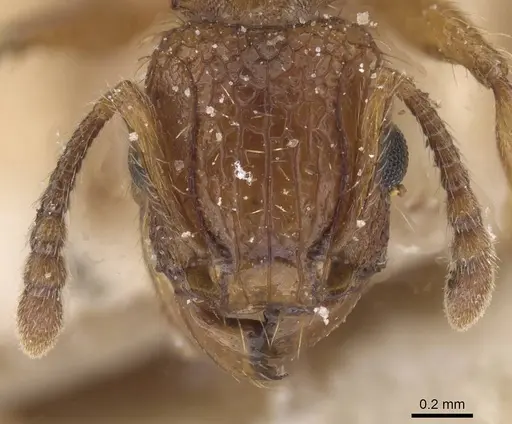
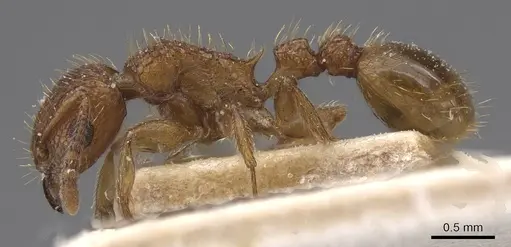
Tetramorium notiale is a small to medium-sized ant species native to the Afrotropical region, found across southern Africa from South Africa to the Democratic Republic of Congo [1]. Workers measure 3.5-5.0mm and have a distinctive bright yellow-brown to orange-brown coloration, with the gaster typically lighter than the head and alitrunk [1]. This species belongs to the T. cristatum species complex within the Tetramorium bicarinatum species group and is part of a triad of closely related species separated primarily by color differences [1].
These ants are ground-nesting specialists that create turreted nest entrances and can burrow quite deep, up to 37cm below the surface with multiple galleries arranged vertically above one another [1]. They forage both on the ground and in vegetation, making them versatile foragers in open to semi-open habitats like grassland, savannah, and woodland [1]. This combination of deep nesting and dual foraging strategy makes them an interesting species for antkeepers who want something a bit different from typical ground-nesting ants.
Quick Summary
- Difficulty: Easy
- Origin & Habitat: Afrotropical region, found in Botswana, Democratic Republic of Congo, Eswatini, Malawi, Mozambique, Namibia, South Africa, Zambia, and Zimbabwe. Inhabits open to semi-open habitats including grassland, savannah, and woodland [1].
- Colony Type: Likely monogyne (single queen colonies) based on typical Tetramorium patterns, though colony structure has not been specifically documented for this species.
- Colony: Monogyne
- Founding: Claustral
- Size & Growth:
- Queen: Approximately 6-8mm (estimated based on genus patterns for Tetramorium queens in the bicarinatum group)
- Worker: 3.5-5.0mm [1]
- Colony: Likely several hundred workers based on typical Tetramorium colony sizes
- Growth: Moderate, based on typical Tetramorium development patterns
- Development: Estimated 6-8 weeks at optimal temperature based on genus-level data for Tetramorium species (Development time is estimated from related Tetramorium species as specific timing has not been documented for T. notiale)
- Antkeeping:
- Temperature: Keep at 22-26°C, they come from warm African habitats and prefer stable, moderate to warm temperatures. A heating cable on one side of the nest can create a beneficial gradient.
- Humidity: Moderate humidity around 50-70%. These ants nest underground and can handle somewhat drier conditions than rainforest species, but the nest substrate should retain some moisture. Allow parts of the nest to dry out while keeping other areas damp.
- Diapause: Unconfirmed, as a species from southern Africa, they may experience reduced activity during cooler months but true hibernation is unlikely. Consider a slight cooling period (15-18°C) for 2-3 months in winter if the colony shows reduced activity.
- Nesting: Ground-nesting species that builds deep underground nests with multiple chambers. In captivity, a naturalistic setup with soil substrate (at least 10-15cm deep) or a Y-tong/plaster nest works well. They prefer to build their own tunnels, so a diggable substrate encourages natural behavior. Turreted nest entrances have been observed in the wild.
- Behavior: Workers are active foragers that search both on the ground and in low vegetation [1]. They are not particularly aggressive but will defend their nest vigorously. Escape risk is moderate, these are small ants but not as tiny as some Tetramorium species, so standard escape prevention measures (fluon barriers, tight-fitting lids) are usually sufficient. Workers are robust for their size and can handle moderate handling.
- Common Issues: deep nesting means they need vertical space in their setup, shallow nests won't allow natural tunnel-building, colony slow to establish initially, beginners may lose patience during the founding phase, foraging in vegetation means they may climb out of ground-level setups if not properly contained, turret-building behavior can lead to substrate being pushed up against escape barriers, wild-caught colonies may have parasites that are difficult to detect
Housing and Nest Setup
Tetramorium notiale is a ground-nesting ant that naturally builds deep underground nests with multiple chambers connected by vertical tunnels. In the wild, they've been found nesting up to 37cm deep with turreted entrance structures [1]. For captive care, a naturalistic setup with a deep soil layer (at least 10-15cm) works best, as it allows the colony to exhibit their natural tunnel-building behavior. A mix of sand and soil (about 70:30 ratio) gives them the right balance of structure and drainage.
Alternatively, a Y-tong (acrylic) nest with a connected foraging area works well, especially if you provide a dirt area for them to dig in. Plaster nests are also suitable but may need more frequent rehydration. Whatever setup you choose, ensure the outworld has good escape prevention, these small ants can squeeze through small gaps. A layer of fluon on the edges of the foraging area helps prevent escapes.
The turret-building behavior observed in wild colonies is fascinating, they construct small soil turrets around their nest entrances. In captivity, they may attempt similar behavior, so ensure your setup can accommodate some substrate movement without compromising escape barriers.
Feeding and Diet
Like most Tetramorium species, T. notiale is omnivorous and will accept a variety of foods. In the wild, they forage on the ground and in vegetation, likely collecting honeydew from aphids and small insects [1]. In captivity, offer a balanced diet of protein and carbohydrates.
For protein, provide small insects like fruit flies, small crickets, mealworms, and waxworms. They can handle prey items roughly equal to their own body size. For carbohydrates, offer sugar water, honey, or diluted honeydew. Change sugar sources every few days to prevent mold.
Feed the colony 2-3 times per week with small prey items, removing any uneaten food after 24 hours. Keep a constant supply of sugar water available in a test tube with a cotton wick. Adjust feeding frequency based on colony size, larger colonies can handle more food, while founding colonies need less.
Temperature and Seasonal Care
As a species from southern Africa, Tetramorium notiale prefers warm conditions. Keep the nest area at 22-26°C for optimal brood development. They can tolerate temperatures down to around 18°C but may become less active. Avoid temperatures above 30°C as this can stress the colony.
A heating cable placed on one side of the nest creates a temperature gradient that allows the ants to regulate their own conditions. Place the heating element on top of the nest material (not underneath) to avoid excessive drying. Room temperature within the 22-26°C range is acceptable without additional heating.
Regarding winter care, true diapause is unconfirmed for this species. However, as they come from a region with seasonal variation, they may benefit from a slight cooling period (15-18°C) for 2-3 months during winter months if the colony shows reduced activity. Reduce feeding during this period but maintain some moisture in the nest. [1]
Colony Founding and Growth
Queens of Tetramorium notiale are expected to be claustral, meaning they seal themselves in a chamber and raise the first workers without foraging. Based on typical Tetramorium patterns, the queen will lay eggs after mating, and the brood will develop through egg, larva, and pupa stages before emerging as nanitic (first) workers.
The time from egg to first worker is estimated at 6-8 weeks at optimal temperature, though this hasn't been specifically documented for T. notiale. Initial colony growth is relatively slow, the first generation of workers (nanitics) will be smaller than mature workers. After the nanitics emerge, the queen can resume full egg production and the colony growth rate should increase.
Patience is key during the founding phase. Many beginners make the mistake of disturbing the queen too often or providing excessive food. Let the queen do her work in peace. Once the first workers emerge, you can gradually increase feeding and observe the colony expand.
Behavior and Observation
Tetramorium notiale workers are active foragers that search both on the ground and in low vegetation [1]. This dual foraging strategy means they're interesting to watch as they patrol different areas. Workers are moderately sized (3.5-5.0mm) and have good vision, which helps them navigate their environment.
These ants are not particularly aggressive toward humans but will defend their nest vigorously if threatened. They're a good species for observation because of their active foraging and interesting nest-building behaviors. The turret construction around nest entrances is a unique trait worth watching for.
In terms of escape risk, these ants are small but not among the tiniest ant species. Standard escape prevention with fluon barriers and tight-fitting lids is usually sufficient. However, always err on the side of caution, small ants can surprise you with their ability to find gaps.
Frequently Asked Questions
How long does it take for Tetramorium notiale to raise first workers?
Based on typical Tetramorium development patterns, expect 6-8 weeks from egg to first worker at optimal temperature (22-26°C). This is an estimate as specific development timing hasn't been documented for this species. The first workers (nanitics) will be smaller than mature workers.
What size nest do I need for Tetramorium notiale?
These are ground-nesting ants that naturally burrow 37cm deep in the wild. In captivity, provide at least 10-15cm of diggable substrate. A naturalistic setup with a deep soil chamber works best, or a Y-tong nest with a connected digging area. They build multiple chambers, so vertical space is important.
Do Tetramorium notiale ants need hibernation?
True hibernation is unconfirmed for this species. They come from southern Africa where winters are mild. You may offer a slight cooling period (15-18°C) for 2-3 months if the colony shows reduced activity, but this is optional. Most keepers successfully keep them active year-round at room temperature.
What do Tetramorium notiale ants eat?
They are omnivorous. Offer small insects (fruit flies, small crickets, mealworms) for protein 2-3 times per week, and keep a constant supply of sugar water, honey, or diluted honeydew. Remove uneaten prey after 24 hours to prevent mold.
Are Tetramorium notiale good for beginners?
Yes, they are considered an easy species to keep. They are relatively hardy, don't require extreme humidity, and are not particularly aggressive. The main challenges are providing adequate nesting depth and being patient during the slow founding phase. Their interesting foraging behavior makes them rewarding to watch.
How big do Tetramorium notiale colonies get?
Based on typical Tetramorium colony sizes, expect several hundred workers at maturity. Colony growth is moderate, it takes time to build from a founding queen to a large colony, but once established, they grow steadily.
Can I keep multiple Tetramorium notiale queens together?
This species is likely monogyne (single queen), and combining unrelated queens is not recommended. Unlike some polygynous Tetramorium species, T. notiale typically has single-queen colonies. If you acquire multiple foundresses, house them separately.
Do Tetramorium notiale ants sting?
Tetramorium species have functional stingers in the Myrmicinae subfamily. While not particularly aggressive, they may sting if handled roughly or if their nest is threatened. The sting is mild for most people, similar to a minor bee sting.
Why is my Tetramorium notiale colony not growing?
Check three things: temperature (should be 22-26°C), food (are you providing enough protein and constant sugar?), and disturbance (are you checking on them too often?). Founding colonies are sensitive to stress. Also ensure humidity is adequate, too dry can kill brood. Patience is key during the founding phase.
When should I move my Tetramorium notiale to a larger setup?
Move them when the colony reaches around 50-100 workers and the current nest is becoming crowded. Signs include workers clustering at the edges, frequent foraging in the outworld, or the queen spending time in the foraging area. A naturalistic setup with deeper substrate can accommodate them longer.
References

This caresheet is licensed under CC BY-SA 4.0 .
CASENT0066862
View on AntWeb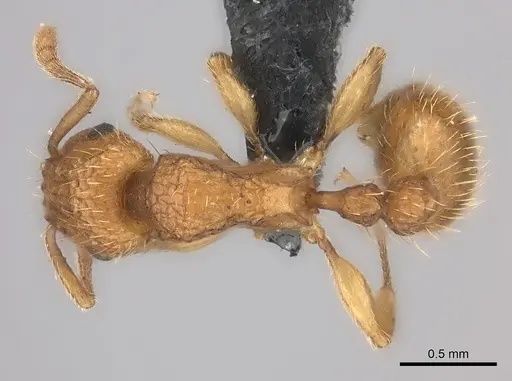
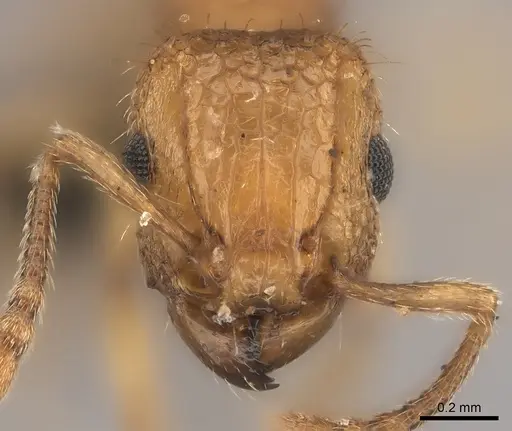
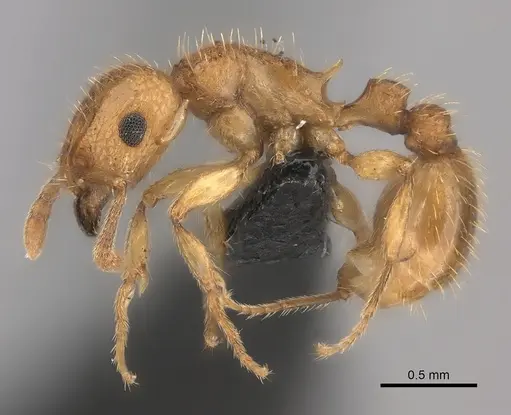
CASENT0066962
View on AntWeb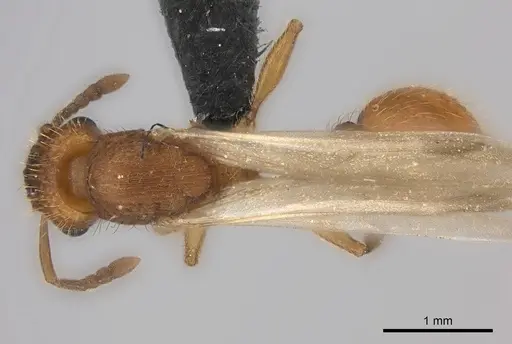
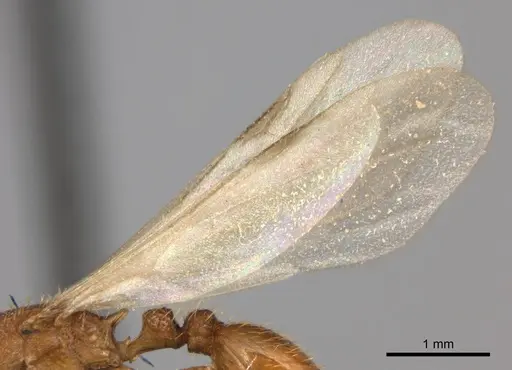
CASENT0235000
View on AntWeb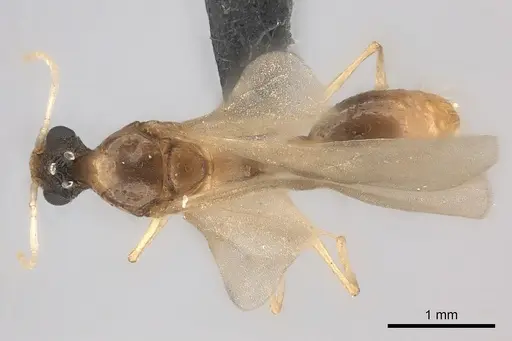
CASENT0249030
View on AntWeb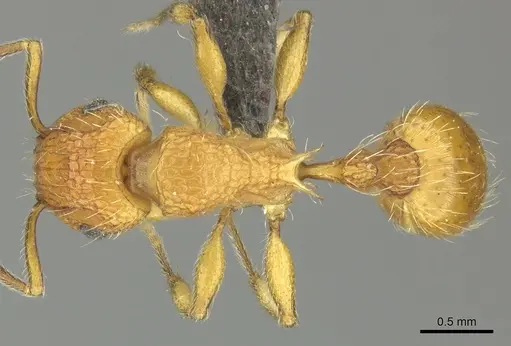
CASENT0255127
View on AntWeb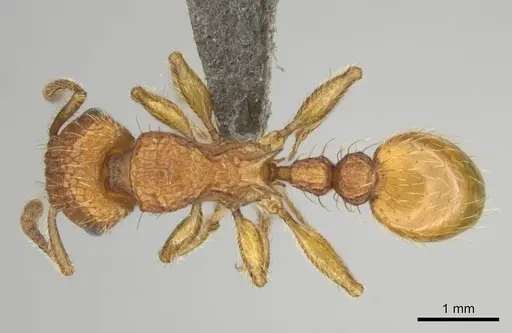
CASENT0901116
View on AntWeb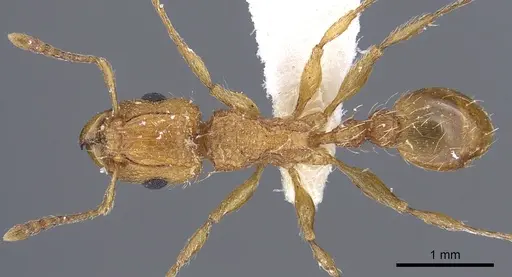
CASENT0915036
View on AntWeb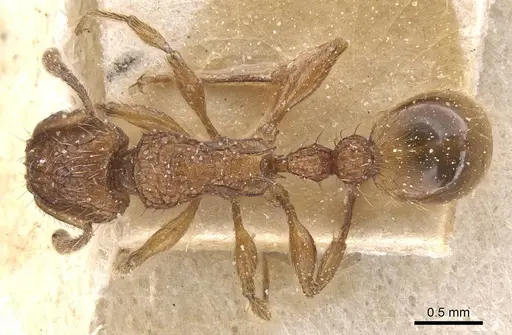
Literature
Loading...Loading products...