

Tetramorium nama
- Scientific Name
- Tetramorium nama
- Tribe
- Crematogastrini
- Subfamily
- Myrmicinae
- Author
- Hawkes, 2020
- Distribution
- Found in 1 countries
Tetramorium nama Overview
Tetramorium nama is an ant species of the genus Tetramorium. It is primarily documented in 1 countries , including Namibia. Detailed taxonomic data and occurrence records can be further explored via authoritative databases such as AntWeb or the Global Biodiversity Information Facility (GBIF).
Tetramorium nama
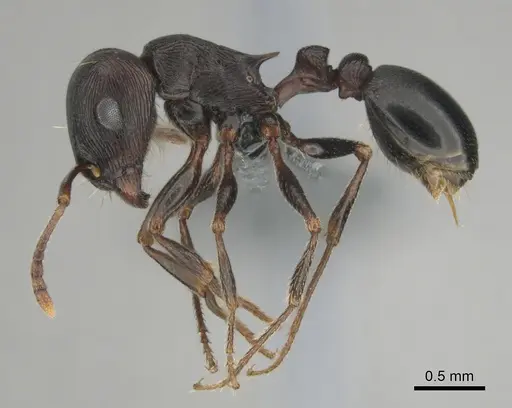
Tetramorium nama is a recently described ant species from the Richtersveld National Park in South Africa's Northern Cape province. Workers are small at around 1.1mm head width, with a distinctive dark blackish-brown body and contrasting reddish-brown mandibles [1]. This species belongs to the Tetramorium solidum group, which are typically seed-harvesting ants. The most notable thing about T. nama is how little we know about it, it was only described in 2020 from eight workers collected in a single pitfall trap, making it one of the rarest and most poorly understood ants in the hobby. The few specimens that exist were found near the Orange River in an arid riverine fringe habitat with sparse vegetation [1].
Quick Summary
- Difficulty: Expert
- Origin & Habitat: Known only from the Richtersveld National Park in South Africa's Northern Cape province, specifically near the Orange River. This is an arid to semi-arid region with extreme temperatures and very low rainfall. The type locality sits at about 65 meters elevation in open vegetation between riverbank thicket and alluvial terrace gravels [1].
- Colony Type: Unknown. Only eight worker specimens have ever been collected, and neither queens nor males have been described. Based on related species in the solidum group, they likely form single-queen colonies, but this is unconfirmed.
- Size & Growth:
- Queen: Unknown, queens have not been described yet
- Worker: 1.04-1.13mm head width (HW),1.17-1.32mm mesosoma length (WL) [1]
- Colony: Unknown, only eight workers have ever been collected
- Growth: Unknown
- Development: Unknown, no data available for this species (Closely related Tetramorium species in the solidum group typically develop from egg to worker in 6-10 weeks at warm temperatures, but this is an estimate for T. nama specifically)
- Antkeeping:
- Temperature: Based on the hot, arid habitat in Richtersveld National Park, these ants likely tolerate high temperatures. Related species in this group do well at 24-28°C. Provide a warm area around 26°C with a slight gradient.
- Humidity: Low to moderate. The natural habitat is arid desert fringe near the Orange River. Keep substrate moderately dry with occasional damp patches, avoid the constant moisture preferred by tropical species.
- Diapause: Likely, most southern African ants have some form of winter rest period. Reduce temperature to around 15-18°C for 2-3 months during winter.
- Nesting: No specific data on nesting preferences. Members of the solidum group typically nest in soil under stones or in small cavities. A naturalistic setup with a digging area and undertube hydration would work well.
- Behavior: No specific behavioral observations have been documented for this species. As a member of the solidum group, they are likely seed-harvesters that also scavenge for protein. Workers are small but should not be considered significant escape risks given their size, standard escape prevention is adequate. Temperament is unknown but related species are typically non-aggressive.
- Common Issues: this species is extremely rare in the wild and may not be available in the antkeeping hobby, queen and male castes are unknown, founding behavior is unconfirmed, no established care protocols exist since the species was only described in 2020, wild populations face multiple threats including mining, grazing, and invasive species, ethical sourcing is a major concern, related species are seed-harvesters but specific dietary preferences are unconfirmed for T. nama
Species Discovery and Rarity
Tetramorium nama was only described in 2020 by Peter G. Hawkes, making it one of the most recently discovered ant species available in the hobby. The entire known population comes from just eight workers collected in a single pitfall trap during an environmental survey of a diamond mine concession in the Richtersveld National Park [1]. This is extraordinarily rare in antkeeping, most species have at least some documented colony sizes, queen behavior, and captive care notes. The species was found in an area where mining, grazing, and invasive tree species are degrading the local environment, and it may be classified as Vulnerable or Endangered once more data is gathered [1]. If you obtain this species, you may be working with the first captive colonies ever kept.
Identification and Morphology
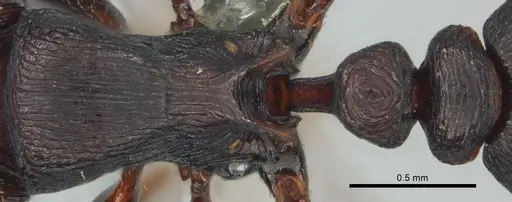
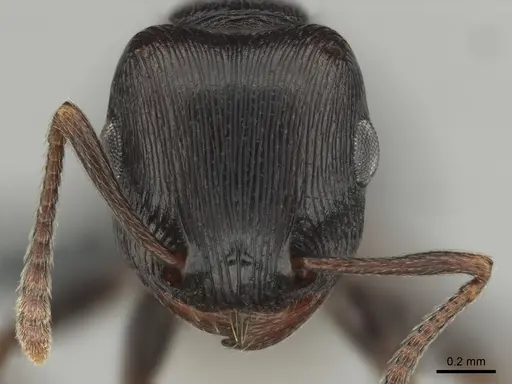
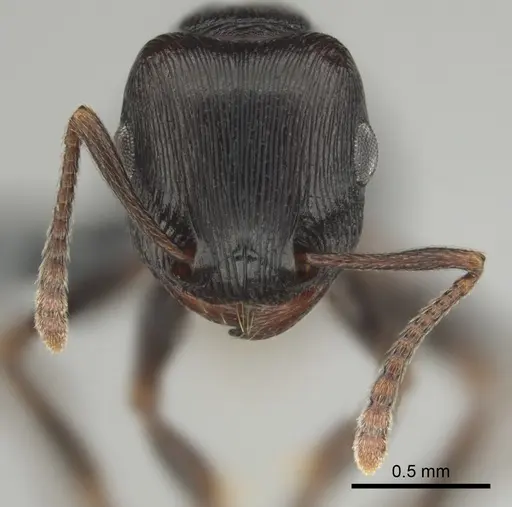
Workers are small at about 1.1mm head width, with a distinctive appearance thanks to their dense longitudinal costulae (groove-like sculpture) on the head and mesosoma. The body is mainly dark blackish-brown, but the mandibles are a contrasting reddish-brown that stands out [1]. They have long propodeal spines (the spiky projections at the back of the mesosoma) and a well-developed psammophore, a cluster of specialized J-shaped hairs on the underside of the head used for carrying sand grains, a common trait in desert-dwelling ants [1]. The petiole (the narrow waist segment) has distinctive concentric or whorled sculpture that helps distinguish it from closely related species like T. grandinode and T. duncani [1].
Natural Habitat and Climate
T. nama comes from the Richtersveld National Park in South Africa's Northern Cape province, one of the most arid regions in the country. The type locality sits at about 65 meters elevation near the Orange River (the Gariep), in an area transitional between alluvial river vegetation and mountain desert [1]. The habitat is an open riverine fringe with sparse vegetation dominated by Black Ebony (Euclea pseudebenus) and Wild Tamarisk (Tamarix usneoides) trees. This region experiences extreme heat in summer and mild winters, with very low annual rainfall. The ants were collected in September 2019,which is late winter/early spring in the southern hemisphere [1].
Diet and Feeding
As a member of the Tetramorium solidum group, T. nama is likely a seed-harvesting species similar to other Tetramorium ants in this group. In captivity, you should offer a mix of small seeds (grass seeds, millet, poppy seeds) as a staple, along with protein sources like small insects or protein-based ant feeds. Sugar water or honey can be offered occasionally, though many seed-harvesting ants primarily rely on seeds and protein. Start with small amounts and observe what the colony accepts. Given how rare and poorly understood this species is, keep detailed notes on what foods they accept, you may be contributing to the first captive care documentation for this species. [1]
Housing and Nesting
No specific nesting data exists for T. nama, but related species in the solidum group typically nest under stones or in shallow soil chambers. A naturalistic setup with a digging area filled with sandy soil and undertube hydration would be appropriate. The substrate should be allowed to dry out partially between waterings, aim for moderately damp conditions, not the constantly wet substrate that tropical species prefer. Given their desert origins, ensure good ventilation to prevent mold. A small formicarium with a hydration system and a foraging area would work well once you locate a queen and establish a founding colony.
Temperature and Seasonal Care
Based on their hot, arid origin, T. nama likely tolerates and may prefer warmer temperatures than many common ant species. Related species in this group do well at 24-28°C. Provide a warm area around 26°C with a slight gradient so workers can choose their preferred temperature. For winter, reduce temperatures to around 15-18°C for 2-3 months, this mimics the mild winter rest period these southern African ants would experience in the wild. The collection date (September) suggests activity during the warmer months, with reduced activity in the austral winter from roughly June to August. [1]
Conservation and Ethical Considerations
This is perhaps the most important section for anyone keeping Tetramorium nama. The species is known from only eight workers ever collected and is being assessed for Vulnerable or Endangered status under IUCN criteria [1]. The wild population faces serious threats from diamond mining in the Richtersveld National Park, grazing pressure, and invasive tree species degrading their habitat. If this species becomes available in the antkeeping hobby, ethical sourcing is critical, only purchase from breeders who have successfully founded colonies in captivity. Never release any ant colony in non-native areas, but especially one as rare and potentially endangered as T. nama.
Frequently Asked Questions
Is Tetramorium nama available in the antkeeping hobby?
No, this species is extremely rare. It was only described in 2020 from eight workers collected in South Africa, and neither queens nor males have been described. It's unlikely to be available commercially until someone successfully locates and cultivates a queen.
How big do Tetramorium nama colonies get?
Unknown. The largest known collection of this species is just eight workers from a single pitfall trap. Related species in the solidum group typically form colonies of several hundred workers, but we have no specific data for T. nama.
What do Tetramorium nama ants eat?
Based on their classification in the solidum group, they are likely seed-harvesters. Offer small seeds like grass seeds or millet as a staple, along with protein sources like small insects. Sugar water or honey can be offered occasionally.
Do Tetramorium nama ants sting?
Yes, they have a stinger. The original description notes a sting is present, weakly curved ventrad with a distinct pennant-shaped lamellate appendage [1]. However, given their very small size (around 1.1mm), any sting would be minimal.
What temperature do Tetramorium nama ants need?
Based on their hot, arid origin in the Richtersveld National Park, they likely prefer warmer conditions. Start around 24-28°C with a slight gradient. Related species in this group do well at these temperatures.
Do Tetramorium nama ants need hibernation?
Likely yes, but a mild one. As southern African ants from a subtropical to desert climate, they probably need a winter rest period of 2-3 months at reduced temperatures around 15-18°C rather than the deep hibernation that temperate species require.
How do I identify Tetramorium nama workers?
Workers have distinctive dense longitudinal costulae (grooves) on the head and mesosoma, long propodeal spines, and a dark blackish-brown body with contrasting reddish-brown mandibles. The petiole has characteristic concentric or whorled sculpture. Given the species was only described in 2020 and only eight workers exist in collections, identification by a specialist may be necessary.
Can I keep multiple Tetramorium nama queens together?
Unknown. Neither queens nor colony founding behavior has been documented for this species. The colony structure (single-queen vs multi-queen) is completely unconfirmed. Do not attempt combining unrelated queens until more is known.
How long does it take for Tetramorium nama to develop from egg to worker?
Unknown, no development data exists for this species. Closely related Tetramorium species typically take 6-10 weeks from egg to worker at warm temperatures, but this is only an estimate for T. nama.
Is Tetramorium nama a good species for beginners?
No. This is an expert-level species due to its extreme rarity, completely unestablished care protocols, and the fact that queens have never been described. If you obtain this species, you may be contributing to the first captive breeding success for this species. Only experienced antkeepers should attempt this, and ethical sourcing is critical.
References

This caresheet is licensed under CC BY-SA 4.0 .
CASENT0818990
View on AntWeb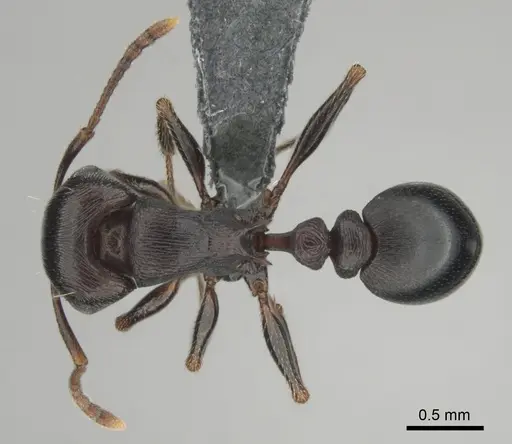
Literature
Loading...Loading products...