

Tetramorium legone
- Scientific Name
- Tetramorium legone
- Tribe
- Crematogastrini
- Subfamily
- Myrmicinae
- Author
- Bolton, 1980
- Distribution
- Found in 1 countries
Tetramorium legone Overview
Tetramorium legone is an ant species of the genus Tetramorium. It is primarily documented in 1 countries , including Nigeria. Detailed taxonomic data and occurrence records can be further explored via authoritative databases such as AntWeb or the Global Biodiversity Information Facility (GBIF).
Tetramorium legone
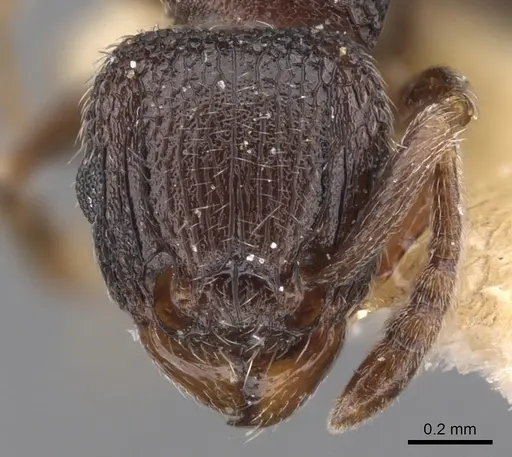
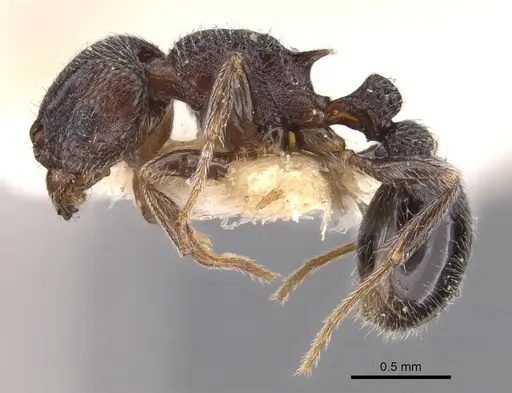
Tetramorium legone is a tiny West African ant species measuring just 3.3mm in total length [1]. Workers are dark brown with a distinctive blackish gaster, and they possess a unique feature among African Tetramorium, the base of their first gastral tergite (the front part of the abdomen) is densely sculptured with fine punctures that can appear as minute striations [1][2]. This species belongs to the Tetramorium angulinode species group and is found across Benin, Ghana, and Nigeria in the Afrotropical region [3]. They nest in the ground in open, sandy areas and have been documented in mango orchards in Benin [3].
Quick Summary
- Difficulty: Medium
- Origin & Habitat: West Africa (Benin, Ghana, Nigeria), ground nesting in open, sandy soils and agricultural areas like mango orchards [3][1]
- Colony Type: Colony structure is unconfirmed. Based on typical Tetramorium patterns, likely single-queen colonies.
- Size & Growth:
- Queen: Unconfirmed, no documented queen measurements for this species
- Worker: 3.3mm total length [1]
- Colony: Colony size is unconfirmed, likely small to moderate based on typical Tetramorium patterns
- Growth: Growth rate is unconfirmed
- Development: Development timeline is unconfirmed. Based on typical Tetramorium patterns and West African climate, estimate 4-8 weeks at warm temperatures. (Estimate based on genus patterns, not directly studied for this species)
- Antkeeping:
- Temperature: Keep warm around 24-28°C. West African species prefer tropical to subtropical temperatures. A heating cable on one side of the nest creates a suitable gradient.
- Humidity: Moderate humidity with dry areas. These ants inhabit open, sandy soils in nature, so provide a mix of moist substrate and dry areas for them to choose from.
- Diapause: No diapause required. As a West African species, they do not experience cold winters and remain active year-round.
- Nesting: Ground-nesting species. In captivity, a naturalistic setup with sandy soil substrate works well, or a Y-tong/plaster nest with soil chamber. They need access to dry areas within the nest.
- Behavior: Workers are small at 3.3mm and likely forage for small prey and seeds. Based on typical Tetramorium behavior, they are probably moderate foragers with moderate aggression when defending the nest. Escape prevention is critical due to their tiny size, use fine mesh barriers and tight-fitting lids.
- Common Issues: escape prevention is critical, their tiny 3mm size means they can squeeze through standard barriers easily, slow colony growth may frustrate beginners who overfeed or overhandle the colony, ground-nesting behavior requires proper substrate depth and moisture balance, wild-caught colonies may carry parasites that can cause colony failure, maintaining proper humidity without waterlogging is tricky, too wet causes mold, too dry stresses the colony
Housing and Nest Setup
Since T. legone is a ground-nesting species that naturally lives in open, sandy soils, a naturalistic setup with a sandy soil substrate works best. Provide at least 3-5cm of substrate depth to allow them to dig chambers and tunnels. A Y-tong (AAC) nest with a soil chamber or a plaster nest with a dirt insert also works well. The key is offering a humidity gradient, some areas should be moist while others remain dry, allowing the ants to self-regulate. Use a small water reservoir connected to the substrate for moisture, but avoid flooding. For the outworld, a simple plastic container with a textured floor works for foraging. [1][3]
Feeding and Diet
Based on typical Tetramorium behavior, T. legone is likely omnivorous. Offer small protein sources like fruit flies, small mealworms, or other tiny insects. They probably also accept sugar sources like honey water or sugar water, especially if honeydew-producing insects are unavailable. In their natural habitat of mango orchards, they likely tend aphids for honeydew. Feed small amounts every 2-3 days and remove uneaten food promptly to prevent mold. Since workers are only 3.3mm, prey items should be appropriately sized, very small insects or pre-killed/crushed prey works better than large items.
Temperature and Heating
As a West African species from Benin, Ghana, and Nigeria, T. legone needs warm conditions. Keep the nest area at 24-28°C for optimal activity and brood development. Use a heating cable placed on top of the nest (never under it, as this causes excessive drying) to create a gentle temperature gradient. Room temperature alone may be insufficient, especially in cooler climates. Monitor with a thermometer and adjust heating to maintain consistent warmth. Avoid temperatures above 32°C as this can stress or kill the colony. [3]
Humidity Management
T. legone inhabits open, sandy soils in nature, suggesting they prefer moderate humidity with good drainage. The substrate should be moist but never waterlogged, think of well-drained sandy soil that holds some moisture without becoming soggy. Provide a water tube or small reservoir connected to the nest area, and check the substrate regularly. If condensation forms heavily on the nest walls, reduce watering. If the substrate dries out completely between the moist areas, increase water slightly. The presence of dry areas is important, these ants naturally live in environments with variable moisture. [3]
Escape Prevention
With workers measuring only 3.3mm, escape prevention is absolutely critical. Standard test tube setups may require additional barriers. Use fine mesh (0.5mm or smaller) on any ventilation holes. Apply Fluon or similar barrier grease to the upper edges of formicarium walls. When using test tubes, ensure the cotton plug is packed tightly. Check all connections and seams regularly, these tiny ants will find any gap. The term 'escape artists' doesn't fully capture the risk: at 3mm, they can slip through gaps that would stop larger ants. [1]
Colony Founding
Colony founding behavior is unconfirmed for this specific species. Based on typical Tetramorium patterns, the queen likely seals herself in a claustral chamber and raises the first workers alone on stored fat reserves. If you obtain a founding queen, provide a small test tube setup with moist cotton and place it in a warm, dark location. Do not disturb her during the founding period, this is the most common cause of colony failure. Wait at least 4-6 weeks before checking for the first workers (nanitics).
Frequently Asked Questions
How long does it take for Tetramorium legone to produce first workers?
The exact timeline is unconfirmed for this species. Based on typical Tetramorium development and their West African origin, expect first workers (nanitics) in approximately 4-8 weeks at warm temperatures (24-28°C). The queen will remain sealed in her founding chamber until the first workers emerge.
What do Tetramorium legone ants eat?
Based on typical Tetramorium behavior, they are omnivorous. Offer small protein sources like fruit flies, tiny mealworms, or other small insects. They likely accept sugar water or honey diluted with water. In their natural mango orchard habitat, they probably also tend aphids for honeydew.
Do Tetramorium legone ants sting?
Tetramorium species are in the subfamily Myrmicinae, which includes ants with functional stingers. However, T. legone is small (3.3mm) and not typically aggressive. If threatened, they may use their stinger, but the pain level would be minimal due to their tiny size.
What temperature do Tetramorium legone ants need?
Keep them warm at 24-28°C. As a West African species from Benin, Ghana, and Nigeria, they prefer tropical temperatures. Use a heating cable on top of the nest to maintain warmth, especially if room temperature is below 24°C.
How big do Tetramorium legone colonies get?
Colony size is unconfirmed for this species, but based on typical Tetramorium patterns and their small worker size (3.3mm), colonies likely reach several hundred workers at maximum. Growth is probably slow to moderate.
Can I keep Tetramorium legone in a test tube?
Yes, test tubes work for founding colonies and small colonies. However, due to their tiny 3mm size, you must use excellent escape prevention, tight cotton, fine mesh on any openings, and barrier grease on edges. For established colonies, consider transitioning to a naturalistic setup with sandy soil substrate.
Do Tetramorium legone ants need hibernation?
No. As a West African species from tropical regions, they do not require diapause or hibernation. Keep them warm and active year-round at 24-28°C.
Are Tetramorium legone ants good for beginners?
This species is rated as Medium difficulty. While small and requiring careful escape prevention, they are relatively hardy once established. The main challenges are their tiny size requiring excellent barriers, and their slow growth requiring patience. They are not the best first ant but are manageable for keepers willing to pay attention to escape prevention.
Why are my Tetramorium legone ants escaping?
At only 3.3mm, they are incredibly small and can squeeze through tiny gaps. Check all barriers, use fine mesh (0.5mm or smaller), apply Fluon to edges, and ensure cotton plugs are packed tightly. Even seemingly sealed containers may have microscopic gaps these tiny ants can exploit.
When should I move Tetramorium legone to a formicarium?
Wait until the colony has at least 20-30 workers and the test tube is becoming crowded. For ground-nesting species like T. legone, a naturalistic setup with soil substrate works better than standard formicariums. Make the transition gradual by connecting the test tube to the new setup and allowing the ants to explore.
References

This caresheet is licensed under CC BY-SA 4.0 .
CASENT0901170
View on AntWeb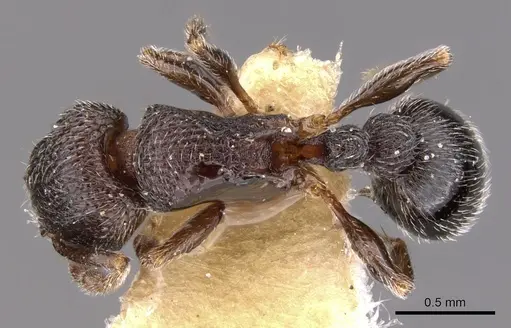
Literature
Loading...Loading products...