

Tetramorium angulinode
- Scientific Name
- Tetramorium angulinode
- Tribe
- Crematogastrini
- Subfamily
- Myrmicinae
- Author
- Santschi, 1910
- Distribution
- Found in 11 countries
Tetramorium angulinode Overview
Tetramorium angulinode is an ant species of the genus Tetramorium. It is primarily documented in 11 countries , including Burkina Faso, Congo, Democratic Republic of the. Detailed taxonomic data and occurrence records can be further explored via authoritative databases such as AntWeb or the Global Biodiversity Information Facility (GBIF).
Tetramorium angulinode
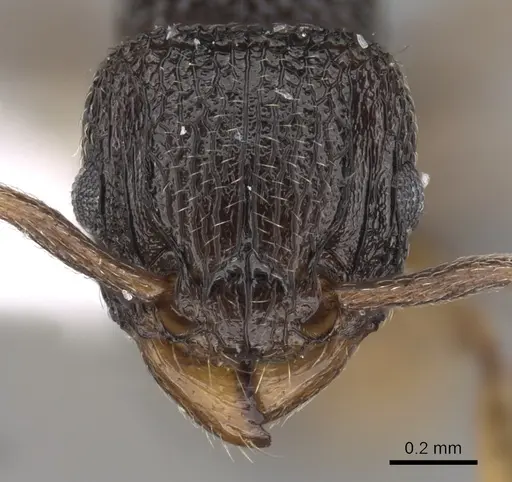
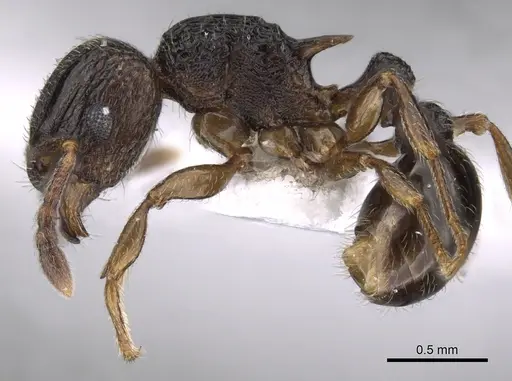
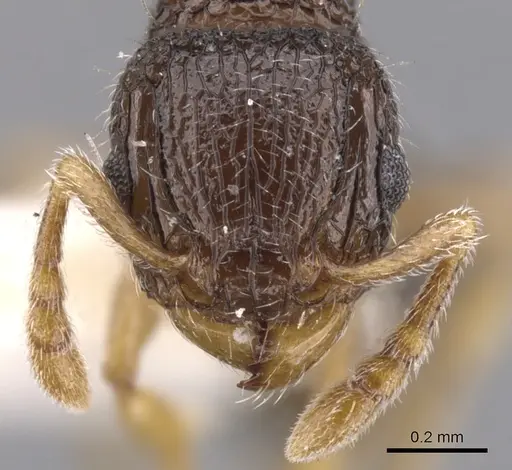
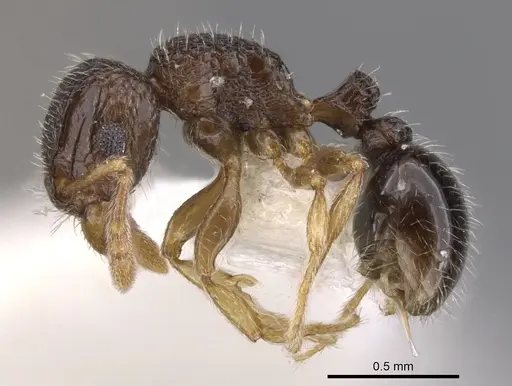
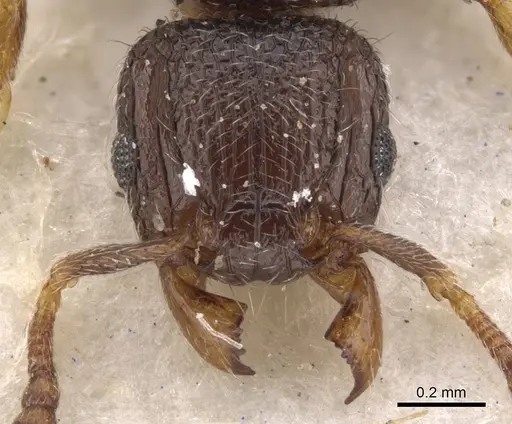
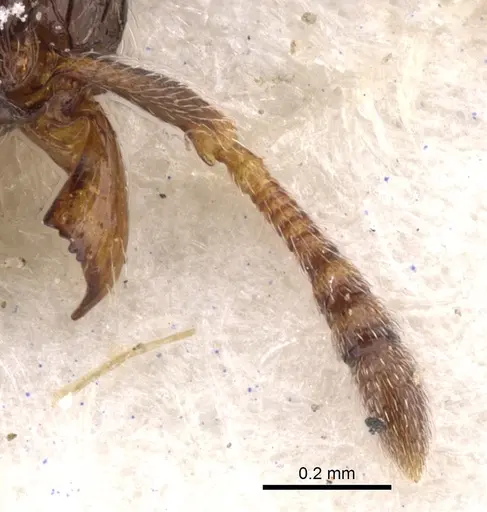
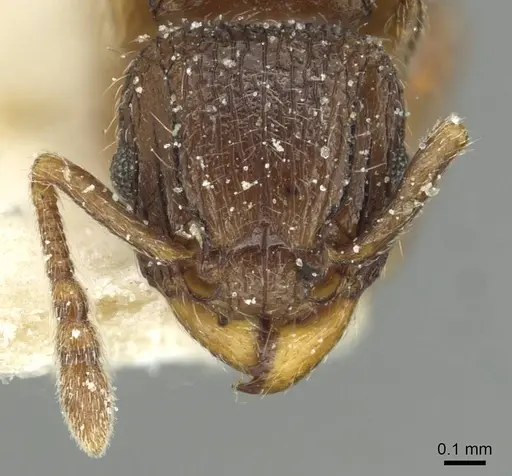
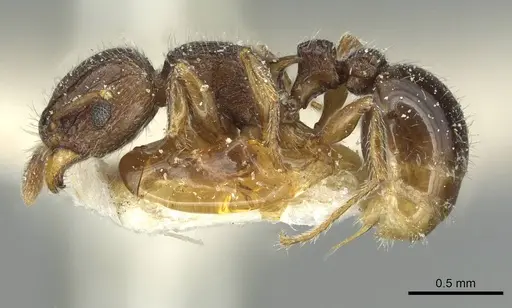
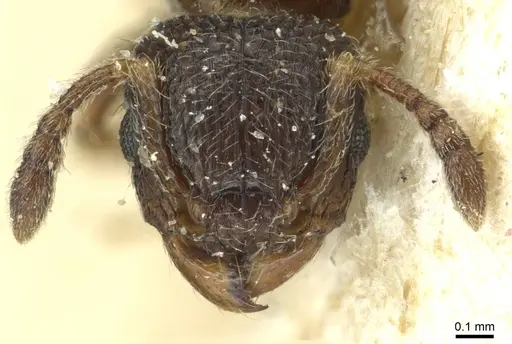
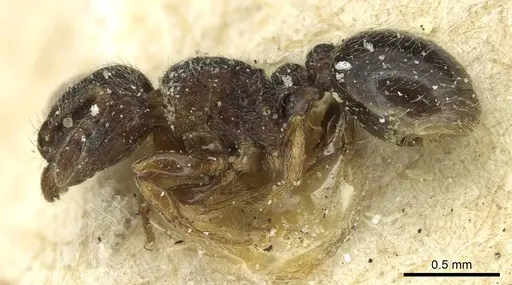
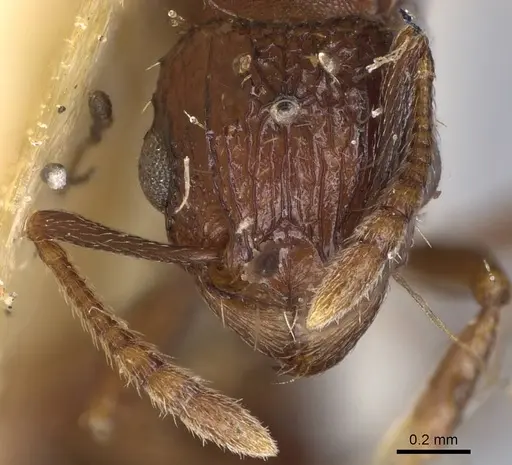
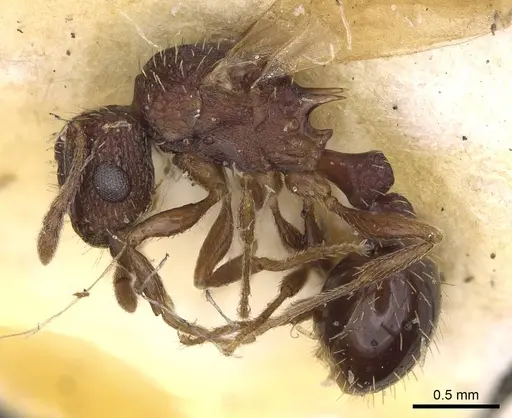
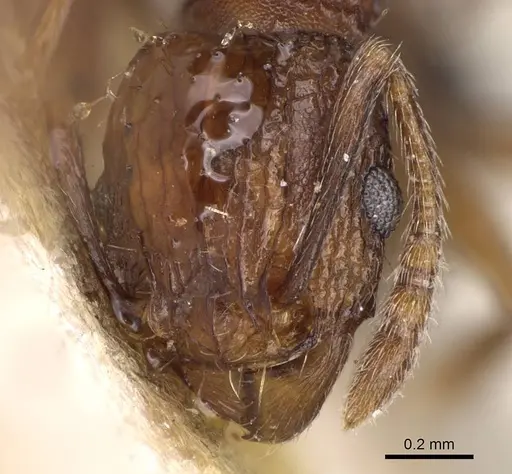
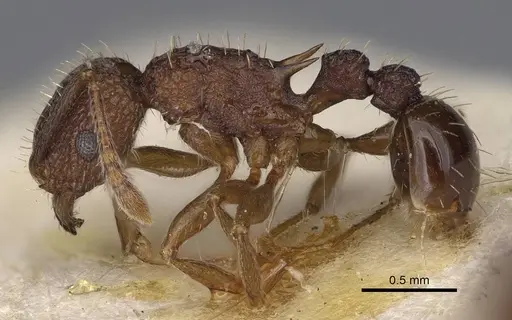
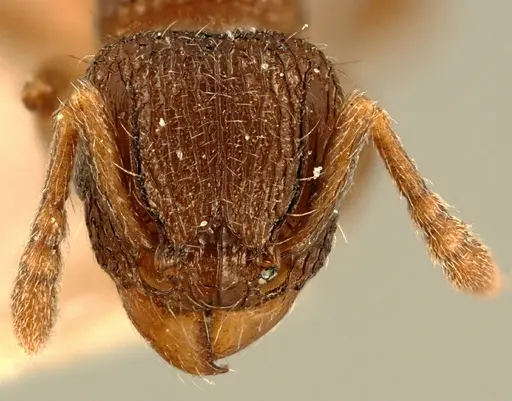
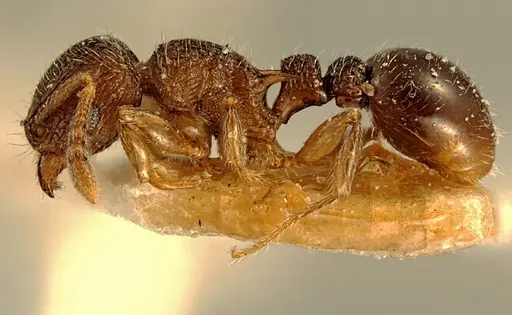
Tetramorium angulinode is a small, dark brown ant measuring 2.3-2.9mm in total length [1]. Workers have a distinctive appearance with longitudinally rugulose head and alitrunk, while the dorsal surfaces of the petiole and postpetiole show an open reticulum pattern with shiny interspaces [1]. The species belongs to the subgenus Xiphomyrmex and is part of the angulinode species group, closely related to T. chloe and T. zapyrum [2][3].
This ant is widespread across the Afrotropical region but appears to be uncommon wherever it occurs [1]. It inhabits savannah and grassland environments, though it can also be found in forest clearings and cultivated areas within forest zones [3]. In some regions like Benin, these ants have been recorded in mango orchards where they serve as prey for the weaver ant Oecophylla longinoda [3]. The species nests in the ground amongst grass roots or at the bases of small trees [3].
Quick Summary
- Difficulty: Medium
- Origin & Habitat: Afrotropical region, found in Benin, Botswana, Cameroun, Congo, Democratic Republic of Congo, Nigeria, Sudan, and Zimbabwe. Inhabits savannah and grassland, also found in forest clearings and cultivated or disturbed ground within forest zones. Nests in the ground amongst roots of grasses and low plants, or directly in ground at bases of small trees [1][3].
- Colony Type: Colony structure is unconfirmed. No specific data on queen number or colony size in wild colonies.
- Size & Growth:
- Queen: Unconfirmed, related Tetramorium species typically 5-8mm
- Worker: 2.3-2.9mm [1]
- Colony: Unconfirmed, likely small to moderate colonies based on related species
- Growth: Moderate
- Development: 6-10 weeks estimated based on typical Tetramorium development at optimal temperature (Development time is estimated from related Tetramorium species as no specific data exists for T. angulinode)
- Antkeeping:
- Temperature: Keep at 22-26°C, this range supports activity and brood development for tropical Tetramorium species
- Humidity: Moderate humidity around 50-70%. Keep substrate slightly moist but not waterlogged, mimicking savannah conditions
- Diapause: Unlikely, being a tropical African species, they likely do not require a diapause period
- Nesting: Natural nesting is in soil amongst grass roots or at base of small trees. In captivity, a naturalistic setup with soil substrate or a Y-tong/plaster nest works well. Provide a moisture gradient so ants can choose their preferred humidity
- Behavior: Workers are small at 2.3-2.9mm and relatively docile compared to some other Myrmicinae [1]. They likely forage on the ground surface for small insects and honeydew. Being small, escape prevention is important, use fine mesh barriers. They are preyed upon by Oecophylla longinoda in their native range, indicating they face predation pressure [3].
- Common Issues: small worker size means escapes are likely without fine mesh barriers, tropical species may decline if kept too cool, maintain warm temperatures, limited data on captive care means some trial and error may be needed, wild-caught colonies may have parasites given their role as prey species, uncommon species in the hobby means established care protocols may not exist
Housing and Nest Setup
Tetramorium angulinode naturally nests in soil amongst grass roots and at the bases of small trees [3]. For captivity, a naturalistic setup with a soil-based substrate works best, use a mix of soil and sand that holds some moisture but drains well. A Y-tong (AAC) or plaster nest with a water reservoir also works well, providing a humidity gradient that allows the ants to self-regulate. Because workers are tiny (2.3-2.9mm), escape prevention is critical, use tight-fitting lids and fine mesh on any ventilation holes [1]. The colony will likely do best with a moderate amount of vertical space for tunneling and chamber creation.
Feeding and Diet
In common with other Tetramorium species, T. angulinode likely has an omnivorous diet. They probably forage for small insects, seeds, and honeydew from aphids or scale insects. In captivity, offer a varied diet including small live prey like fruit flies or pinhead crickets, protein-rich foods like boiled egg or cat food, and sugar sources such as honey water or sugar water. Given their small size, prey items should be appropriately sized, very small insects and arthropods work best. They may also accept seeds or seed-like foods. Feed every 2-3 days, removing uneaten food to prevent mold. [1]
Temperature and Seasonal Care
As a tropical African species from savannah and grassland habitats, T. angulinode requires warm temperatures. Keep the nest area at 22-26°C, this range supports normal activity and brood development. A heating cable on one side of the nest can create a temperature gradient. Being from a region near the equator, they likely do not require a diapause period. However, avoid temperatures above 30°C as this can stress the colony. Room temperature within the recommended range is acceptable if your home stays consistently warm. [1]
Humidity Requirements
These ants come from savannah and grassland habitats where conditions are moderately dry but not arid. Aim for humidity around 50-70% in the nest area. Keep the substrate slightly moist but allow some drying between waterings, the soil should feel damp but not soggy. A moisture gradient is ideal so ants can move between wetter and drier areas as needed. Avoid both constant saturation and complete drying out. Good ventilation helps prevent mold while maintaining appropriate humidity levels. [1][3]
Behavior and Colony Dynamics
Workers measure just 2.3-2.9mm, making them among the smaller ant species kept in captivity [1]. They are likely relatively docile and not particularly aggressive. The species appears to be uncommon throughout its range, which may reflect either low colony numbers or cryptic nesting habits [1]. In their native habitat, they serve as prey for Oecophylla longinoda (weaver ants), indicating they face significant predation pressure [3]. This suggests they may be more secretive in the wild, preferring to stay hidden within their nests and foraging quietly.
Frequently Asked Questions
How long does it take for Tetramorium angulinode to produce first workers?
Exact development time is unconfirmed for this species. Based on typical Tetramorium development, expect approximately 6-10 weeks from egg to first worker at optimal temperature (22-26°C). The first workers (nanitics) will likely be smaller than mature workers.
What do Tetramorium angulinode ants eat?
They are omnivorous like most Tetramorium species. Offer small live prey (fruit flies, small crickets), protein sources (boiled egg, cat food), and sugar (honey water, sugar water). Prey should be appropriately sized for their tiny 2.3-2.9mm workers.
Can I keep Tetramorium angulinode in a test tube?
A test tube can work for a founding queen, but given their natural nesting in soil amongst grass roots, a naturalistic setup with soil substrate is preferable for long-term housing. A Y-tong or plaster nest with moisture also works well.
Do Tetramorium angulinode ants sting?
Tetramorium belongs to the Myrmicinae subfamily, which includes species with functional stingers. However, this species is small and relatively docile. If threatened, they may attempt to sting, but the sting is likely mild given their tiny size.
Are Tetramorium angulinode good for beginners?
This species is rated as Medium difficulty. While not the most challenging, there is limited captive breeding data available, so some trial and error may be required. Their small size and specific temperature needs make them better suited for keepers with some experience.
What temperature do Tetramorium angulinode need?
Keep them warm at 22-26°C. As a tropical African species from savannah habitats, they require consistent warmth. Avoid temperatures below 20°C or above 30°C.
How big do Tetramorium angulinode colonies get?
Colony size is unconfirmed for this species. Based on related Tetramorium species and their small worker size, colonies likely remain small to moderate, probably under a few hundred workers.
Do Tetramorium angulinode need hibernation?
Unlikely. Being a tropical African species from near the equator, they probably do not require a diapause period. Maintain warm temperatures year-round.
Why are my Tetramorium angulinode dying?
Common causes include: temperatures too cool (below 20°C), improper humidity (too wet or too dry), escape of tiny workers, or poor nutrition. Review temperature, humidity, and food offerings. Limited captive data means some adjustment may be needed.
References

This caresheet is licensed under CC BY-SA 4.0 .
CASENT0235158
View on AntWeb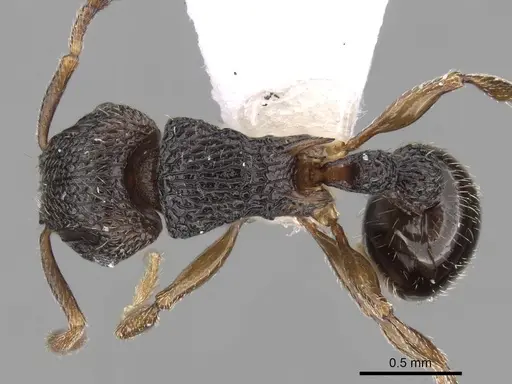
CASENT0901162
View on AntWeb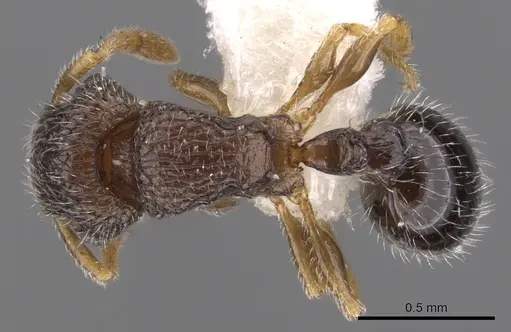
CASENT0901163
View on AntWeb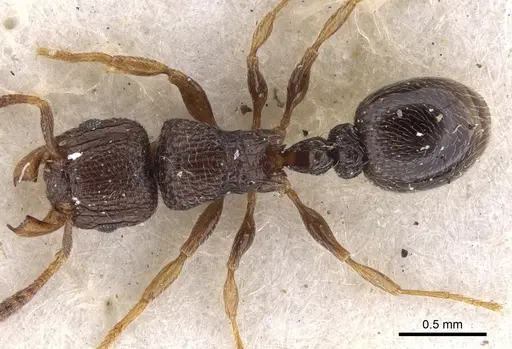
CASENT0913987
View on AntWeb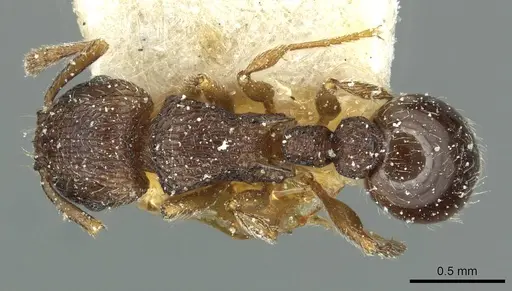
CASENT0913988
View on AntWeb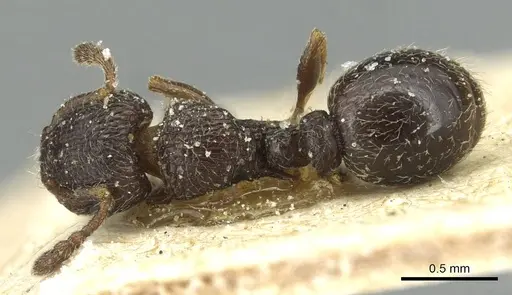
CASENT0914276
View on AntWeb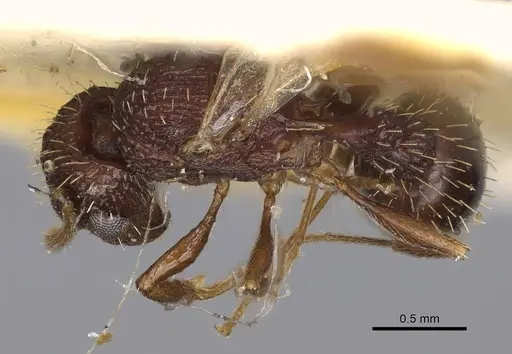
CASENT0914277
View on AntWeb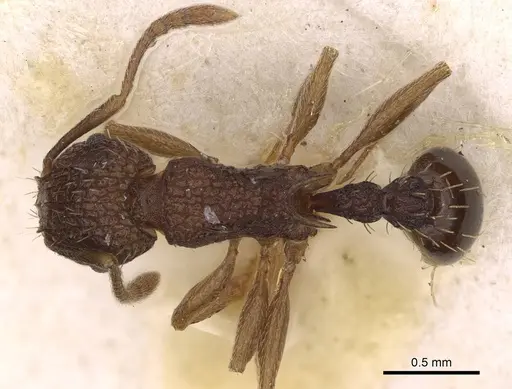
ZFMKHYM20096255
View on AntWeb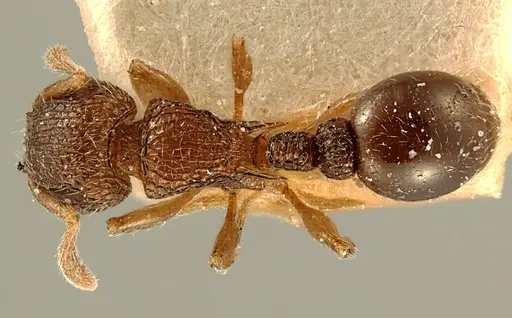
Literature
Loading...Loading products...