

Tetramorium khyarum
- Scientific Name
- Tetramorium khyarum
- Tribe
- Crematogastrini
- Subfamily
- Myrmicinae
- Author
- Bolton, 1980
- Distribution
- Found in 3 countries
Tetramorium khyarum Overview
Tetramorium khyarum is an ant species of the genus Tetramorium. It is primarily documented in 3 countries , including Namibia, Saudi Arabia, South Africa. Detailed taxonomic data and occurrence records can be further explored via authoritative databases such as AntWeb or the Global Biodiversity Information Facility (GBIF).
Tetramorium khyarum
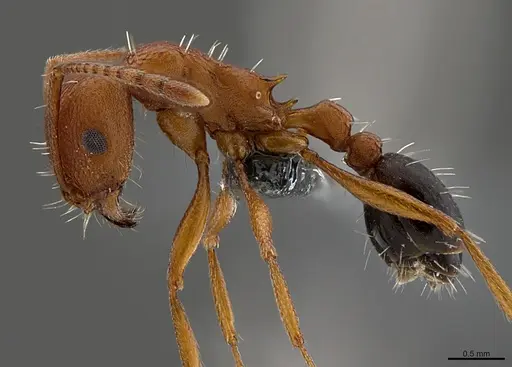
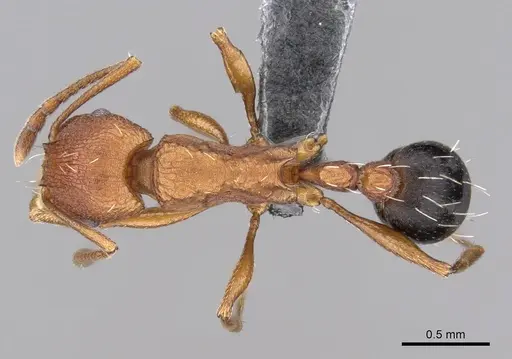
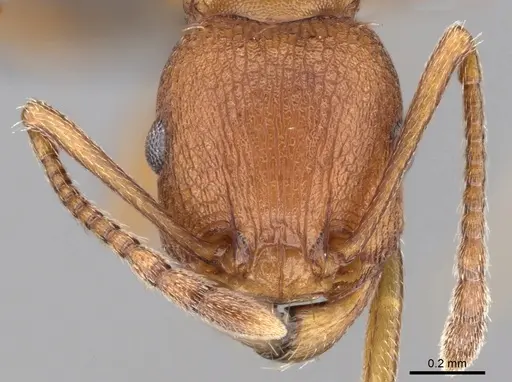
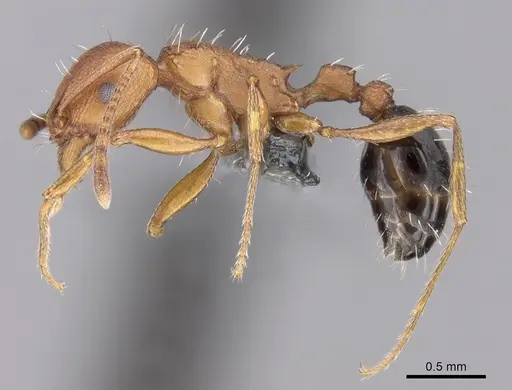
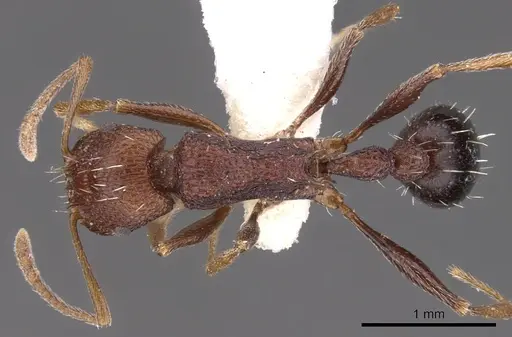
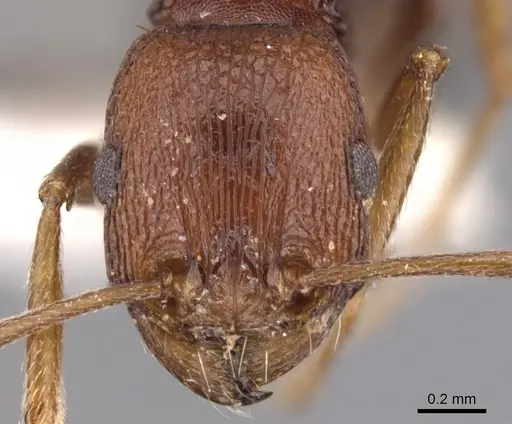
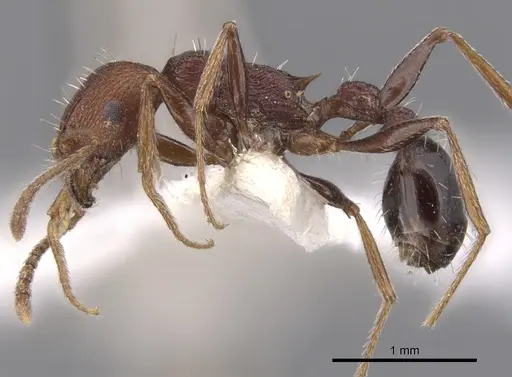
Tetramorium khyarum is a medium-sized ant species belonging to the Myrmicinae subfamily. Workers measure 3.9-4.4mm with a distinctive bicolored appearance, the body ranges from dull red to yellow or yellowish brown, while the gaster is darker, appearing blackish brown [1]. This species belongs to the sericeiventre group and is characterized by having a single pair of hairs on the propodeal dorsum (the upper surface of the rear body segment) and lacking projecting hairs behind the eyes [2]. The species was described from Nigeria in 1980 and is widely distributed across savannah and grassland habitats in the western half of Africa, though it does not appear to be very common [1].
This ant has been recorded across a broad geographic range including Botswana, Democratic Republic of Congo, Ivory Coast, Namibia, Nigeria, Saudi Arabia, South Africa, and Yemen [1]. It can be confused with the closely related Tetramorium sepositum, but T. khyarum lacks the projecting hairs on the sides of the head that its relative possesses [3]. The species shows considerable variation in sculpture (the texture of its body surface) between different populations, which is common in this group.
Quick Summary
- Difficulty: Easy
- Origin & Habitat: Native to savannah and grassland habitats across western Africa and the Arabian Peninsula. Found in Botswana, Democratic Republic of Congo, Ivory Coast, Namibia, Nigeria, Saudi Arabia, South Africa, and Yemen [1]. The species prefers warm, relatively dry to moderate humidity environments typical of savannah ecosystems.
- Colony Type: Unconfirmed. Most Tetramorium species form single-queen colonies (monogyne), but colony structure has not been specifically documented for T. khyarum.
- Size & Growth:
- Queen:{.size-link} Estimated 7-10mm based on typical Tetramorium genus patterns [1]
- Worker:{.size-link} 3.9-4.4mm [1]
- Colony: Estimated several hundred to a few thousand workers based on genus patterns
- Growth: Moderate, inferred from typical Tetramorium development
- Development: Estimated 6-8 weeks at optimal temperature based on related Tetramorium species (Development time inferred from genus-level data, specific timing for this species has not been documented)
- Antkeeping:
- Temperature: Keep at 24-28°C, warmer conditions matching their African savannah origin. A heating cable on one side of the nest can create a temperature gradient.
- Humidity: Moderate humidity needs (50-60%). These ants come from savannah habitats, so avoid overly damp conditions. Allow the nest substrate to dry partially between waterings.
- Diapause: Not typically required. As an African species from tropical/subtropical regions, they do not need a true hibernation. However, they may show reduced activity during cooler periods.
- Nesting: Y-tong (AAC) nests or plaster nests work well. They prefer tighter chambers scaled to their medium size. Naturalistic setups with dry to moderately damp substrate are suitable.
- Behavior: Generally calm and non-aggressive. Workers are active foragers that search for food on the ground. They are medium-sized ants with a well-developed sting, so escape prevention is important but not as critical as for tiny species. They are generalist feeders and will accept a variety of protein and sugar sources.
- Common Issues: colonies may fail if kept too cold, maintain warm temperatures, overly humid conditions can cause stress and mold problems, wild-caught colonies may carry parasites that affect survival in captivity, moderate growth rate may test beginner patience, avoid overfeeding or disturbing the colony
Housing and Nest Setup
Tetramorium khyarum adapts well to various captive setups. Y-tong (acrylic) nests work excellently, the tight chambers match their medium size and allow you to observe colony activity easily. Plaster nests are also suitable, providing good humidity control. For the outworld, a simple plastic container with a secure lid works fine. Because they are moderate-sized ants (under 5mm), standard escape prevention measures like Fluon barriers on the rim of the outworld are effective. Avoid overly large outworlds relative to the colony size, these ants do best with compact, easy-to-defend spaces. [2][3]
Feeding and Diet
Like most Tetramorium species, T. khyarum is a generalist feeder. Offer protein sources like small crickets, mealworms, fruit flies, and other small insects twice weekly. They also readily accept sugar water, honey, or diluted maple syrup as an energy source. In the wild, they forage for honeydew from aphids and other small invertebrates, so a varied diet keeps them healthy. Remove uneaten prey after 24-48 hours to prevent mold. Fresh water should always be available. [1]
Temperature and Seasonal Care
Maintain temperatures between 24-28°C for optimal colony health and brood development. These ants come from warm African savannah environments and do not tolerate cool conditions well. A small heating cable placed on one side of the nest creates a temperature gradient that lets ants choose their preferred warmth. Unlike temperate species, T. khyarum does not require hibernation or diapause. They may naturally slow down slightly during cooler months in your home, but this is not a true dormancy period. Avoid temperatures below 20°C for extended periods.
Humidity and Water
Keep humidity in the moderate range (50-60%). These savannah ants prefer drier conditions compared to forest-dwelling species. The nest substrate should be allowed to partially dry between waterings, damp but not soggy is the goal. Overly wet conditions lead to mold and can stress the colony. A water test tube connected to the nest provides constant drinking water. Mist the outworld occasionally but avoid creating constant dampness. [2]
Behavior and Colony Dynamics
Workers are active foragers that readily search for food in the outworld. The colony will establish clear trails to food sources once they discover them. They possess a functional stinger (Myrmicinae have stingers) but are not particularly aggressive, they typically retreat rather than attack when disturbed. The colony will grow gradually over many months, with the queen laying eggs continuously once established. First workers (nanitics) will be smaller than mature workers but will grow in size as the colony expands. [1]
Frequently Asked Questions
How long does it take for Tetramorium khyarum to produce first workers?
Expect first workers (nanitics) approximately 6-8 weeks after the queen lays eggs, assuming optimal temperatures around 24-28°C. This estimate is based on typical Tetramorium development patterns since specific timing for T. khyarum has not been documented.
Can I keep Tetramorium khyarum in a test tube setup?
Yes, test tube setups work well for founding colonies. Use a standard test tube with a water reservoir sealed with cotton, this provides humidity without flooding. Once the colony reaches 20-30 workers, consider moving them to a small formicarium or Y-tong nest.
Do Tetramorium khyarum ants sting?
Yes, as members of the Myrmicinae subfamily, they have functional stingers. However, they are not aggressive and typically only sting if directly threatened or handled roughly. The sting is mild compared to some other ant species.
What temperature is best for Tetramorium khyarum?
Keep them warm at 24-28°C. These African savannah ants prefer temperatures in this range. A heating cable on one side of the nest creates a gradient they can regulate themselves. Avoid temperatures below 20°C.
Are Tetramorium khyarum good for beginners?
Yes, they are considered a good beginner species. They are relatively hardy, tolerate some variation in care conditions, and are not overly aggressive. Their moderate size and generalist diet make them easier to keep than some more demanding species.
How big do Tetramorium khyarum colonies get?
Based on typical Tetramorium patterns, colonies likely reach several hundred to a few thousand workers over several years. They are not among the largest Tetramorium species but can still form substantial colonies.
Do Tetramorium khyarum need hibernation?
No, they do not require hibernation. As an African species from tropical to subtropical regions, they remain active year-round with proper warmth. They may show slightly reduced activity in cooler months but do not enter true diapause.
What do Tetramorium khyarum eat?
They are generalist feeders. Offer small insects (crickets, mealworms, fruit flies) as protein twice weekly, plus sugar water, honey, or maple syrup for energy. They will also collect honeydew if you keep aphids nearby.
When should I move Tetramorium khyarum to a formicarium?
Move them when the test tube becomes crowded or the water reservoir runs low, typically when the colony reaches 20-40 workers. A small Y-tong or plaster nest works well for the transition. Make sure the new nest has appropriate chamber sizes for their medium size.
Why is my Tetramorium khyarum colony declining?
Common causes include: temperatures too low (below 20°C), excessive humidity causing mold stress, poor nutrition, or parasites from wild-caught colonies. Review your temperature and humidity settings first. Ensure they have fresh protein and sugar sources.
Report an Issue
The current care sheet is based fully on literature. See inconsistencies, or something that's incorrect? Please , it will be resolved after review from an admin. Contributing to the blogs tab also helps providing information, to make us be able to further improve the caresheets. Thank you for your support!
References

This caresheet is licensed under CC BY-SA 4.0 .
Literature
Loading...Loading products...