

Tetramorium sepositum
- Scientific Name
- Tetramorium sepositum
- Tribe
- Crematogastrini
- Subfamily
- Myrmicinae
- Author
- Santschi, 1918
- Distribution
- Found in 3 countries
Tetramorium sepositum Overview
Tetramorium sepositum is an ant species of the genus Tetramorium. It is primarily documented in 3 countries , including Côte d'Ivoire, South Africa, Zimbabwe. Detailed taxonomic data and occurrence records can be further explored via authoritative databases such as AntWeb or the Global Biodiversity Information Facility (GBIF).
Tetramorium sepositum
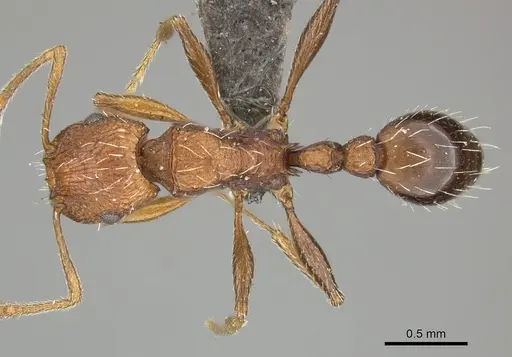
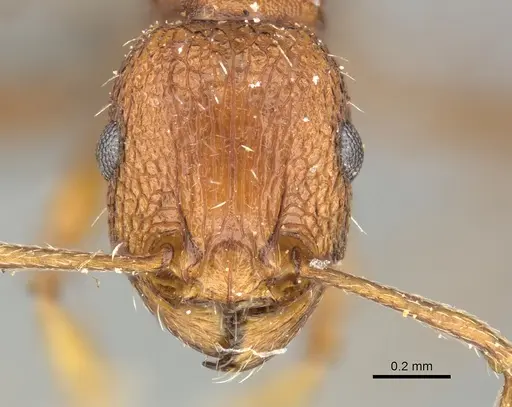
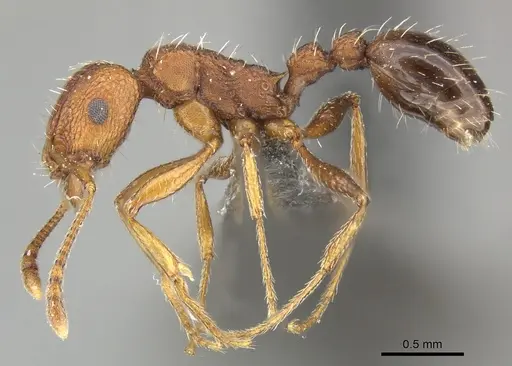
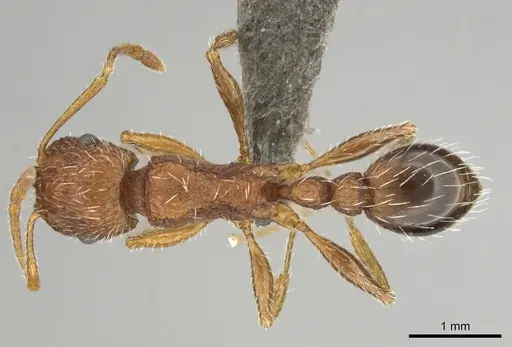
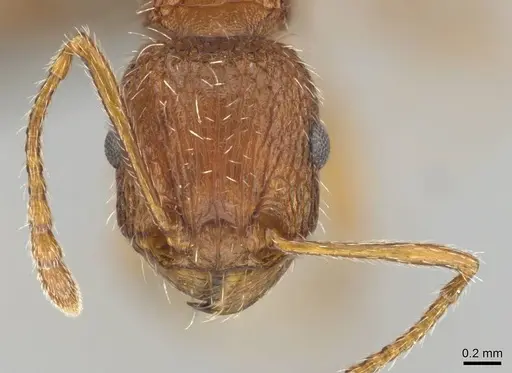
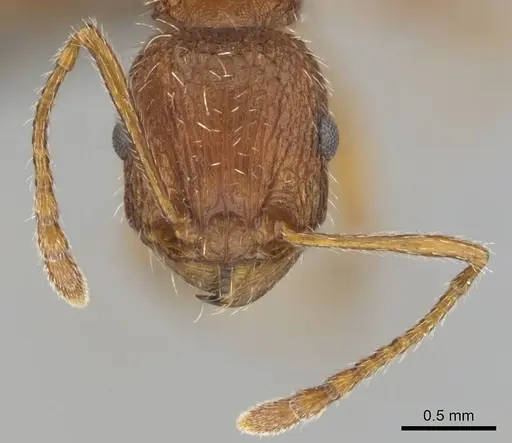
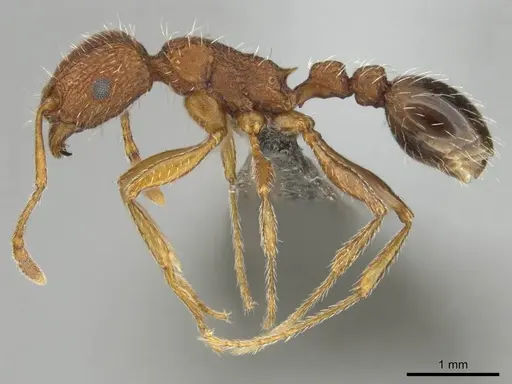
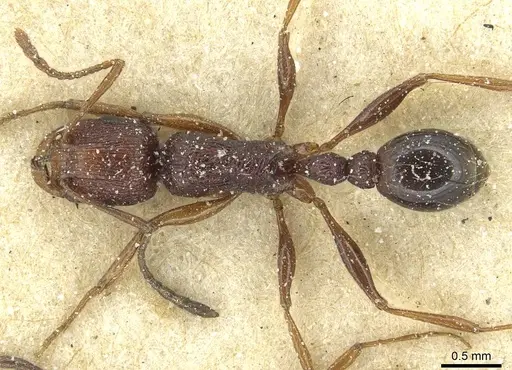
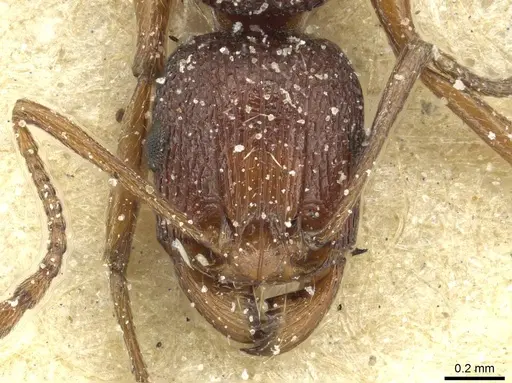
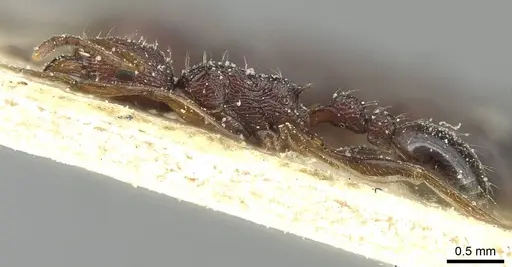
Tetramorium sepositum is a small, reddish-brown ant native to the grasslands of southern Africa, specifically Zimbabwe and Mozambique. Workers measure 3.8-4.4mm and have a distinctive appearance with numerous elongate standing hairs covering their head and body, giving them a noticeably hairy look compared to many other Tetramorium species. Their color ranges from dull red to reddish-brown, with a darker, often blackish-brown gaster. This species belongs to the sericeiventre-complex and can be identified by the presence of several pairs of hairs on the propodeal dorsum and 0-3 long fine hairs projecting from each side of the head behind the eyes.
This ant plays an interesting ecological role as one of the two known host species for an inquiline parasitic ant (Tetramorium sericeiventre being the other), meaning another ant species lives in close association with their colonies. Research shows T. sepositum is strongly associated with grassland habitats in low-elevation areas below 1200m, and it serves as an indicator species for unburned control plots in fire regime studies, suggesting it prefers areas with minimal disturbance [1][2].
Quick Summary
- Difficulty: Unknown, limited captive care data available
- Origin & Habitat: Grassland habitats in Zimbabwe and Mozambique (Afrotropical Region). Found in low-elevation areas below 1200m, with negative correlation to increasing elevation [2]. Also recorded in urban areas of Côte d'Ivoire [3].
- Colony Type: Likely monogyne (single queen) based on typical Tetramorium patterns. Colony structure is not well-documented in scientific literature.
- Colony: Monogyne
- Founding: Claustral
- Size & Growth:
- Queen: Undocumented for this specific species, genus estimate 7-9mm
- Worker: 3.8-4.4mm
- Colony: Unknown, typical Tetramorium colonies reach several hundred to a few thousand workers
- Growth: Unknown, likely moderate based on genus patterns
- Development: Estimated 6-8 weeks at optimal temperature based on related Tetramorium species (Development timeline not specifically studied for this species, estimate based on genus typical patterns)
- Antkeeping:
- Temperature: Based on its Afrotropical grassland distribution, this species likely prefers warm conditions around 22-28°C. The elevation data suggests it thrives in warmer lowland areas.
- Humidity: As a grassland species, likely prefers moderate humidity. Provide a moist but not waterlogged nest substrate, with some drier areas available.
- Diapause: Unknown, likely no true diapause given its African distribution, but may have reduced activity during cooler periods
- Nesting: Natural grassland nester, likely nests in soil under stones or in small chambers. In captivity, a Y-tong (AAC) nest or plaster nest with moderate moisture works well. Provide a connection to an outworld for foraging.
- Behavior: Typical Tetramorium temperament, moderately aggressive when disturbed, workers are active foragers. Like most Myrmicinae, this species has a functional stinger and can deliver a painful sting if handled roughly or their nest is threatened. Their small size (under 4.5mm) means escape prevention is important, use fine mesh barriers and tight-fitting lids. They are ground-nesting and likely forage on the substrate surface.
- Common Issues: limited species-specific care information makes precise recommendations difficult, small size requires good escape prevention with fine mesh barriers, wild-caught colonies may carry parasites that can cause colony failure, aggressive defense when nest is disturbed, use caution during maintenance, poor documentation of captive breeding success means经验的 keeper may have better results
Identification and Distinguishing Features
Tetramorium sepositum workers are small ants measuring 3.8-4.4mm in total length. They belong to the sericeiventre-complex within Tetramorium, a group characterized by relatively dense body pilosity (hairs). The most distinctive identification features include: several pairs of hairs present on the propodeal dorsum (the upper surface of the propodeum), and 0-3 long fine hairs projecting from each side of the head behind the eyes. The hairs on the body are described as elongate, fine, and acute apically. The mandibles are strongly longitudinally striated, and the scapes (antennal segments) are long with a scape index (SI) always over 100. The color is dull red or reddish-brown, with the gaster typically darker, often blackish-brown but sometimes with a reddish tint.
Natural History and Distribution
This species is known from grassland habitats in Zimbabwe and Mozambique in the Afrotropical Region. Specimen records consistently show association with grassland ecosystems. Research on ant diversity across elevation gradients indicates T. sepositum is a negative indicator taxon, meaning its abundance decreases with increasing elevation, with a change point around 1200m, suggesting it prefers warmer lowland areas [2]. Studies on fire regimes in African savannas found this species is an indicator species for control plots (unburned areas), suggesting it prefers habitats with minimal fire disturbance [1]. Additionally, there are records from urban areas in Côte d'Ivoire, indicating some adaptability to modified habitats [3]. This species, along with Tetramorium sericeiventre, is one of the two known host species for an inquiline ant species.
Nesting and Housing in Captivity
In their natural grassland habitat, T. sepositum likely nests in soil, typically under stones or in small chambers dug into the ground. The species has not been specifically documented in rotting wood, preferring more open grassland environments. For captive care, provide a nest setup that mimics these conditions, a Y-tong (AAC) nest or plaster/acrylic formicarium with moderate moisture works well. The nest should have chambers appropriately sized for their small 3.8-4.4mm workers. Connect the nest to an outworld (foraging area) allowing workers to forage for food. Ensure escape prevention is adequate, their small size means they can squeeze through tiny gaps, so use fine mesh barriers and tight-fitting lids. A small water tube attached to the nest helps maintain humidity.
Feeding and Diet
Tetramorium species are typically omnivorous, with a diet that includes seeds, small insects, and honeydew from aphids. In captivity, you can offer a varied diet including: small live or frozen insects (fruit flies, pinhead crickets, small mealworms), seeds (grass seeds are appropriate for a grassland species), and sugar sources (honey water, sugar water). As a grassland species, seeds may be particularly appreciated. Offer protein foods 2-3 times per week, and ensure a constant sugar source is available. Remove uneaten food after 24-48 hours to prevent mold. Always provide fresh water.
Temperature and Seasonal Care
Based on its Afrotropical distribution and preference for low-elevation grassland habitats, T. sepositum likely prefers warmer conditions in the range of 22-28°C. The elevation data showing negative correlation with increasing elevation confirms it thrives in warmer lowland areas. A heating cable on one side of the nest can create a temperature gradient, allowing ants to regulate their own temperature by moving between warmer and cooler areas. Maintain temperatures in the low-to-mid 20s°C range. Regarding diapause: given its African distribution, a true winter diapause is unlikely. However, the colony may show reduced activity during cooler periods. If your room temperature drops significantly in winter, you may notice slower activity, but no special hibernation setup is typically needed for this species. [2]
Behavior and Temperament
Like most Tetramorium species, T. sepositum workers are active foragers and moderately aggressive when their nest is disturbed. They possess a functional stinger (as is typical for Myrmicinae) and can deliver a painful sting if threatened. When maintaining the colony, work gently and avoid sudden vibrations or nest disturbances. These ants are not typically aggressive toward keepers during routine observation, but will defend vigorously if they feel their colony is in danger. Workers are small (3.8-4.4mm) but numerous and will readily attack perceived threats. Their small size also means they are capable of escaping through very small gaps, always use excellent escape prevention with fine mesh and tight-fitting equipment.
Frequently Asked Questions
How long does it take for Tetramorium sepositum to produce first workers?
The exact development timeline has not been documented for this species. Based on typical Tetramorium genus patterns, expect approximately 6-8 weeks from egg to first worker (nanitic) at optimal warm temperatures around 24-26°C. The queen will seal herself in a chamber and remain there until her first workers emerge, living off her stored fat reserves during this claustral founding period.
What do Tetramorium sepositum ants eat?
Like most Tetramorium species, they are omnivorous. Offer a varied diet including small insects (fruit flies, small mealworms, pinhead crickets), seeds (particularly grass seeds appropriate for a grassland species), and sugar sources (honey water, sugar water). Protein should be offered 2-3 times per week, with a constant sugar source available.
Can I keep Tetramorium sepositum in a test tube setup?
Yes, test tubes work well for founding colonies and small colonies. Use a standard test tube setup with a water reservoir (cotton ball with water) to maintain humidity. Ensure the tube is in a dark, quiet location. As the colony grows, you may need to move them to a larger formicarium. The small worker size (3.8-4.4mm) means you should use a test tube with a narrow opening or add cotton to prevent escapes.
Do Tetramorium sepositum ants sting?
Yes, like all Myrmicinae ants, they have a functional stinger and can deliver a painful sting if threatened. However, they are not particularly aggressive during casual observation and will typically flee before stinging. Exercise caution during nest maintenance and avoid handling them directly.
What temperature is best for Tetramorium sepositum?
Based on their Afrotropical grassland distribution and preference for low-elevation areas, keep them warm at 22-28°C. The low-to-mid 24°C range is likely ideal. A heating cable on part of the nest creates a gradient allowing ants to self-regulate. Avoid temperatures below 20°C for extended periods.
How big do Tetramorium sepositum colonies get?
Colony size has not been specifically documented for this species, but typical Tetramorium colonies reach several hundred to a few thousand workers. Growth rate is likely moderate, expect several months to a year to reach 50-100 workers from a founding colony.
Do Tetramorium sepositum need hibernation or diapause?
Given their African distribution, a true winter diapause is unlikely to be required. The species prefers warm lowland areas and shows reduced abundance above 1200m elevation. However, they may show reduced activity during cooler periods. No special hibernation setup is typically needed, but avoid exposing them to cold temperatures below 15°C.
Are Tetramorium sepositum good for beginners?
This species has limited documented captive care information, making it a moderate challenge. If you have experience with other Tetramorium species, you should be able to keep this successfully. Their small size requires good escape prevention, and their sting means they should be handled with care. Start with a small colony or queen if available.
Why are my Tetramorium sepositum dying?
Common causes include: temperature too cold (below 20°C), humidity issues (too dry or too wet), poor escape prevention leading to colony loss, mold from uneaten food, or stress from excessive nest disturbance. Wild-caught colonies may also carry parasites. Ensure proper temperature (22-28°C), adequate but not excessive humidity, remove uneaten food promptly, and minimize nest disturbances.
When should I move Tetramorium sepositum to a formicarium?
Move them when the test tube or founding setup becomes crowded, typically when you see 50+ workers and the water reservoir is running low or the tube is fouled. Transfer to a properly sized formicarium with appropriate chamber sizes for their small workers. Ensure the new setup has a connection to an outworld and maintain similar humidity levels.
References

This caresheet is licensed under CC BY-SA 4.0 .
Literature
Loading...Loading products...