

Tetramorium enkidu
- Scientific Name
- Tetramorium enkidu
- Tribe
- Crematogastrini
- Subfamily
- Myrmicinae
- Author
- Hita Garcia & Fisher, 2014
- Distribution
- Found in 1 countries
Tetramorium enkidu Overview
Tetramorium enkidu is an ant species of the genus Tetramorium. It is primarily documented in 1 countries , including Madagascar. Detailed taxonomic data and occurrence records can be further explored via authoritative databases such as AntWeb or the Global Biodiversity Information Facility (GBIF).
Tetramorium enkidu
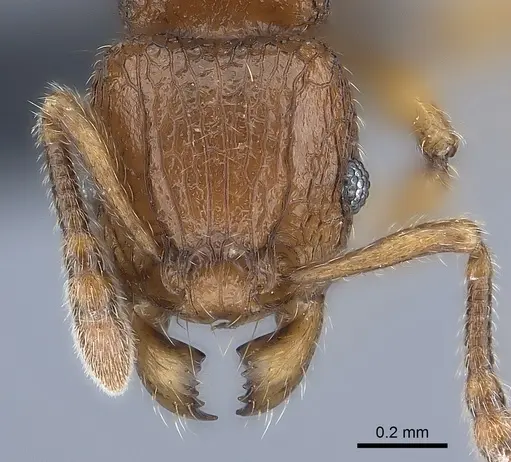
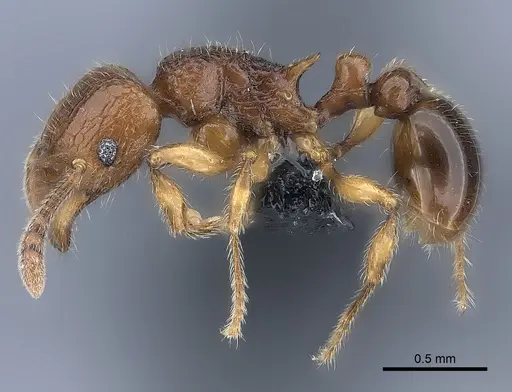
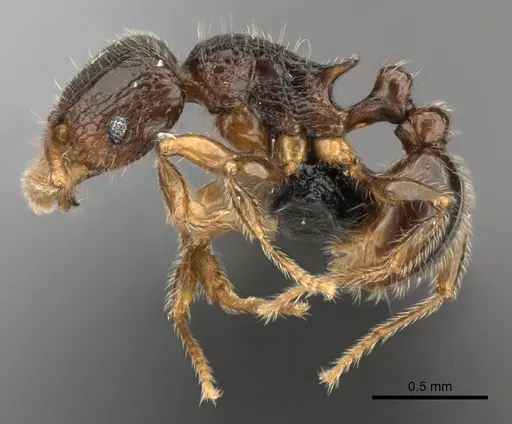
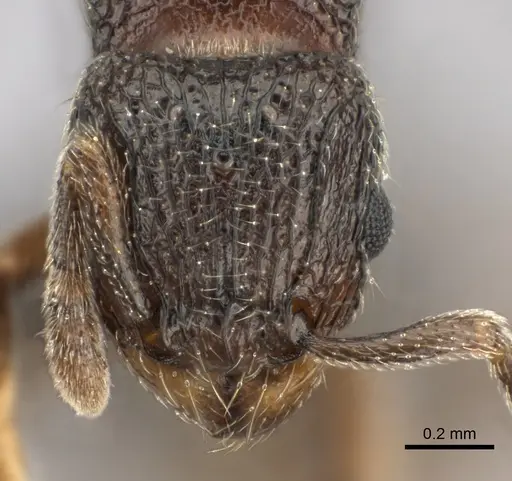
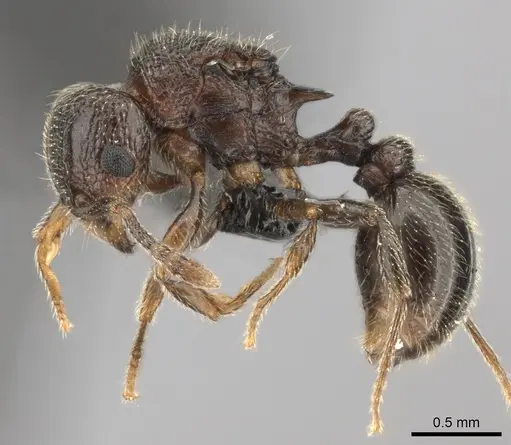
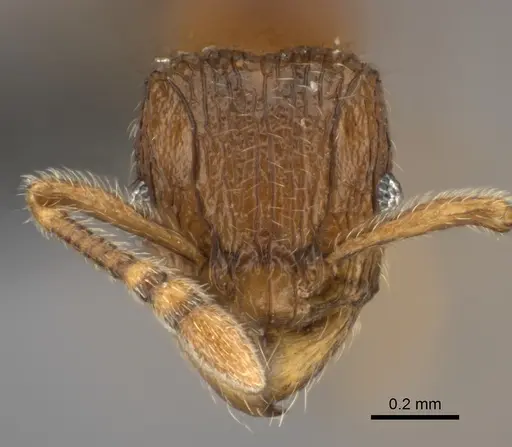
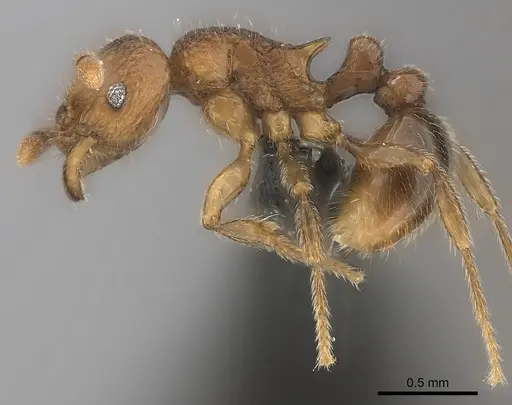
Tetramorium enkidu is a small ant species native to the rainforests of northern Madagascar. Workers measure 0.53-0.62mm in head length and display a distinctive appearance with small to moderate eyes, long propodeal spines, and several long erect hairs on their waist segments [1][2]. Their body coloration ranges from light to dark brown, with lighter-colored mandibles, antennae, and legs. This species belongs to the Tetramorium naganum species group and can be identified by its thick petiolar node that is 1.5-1.7 times higher than long, a feature that separates it from related species like T. gilgamesh and T. naganum [1]. The species name honors Enkidu from the Epic of Gilgamesh, reflecting the researchers' creative approach to taxonomy [1].
These ants inhabit the leaf litter and ground layers of rainforest environments in northern Madagascar, where they live at elevations between 125-1100 meters [2]. As a recently described species (2014), captive husbandry information is limited, but their natural habitat suggests preferences for stable, humid, tropical conditions.
Quick Summary
- Difficulty: Medium
- Origin & Habitat: Northern Madagascar, found in rainforests and montane rainforests from Montagne d'Akirindro through Maroantsetra, Cap Masoala, Ambanitaza, Marojejy, Binara to Montagne d'Ambre at elevations 125-1100m [1][2]
- Colony Type: Unconfirmed, colony structure has not been documented for this species. Most Tetramorium species are monogyne (single queen), but this has not been specifically studied for T. enkidu.
- Size & Growth:
- Queen: Undescribed, no queen measurements available for this species [1]
- Worker: 0.53-0.62mm head length,0.50-0.60mm head width,0.59-0.77mm mesosoma length [1]
- Colony: Unknown, no colony size data available
- Growth: Unknown, no development studies exist for this species. Based on typical Tetramorium patterns, expect moderate growth rate.
- Development: Estimated 6-10 weeks based on genus-level data for related Tetramorium species (Direct development data unavailable. Temperature around 24-28°C likely optimal based on rainforest habitat preferences.)
- Antkeeping:
- Temperature: Keep at 24-28°C, this matches their natural rainforest habitat in northern Madagascar. A slight gradient allows workers to self-regulate. Avoid temperatures below 20°C or above 32°C
- Humidity: High humidity required, aim for 70-85% relative humidity. Keep the nest substrate consistently moist but not waterlogged. Their natural leaf litter habitat stays damp year-round
- Diapause: Unlikely, as a tropical rainforest species from Madagascar, they probably do not require a diapause period. Maintain stable temperatures year-round
- Nesting: Natural nesting occurs in leaf litter and soil [2]. In captivity, a naturalistic setup with moist substrate (like a mixing bowl or dirt-filled formicarium) works well. Y-tong nests are also suitable if kept humid. Provide plenty of hiding spaces and cover since they are small and ground-dwelling.
- Behavior: These are small, ground-dwelling ants that likely forage through leaf litter. They are not aggressive and typically avoid confrontation. Workers are modest in size and may be shy. Escape prevention is important due to their small size, use fine mesh and tight-fitting barriers. They likely form moderate-sized colonies based on typical Tetramorium patterns.
- Common Issues: high humidity needs make mold growth a risk, ensure adequate ventilation while maintaining moisture, small size means escape prevention must be excellent, they can squeeze through tiny gaps, limited availability as a newly described species, may be difficult to acquire, tropical humidity requirements can be challenging to maintain consistently, no established captive breeding lines yet, wild-caught colonies may struggle with captivity
Housing and Nest Setup
Tetramorium enkidu naturally lives in leaf litter and the ground layer of rainforests, so they need a setup that mimics these conditions [2]. A naturalistic terrarium-style setup works best, use a mixing bowl, dirt-filled formicarium, or similar container filled with moist, loose substrate. The substrate should hold humidity well while still allowing some drainage. Add leaf litter, small pieces of bark, and other debris on top to give them cover and foraging space. A Y-tong (AAC) nest can also work if you keep it consistently humid, but they may not use it as readily as a naturalistic setup. Always provide an outworld (foraging area) connected to the nest chamber. Because they are small ants, ensure all connections and barriers are tight, they can escape through surprisingly small gaps.
Feeding and Diet
In the wild, Tetramorium ants are generalist omnivores that scavenge for small insects, honeydew, and other organic matter in the leaf litter. In captivity, offer a varied diet including small live or frozen prey (fruit flies, pinhead crickets, small mealworms) as protein sources. They will likely accept sugar water, honey, or diluted honeydew. Offer protein foods 2-3 times per week and keep a sugar source available constantly. Remove uneaten prey after 24-48 hours to prevent mold. Since they are small ants, food items should be appropriately sized, very small pieces that they can manage. Their foraging in leaf litter suggests they are comfortable hunting small, slow-moving prey.
Temperature and Humidity
As residents of Madagascar's rainforests, these ants need warm, humid conditions. Keep temperatures in the range of 24-28°C, with a slight gradient so workers can move to warmer or cooler areas as needed. A heating cable on one side of the nest can create this gradient. Humidity should stay high at 70-85%, the substrate should feel consistently moist but not waterlogged. Mist the setup regularly and monitor for condensation. However, balance humidity with adequate ventilation to prevent mold growth. Poor ventilation combined with high humidity leads to fungal problems that can kill colonies. A small ventilation hole or mesh top helps maintain air circulation while retaining moisture.
Colony Development
Since Tetramorium enkidu was only described in 2014,there is no published data on their captive development [1]. Based on typical Tetramorium genus patterns, expect claustral founding where the queen seals herself in a chamber and raises the first workers (nanitics) on stored fat reserves. The first workers will be smaller than mature workers. Development from egg to worker likely takes 6-10 weeks at optimal temperature (around 26°C). Colony growth will be moderate, they probably won't reach massive numbers quickly. Be patient with founding colonies and avoid disturbing the queen during the founding phase. Once established, colonies likely reach several hundred workers over time, though exact maximum size is unknown.
Behavior and Temperament
These are small, ground-dwelling ants that likely spend most of their time foraging through the leaf litter layer. They are not particularly aggressive and will typically flee from threats rather than engage. Workers are modest in size and may be somewhat shy. They probably form single-queen colonies based on typical Tetramorium patterns, though this hasn't been confirmed for this species. Their small size means they have many potential predators, so they likely prefer to stay hidden under cover. In captivity, provide plenty of hiding spaces and avoid exposing them to excessive disturbance. They are not known to sting and present no danger to keepers.
Frequently Asked Questions
How long does it take for Tetramorium enkidu to raise their first workers?
The exact timeline is unknown for this species, but based on typical Tetramorium development patterns, expect 6-10 weeks from egg to first worker at optimal temperature (around 26°C). The queen will seal herself in during founding and raise the first brood alone using stored fat reserves.
What temperature do Tetramorium enkidu ants need?
Keep them at 24-28°C to match their natural rainforest habitat in northern Madagascar. A slight temperature gradient allows the ants to self-regulate. Avoid temperatures below 20°C or above 32°C.
Are Tetramorium enkidu ants good for beginners?
This species is rated as Medium difficulty. While not overly demanding, they require high humidity and warm temperatures that can be challenging to maintain consistently. Their small size also requires excellent escape prevention. They may be harder to find since the species was only described in 2014.
Do Tetramorium enkidu ants need hibernation?
No, they likely do not require hibernation. As a tropical rainforest species from Madagascar, they are adapted to year-round warm and humid conditions. Maintain stable temperatures throughout the year.
What do Tetramorium enkidu ants eat?
They are generalist omnivores. Offer small live or frozen prey (fruit flies, small mealworms, pinhead crickets) as protein 2-3 times per week. Keep sugar water, honey, or honeydew available constantly. Size food appropriately for their small workers.
How big do Tetramorium enkidu colonies get?
Colony size is not documented for this species. Based on typical Tetramorium patterns, colonies likely reach several hundred workers at maximum. Growth is moderate, expect gradual expansion rather than rapid colony explosion.
Can I keep multiple Tetramorium enkidu queens together?
This has not been documented for this species. Most Tetramorium species are monogyne (single queen), but some can be polygynous. Until specific data is available, it is not recommended to combine unrelated queens. If you acquire a multi-queen colony, keep them together only if they are already established as a group.
Do Tetramorium enkidu ants sting?
Tetramorium ants have a stinger but are not aggressive and rarely use it. These small ants present no danger to keepers. They will typically flee rather than engage if threatened.
Why are my Tetramorium enkidu ants dying?
Common causes include: low humidity (they need 70-85%), temperatures too cold (below 20°C), mold from poor ventilation, or escape through tiny gaps. Check your setup parameters and ensure the queen is healthy. Wild-caught colonies may also struggle with captivity initially.
References

This caresheet is licensed under CC BY-SA 4.0 .
CASENT0039588
View on AntWeb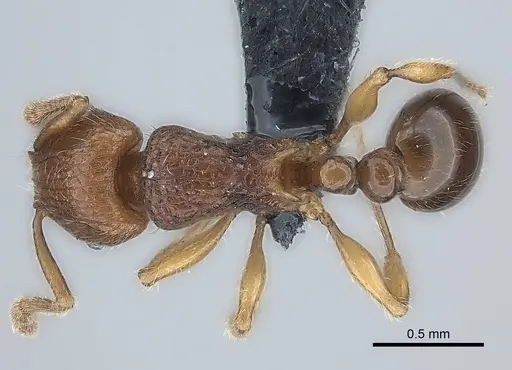
CASENT0045673
View on AntWeb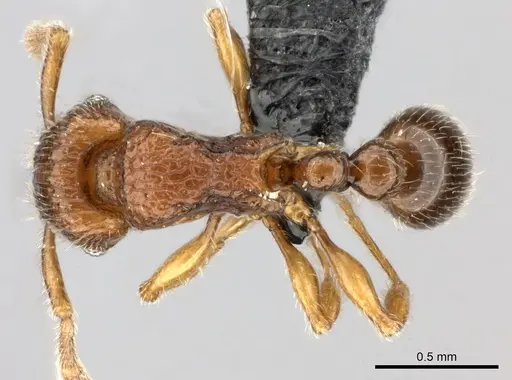
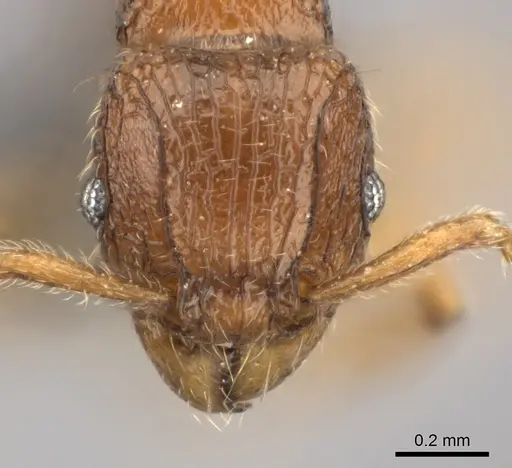
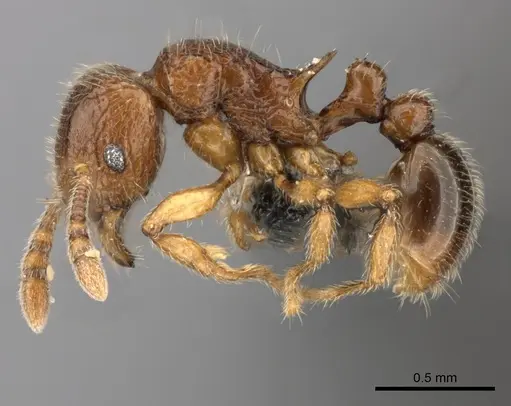
CASENT0056450
View on AntWeb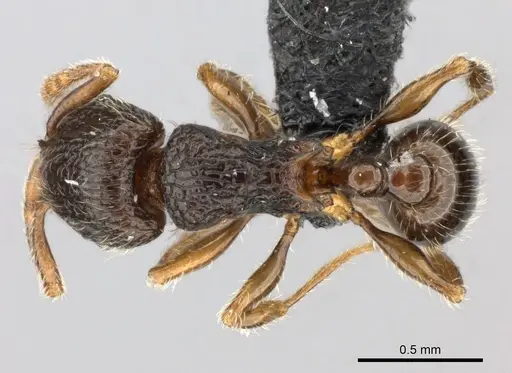
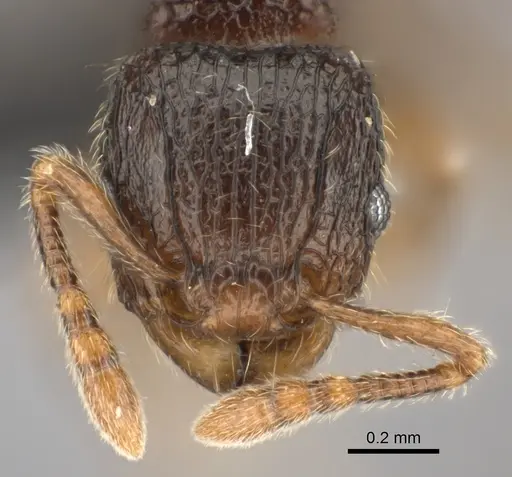
CASENT0056454
View on AntWeb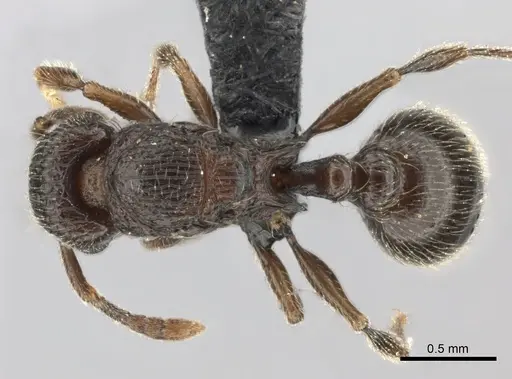
CASENT0404916
View on AntWeb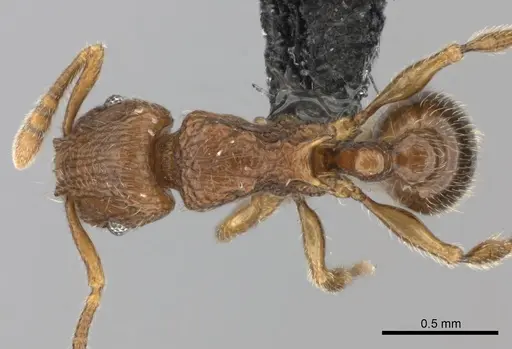
Literature
Loading...Loading products...