

Tetramorium cristatum
- Scientific Name
- Tetramorium cristatum
- Tribe
- Crematogastrini
- Subfamily
- Myrmicinae
- Author
- Stitz, 1910
- Distribution
- Found in 3 countries
Tetramorium cristatum Overview
Tetramorium cristatum is an ant species of the genus Tetramorium. It is primarily documented in 3 countries , including Kenya, Liberia, Nigeria. Detailed taxonomic data and occurrence records can be further explored via authoritative databases such as AntWeb or the Global Biodiversity Information Facility (GBIF).
Tetramorium cristatum
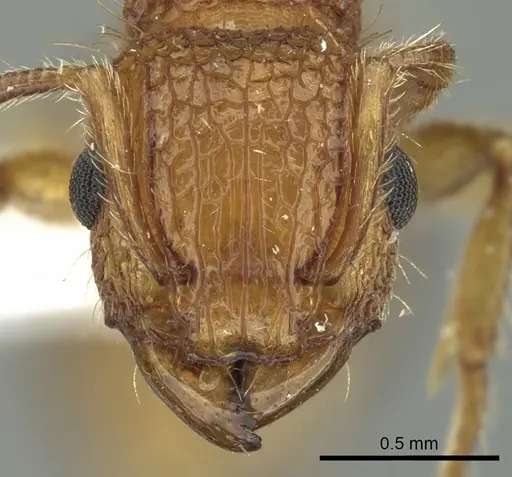
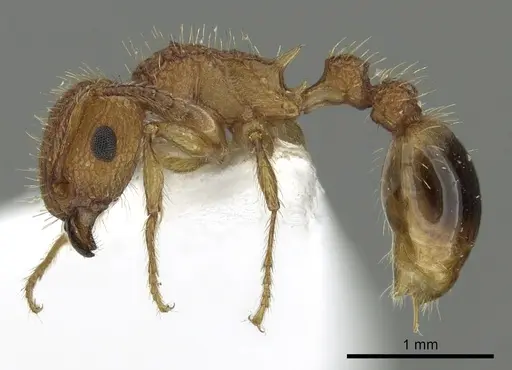
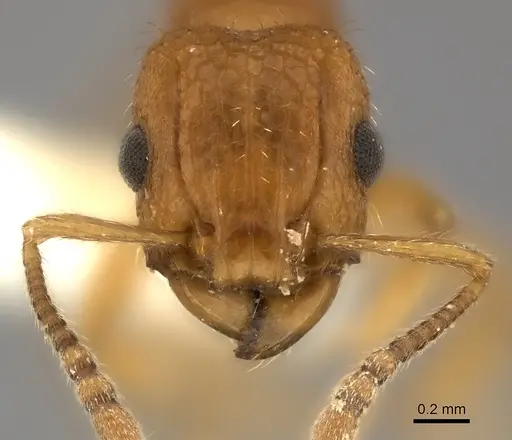
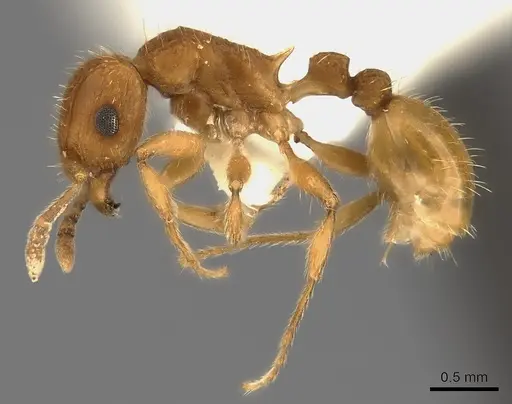
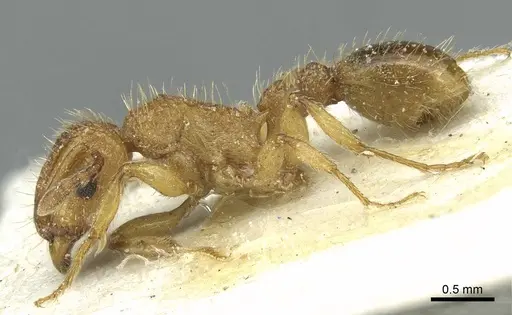
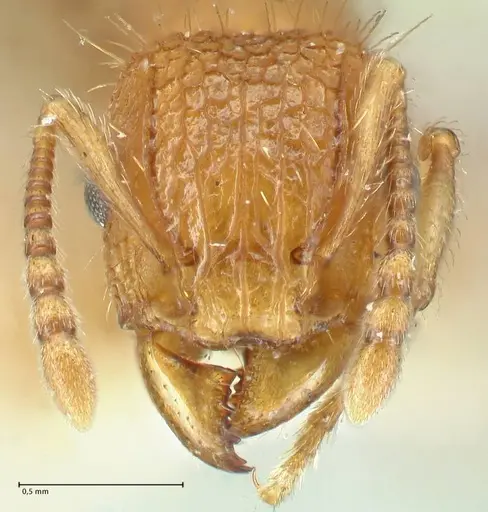
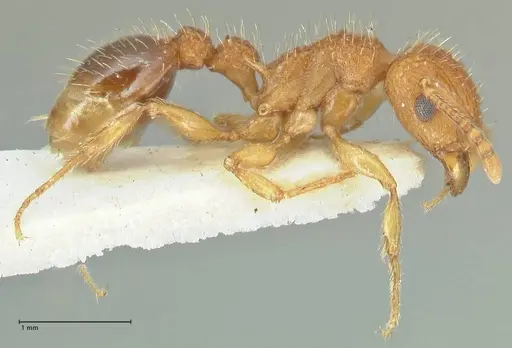
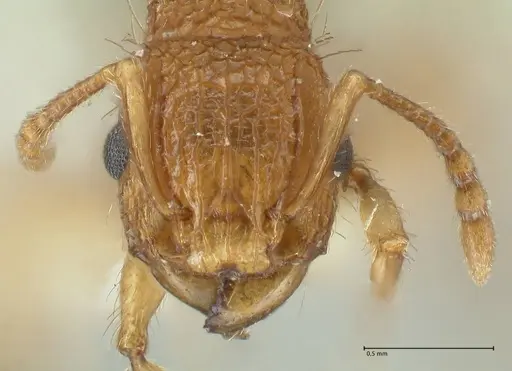
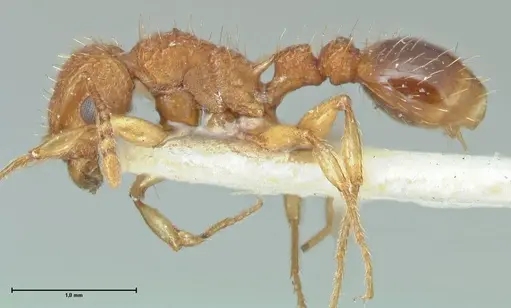
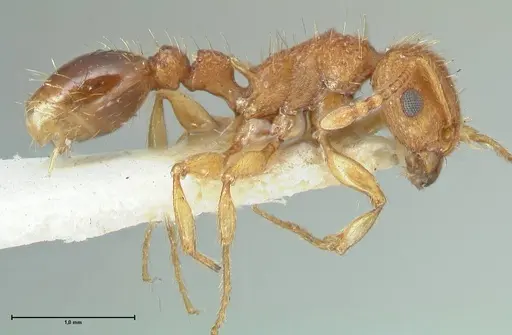
Tetramorium cristatum is a medium-sized African ant belonging to the Myrmicinae subfamily. Workers measure 4-5mm in length with a distinctive two-tone coloration: the head, alitrunk (middle body section), and pedicel (waist segments) range from bright orange-yellow to glossy orange-brown, while the gaster (abdomen) is always much darker, dark brown to blackish brown [1]. This strong color contrast makes them easy to identify, especially when compared to other African Tetramorium species that have more uniform coloring. They belong to the T. cristatum species complex within the Tetramorium bicarinatum species group [1].
These ants are ground-nesting species found in open habitats like savannah and farmland across tropical Africa [1]. They prefer warm conditions and are active foragers, hunting for small prey and tending to honeydew-producing insects. Their colonies are relatively modest in size compared to some other Tetramorium species, and they show typical Myrmicinae behavior with moderate aggression when defending their nest.
Quick Summary
- Difficulty: Medium
- Origin & Habitat: Tropical Africa, found in savannah and farmland environments across multiple countries including Ghana, Ivory Coast, Nigeria, Kenya, Uganda, Tanzania, Zimbabwe, Democratic Republic of Congo, Angola, Sudan, and Togo [1]. All collections have been from ground-level habitats.
- Colony Type: Single-queen colonies (monogyne) are typical for this species, based on typical Tetramorium colony structures in the bicarinatum group.
- Colony: Monogyne
- Founding: Claustral
- Size & Growth:
- Queen: Unconfirmed size, likely similar to other Tetramorium bicarinatum group members at 7-9mm
- Worker: 4-5mm (TL 4.1-5.1mm) [1]
- Colony: Likely several hundred workers based on typical Tetramorium colony sizes
- Growth: Moderate, estimated 6-10 weeks from egg to first worker at optimal temperature
- Development: 6-10 weeks estimated based on related Tetramorium species (Development time depends on temperature, warmer conditions within acceptable range speeds up development)
- Antkeeping:
- Temperature: Keep at 24-28°C, these are tropical ants that need warmth. A heating cable on one side of the nest creates a temperature gradient they can choose between.
- Humidity: Moderate humidity around 50-70%. They come from savannah and farmland where conditions are not extremely wet. Allow the nest substrate to dry partially between water additions.
- Diapause: No, as a tropical species from Africa, they do not require hibernation. Keep them warm year-round.
- Nesting: Ground-nesting species that does well in test tubes, Y-tong (AAC) nests, or plaster nests. Provide a moisture chamber but avoid overly wet conditions.
- Behavior: Active foragers that hunt small insects and tend to honeydew-producing insects like aphids. They show moderate aggression when their nest is disturbed, typical Myrmicinae defensive behavior. Workers are robust and can deliver a mild sting if handled roughly. Escape prevention is important as they are active and will explore gaps, use standard barriers like Fluon on test tube setups.
- Common Issues: colonies may decline if kept too cool, maintain warm temperatures consistently, escape prevention matters, active foragers will explore any gaps in setup, overwatering can cause mold issues, allow partial drying between water additions, slow founding phase, claustral queens need time alone without disturbance, wild-caught colonies may carry parasites that can devastate captive populations
Housing and Nest Setup
Tetramorium cristatum does well in standard ant housing setups. Test tubes work excellently for founding colonies, fill one-third with water, plug with cotton, and place the queen in the dark area. For established colonies, Y-tong (AAC) nests or plaster nests work well. These ants are ground-nesters, so they appreciate a nest chamber they can walk on rather than hang from. If using a formicarium, include an outworld area where foragers can hunt and explore. Escape prevention is important, apply Fluon or similar barriers to test tube rims and any connections between nest areas. A small water tube for drinking is appreciated but not required for founding colonies. [1]
Feeding and Diet
Like most Tetramorium species, T. cristatum is omnivorous. They accept protein sources like small insects (fruit flies, pinhead crickets, mealworms) and will also collect honeydew from aphids if available. Offer sugar water or honey water as an energy source, replace every 2-3 days to prevent fermentation. Feed protein 2-3 times per week, adjusting based on colony size. Remove uneaten prey after 24 hours to prevent mold. For founding colonies, a small drop of honey water is sufficient, the queen doesn't need much until workers arrive.
Temperature and Seasonal Care
These tropical ants need consistent warmth. Keep the nest area at 24-28°C, this range supports good brood development without being excessive. A heating cable placed on one side of the nest creates a gradient that lets ants choose their preferred temperature. Avoid temperatures below 22°C for extended periods as this can slow colony development and weaken the colony. Since they come from tropical Africa, no hibernation or winter cooling is needed. Maintain warm conditions year-round. Monitor for overheating if using heating equipment, never exceed 32°C. [1]
Colony Founding
Queens are claustral, meaning they seal themselves inside a chamber and raise their first workers entirely on stored fat reserves without leaving to forage. Place a newly caught queen in a prepared test tube setup and leave her completely undisturbed in darkness for 4-6 weeks. Do not check on her daily, excessive disturbance can cause her to abandon or eat her eggs. You'll know founding was successful when workers appear. The first workers (nanitics) will be smaller than normal workers but the colony will grow quickly once established. After workers arrive, you can begin offering small food items.
Behavior and Temperament
Workers are active foragers that search for food both on the ground and on low vegetation. They show typical Myrmicinae defensive behavior, if their nest is disturbed, workers will emerge aggressively and may sting. Handle gently and avoid disturbing the nest during the founding phase. They communicate through chemical signals and use pheromone trails to guide nestmates to food sources. Workers live several months, and the colony will gradually grow as the queen continues laying eggs. This species is not particularly skittish, they tend to hold their ground rather than flee when confronted. [1]
Frequently Asked Questions
How long does it take for Tetramorium cristatum to raise first workers?
Expect 6-10 weeks from egg to first worker at optimal temperature (24-28°C). The exact timing depends on temperature, warmer conditions within the acceptable range speed up development. The claustral queen seals herself in and raises the first brood alone, so be patient and avoid disturbing her during this critical period.
Can I keep multiple Tetramorium cristatum queens together?
Not recommended. This species forms single-queen colonies (monogyne). Combining unrelated queens typically results in fighting and colony failure. If you catch multiple founding queens, house them separately from the start.
Do Tetramorium cristatum ants sting?
Yes, they can sting. As Myrmicinae ants, they have a functional stinger and may use it if handled roughly or if their nest is severely disturbed. The sting is mild compared to some other ants, but sensitive individuals may experience localized irritation. Simply handle them gently and avoid provoking defensive responses.
What temperature do Tetramorium cristatum ants need?
Keep them at 24-28°C. These are tropical ants from African savannah and farmland, so they need consistent warmth. A heating cable on part of the nest creates a gradient they can regulate themselves. Avoid temperatures below 22°C for extended periods.
Are Tetramorium cristatum ants good for beginners?
They are moderate difficulty. The main challenges are maintaining warm temperatures consistently and providing appropriate protein foods. They are not as forgiving as some common temperate species, but their straightforward diet and typical ant behaviors make them manageable for keepers with some basic antkeeping experience.
How big do Tetramorium cristatum colonies get?
Based on related species in the bicarinatum group, colonies likely reach several hundred workers. They are not among the largest Tetramorium species, but a healthy established colony will still have impressive worker numbers.
Do Tetramorium cristatum ants need hibernation?
No. As a tropical African species, they do not require hibernation or winter cooling. Keep them warm year-round at 24-28°C. Attempting to cool them for winter can stress or kill the colony.
What do Tetramorium cristatum ants eat?
They are omnivorous. Offer small insects (fruit flies, pinhead crickets, mealworms) as protein 2-3 times per week, and provide sugar water or honey water as a constant energy source. They will also tend to aphids if given access to them.
When should I move my Tetramorium cristatum colony to a formicarium?
Wait until the colony has 50-100 workers before moving to a larger setup. Before then, a test tube or small Y-tong nest works fine. When moving, connect the new nest to the old one and let workers migrate on their own, do not force the move.
Why are my Tetramorium cristatum workers dying?
Common causes include: temperature too low (keep above 22°C), mold from overwatering or uneaten food, parasites from wild-caught colonies, or disturbance during founding. Check temperature first, then review your feeding and humidity practices. Remove uneaten prey promptly.
References

This caresheet is licensed under CC BY-SA 4.0 .
CASENT0217222
View on AntWeb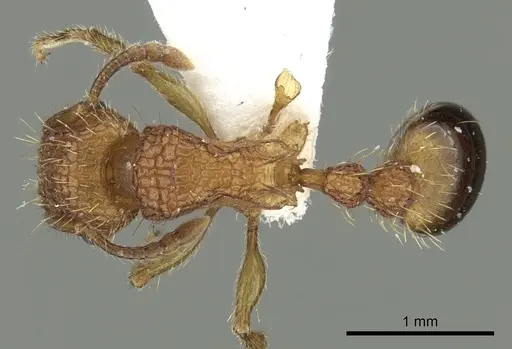
CASENT0217966
View on AntWeb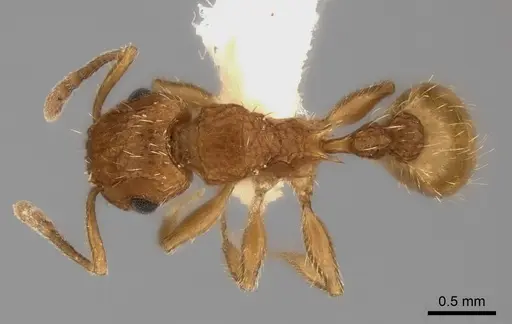
CASENT0915002
View on AntWeb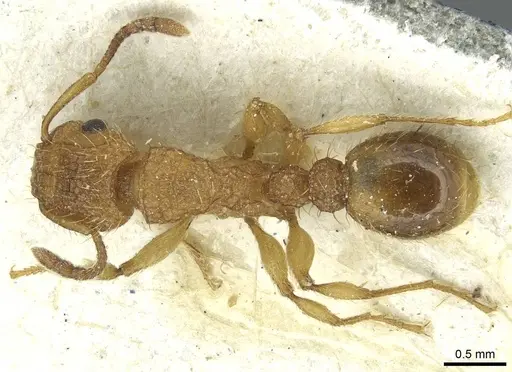
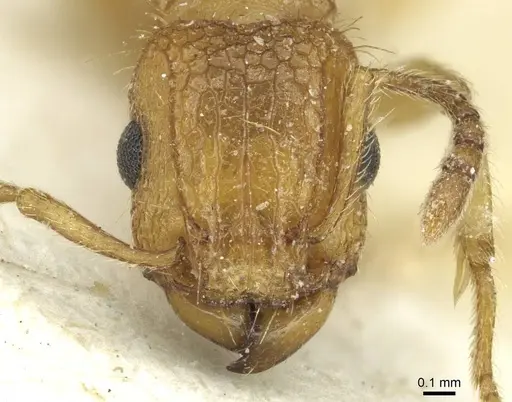
FOCOL2096
View on AntWeb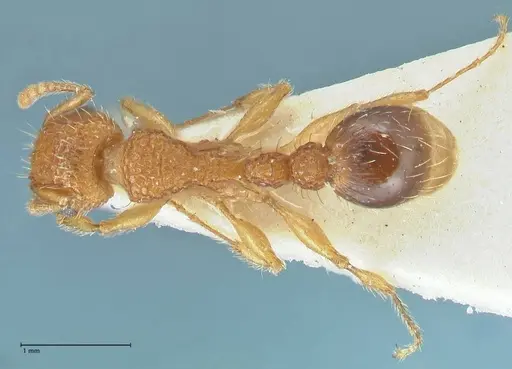
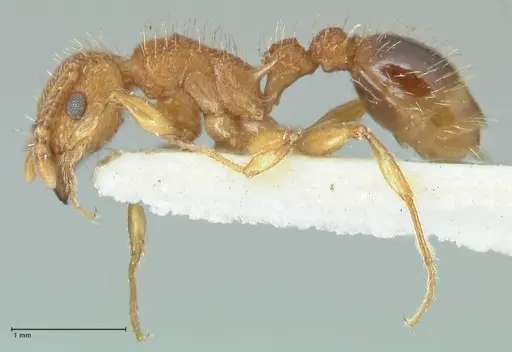
FOCOL2097
View on AntWeb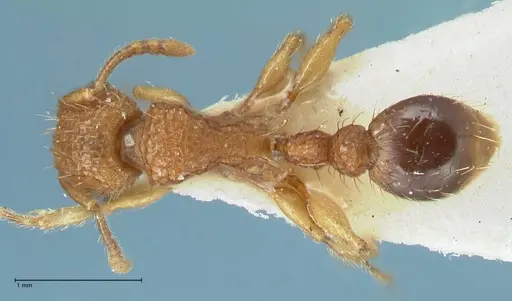
Literature
Loading...Loading products...