

Tetramorium browni
- Scientific Name
- Tetramorium browni
- Tribe
- Crematogastrini
- Subfamily
- Myrmicinae
- Author
- Bolton, 1980
- Distribution
- Found in 2 countries
Tetramorium browni Overview
Tetramorium browni is an ant species of the genus Tetramorium. It is primarily documented in 2 countries , including Côte d'Ivoire, Liberia. Detailed taxonomic data and occurrence records can be further explored via authoritative databases such as AntWeb or the Global Biodiversity Information Facility (GBIF).
Tetramorium browni
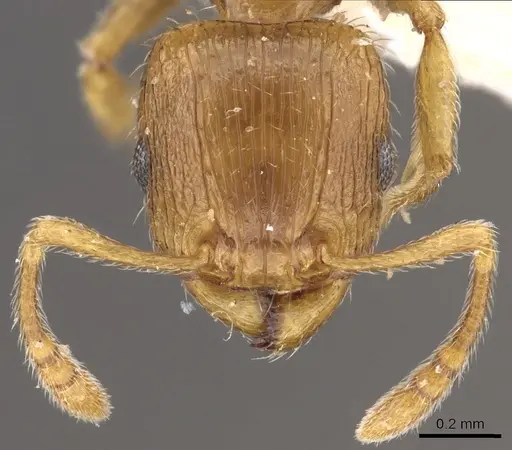
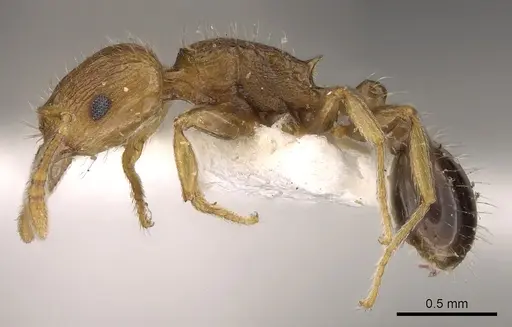
Tetramorium browni is a small, yellowish ant species belonging to the Tetramorium camerunense species group in the Crematogastrini tribe. Workers measure just 2.6-2.9mm in length and have a distinctive appearance with smooth mandibles, glossy yellow body, and a brown gaster (abdomen). The species is arboreal, living in rainforest and forest habitats where it nests in rotting wood in trees. The most notable physical feature is the long, fine, acute hairs on the dorsal alitrunk (middle body section) that are distinctly longer than the maximum diameter of the eye. This species was described by Bolton in 1980 from Ghana, where the type specimens were collected from a rotten log.
This ant is part of a complex of four yellowish species (others are dark brown), and can be distinguished from similar species by its smooth mandibular blades and the characteristic long hairs on the alitrunk. Being arboreal, they have different housing needs than ground-nesting Tetramorium species, they prefer vertical spaces and climbing structures rather than horizontal nest chambers.
Quick Summary
- Difficulty: Medium
- Origin & Habitat: Ghana in the Afrotropical region. This species lives in rainforest and other forest habitats, where it is arboreal, meaning it lives in trees rather than on the ground. Type specimens were collected from a rotten log in a forested area.
- Colony Type: Colony structure is unconfirmed for this species. Based on typical Tetramorium patterns, it is likely monogyne (single queen colonies), though this has not been directly documented.
- Size & Growth:
- Queen: Undocumented, queen measurements not available in primary literature
- Worker: 2.6-2.9mm
- Colony: Unknown, no colony size data available
- Growth: Unknown, no development data available for this species
- Development: Estimated 6-8 weeks based on typical Tetramorium genus patterns at optimal temperature (No direct development data exists for this species. Estimates based on related Tetramorium species which typically complete development in 6-8 weeks at room temperature.)
- Antkeeping:
- Temperature: Keep at room temperature, roughly 20-26°C. No specific thermal requirements documented, so standard ant room conditions work well. A gentle gradient is beneficial.
- Humidity: Moderate to high humidity, being arboreal and from rainforest habitat, they prefer damp conditions. Keep nest substrate moist but not waterlogged.
- Diapause: Unknown, no documented hibernation requirements. As a species from Ghana (tropical), they may not require a true diapause period.
- Nesting: Arboreal species, requires vertical nesting options. Rotten log pieces, cork bark, or vertical acrylic nests work well. Provide climbing structures and branches. Test tubes can work but should be positioned horizontally or with vertical orientation.
- Behavior: This is a small, generally peaceful species. Workers are active foragers that will search for food throughout their enclosure. Being arboreal, they are good climbers and may escape if given the opportunity. They are not aggressive and can be handled gently. Their small size (under 3mm) means escape prevention is important, use fine mesh barriers and secure lids.
- Common Issues: escape prevention is critical due to their very small size, they can squeeze through tiny gaps, no documented care requirements means keepers must adapt from related species, humidity control is important, too dry can be fatal, too wet causes mold, arboreal nature requires vertical space and climbing structures, horizontal-only nests are unsuitable, slow colony growth is typical for small species, patience is required
Housing and Nest Setup
Tetramorium browni requires arboreal-style housing rather than typical horizontal formicarium setups. In the wild, these ants live in rotting wood in trees, so captivity should reflect this. Vertical acrylic nests, cork bark setups, or Y-tong nests with narrow chambers work well. Provide plenty of climbing structures like branches, twigs, or artificial plants. The outworld (foraging area) should also allow for vertical exploration, you can create a naturalistic setup with cork bark pieces leaning against walls or arranged vertically. Test tubes can work if positioned horizontally with a cotton barrier, but vertical space is essential for their natural behavior. Ensure escape prevention is excellent, these tiny ants (under 3mm) can escape through remarkably small gaps. Use fine mesh on any ventilation holes and check all seams regularly.
Feeding and Diet
Like most Tetramorium species, T. browni is omnivorous and will accept a variety of foods. Offer protein sources such as small insects (fruit flies, pinhead crickets, small mealworms), and sugar sources like honey water or sugar water. In nature, arboreal ants often tend aphids or collect honeydew, so they may accept sweet liquids readily. Feed small amounts every 2-3 days, removing uneaten food promptly to prevent mold. Since this species has not been kept in captivity extensively, acceptance of various foods may need to be observed individually. Start with standard ant foods (sugar water, small insects) and experiment with other options. Always provide fresh water.
Temperature and Humidity
Room temperature (20-26°C) is suitable for this species, with no special heating required in most homes. Being from Ghana (tropical Africa), they prefer warmth but can tolerate typical room temperatures. Humidity is more critical, as an arboreal rainforest species, they need moderate to high humidity. Keep the nest substrate consistently moist but not waterlogged. A humidity range of 60-80% is appropriate. Monitor for condensation and drying. If using a test tube setup, ensure the water reservoir is adequate but not excessive. Mist the outworld occasionally, especially in drier climates. Avoid placing the nest near heating elements that could dry it out.
Colony Founding and Growth
Queen measurements and founding behavior have not been documented in scientific literature for this species. Based on typical Tetramorium patterns, founding is likely claustral, the queen seals herself in a chamber and lives off stored fat reserves until her first workers (nanitics) emerge. Workers measure 2.6-2.9mm, making them quite small. Colony growth is expected to be slow initially, as is typical with small species. The first workers will be nanitics (smaller than mature workers) and may take 6-8 weeks to develop based on genus-level estimates. Once established, colonies may grow to moderate sizes, though maximum colony size is unknown for this species. Patience is essential, small species often take months to establish visible populations.
Behavior and Temperament
Tetramorium browni workers are small, active, and generally peaceful. They are not aggressive and do not have functional stingers (Myrmicinae tribe Crematogastrini does not have potent stingers, they may bite but it is not dangerous to humans). Workers are good climbers and will explore vertical spaces readily. They are arboreal by nature, so they prefer to travel along branches and surfaces rather than across open ground. Colony activity levels are moderate, they will forage actively but are not hyperactive. These ants are suitable for observation but may not display dramatic behaviors. Their small size and yellowish coloration make them visually distinctive in the ant-keeping hobby.
Frequently Asked Questions
How long does it take for Tetramorium browni to have first workers?
Exact timing is unknown as this species has not been studied in captivity. Based on typical Tetramorium genus patterns, expect 6-10 weeks from egg to first worker at room temperature (around 22-25°C). This is an estimate, actual timing may vary.
What size colony does Tetramorium browni reach?
Maximum colony size is unknown. Based on worker size (2.6-2.9mm) and typical Tetramorium patterns, colonies likely reach several hundred workers at most. Small species tend to have smaller maximum colony sizes.
Can I keep Tetramorium browni in a test tube?
Yes, test tubes can work for founding colonies and small colonies. However, being arboreal, they will do better with vertical climbing structures added to the setup. A test tube with a small piece of cork bark or twig inside provides climbing enrichment.
Do Tetramorium browni ants sting?
Myrmicinae ants like Tetramorium have stingers but their sting is not medically significant. These small ants may bite if threatened, but they are not aggressive and pose no danger to humans.
What do Tetramorium browni eat?
They are omnivorous. Offer small insects (fruit flies, small crickets, mealworms) for protein and sugar water or honey water for carbohydrates. They may also accept other sweet liquids. Feed every 2-3 days and remove uneaten food.
Are Tetramorium browni good for beginners?
This species is rated as medium difficulty. While not aggressive, there is limited captive care information available since it is not commonly kept. Beginners may want to start with more documented species like Tetramorium caespitum or other well-established pet ants.
Do Tetramorium browni need hibernation?
Hibernation requirements are unknown. As a species from Ghana (tropical Africa), they likely do not require a true diapause. Room temperature over winter should be sufficient. Monitor colony activity, if they remain active, no special cooling is needed.
Why are my Tetramorium browni escaping?
Their small size (under 3mm) makes them excellent escape artists. Check all barriers, lids, and ventilation holes. Use fine mesh (at least 0.5mm or smaller) and seal any gaps. Even tiny gaps that would not concern larger ants will allow these tiny workers to escape.
When should I move Tetramorium browni to a formicarium?
Move to a larger setup when the colony reaches roughly 30-50 workers or when the test tube becomes crowded. For arboreal species, ensure the new setup provides vertical space and climbing opportunities. A naturalistic or Y-tong setup works well.
Can I keep multiple Tetramorium browni queens together?
Colony structure is unconfirmed for this species. Combining unrelated queens is not recommended as it has not been documented and could result in fighting. Single-queen colonies are the safest approach.

This caresheet is licensed under CC BY-SA 4.0 .
CASENT0901208
View on AntWeb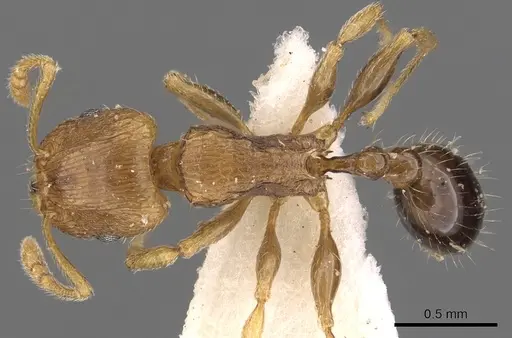
Literature
Loading...Loading products...