

Tetramorium ala
- Scientific Name
- Tetramorium ala
- Tribe
- Crematogastrini
- Subfamily
- Myrmicinae
- Author
- Hita Garcia & Fisher, 2012
- Distribution
- Found in 1 countries
Tetramorium ala Overview
Tetramorium ala is an ant species of the genus Tetramorium. It is primarily documented in 1 countries , including Madagascar. Detailed taxonomic data and occurrence records can be further explored via authoritative databases such as AntWeb or the Global Biodiversity Information Facility (GBIF).
Tetramorium ala
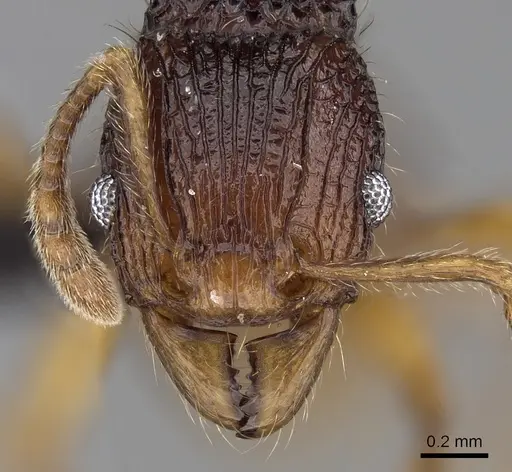
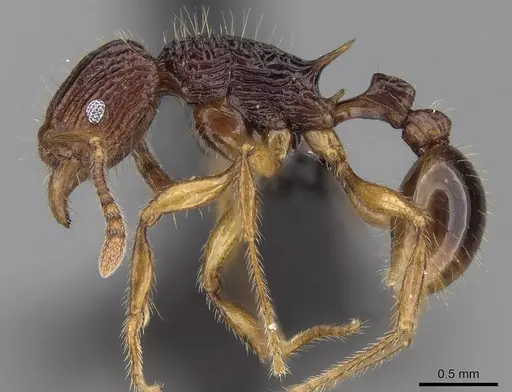
Tetramorium ala is a small ant species native to Madagascar, measuring approximately 1mm in worker length. Workers have a distinctive bright orange to orange-brown coloration with long propodeal spines and a rectangular petiolar node. This species belongs to the Tetramorium andrei species complex within the Tortuosum group, characterized by its moderately sized eyes and longitudinal rugae on the head and mesosoma. The species is only known from Montagne d'Anjanaharibe in northeastern Madagascar, where it was collected in montane rainforest leaf litter at 1100m elevation [1].
This is a leaf-litter dwelling species from a high-elevation tropical rainforest environment. Like other Tetramorium, they are ground-nesting ants that likely form moderate-sized colonies. The montane habitat suggests they prefer cooler, humid conditions compared to lowland tropical ants.
Quick Summary
- Difficulty: Medium
- Origin & Habitat: Montagne d'Anjanaharibe, northeastern Madagascar, montane rainforest at 1100m elevation. Specimens collected from leaf litter [1][2].
- Colony Type: Unconfirmed. Most Tetramorium species are single-queen (monogyne) colonies, but colony structure has not been documented for this specific species.
- Size & Growth:
- Queen: Estimated 6-8mm based on genus patterns [2]
- Worker: 0.88-1.01mm [1]
- Colony: Unknown, likely 100-500 workers based on similar Tetramorium species [2]
- Growth: Moderate, inferred from tropical Tetramorium patterns
- Development: Estimated 6-8 weeks at optimal temperature based on genus patterns [2] (Direct development data unavailable, estimate based on related Tetramorium species)
- Antkeeping:
- Temperature: Keep around 22-25°C. The montane origin suggests they prefer cooler conditions than typical tropical ants, avoid temperatures above 28°C [2].
- Humidity: High humidity preferred (70-80%). Montane rainforest environment is consistently damp. Keep substrate moist but not waterlogged [2].
- Diapause: Unlikely, tropical species from consistent climate. No winter dormancy expected [2].
- Nesting: Naturalistic setup with leaf litter and moist substrate works well. Y-tong or plaster nests with small chambers are suitable alternatives. Provide deep substrate for tunneling [2].
- Behavior: Likely generalist foragers based on genus patterns. Workers are small (~1mm) so escape prevention is important, use fine mesh barriers. Non-aggressive temperament typical of the genus. May show moderate foraging activity in the outworld.
- Common Issues: limited data means care requirements are partly inferred, monitor colony response and adjust, small worker size requires fine mesh barriers to prevent escapes, high humidity needs must be balanced with ventilation to prevent mold, tropical species may be sensitive to temperature extremes, wild-caught colonies may carry parasites, quarantine and observe
Housing and Nest Setup
For such a small leaf-litter species, a naturalistic terrarium-style setup works best. Use a layer of moist soil or coconut fiber as substrate (at least 5cm deep), topped with dried leaves and pieces of bark to simulate their natural leaf-litter environment. This gives workers plenty of hiding spots and foraging opportunities. Alternatively, a Y-tong nest with small chambers or a plaster nest with good moisture retention works well. Because workers are only about 1mm long, ensure all connections and barriers use fine mesh, these tiny ants can squeeze through standard escape barriers meant for larger species. A water tube connected to the nest helps maintain humidity [2].
Feeding and Diet
Tetramorium ala is likely a generalist forager like other species in the genus. Offer protein sources such as small insects (fruit flies, pinhead crickets, mealworms), and provide sugar water or honey as an energy source. In a naturalistic setup, they will scavenge through the leaf litter for small arthropods and detritus. Feed every 2-3 days, removing uneaten prey after 24 hours to prevent mold. A constant sugar source (honey water or sugar water) should be available. Observe your colony's preferences, some Tetramorium favor protein while others take more sugar [2].
Temperature and Humidity
The montane rainforest origin of this species is key to its temperature needs. Aim for 22-25°C, cooler than typical tropical ants prefer. Avoid temperatures above 28°C, as this could stress or kill the colony. Use a heating cable only if room temperature falls below 20°C, and place it on one side of the nest to create a gradient. For humidity, maintain 70-80% relative humidity. The substrate should feel consistently moist but never waterlogged. Mist occasionally and use a water tube in the nest to maintain moisture. Good ventilation is essential to prevent mold while maintaining humidity [2].
Colony Development
Direct development data for this species does not exist. Based on typical Tetramorium patterns, expect 6-8 weeks from egg to first worker at optimal temperature (22-25°C). The first workers (nanitics) will be smaller than mature workers. Growth rate is moderate, colonies expand gradually over months rather than exploding in size. Founding colonies should be left undisturbed in their test tube setup until workers appear, then fed minimally. Once the colony reaches 20-30 workers, you can consider moving to a formicarium if desired. Colonies likely max out at a few hundred workers based on similar species [2].
Seasonal Care
As a tropical species from a consistent montane climate, T. ala does not require hibernation or diapause. Maintain stable temperatures year-round without seasonal drops. Room temperature in most homes (20-24°C) should be suitable. Avoid placing the colony near air conditioning vents or drafty windows that could cause temperature fluctuations. The main seasonal consideration is humidity, dry winter air in heated homes may require more frequent misting or larger water reservoirs [2].
Frequently Asked Questions
How long does it take for Tetramorium ala to produce first workers?
Direct data is unavailable, but based on genus patterns expect 6-8 weeks from egg to worker at optimal temperature (22-25°C). The first workers will be nanitics, smaller than mature workers. Be patient during founding as the queen needs time to lay eggs and raise the first brood [2].
What size colony does Tetramorium ala reach?
Colony size has not been documented for this species. Based on similar Tetramorium species, expect colonies of 100-500 workers. This is a small to medium-sized colony for the genus. Growth is gradual over many months [2].
Do Tetramorium ala ants sting?
Tetramorium ants have a functional stinger in the Myrmicinae subfamily. However, given their tiny size (1mm workers), any sting would be negligible to humans. They are not considered dangerous or aggressive [2].
Can I keep Tetramorium ala in a test tube?
Yes, test tubes work well for founding colonies. Use a small test tube with a water reservoir (cotton ball) to maintain humidity. Cover the opening with fine mesh (at least 0.5mm or finer) because these tiny ants can escape through standard barriers. Keep the tube in a dark, quiet location until workers emerge [2].
What temperature do Tetramorium ala need?
Keep them at 22-25°C. The montane origin suggests they prefer cooler conditions than typical tropical ants, avoid temperatures above 28°C. Room temperature in most homes is suitable. Use a heating cable only if needed to maintain warmth [1][2].
Do Tetramorium ala need hibernation?
No. As a tropical species from Madagascar's consistent climate, they do not require hibernation or winter dormancy. Maintain stable temperatures year-round. This differs from temperate Tetramorium species which do need a winter rest period [2].
Are Tetramorium ala good for beginners?
This species is not ideal for complete beginners due to limited species-specific data and their small size requiring careful escape prevention. However, antkeepers with some experience keeping tropical species should find them manageable. The main challenges are maintaining high humidity and providing appropriate small prey [2].
What do Tetramorium ala eat?
Like other Tetramorium, they are generalist feeders. Offer small insects (fruit flies, tiny crickets, mealworms) for protein and sugar water or honey for carbohydrates. They will scavenge through leaf litter in a naturalistic setup. Feed protein 2-3 times per week and keep a constant sugar source available [2].
Why are my Tetramorium ala escaping?
Workers are only about 1mm long, they can squeeze through tiny gaps that larger ants cannot. Use fine mesh (0.5mm or finer) on all openings and check for any gaps in your setup. Even standard fluon barriers may need reinforcement for such small ants. Inspect all connections between the nest and outworld [2].
When should I move Tetramorium ala to a formicarium?
Wait until the colony has at least 30-50 workers and is actively foraging in the outworld. Moving too early can stress the queen and cause colony decline. In a naturalistic setup, they may do well without ever moving to a formal formicarium, the leaf litter layer serves as their foraging area [2].
References

This caresheet is licensed under CC BY-SA 4.0 .
CASENT0038393
View on AntWeb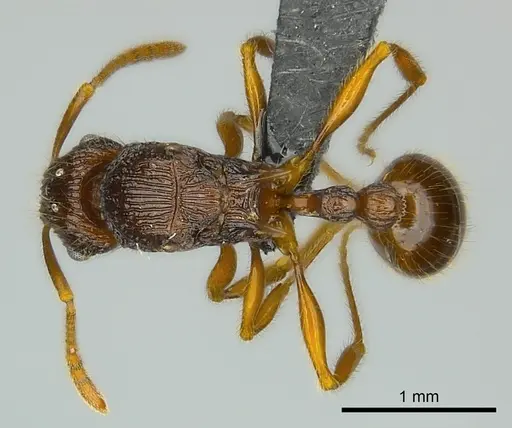
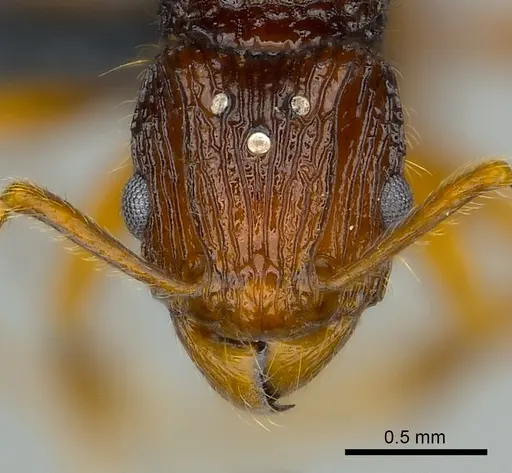
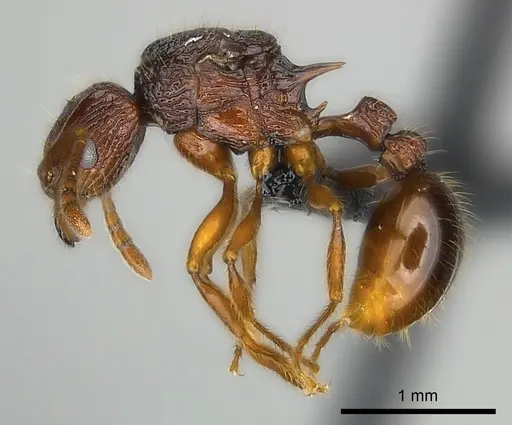
CASENT0038473
View on AntWeb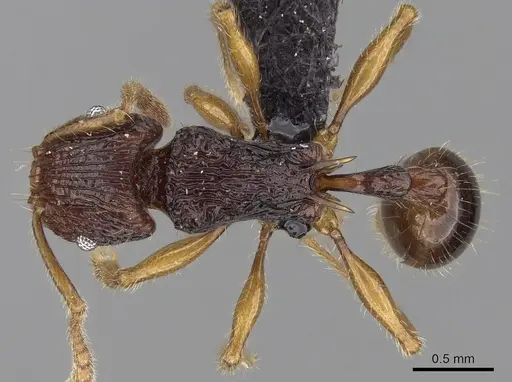
Literature
Loading...Loading products...