

Temnothorax pseudandrei
- Scientific Name
- Temnothorax pseudandrei
- Tribe
- Crematogastrini
- Subfamily
- Myrmicinae
- Author
- Snelling <i>et al.</i>, 2014
- Distribution
- Found in 1 countries
Temnothorax pseudandrei Overview
Temnothorax pseudandrei is an ant species of the genus Temnothorax. It is primarily documented in 1 countries , including United States of America. Detailed taxonomic data and occurrence records can be further explored via authoritative databases such as AntWeb or the Global Biodiversity Information Facility (GBIF).
Temnothorax pseudandrei
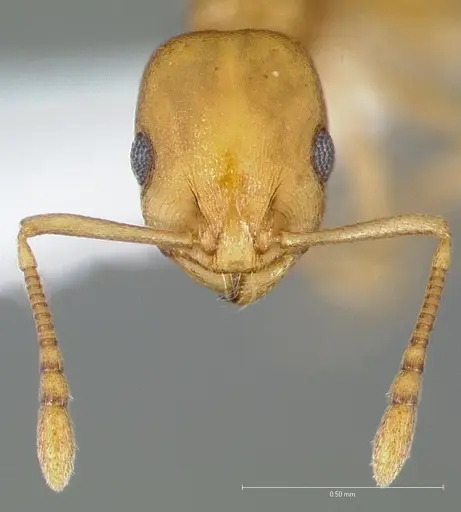
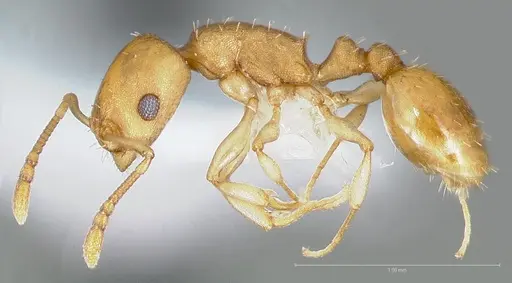
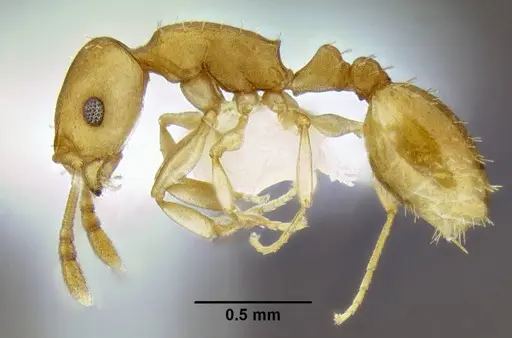
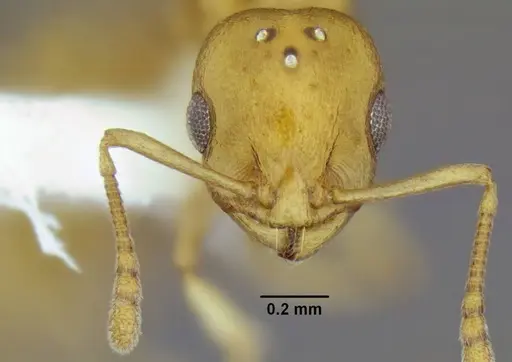
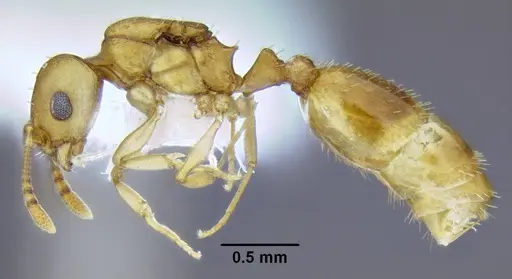
Temnothorax pseudandrei is a tiny arboreal ant species native to the southwestern United States, specifically Arizona and California [1]. Workers measure just 2.5-3mm and are uniformly pale yellow to reddish yellow, with a slightly darker gaster [1][2]. This species was only described in 2014 and gets its name from its close resemblance to the more common ground-dwelling Temnothorax andrei, 'pseudandrei' literally means 'false andrei' [1]. Unlike its cousin, T. pseudandrei is arboreal, nesting under tree bark in riparian areas. The species has a short, broad subpetiolar process and lacks the erect head setae that T. andrei displays [2]. This is a rarely kept species in captivity, and much of its biology remains unstudied.
Quick Summary
- Difficulty: Medium
- Origin & Habitat: Southwestern United States (Arizona, California). Found in riverine gallery forests and desert habitats, nesting under bark of Fremont cottonwood (Populus fremontii) and desert willow (Chilopsis linearis) [1][2].
- Colony Type: Single-queen (monogyne) colonies. Colony structure is not well-documented in scientific literature.
- Colony: Monogyne
- Founding: Claustral
- Size & Growth:
- Queen: Approximately 3.5-4mm (WL 0.995mm) [2]. Signal: directly measured.
- Worker: 2.5-3mm (WL 0.627-0.715mm) [1][2]. Signal: directly measured.
- Colony: Unknown for this species. Typical Temnothorax colonies reach dozens to a few hundred workers. Signal: estimated from genus patterns.
- Growth: Moderate. Signal: estimated from genus patterns.
- Development: 6-10 weeks. Signal: inferred from typical Temnothorax genus development [1]. (Development time is estimated based on related Temnothorax species. Specific data for T. pseudandrei is not available.)
- Antkeeping:
- Temperature: Aim for room temperature around 20-24°C. This species comes from temperate regions with seasonal temperature variation, so a mild temperature gradient is appropriate. Signal: condition-based inference from habitat [1].
- Humidity: Moderate humidity. As an arboreal nester in bark, they prefer conditions similar to tree-dwelling ants, not as damp as ground-nesting species but not completely dry either. Keep nest material slightly moist but allow some drying between waterings. Signal: inferred from arboreal nesting behavior [1].
- Diapause: Yes. This species is native to temperate Arizona and California, so a winter rest period is likely needed. Keep at 10-15°C for 2-3 months during winter. Signal: inferred from geographic range and temperate climate [1].
- Nesting: Arboreal nester, in the wild they live under tree bark. For captivity, a naturalistic setup with bark, twigs, or cork works well. You could also use a Y-tong (AAC) nest with narrow chambers. Avoid large, open spaces, they prefer tight, enclosed spaces typical of bark crevices. Signal: inferred from natural nesting behavior [1].
- Behavior: Temperament is typical of small Temnothorax, generally peaceful and non-aggressive. Workers are active foragers. Escape prevention is critical due to their very small size, they can squeeze through the tiniest gaps. Use fine mesh and tight-fitting lids. Signal: inferred from genus behavior and size.
- Common Issues: escape prevention is critical, they are tiny and will find any gap, slow colony growth means beginners may lose patience and overfeed, wild-caught colonies may have parasites that kill them in captivity, arboreal setup may be unfamiliar to keepers used to ground-nesting ants, limited available care information, much is inferred from genus patterns
Housing and Nest Setup
Temnothorax pseudandrei is an arboreal species, meaning they naturally live in tree bark rather than underground [1]. For captive care, you have a few good options. A naturalistic setup with pieces of cork bark, twigs, or small log sections works well, the ants will nest in the crevices between bark layers. Alternatively, a Y-tong (AAC) formicarium with narrow chambers mimics the tight spaces they prefer in the wild. Avoid large, open acrylic nests, these tiny ants feel exposed in big chambers and may not settle. Keep the nest vertically oriented if possible, as they naturally live up in trees. A small outworld connected to the nest allows for foraging space.
Feeding and Diet
Like most Temnothorax, these ants are omnivorous. They likely forage for small insects, honeydew, and nectar in the wild. In captivity, offer a mix of protein and sugar sources. Small live prey like fruit flies, pinhead crickets, or springtails works well for protein. For sugars, offer diluted honey water, sugar water, or small drops of honey. Feed protein 2-3 times per week and keep sugar water available constantly. Remove any uneaten prey after 24 hours to prevent mold. Because they are so small, portion sizes should be tiny, a drop of honey water and a few fruit flies is plenty for a growing colony.
Temperature and Seasonal Care
Keep your colony at room temperature, ideally around 20-24°C. This species comes from Arizona and California, which have mild winters but distinct seasonal temperature changes. During the summer active season, normal room temperature is fine. In winter, they need a diapause (winter rest) period. Reduce temperatures to 10-15°C for 2-3 months, typically from late fall through early spring. You can accomplish this by moving the colony to a cooler location like an unheated garage or basement, or using a small refrigerator-friendly formicarium. Do not feed during diapause and keep moisture available but minimal. This rest period helps maintain natural colony cycles and promotes healthy reproduction. [1]
Handling and Escape Prevention
Due to their extremely small size, escape prevention is the most critical aspect of keeping T. pseudandrei. These ants are barely 2.5-3mm long and can squeeze through gaps that would stop larger ants. Use only fine mesh (at least 0.5mm or finer) on any ventilation holes. Ensure all connection points between the nest and outworld are sealed with fluon or another barrier. When observing or moving colonies, work over a white tray or paper to catch any escapees. Despite their small size, they are relatively slow-moving compared to some other tiny ants, which makes containment easier, but do not rely on this. Excellent escape prevention is non-negotiable. [2]
Colony Establishment
If you acquire a founding queen (claustral), she will seal herself in a small chamber and raise her first workers on stored body fat. This founding period typically takes 4-8 weeks before the first nanitic (first) workers emerge. Do not disturb the queen during this time, opening the founding chamber can stress her and cause her to abandon or eat her brood. Once workers emerge, you can connect a small outworld for foraging. Colony growth will be gradual, expect 6-12 months to reach 20-30 workers, then growth accelerates somewhat. If you acquire an established colony, transfer it carefully to an appropriate arboreal-style setup and allow a few days for the ants to settle before feeding.
Frequently Asked Questions
How long does it take for Temnothorax pseudandrei to raise first workers?
Expect 4-8 weeks from egg to first worker (nanitic) at room temperature. This is typical for claustral Temnothorax species. The queen seals herself in and raises the first brood alone, so be patient and do not disturb the founding chamber.
What do Temnothorax pseudandrei ants eat?
They are omnivorous. Offer small live prey (fruit flies, springtails, tiny crickets) for protein 2-3 times per week, and keep sugar water or honey available at all times. Remove uneaten food after 24 hours.
Do Temnothorax pseudandrei ants sting?
Temnothorax ants have a stinger but are not aggressive and rarely sting. These tiny ants are peaceful and focused on foraging. Even if they did sting, their small size means the sting would be negligible.
Can I keep multiple queens together?
This species is likely monogyne (single queen). Combining unrelated queens is not recommended as they would likely fight. Only keep one queen per colony.
Do Temnothorax pseudandrei need hibernation?
Yes, they likely need a winter diapause. Reduce temperatures to 10-15°C for 2-3 months during winter (typically November-February in the Northern Hemisphere). Do not feed during this period but keep some moisture available.
How big do Temnothorax pseudandrei colonies get?
Colony size is not well documented for this species, but typical Temnothorax colonies reach dozens to a few hundred workers. Growth is relatively slow, taking a year or more to establish.
Are Temnothorax pseudandrei good for beginners?
This species is rated Medium difficulty. While not the easiest species, it is manageable for keepers with some experience. The main challenges are escape prevention (critical due to tiny size) and providing appropriate arboreal-style housing. Beginners should master larger, more forgiving species first.
When should I move my colony to a formicarium?
Wait until the colony has at least 20-30 workers and is actively using an outworld for foraging. For this tiny species, a naturalistic setup with bark or a small Y-tong nest works well from the start if you have a founding colony.
References

This caresheet is licensed under CC BY-SA 4.0 .
CASENT0005693
View on AntWeb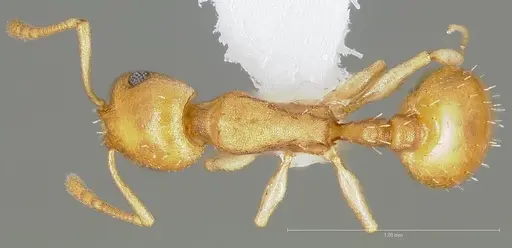
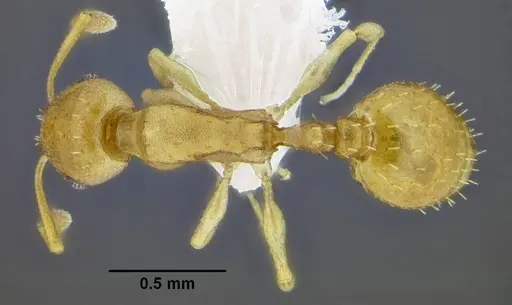
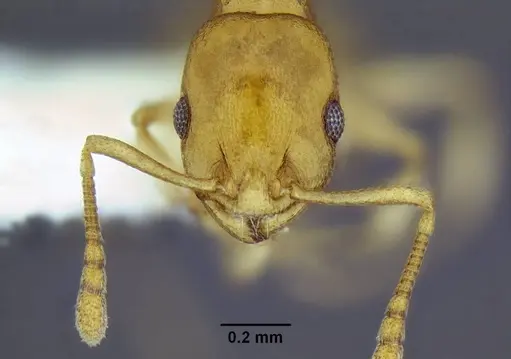
CASENT0339311
View on AntWeb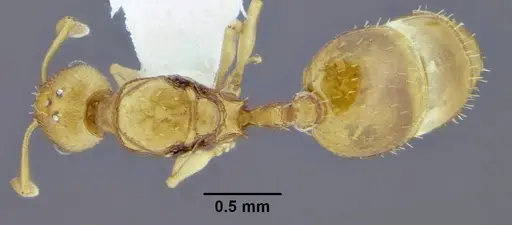
Literature
Loading...Loading products...