Temnothorax pilagens
- Scientific Name
- Temnothorax pilagens
- Tribe
- Crematogastrini
- Subfamily
- Myrmicinae
- Author
- Seifert <i>et al.</i>, 2014
- Common Name
- Pillage Ant
- Distribution
- Found in 1 countries
Temnothorax pilagens Overview
Temnothorax pilagens (commonly known as the Pillage Ant) is an ant species of the genus Temnothorax. It is primarily documented in 1 countries , including United States of America. Detailed taxonomic data and occurrence records can be further explored via authoritative databases such as AntWeb or the Global Biodiversity Information Facility (GBIF).
Temnothorax pilagens - "Pillage Ant"
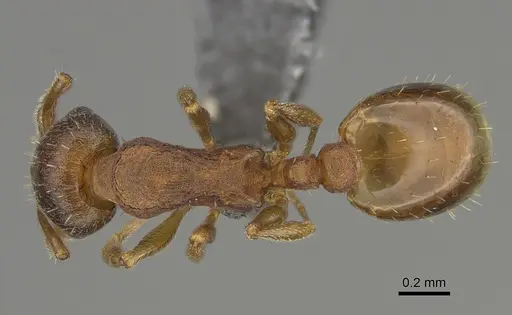
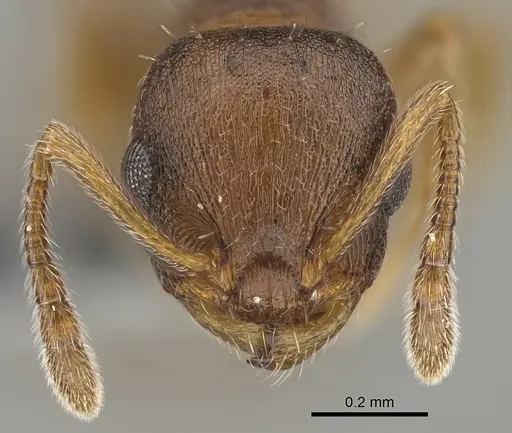
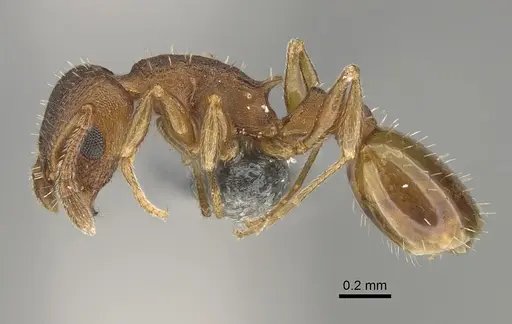
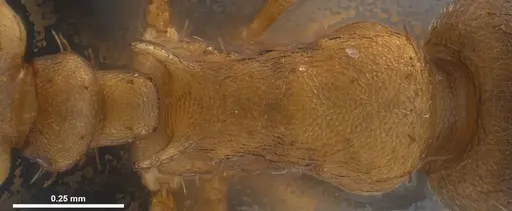
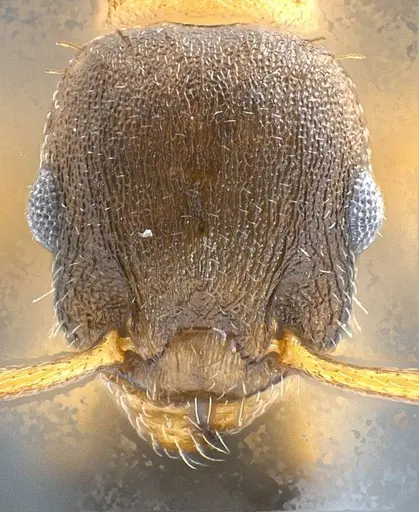
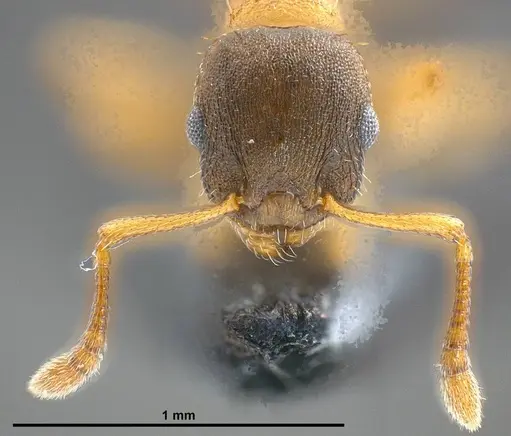
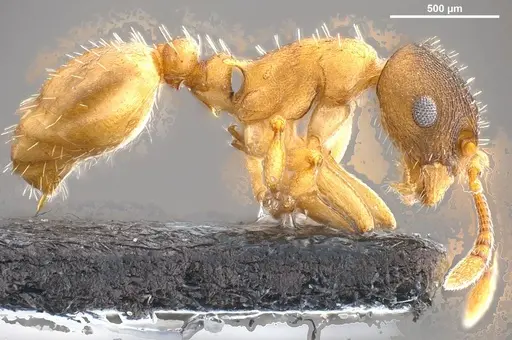
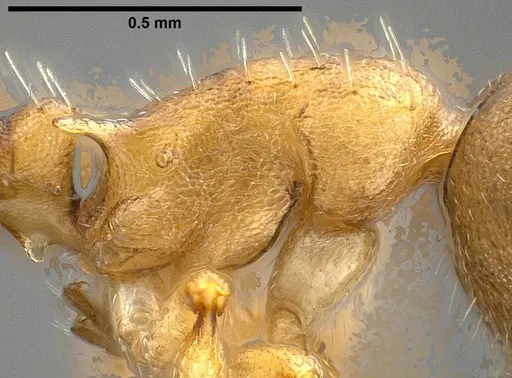
Temnothorax pilagens is a tiny slave-making ant native to the northeastern United States. Workers are about 2-3 mm with a distinctive appearance: dark brown head, yellowish body and waist, and a gaster that is yellowish with large brown patches that can cover up to 70% of the surface [1]. The species name comes from the Latin 'pilare', to plunder, reflecting its slave‑raiding lifestyle [2]. This ant is an obligate social parasite: it cannot establish a colony without enslaved host workers from two host species, Temnothorax longispinosus and Temnothorax ambiguus [3][1]. Colonies are strictly single‑queen and contain on average just 4 slave‑maker workers alongside 13 enslaved host workers [1]. The species was formally described only in 2014 and is one of the rarest ants in North America, known from just three sites in Michigan, New York, and Vermont [1].
Quick Summary
- Difficulty: Expert
- Origin & Habitat: Forests and woodlands in the northeastern United States, particularly wooded areas with little understory and a high density of suitable nest sites like acorns, hickory nuts, and sticks [1][2]. Recorded in Michigan, New York, and Vermont, with possibly southeastern Canada [1].
- Colony Type: Strictly monogynous (single queen). Likely polydomous during summer, 72% of collected nests were queenless with a queenright nest nearby, and neighbouring nests can merge without aggression [1]. This species is an obligate social parasite that cannot survive without enslaved Temnothorax longispinosus or T. ambiguus workers.
- Size & Growth:
- Queen: Approximately 3 mm (inferred from Temnothorax genus) [1].
- Worker: Approximately 2-3 mm (inferred from Temnothorax genus) [1].
- Colony: Up to about 27 slave‑maker workers and 55 enslaved workers [1].
- Growth: Unknown, no development data available.
- Development: Unknown, no direct data. Based on typical Temnothorax patterns, estimate 6-10 weeks at optimal temperature. (Development timeline has not been studied. Figure is a rough guess based on similar small Myrmicinae.)
- Antkeeping:
- Temperature: Not directly studied. Given the temperate northern US distribution and host species, likely do well at typical room temperatures (18-24°C) with seasonal variation. Use this as a starting point and adjust based on colony activity.
- Humidity: Not directly studied. As a forest‑dwelling species that nests in acorns and sticks, the nest substrate should be kept moderately moist but not waterlogged.
- Diapause: Likely requires winter hibernation, both host species (T. longispinosus, T. ambiguus) need diapause. Expect 2-3 months at 5-10°C during winter.
- Nesting: In nature, nests in preformed cavities in acorns, hickory nuts, and sticks [1]. In captivity, use small test tubes or small plaster/Y‑tong nests with narrow chambers. Provide multiple connected chambers to allow for polydomous behaviour. Avoid large open spaces, these tiny ants prefer tight spaces.
- Behavior: Temnothorax pilagens is a specialized slave‑maker. Scouts locate host nests and raid either alone or with up to 4 workers in a column [1]. They use their stinger effectively, well‑aimed stings from behind cause paralysis and quick death in hosts [1]. Raids can be highly aggressive or relatively peaceful, peaceful raids are more common against queenless host nests [1]. Hosts show little or delayed recognition of raiders, likely due to suppressed enemy recognition [1]. Slave‑makers also forage and care for brood themselves to some extent, unlike some other slave‑makers that rely entirely on slaves [4]. Escape risk is moderate, use standard prevention suitable for ants under 5 mm.
- Common Issues: This species cannot be kept without maintaining live host colonies (T. longispinosus or T. ambiguus), it is an obligate social parasite that depends entirely on enslaved workers., Very limited availability, described only in 2014,rarely collected, and never available in the antkeeping hobby. Obtaining both parasite and host colonies is extremely difficult., Colonies are tiny, average only 4 slave‑maker workers. Colony growth is very slow and propagation challenging., If the host colony dies, the slave‑maker colony will also quickly collapse from lack of workforce., Wild‑caught colonies may have parasites or diseases that can cause failure in captivity. Quarantine new acquisitions.
Understanding T. pilagens: A Slave-Making Ant
Temnothorax pilagens is one of the rarest and most specialized ants in North America. It was only formally described as a species in 2014,distinguished from its close relative T. duloticus [1]. Unlike most ants that build their own colonies, T. pilagens is an obligate social parasite, it cannot survive without enslaved workers from host species. It raids colonies of two host ants: Temnothorax longispinosus and Temnothorax ambiguus [3][1]. During raids, a scout may operate alone or recruit up to 4 workers in a coordinated column [1]. What makes this species particularly effective is its use of venom, they deliver well‑aimed stings that paralyze hosts within seconds [1]. Often the raids remain peaceful because hosts have difficulty recognizing the invaders as enemies, their enemy recognition appears to be suppressed [5]. In some raids, slave‑makers not only take brood but also carry adult host workers back to integrate into their workforce [1]. Keeping T. pilagens means maintaining a parasite and its host simultaneously, a unique challenge even for expert antkeepers.
Housing the Parasite and Its Hosts
Keeping T. pilagens requires maintaining at least two colonies: the slave‑maker colony and one or more host colonies (T. longispinosus or T. ambiguus). This makes the species expert‑level only. For the slave‑maker colony, use small test tubes or small plaster/Y‑tong nests with narrow chambers scaled to their tiny ~3 mm size. They naturally nest in preformed cavities like acorns and hickory nuts, so tight‑fitting chambers mimic their natural environment [1]. The host colonies need similar setups, these are also small woodland ants that prefer tight spaces. Provide multiple connected chambers to accommodate the polydomous structure that T. pilagens shows in the wild (72% of natural nests were queenless with queenright nests nearby) [1]. Keep the nest substrate moderately moist but not waterlogged. Escape prevention is important, these ants are small enough to slip through standard gaps.
Feeding and Nutrition
T. pilagens workers do forage and care for brood to some extent, unlike some other slave‑maker species that rely entirely on their slaves [4]. However, the enslaved host workers handle most of the foraging and brood care. In captivity, feed both the slave‑maker colony and host colonies. Offer standard ant foods: sugar water or honey for energy, and protein sources like small insects (fruit flies, pinhead crickets, mealworms). The host species T. longispinosus and T. ambiguus are generalist foragers that eat honeydew, small insects, and seeds. Feed both colonies regularly, the host workers will typically bring food back. Remove uneaten food to prevent mold. Because colonies are small, offer tiny amounts and adjust based on consumption.
Seasonal Care and Overwintering
Given their distribution in northern Michigan, New York, and Vermont, T. pilagens likely requires a winter diapause period. Both host species (T. longispinosus and T. ambiguus) undergo hibernation, so the slave‑maker colony should also be cooled during winter. Provide 2-3 months of cold temperatures around 5-10°C (refrigerator temperature) during winter months. Reduce or stop feeding during this period. Both the parasite colony and host colonies need this cold period to remain healthy. In summer, the species is likely polydomous, maintaining multiple connected nest sites, so consider providing several small nests that can be connected. The patchy natural distribution (0.02-0.08 slave‑maker colonies per square meter at studied sites) suggests they do best in areas with high host colony density [1].
Reproduction and Colony Growth
T. pilagens colonies are strictly monogynous, each colony has exactly one queen [1]. The species is one of the rarest ants in North America, known from only three sites: Niquette Bay State Park, Vermont, E.N. Huyck Preserve, New York, and Sleeping Bear National Lakeshore, Michigan [1]. In Vermont and New York, the species has not been re‑collected despite repeated searching. Average colony size is small: around 4 slave‑maker workers (range 0-16) and 13 enslaved workers (range 2-50) [1]. One exceptional colony had 27 slave‑makers with 55 slaves. Nuptial flight timing is not documented, but based on related species and the northern distribution, mating likely occurs in late summer or early fall. Colony growth is slow given the small worker numbers, this is not a species that will rapidly produce many workers.
Legal and Ethical Considerations
Temnothorax pilagens is native to the United States and should never be released outside its natural range. It is not invasive, but releasing any native ant outside its established range can disrupt local ecosystems. More importantly, this species cannot be legally collected without appropriate permits, it is a rare species with limited distribution. The species is known from only three sites and has not been re‑collected in two of those locations [1]. For antkeepers: do not attempt to collect this species from the wild. If you somehow obtain captive‑bred colonies, keep them contained and never release them. This species is not available in the antkeeping hobby due to its rarity and specialized requirements.
Frequently Asked Questions
Can I keep Temnothorax pilagens as a pet?
No, this species is an obligate social parasite that cannot survive without host colonies. You must keep both T. pilagens AND live host colonies (T. longispinosus or T. ambiguus) simultaneously. This makes it one of the most difficult ants to keep and is only suitable for expert antkeepers with specific knowledge of slave‑maker biology. Additionally, the species is extremely rare in the hobby and has never been commercially available [1][3].
What do Temnothorax pilagens eat?
T. pilagens workers do some foraging and brood care, but enslaved host workers handle most of the food gathering. Feed both the slave‑maker colony and host colonies sugar water or honey for energy, plus small protein sources like fruit flies or tiny insects. The host species are generalist foragers that eat honeydew, small insects, and seeds [4].
How big do Temnothorax pilagens colonies get?
Colonies are small. The average colony contains only about 4 slave‑maker workers (range 0-16) and 13 enslaved host workers (range 2-50). The largest documented colony had 27 T. pilagens workers with 55 slaves [1]. This is not a species that produces large worker numbers.
Do Temnothorax pilagens ants sting?
Yes, they have a functional stinger and use it effectively during raids. Their stinger delivery is well‑aimed from behind, between the head and thorax, causing paralysis and quick death in host ants [1]. This is facilitated by strongly developed flexor muscles in the petiole and postpetiole that allow easy gaster flexion [1]. For humans, the sting is minor due to their tiny size.
What temperature do T. pilagens need?
Not directly studied, but based on their northern US distribution and host species requirements, they do well at typical room temperatures (18-24°C). They require seasonal variation including a winter diapause period of 2-3 months at 5-10°C. Both the parasite and host colonies need this hibernation period.
Are T. pilagens good for beginners?
No, this species is absolutely not suitable for beginners. It is an obligate social parasite requiring simultaneous maintenance of both the slave‑maker and host colonies. The species is extremely rare, has never been available in the antkeeping hobby, and requires expert‑level knowledge of both parasite and host biology. Even experienced antkeepers should not attempt this species [1][3].
How long does it take for T. pilagens to develop from egg to worker?
Unknown, no direct development data exists for this species. Based on typical Temnothorax patterns for small Myrmicinae, estimate 6-10 weeks at optimal temperature, but this is a rough guess. The species was only described in 2014 and has not been studied in captivity.
Why is T. pilagens so rare?
The species has a very limited and patchy distribution. It is only known from three sites in the northern US: Michigan, New York, and Vermont. In New York and Vermont, it has not been re‑collected despite repeated searching [1]. Its survival depends entirely on high densities of host colonies, it cannot exist without enslaved workers. The patchy occurrence reflects the patchy distribution of suitable host populations. Additionally, it was only formally described in 2014,so it may have been overlooked, but its rarity is confirmed by multiple collection attempts.
What makes T. pilagens different from other slave‑maker ants?
T. pilagens is one of the few dulotic ants in North America and shows unique adaptations. It preferentially raids T. ambiguus over T. longispinosus [4]. It uses its stinger very effectively during raids, delivering paralyzing venom that causes quick death [1]. Unlike some slave‑makers that rely entirely on slaves, T. pilagens workers also forage and care for brood themselves [4]. It is closely related to T. duloticus but has distinct morphological differences including shorter antennae (11 segments instead of 12) and shorter scapes [1].
Report an Issue
The current care sheet is based fully on literature. See inconsistencies, or something that's incorrect? Please , it will be resolved after review from an admin. Contributing to the blogs tab also helps providing information, to make us be able to further improve the caresheets. Thank you for your support!
References

This caresheet is licensed under CC BY-SA 4.0 .
ANTWEB1008482
View on AntWeb
CASENT0923376
View on AntWeb