

Temnothorax minutissimus
- Scientific Name
- Temnothorax minutissimus
- Tribe
- Crematogastrini
- Subfamily
- Myrmicinae
- Author
- Smith, 1942
- Distribution
- Found in 1 countries
Temnothorax minutissimus Overview
Temnothorax minutissimus is an ant species of the genus Temnothorax. It is primarily documented in 1 countries , including United States of America. Detailed taxonomic data and occurrence records can be further explored via authoritative databases such as AntWeb or the Global Biodiversity Information Facility (GBIF).
Temnothorax minutissimus
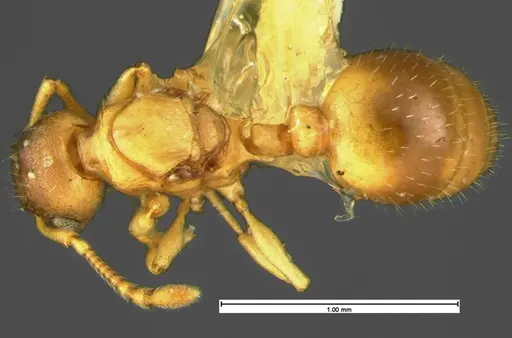
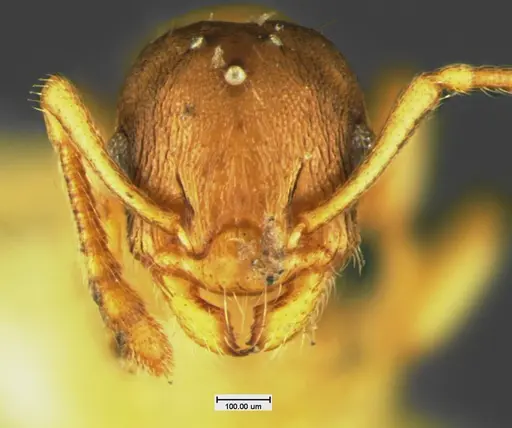
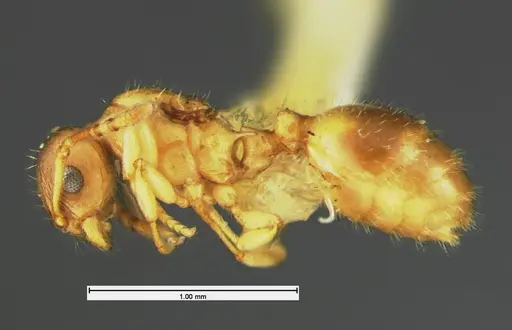
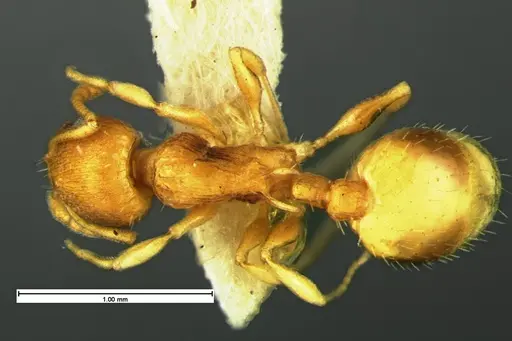
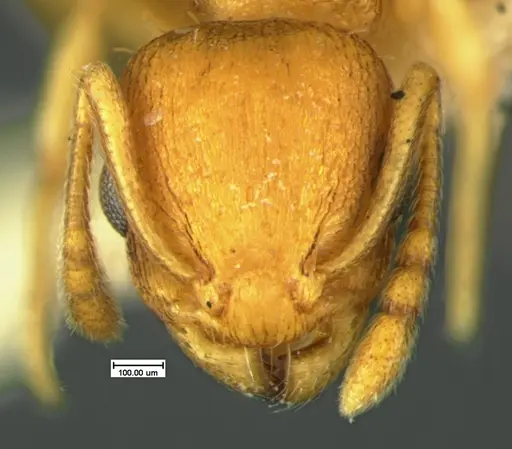
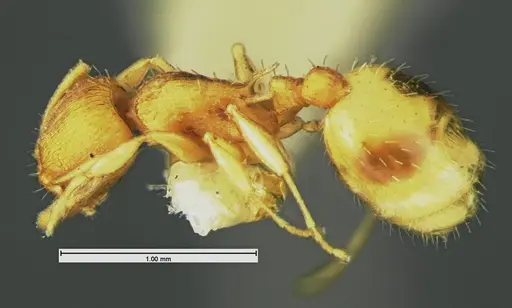
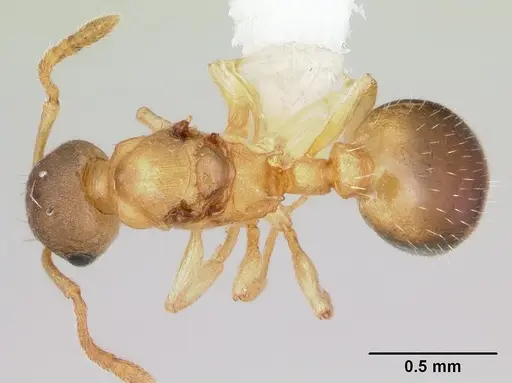
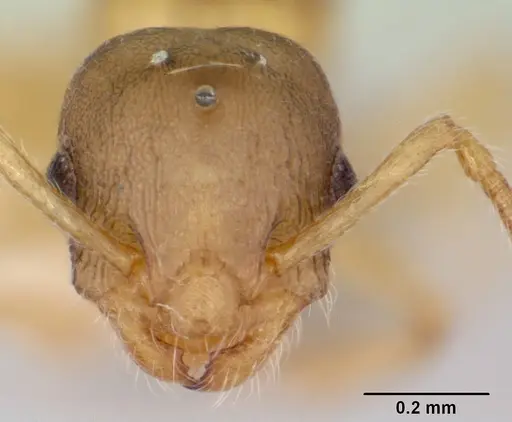
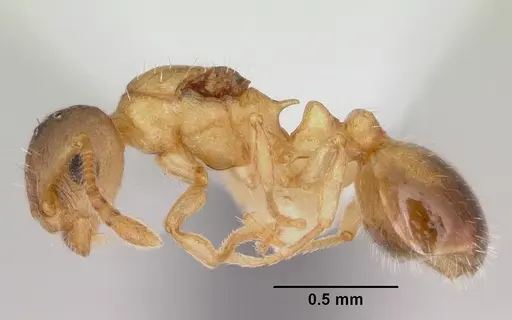
Temnothorax minutissimus is an extraordinarily rare workerless ant that lives entirely as an inquiline parasite within colonies of its host species, Temnothorax curvispinosus [1]. This tiny parasitic ant measures just 3mm in length, about 77% the size of its host queen, and has pale yellow to light brown coloring with distinctly blunt propodeal spines that set it apart from similar species [2]. The species gets its name 'minutissimus' (meaning 'very tiny') from its remarkably small size compared to the host [3]. Unlike virtually all other ants, this species produces NO workers whatsoever, it exists only as reproductive females (and males during breeding season) that depend entirely on host workers for food, shelter, and survival [4]. The queens have evolved to chemically mimic their host queen, grooming her and riding on her back to gain acceptance into the host colony [5]. This is not a species you can keep in the traditional sense, it requires an established host colony to survive.
Quick Summary
- Difficulty: Expert
- Origin & Habitat: Eastern United States, known from District of Columbia, Indiana, Michigan, New York, Ohio, West Virginia, and North Carolina [6][2][7]. Found in woodland areas and along forest edges, typically near the base of large oak trees [1]. In nature, they nest in acorns and other hollow cavities within leaf litter, always within their host's nest.
- Colony Type: Workerless obligatory inquiline, no workers of its own species exist. Lives as a social parasite within host Temnothorax curvispinosus colonies. The host species is facultatively polygynous (can have one or multiple queens), and T. minutissimus is also facultatively polygynous, multiple parasitic females can coexist in one host colony [1]. Host-queen tolerant, the parasite coexists with the host queen rather than killing her [1].
- Colony: Optionally polygyne
- Queen: Socially parasitic
- Size & Growth:
- Queen: ~3 mm [1]
- Worker: Workerless species, no workers exist [4]
- Colony: Colony size refers to the host colony, T. curvispinosus colonies typically reach several hundred workers. Within a parasitized colony, you may find multiple T. minutissimus females (dealates and alates) [1]
- Growth: Unknown for this species specifically
- Development: N/A, workerless species [4] (This species produces only reproductives (males and new queens/gynes), never workers. Development occurs after the host species produces its sexual brood [1].)
- Antkeeping:
- Temperature: Keep host colony at typical T. curvispinosus temperatures: around 20-24°C [3]. Stable room temperature is acceptable.
- Humidity: Maintain moderate humidity similar to typical woodland ant conditions, damp but not wet substrate, around 50-70% relative humidity [3].
- Diapause: Likely requires winter dormancy like its host species. In the wild, mated females overwinter within host colonies (IMOH, Intranidal Mated Offspring Hibernation) [1]. Expect 2-3 months at cool temperatures (10-15°C) during winter.
- Nesting: This species cannot be kept alone. You must first establish a healthy Temnothorax curvispinosus colony, then attempt to introduce T. minutissimus. The host nests in acorns, hollow twigs, sticks, and dead roots in leaf litter. A naturalistic setup with multiple small cavities works best.
- Behavior: Extremely docile and passive, this species has no workers to defend it and relies entirely on host acceptance. The parasitic queens spend much of their time riding on or flanking the host queen, grooming her to chemically mimic her colony odor [5]. They sometimes consume host eggs, which may help regulate the host colony's reproductive output [1]. Males are produced in late summer and show unusual morphological feminization, they have reduced antennomeres (9-10-11 instead of the normal 12) and smaller eyes than typical ant males [1]. This species cannot sting or defend itself in any way.
- Common Issues: This species cannot survive without a host colony, you cannot keep T. minutissimus alone, Introducing the parasite to a host colony may be rejected, host colonies do not always accept intruder queens, The host colony may decline or be stressed by the parasite burden over time, Finding T. minutissimus to purchase is extremely difficult, it is one of the rarest North American ants, If the host colony dies, the parasite colony will also die, they cannot survive independently
Understanding This Species
Temnothorax minutissimus is one of the most unusual ants you could ever consider keeping, it is a workerless obligatory inquiline, meaning it has completely lost the worker caste and cannot survive without a host colony [4]. Unlike slave-making ants that raid other species for workers, this species produces no workers at all. It lives entirely within nests of Temnothorax curvispinosus, feeding on food foraged by host workers and depending entirely on the host for its survival [1]. The females are pale yellow to light brown, measuring about 3mm, and have distinctive blunt propodeal spines that are the same diameter from base to tip, a key identification feature [2]. They are remarkably rare in the wild, with only about 3% of host colonies being parasitized [1]. This is not a species for beginners or even intermediate antkeepers, it represents an extreme challenge that requires first establishing a healthy host colony.
The Host Species: Temnothorax curvispinosus
Before you can keep T. minutissimus, you must first keep and maintain a colony of Temnothorax curvispinosus, its only viable host in captivity [1]. T. curvispinosus is a small, reddish-brown ant native to the eastern United States that nests in acorns, hollow twigs, sticks, and other small cavities in woodland leaf litter. They are a common species and make decent pets, but like all Temnothorax, they are small and require fine escape prevention. The host colony should be established and healthy before any introduction attempts. Keep T. curvispinosus at room temperature (20-24°C) with moderate humidity. Feed them standard ant foods: sugar water or honey, and protein sources like mealworms, fruit flies, or other small insects. Once you have a thriving colony with a healthy queen and good worker population, you can attempt to introduce the parasite.
Introducing the Parasite
If you somehow obtain T. minutissimus queens, introducing them to a host colony is delicate and success is not guaranteed. Research shows that mated young queens can be accepted by host colonies both in spring and fall, but acceptance is not automatic [1]. The parasitic queens have evolved to chemically mimic the host queen's colony odor by grooming and riding on the host queen's head [5]. This chemical deception helps them gain entry, but host colonies may still reject intruders. Some sources indicate that multiple T. minutissimus females can coexist in one host colony, with as many as 14-32 parasitic females recorded in Ohio colonies [2]. Start by introducing a single dealate female to a well-established host colony and monitor closely for aggression. The host workers may attack and kill the intruder, or they may accept her. There is no guaranteed method, this remains an area where captive success stories are extremely rare.
Breeding and Reproduction
Temnothorax minutissimus has one of the most unusual reproductive biology of any ant. They produce only sexuals (males and new queens/gynes), never workers [1]. The strongly female-biased sex ratio means roughly 10 males for every 100 females in laboratory colonies [1]. Males appear in August and September and show remarkable morphological differences from typical ant males, they have reduced antennomeres (9-10-11 instead of 12), smaller eyes, and show signs of 'feminization' [1]. Intranidal mating (mating inside the nest) has been observed, with males mounting females within the host colony [1]. After mating, mated females remain in the colony through winter, this is called IMOH (Intranidal Mated Offspring Hibernation) [1]. In spring, these mated females disperse on foot to find and invade new host colonies. Captive breeding would require maintaining both the host colony and the parasite through multiple generations, an extraordinary challenge.
Legal and Ethical Considerations
Temnothorax minutissimus is native to the eastern United States and should NEVER be released outside its natural range [6]. It is also protected in some states due to its rarity, it is considered one of the rarest ant species in North America. Before acquiring this species, check local regulations regarding collection and possession of native ants. Additionally, consider whether keeping a workerless parasite is ethical, this species cannot survive without its host, and any failure in husbandry means certain death for the parasites. The species is difficult to find in the wild (only about 3% of host colonies are parasitized) and should not be collected by hobbyists. If you are interested in this species for educational or research purposes, contact universities or museums that study social parasitism in ants.
Frequently Asked Questions
Can I keep Temnothorax minutissimus as a pet?
No, this is a workerless obligatory inquiline that cannot survive without a host colony of Temnothorax curvispinosus. You cannot keep it like a normal ant. You would first need to establish a healthy T. curvispinosus colony, then attempt to introduce the parasite. This is an expert-level challenge with no guaranteed success. Additionally, T. minutissimus is one of the rarest ants in North America and is not available through commercial ant keepers.
Does Temnothorax minutissimus have workers?
No. This is a workerless species, no workers of this species have ever been documented [4]. The species exists only as reproductive females (queens) and males. All colony maintenance, foraging, and brood care is performed by the host species' workers.
What does Temnothorax minutissimus eat?
It eats whatever the host workers feed it. Like all inquiline parasites, T. minutissimus is totally dependent on host workers for food. The hosts forage for their own nutrition and then regurgitate food to the parasites, similar to how they feed their own queen. You do not directly feed the parasite, you feed the host colony.
How do I start a colony of Temnothorax minutissimus?
You cannot start a colony from scratch. You must first establish a Temnothorax curvispinosus colony, then introduce T. minutissimus females. However, obtaining T. minutissimus is extraordinarily difficult, it is one of the rarest ants in North America, found in only about 3% of host colonies. There is no commercial source for this species. This is not a species for hobbyist ant keeping.
Will the host colony accept the parasite?
Not guaranteed. Research shows that mated young queens can be accepted by host colonies in both spring and fall, but acceptance is hit-or-miss [1]. The parasite queens groom the host queen to chemically mimic her colony signature, which helps with acceptance [5]. However, host workers may attack and kill intruders. Even if accepted initially, the relationship may not be stable.
Can I keep multiple T. minutissimus queens together?
Yes, the species is facultatively polygynous, meaning multiple parasitic females can coexist in one host colony. Ohio colonies have been found with 14-32 T. minutissimus females [2]. However, this is only relevant after they have been successfully introduced to a host colony, you cannot keep them together without a host.
Does Temnothorax minutissimus sting?
No. This tiny species has no workers to defend the colony and cannot sting. It is completely defenseless and relies entirely on chemical mimicry and host acceptance for survival.
Do I need to hibernate Temnothorax minutissimus?
Likely yes, following the host's seasonal cycle. In the wild, mated females overwinter within host colonies (a behavior called IMOH, Intranidal Mated Offspring Hibernation) [1]. Keep both the host colony and any parasites cool (10-15°C) for 2-3 months during winter.
How rare is Temnothorax minutissimus?
Extremely rare. Only about 3.3% of T. curvispinosus colonies were found to be parasitized in one study, and 2.3% in another year [1]. It is known from only a handful of states in the eastern United States: District of Columbia, Indiana, Michigan, New York, Ohio, West Virginia, and recently North Carolina [6][2][7].
References

This caresheet is licensed under CC BY-SA 4.0 .
Literature
Loading...Loading products...