

Temnothorax bradleyi
- Scientific Name
- Temnothorax bradleyi
- Tribe
- Crematogastrini
- Subfamily
- Myrmicinae
- Author
- Wheeler, 1913
- Distribution
- Found in 1 countries
Temnothorax bradleyi Overview
Temnothorax bradleyi is an ant species of the genus Temnothorax. It is primarily documented in 1 countries , including United States of America. Detailed taxonomic data and occurrence records can be further explored via authoritative databases such as AntWeb or the Global Biodiversity Information Facility (GBIF).
Temnothorax bradleyi
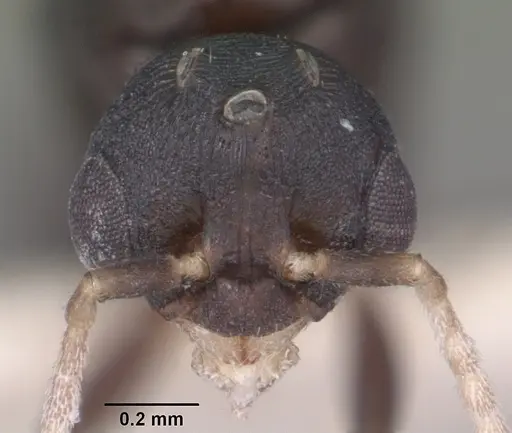
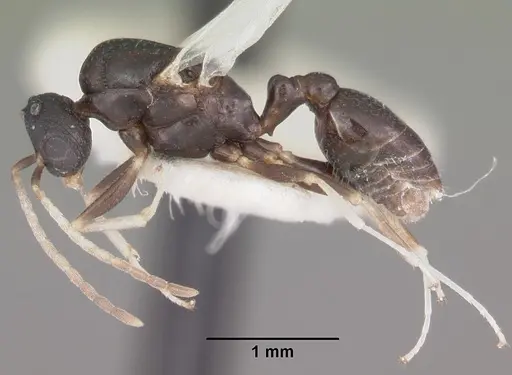
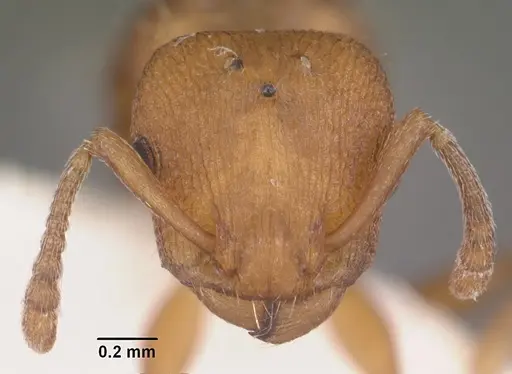
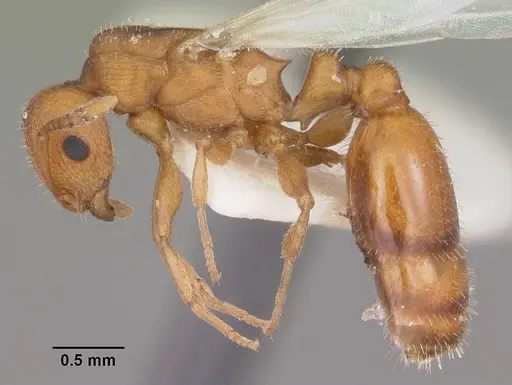
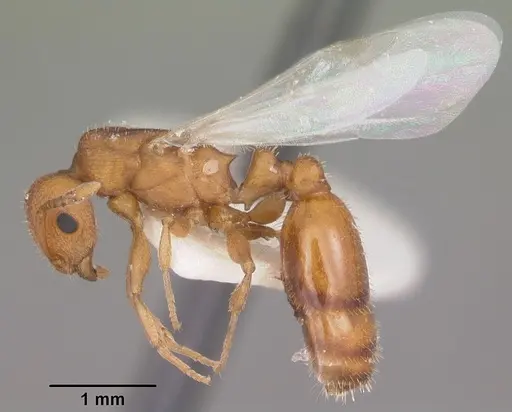
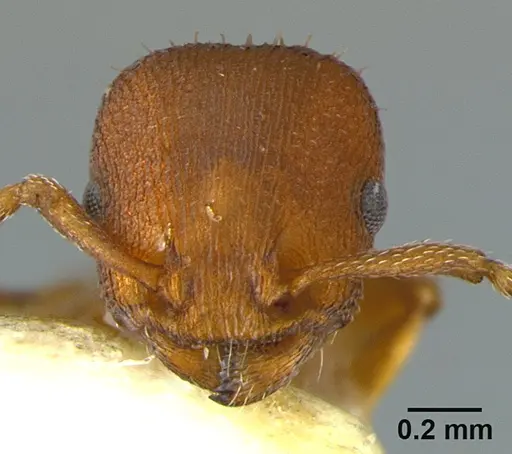
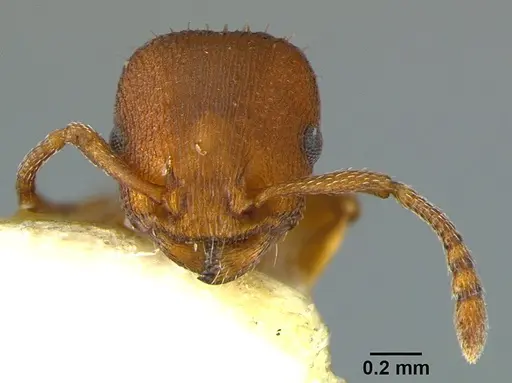
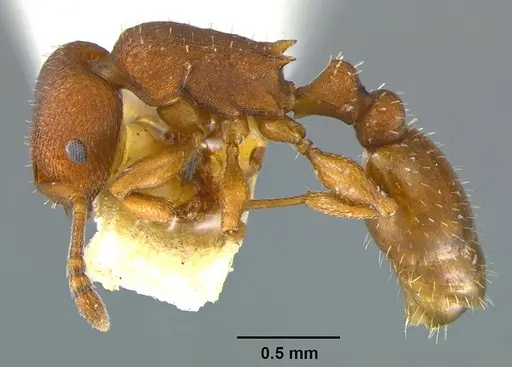
Temnothorax bradleyi is a small, reddish-brown ant native to the southeastern United States. Workers measure just 0.83-0.93mm in Weber's length, making them one of the smaller Temnothorax species [1]. They have a rich ferrugineous (rusty) red coloration with 11-segmented antennae and distinctive propodeal spines that are stout and roughly equal to the distance between their bases [1]. Queens are larger at 1.33mm alitrunk length with coarser longitudinal rugae on the head [2]. This species is a member of the rugatulus clade and is closely related to Temnothorax smithi, though T. bradleyi is smaller with shorter propodeal spines [1].
What makes T. bradleyi stand out is its arboreal nesting habit, these ants nest exclusively under the bark of living pine trees, specifically in flat, well-defined galleries about one meter above ground level [2]. They are part of the longleaf pine ecosystem and prefer open areas with Pinus elliottii and P. palustris [1]. The species is considered uncommon, and colonies are rarely accessible since they nest in tree bark rather than soil or rotting wood [2].
Quick Summary
- Difficulty: Medium
- Origin & Habitat: Southeastern United States, Central Florida north into Georgia, west to Alabama and Louisiana, likely also in the Carolinas [1][3]. They inhabit the longleaf pine ecosystem, nesting under bark of large living pines (Pinus elliottii and P. palustris) in open areas [1].
- Colony Type: Single-queen colonies (monogyne). One documented colony contained 1 dealate queen,42 workers,2 males, and brood [2]. The colony structure appears to be simple single-queen with no documented ergatoid replacement reproductives for this species.
- Colony: Monogyne
- Founding: Claustral
- Size & Growth:
- Queen: 1.33mm alitrunk length (Wilson 1952), estimated 5-6mm total length
- Worker: 0.83-0.93mm Weber's length [1], approximately 2.5-3mm total length
- Colony: Up to at least 42 workers in wild colonies [2]. Likely smaller colonies typical of arboreal Temnothorax species.
- Growth: Moderate, typical for small Myrmicinae ants
- Development: Estimated 6-10 weeks based on typical Temnothorax genus patterns at optimal temperature (Development time is estimated from related species. No specific studies on T. bradleyi development.)
- Antkeeping:
- Temperature: Keep at 20-24°C. As a southeastern US species from Florida and Georgia, they prefer warm conditions but not extreme heat. Room temperature (20-22°C) is suitable, with a slight gradient if possible.
- Humidity: Moderate humidity around 50-60%. Being arboreal nesters under bark, they prefer drier conditions than ground-nesting ants. Allow the nest to dry out between waterings.
- Diapause: Likely requires a mild winter rest period (diapause). As a species from the southeastern US with temperate origins, they probably benefit from 2-3 months at 10-15°C during winter.
- Nesting: Arboreal specialists. Provide a naturalistic setup with flat stones, cork, or bark pieces, or a Y-tong/plaster nest with narrow chambers. They prefer tight spaces scaled to their tiny size. Avoid soil-based setups.
- Behavior: Generally peaceful and non-aggressive. Workers are small and timid, foraging primarily on tree trunks and branches. They are attracted to sweet baits like peanut butter and jelly in the wild [1]. Escape prevention is critical due to their tiny size, they can squeeze through very small gaps. They are not known to sting and pose no danger to keepers.
- Common Issues: tiny size means escapes are likely without fine mesh barriers, arboreal nesting means they need different setup than typical soil nests, uncommon in the hobby, wild colonies are difficult to locate, slow colony growth may frustrate beginners, they may not accept typical test tube setups due to arboreal nature
Housing and Nest Setup
Temnothorax bradleyi requires an arboreal-style setup rather than typical soil nests. In the wild, they nest under bark on living pine trees in flat galleries about one meter above ground [2]. For captivity, a Y-tong (AAC) nest with narrow chambers works well, or a naturalistic setup using flat stones, cork, or bark pieces to simulate their natural arboreal microhabitat [4]. The chambers should be tight and scaled to their tiny 2.5-3mm worker size. Avoid tall, open spaces, these ants prefer tight, flat galleries. A small outworld area allows for foraging. Because of their minute size, escape prevention must be excellent, use fine mesh and tight-fitting lids.
Feeding and Diet
In the wild, T. bradleyi is attracted to sweet baits like peanut butter and jelly on tree trunks [1]. This suggests they readily accept sugar sources. They likely also forage for small insects and honeydew like other small Myrmicinae. In captivity, offer sugar water or honey regularly, along with small protein sources like fruit flies, pinhead crickets, or other tiny arthropods. Given their small size, prey items should be appropriately sized, springtails and aphids are good options. Feed small amounts every 2-3 days and remove uneaten food to prevent mold.
Temperature and Seasonal Care
Keep the nest area at 20-24°C, which matches their native Florida-Georgia climate [1]. Room temperature in most homes is suitable. A slight temperature gradient allows the colony to self-regulate. During winter, provide a mild diapause period of 2-3 months at 10-15°C, this is typical for temperate ant species and helps trigger proper seasonal cycles. Do not cool them below 10°C or expose them to freezing temperatures. They are adapted to the warm, humid southeastern US and do not require extreme heat.
Colony Dynamics
T. bradleyi forms single-queen colonies (monogyne). One documented wild colony contained 1 queen,42 workers,2 males, and brood [2]. This is a relatively small colony size, typical of arboreal Temnothorax species. Queens are claustral founders, they seal themselves in a chamber and raise the first brood alone using stored fat reserves, not leaving to forage. First workers (nanitics) will be smaller than normal workers. Growth is moderate, expect several months from founding to first workers, then slow but steady growth thereafter. Colonies likely max out around 50-100 workers in captivity.
Behavior and Temperament
These are peaceful, non-aggressive ants. Workers are tiny and timid, spending most of their time foraging on vertical surfaces (tree trunks in the wild). They do not have a functional stinger, Myrmicinae in the Crematogastrini tribe rely on biting and chemical defenses rather than stinging. They pose no danger to keepers. However, their minute size means they are excellent escape artists. Always use fine mesh (at least 0.5mm) and check for any gaps in your setup. They are not defensive and can be observed easily once established. [1]
Frequently Asked Questions
Can I keep Temnothorax bradleyi in a test tube?
Test tubes can work for founding colonies, but these ants prefer arboreal-style setups with tight, flat chambers. A Y-tong nest or cork/bark setup mimics their natural bark-nesting behavior better than a standard test tube. If using test tubes, use small diameters and keep the setup horizontal to simulate their flat galleries under bark.
How long does it take for Temnothorax bradleyi to produce first workers?
Based on typical Temnothorax development, expect 6-10 weeks from egg to first worker at optimal temperature (around 22°C). This is an estimate since no specific development studies exist for this species. The claustral queen will seal herself in and raise the first brood alone using stored fat reserves.
Do Temnothorax bradleyi ants sting?
No, these ants do not have a functional stinger. As Myrmicinae in the Crematogastrini tribe, they rely on biting and chemical defenses (formic acid) rather than stinging. They are completely harmless to keepers.
What do Temnothorax bradleyi eat?
They accept sugar sources readily (honey, sugar water, jelly baits) and small protein (fruit flies, tiny crickets, springtails). In the wild, they are attracted to peanut butter and jelly on tree trunks. Feed small amounts of sugar continuously and protein 2-3 times per week.
Are Temnothorax bradleyi good for beginners?
They are rated Medium difficulty. While not the hardest species, they are uncommon in the hobby and require specific arboreal-style housing. Their tiny size also demands excellent escape prevention. Beginners might find larger, more common species easier to start with.
Do Temnothorax bradleyi need hibernation?
Yes, they likely benefit from a mild winter rest period (diapause). As a species from the southeastern US, provide 2-3 months at 10-15°C during winter. Do not freeze them, a cool basement or refrigerator (not freezer) works. This helps maintain proper seasonal cycles.
How big do Temnothorax bradleyi colonies get?
Wild colonies reach at least 42 workers [2]. In captivity, they likely max out around 50-100 workers, smaller than many common ant species. This makes them suitable for keepers with limited space.
Why are my Temnothorax bradleyi escaping?
Their tiny 2.5-3mm size means they can squeeze through gaps that seem impossible. Use fine mesh (0.5mm or smaller), check all lid seals, and ensure any tubing connections are secure. Apply fluon or other barriers to escape-prone areas.
Can I keep multiple queens together?
No, T. bradleyi is monogyne, single-queen colonies. Multiple unrelated queens will fight. Only keep one queen per colony. If you find a wild colony, it will have just one queen.
When should I move them to a formicarium?
Wait until the colony has at least 15-20 workers before moving. For arboreal species like this, a Y-tong or naturalistic setup with cork/bark works better than typical formicaria. Move them gently, these ants are sensitive to disturbance.
References

This caresheet is licensed under CC BY-SA 4.0 .
CASENT0104011
View on AntWeb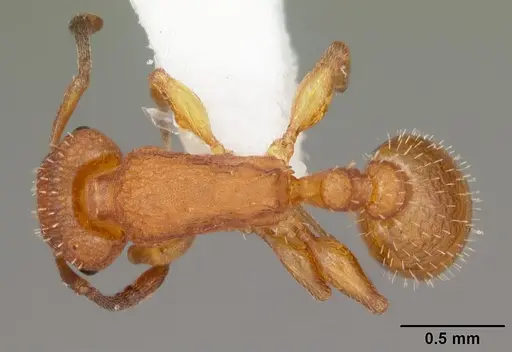
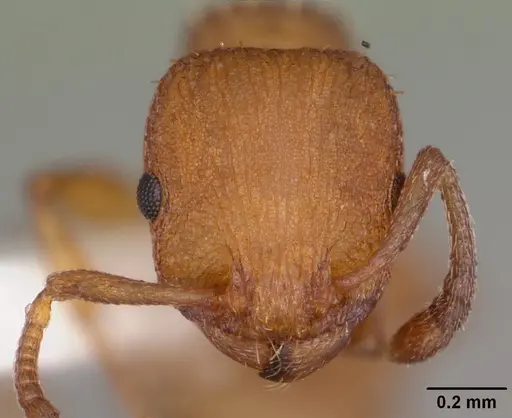
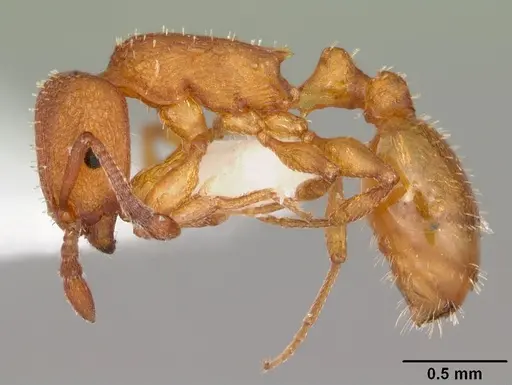
CASENT0104013
View on AntWeb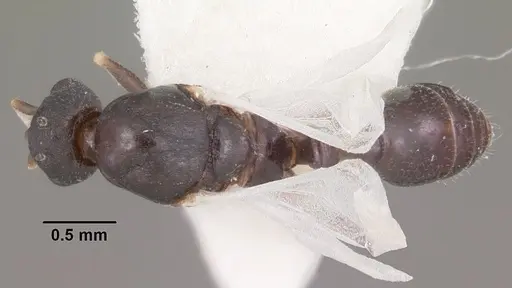
CASENT0104014
View on AntWeb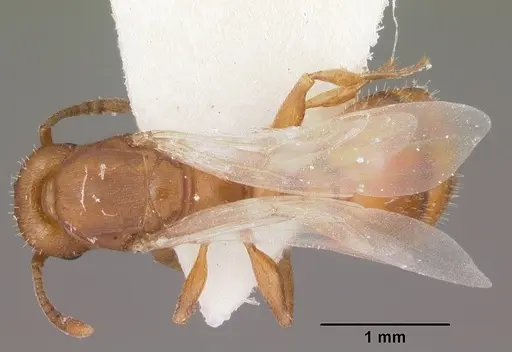
CASENT0105869
View on AntWeb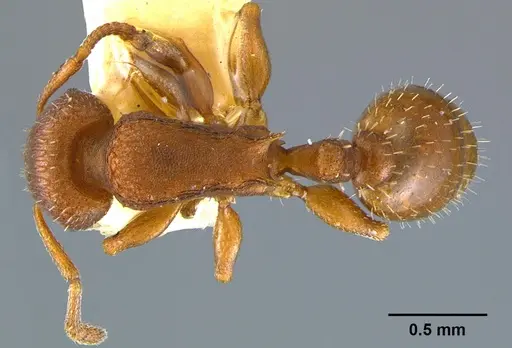
Literature
Loading...Loading products...