

Temnothorax smithi
- Scientific Name
- Temnothorax smithi
- Tribe
- Crematogastrini
- Subfamily
- Myrmicinae
- Author
- Baroni Urbani, 1978
- Distribution
- Found in 1 countries
Temnothorax smithi Overview
Temnothorax smithi is an ant species of the genus Temnothorax. It is primarily documented in 1 countries , including United States of America. Detailed taxonomic data and occurrence records can be further explored via authoritative databases such as AntWeb or the Global Biodiversity Information Facility (GBIF).
Temnothorax smithi
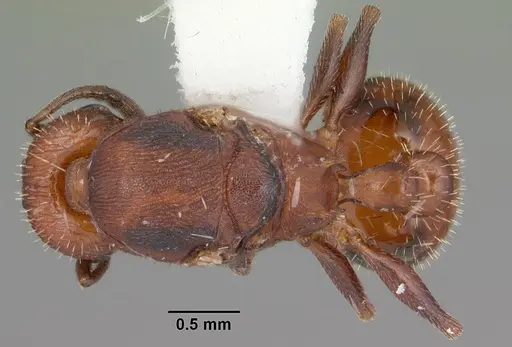
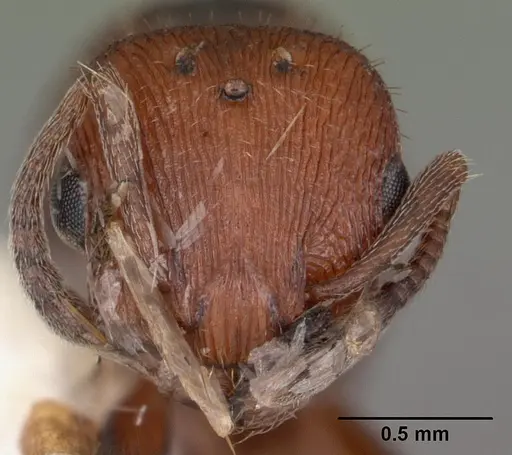
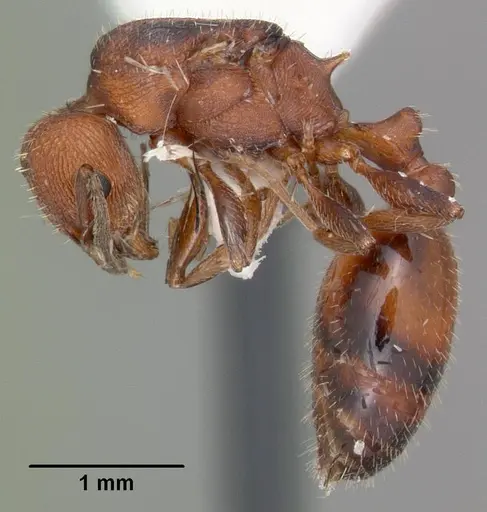
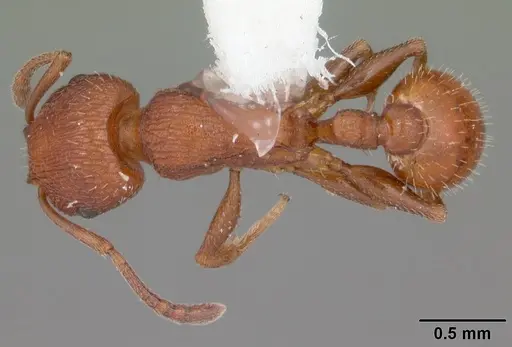
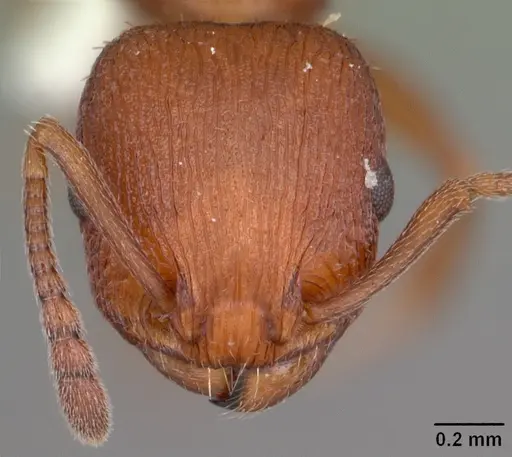
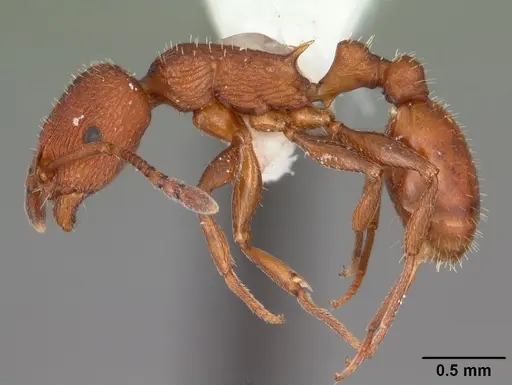
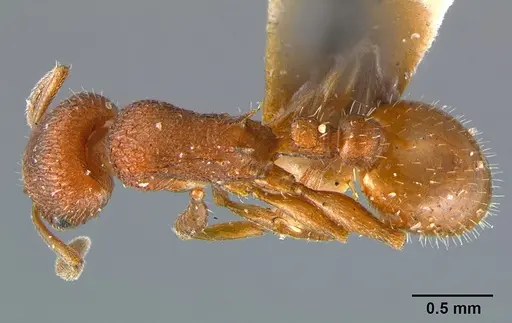
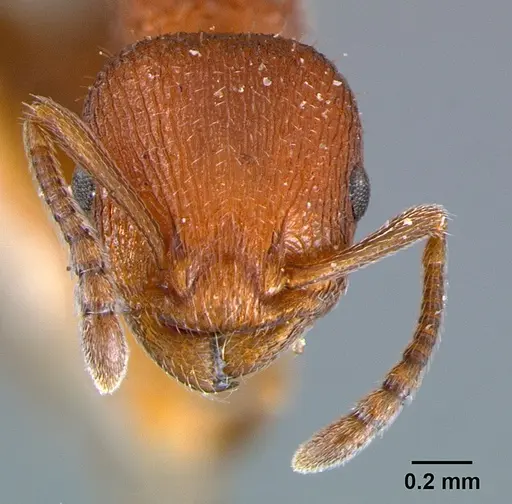
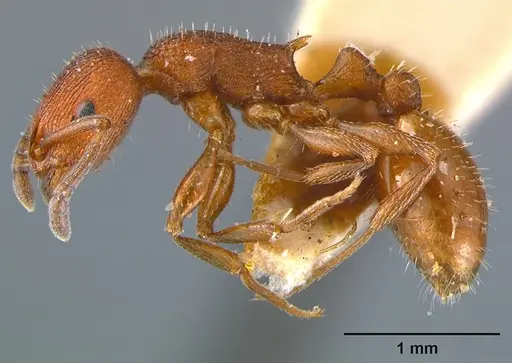
Temnothorax smithi is a medium-sized ant species native to the eastern half of the United States, ranging from Ohio south to Florida and west to Mississippi [1]. Workers measure 2.2-2.9mm with a distinctive reddish-brown coloration and remarkably rough, coarsely rugose sculpturing on the head that makes them easy to identify [1]. The propodeal spines are very long and slender, nearly equal to the distance between their tips, and the 11-segmented antenna is another distinguishing feature [1]. These ants are arboreal nesters, making their homes in cavities within dead trees, under loose bark, and in the galleries of weathered logs or old wooden structures exposed to sunlight [1][2]. What makes this species particularly interesting is its polygynous colony structure, colonies typically contain 2-3 dealate (wingless) queens working together along with 31-40 workers [1]. They also show remarkable desiccation resistance, possessing 3 rectal pads that allow them to absorb water directly from their feces [3].
Quick Summary
- Difficulty: Easy
- Origin & Habitat: Eastern United States (Ohio, Kentucky, Tennessee, North Carolina, South Carolina, Georgia, Florida, Mississippi, Alabama) [1]. Found in open wooded areas, nesting in tree cavities, under bark, and in galleries of weathered logs or old cabins [1][2].
- Colony Type: Polygynous, colonies contain 2-3 dealate queens working together with 31-40 workers [1]. This is a rare example of a naturally multi-queen Temnothorax species.
- Colony: Polygyne
- Founding: Claustral
- Size & Growth:
- Queen: 3.9-4.2mm [1]
- Worker: 2.2-2.9mm [1]
- Colony: Colonies reach at least 31-40 workers in documented nests [1]. Likely larger colonies exist in established nests.
- Growth: Moderate, typical for temperate Temnothorax species
- Development: Estimated 6-10 weeks at optimal temperature based on typical genus development patterns [4] (Development time inferred from related Temnothorax species. Temperature affects development significantly, warmer conditions within safe range speeds growth.)
- Antkeeping:
- Temperature: Keep at 20-24°C, they prefer warm conditions but are adaptable [1]. A gentle temperature gradient allows workers to regulate their own exposure.
- Humidity: Moderate humidity is fine, these ants are notably desiccation resistant thanks to their 3 rectal pads [3]. However, they still need access to moisture. Provide a water source and keep the nest substrate slightly damp, not saturated.
- Diapause: Yes, as a temperate species from the eastern US, they require a winter rest period. Reduce temperature to around 10-15°C for 2-3 months during winter [1].
- Nesting: Arboreal species that naturally nests in tree cavities and under bark [1][2]. In captivity, they do well in Y-tong (AAC) nests, small acrylic setups, or test tube arrangements with access to a foraging area. Provide narrow chambers scaled to their small size.
- Behavior: Workers are shy and secretive, when their nest is disturbed, they make frantic efforts to hide in small crevices [1]. They are not aggressive and will flee rather than fight. Foraging workers have been observed feeding on the shed skins (exuviae) of wood-boring beetles, suggesting they may scavenge protein from unusual sources [1]. They are small ants but not particularly prone to escaping if given proper barriers. Their natural wariness means they may be less active in bright conditions, preferring dimmer lighting.
- Common Issues: queens fighting, despite being naturally polygynous, introducing unrelated foundresses may result in aggression, slow colony growth, moderate growth rate may frustrate beginners expecting rapid development, desiccation risk during hibernation, keep them slightly moist during winter rest, not bone dry, difficulty observing them, their secretive nature and small size make them less interactive than larger species, limited availability, this species is somewhat rarely collected in the wild [4]
Housing and Nest Setup
Temnothorax smithi is an arboreal species that naturally nests in tree cavities and under loose bark [1][2]. In captivity, they do best in setups that mimic these conditions. A Y-tong (AAC) nest works excellently, the narrow chambers match their natural cavity preferences and the wood-like material provides the darkness they prefer. Small acrylic nests or test tube setups with a foraging area are also suitable. Because they are small (workers only 2.2-2.9mm), ensure any connections between nest and outworld are wide enough, but not so large they can escape easily. Provide a dark area for the nest chamber, these ants prefer dim conditions and will be more active in a shaded setup. A small water test tube with a cotton plug provides drinking water, and you can lightly moisten the nest substrate to maintain moderate humidity.
Feeding and Diet
In the wild, workers have been observed feeding on the exuviae (shed skins) of wood-boring beetles [1]. This suggests they are scavengers that will accept various protein sources. In captivity, offer small protein items like fruit flies, pinhead crickets, mealworms, or other appropriately-sized insects. They likely accept some sugar sources too, related species will take honey or sugar water, though this specific species' sugar acceptance isn't well documented. Feed protein roughly twice weekly, removing any uneaten prey after 24-48 hours. A constant sugar water or honey offering provides energy. Their small size means even tiny prey items are suitable, don't overoffer large insects they can't tackle.
Temperature and Seasonal Care
Keep your colony at 20-24°C for optimal activity and brood development [1]. As a temperate species from the eastern United States, they are accustomed to seasonal temperature changes. During the active season (spring through fall), room temperature within this range works well. In winter, they require a diapause period, reduce temperatures to roughly 10-15°C for 2-3 months [1]. This mimics their natural winter rest and helps synchronize their annual cycle. Place the colony in a cool basement, garage, or refrigerator (not freezer) during hibernation. Keep the substrate slightly moist during this period, not wet, but not completely dry either. Return them to warm conditions gradually in spring.
Colony Structure and Multi-Queen Care
Temnothorax smithi is one of the few naturally polygynous Temnothorax species, colonies typically contain 2-3 dealate (wingless) queens working together alongside 31-40 workers [1]. This is unusual in the genus, where single-queen colonies are more common. If you acquire a colony with multiple queens, they should coexist peacefully since this is their natural structure. However, if you try to combine unrelated foundresses (queens that didn't originate from the same colony), aggression may occur, their natural polygyny doesn't necessarily extend to unrelated individuals meeting for the first time in captivity. The presence of multiple queens may contribute to faster colony growth compared to single-queen species, as more egg-layers means more brood production.
Behavior and Observation
These ants are shy and secretive by nature. When their nest is disturbed, workers make frantic efforts to hide in small crevices rather than defending the colony [5]. This wariness means they may not be the most interactive species, they prefer to flee than engage. They are not aggressive and pose no threat to keepers. Their small size and cryptic habits can make them challenging to observe, but this is part of their charm. Workers are most active during dim lighting conditions, so avoid placing the colony in direct bright light. Their remarkable desiccation resistance (enabled by 3 rectal pads that absorb water from feces) [3] means they can tolerate drier conditions than many ants, this is an adaptation to their arboreal nesting sites where moisture may be limited.
Frequently Asked Questions
Are Temnothorax smithi ants good for beginners?
Yes, they are considered easy to keep. Their remarkable desiccation resistance makes them forgiving of minor humidity mistakes, and their moderate temperature requirements are easy to meet in most homes. The main challenges are their small size (which requires good escape prevention) and their secretive nature, which means less interaction than larger, bolder species.
How long does it take for Temnothorax smithi to produce first workers?
Based on typical Temnothorax development, expect first workers (nanitics) approximately 6-10 weeks after the queen lays eggs, assuming optimal temperature around 22-24°C [4]. Development is temperature-dependent, cooler conditions slow growth significantly.
Can I keep multiple queens together in one colony?
Yes, this species is naturally polygynous, colonies typically have 2-3 queens [1]. However, this applies to queens from the same colony. Combining unrelated foundresses is not recommended as it may result in fighting.
Do Temnothorax smithi ants sting?
Temnothorax ants have stingers but are not aggressive and rarely use them. These ants are shy and will flee rather than defend. Even if they did sting, their small size and mild venom would cause minimal discomfort.
What do Temnothorax smithi ants eat?
They are scavengers that accept protein sources like small insects (fruit flies, pinhead crickets, mealworms) and likely sugar sources like honey or sugar water [1]. In the wild, they scavenge shed skins from wood-boring beetles.
Do Temnothorax smithi ants need hibernation?
Yes, as a temperate species from the eastern United States, they require a winter rest period [1]. Reduce temperature to 10-15°C for 2-3 months during winter to mimic their natural cycle.
What is the best nest type for Temnothorax smithi?
Y-tong (AAC) nests work excellently because they mimic the arboreal cavity conditions these ants naturally prefer [1]. Small acrylic nests or test tube setups with a foraging area are also suitable. Provide narrow chambers scaled to their small size.
How big do Temnothorax smithi colonies get?
Documented colonies have 31-40 workers with 2-3 queens [1]. Likely larger colonies exist in established nests. As a polygynous species, they may reach moderate sizes faster than single-queen species.
Why are my Temnothorax smithi ants hiding all the time?
This is normal behavior, they are shy, secretive ants that prefer dark conditions [1]. Place the colony in a dim location and avoid disturbing them frequently. They're most active in low light, so observe them in the evening or with minimal lighting.
Where is Temnothorax smithi found in the wild?
They live in the eastern United States from Ohio south to Florida and west to Mississippi and Alabama [1]. They nest in tree cavities, under bark, and in galleries of weathered logs in open wooded areas.
References

This caresheet is licensed under CC BY-SA 4.0 .
Literature
Loading...Loading products...