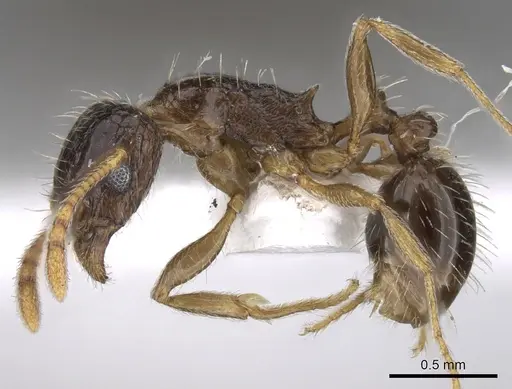
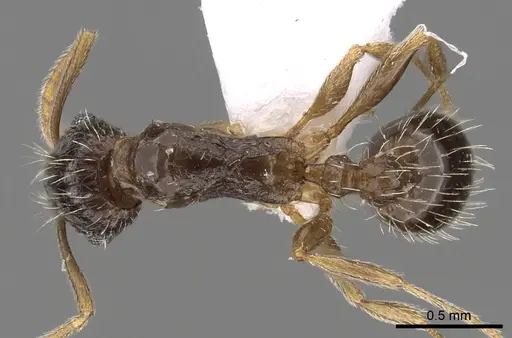
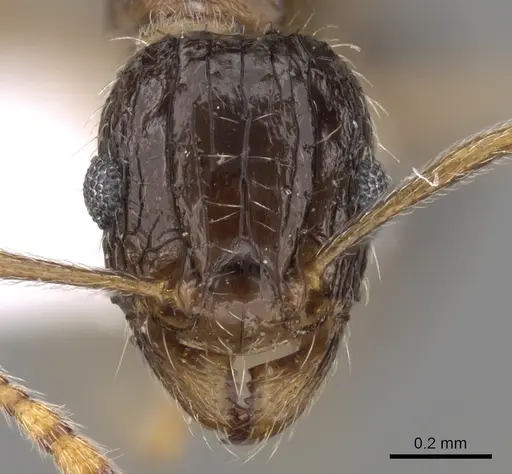
Tetramorium laevithorax - "Smooth-chested Pavement Ant"
Tetramorium laevithorax is a species of ant characterized by its relatively smooth, shiny promesonotal dorsum, which often lacks strong sculpture, though some individuals may have faint longitudinal rugulae. They are typically mid-brown to dark brown in color. These ants are ground-nesting, often found in open or semi-open environments like grasslands and savannahs, but they are also adaptable to disturbed areas such as urban gardens. Workers are small, generally ranging from 3.0 to 3.5 mm in total length. Like many Tetramorium species, they possess distinctive features such as ridged clypeus and an appendaged stinger.
- Difficulty: Easy
- Origin & Habitat: Afrotropical Region (Kenya, Namibia, South Africa, Sudan, Uganda) in Grasslands, Savannahs, Acacia woodlands, Bushveld, Urban gardens, Maize fields, under rocks/wood/soil.
- Colony Type: Monogyne, though some Tetramorium species can be polygyne, claustral founding.
- Size & Growth:
- Queen: 6-8mm
- Worker: 3.0-3.5mm
- Colony: Medium (thousands), potentially up to 10,000 workers for some Tetramorium species. Fast growth.
- Antkeeping:
- Temperature: Ideally, a temperature gradient is preferred. They can thrive at room temperature, but optimal growth is seen between 26-28°C (79-83°F)..
- Humidity: These ants prefer moderately dry nests with a hydration gradient. Aim for 30-40% moist in one section and drier in others..
- Diapause: Required. 2-3 months at 4-10°C.
- Nesting: Ground-nesting species, they prefer nests with tighter tunnels. They can be housed in various formicaria, including test tube setups for founding, and later in acrylic, ytong, or naturalistic setups with a digging medium..
- Behavior: Medium (towards other ant colonies, low towards handlers) aggressiveness.
- Common Issues: Humidity fluctuations, Overfeeding leading to waste, Colony stalling if not enough heat, Mold in nest (from excess humidity/food).
One fascinating aspect of Tetramorium laevithorax, like other pavement ants, is their adaptability. You’ll find them thriving in diverse environments, from natural grasslands to even highly disturbed urban areas like gardens and maize fields. This versatility means they can adjust well to different ant-keeping setups, making them a hardy choice for both new and experienced hobbyists. Their ability to adapt to human settlements, or being "naturalized invaders" in some contexts, shows just how resilient these little creatures are.
Feeding these ants is relatively straightforward as they are generalist foragers. They enjoy a wide range of foods, including liquid sugars like honey or sugar water, and various proteins such as crickets, mealworms, and fruit flies, which are essential for brood development. Don't forget that some Tetramorium species are also semi-granivorous, meaning they appreciate seeds and nuts. Providing a varied diet will keep your colony healthy and happy, promoting robust growth and active foraging.
When it comes to housing, Tetramorium laevithorax prefers nests with snug tunnels, mirroring their natural underground habitats. While they are hardy and can adapt to different formicaria, ensuring a good hydration gradient within their nest is crucial. They appreciate a moderately dry environment, but a section with 30-40% moisture allows them to regulate humidity for their brood. This attention to detail in their living space can greatly impact their overall well-being and growth.
These ants are known for their fast colony growth, often reaching thousands of workers within the first year if they're well-fed and kept at optimal temperatures. While individual queens might vary in their initial egg-laying rates, once the first generation of workers emerges, the colony can experience a significant population boom. This rapid expansion makes them incredibly rewarding to observe for ant keepers who enjoy seeing their colonies flourish quickly.
Diapause, or a hibernation period, is an important part of the Tetramorium life cycle, ensuring the queen's longevity and continued productivity. Although some keepers might choose to skip it, providing a cool period of 2-3 months at around 4-10°C is highly recommended. This simulates their natural seasonal rest and prepares the queen for a new cycle of egg-laying, leading to more vigorous growth in the following active season.