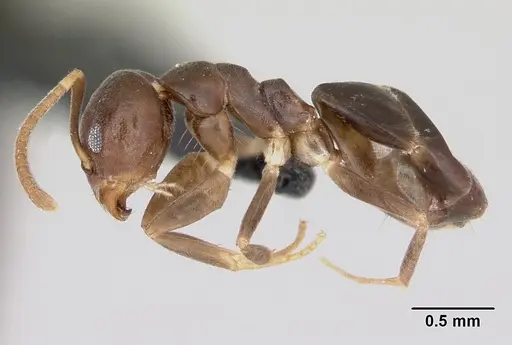
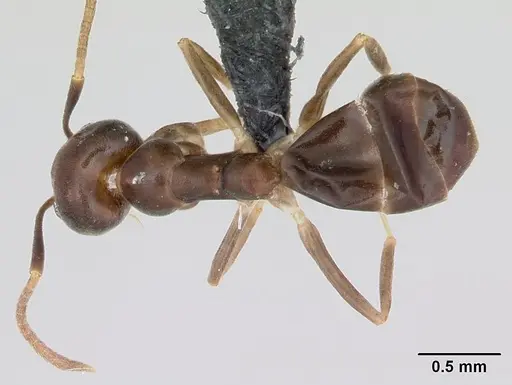
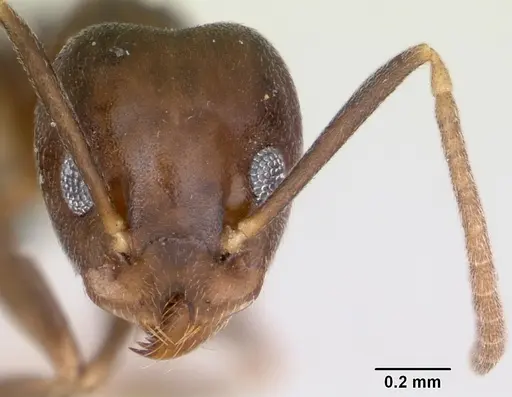
Technomyrmex voeltzkowi - "Voeltzkow's White-Footed Ant (based on common name for the genus)"
Technomyrmex voeltzkowi is a fascinating ant species from the Dolichoderinae subfamily, known for its small size and often variable coloration, ranging from light brown to blackish-brown. These ants exhibit worker polymorphism, meaning their workers can show distinct size variations within the colony, with larger workers typically having broader heads. They are primarily terrestrial ants, frequently found nesting in the ground or under rocks. This species is part of a genus that often forms extensive, multi-nest colonies, making their dynamics quite intriguing to observe.
- Difficulty: Medium
- Origin & Habitat: Afrotropical Region (Botswana, Comoros, Eswatini, Kenya, Mozambique, South Africa, United Republic of Tanzania, Zimbabwe) and Malagasy Region (Madagascar). in Wholly terrestrial, nesting in the ground, under rocks, and found in sifted litter from dry forests. Generally found in tropical and subtropical zones..
- Colony Type: Polygyne (multiple queens, including ergatoid intercastes), unicolonial tendency (forming supercolonies), dependent colony foundation (budding, often involving ergatoid queens) founding.
- Size & Growth:
- Queen: Not specified
- Worker: 2.7-3.7mm
- Colony: Large (tens of thousands to millions, forming supercolonies). Fast growth.
- Antkeeping:
- Temperature: Ideal temperatures for Technomyrmex species range from 24°C to 30°C. Maintaining a consistent temperature within this range, perhaps closer to 26-28°C, will encourage active foraging and healthy brood development..
- Humidity: These ants thrive in moderate to high humidity, ideally between 60% and 80%. Ensure part of the nest setup provides a higher humidity gradient, while still allowing for drier areas to prevent mold..
- Diapause: Not required. Not specified at Not specified.
- Nesting: Given their terrestrial nature, nests simulating ground environments are best. This includes acrylic or Ytong nests with good hydration systems, or natural setups like tubs and trays with a substrate layer. They can also use natural materials like cork bark or wood..
- Behavior: Low (towards handler), Medium (towards food or rival ants) aggressiveness.
- Common Issues: Mold in nest, Mites, Colony stalling (if conditions aren't met), Humidity fluctuations, Escape due to high numbers.
One of the most captivating aspects of Technomyrmex voeltzkowi is the distinct polymorphism observed among their workers. While colonies may contain workers of roughly the same size, others will display a clear range of sizes, contributing to a diverse workforce. Their color is also highly variable, from light to blackish brown, which doesn't seem linked to other observable traits. As a wholly terrestrial species, these ants prefer to build their nests in the soil or under natural covers like rocks, mimicking their wild habitats. When setting up their formicarium, aim to replicate these conditions, perhaps by incorporating a substrate layer and providing various hiding spots.
Technomyrmex voeltzkowi exhibits an intriguing reproductive strategy that sets them apart from many common ant species. Beyond the typical winged queens, they also produce 'ergatoid queens' – wingless female reproductives that are morphologically intermediate between workers and queens. These ergatoid queens play a crucial role in 'dependent colony foundation,' meaning new sub-colonies can bud off from the main nest, often with these wingless reproductives establishing new satellite nests. This unique method of colony expansion contributes to their ability to form large, polydomous colonies.
When it comes to feeding your Technomyrmex voeltzkowi colony, understanding their natural diet is key. Like many Dolichoderinae, their primary sustenance in the wild comes from honeydew produced by sap-feeding insects like aphids. This makes sugary solutions, such as diluted honey or sugar water, an essential part of their diet in captivity. However, they are also opportunistic omnivores and readily scavenge for protein, including dead or living small arthropods and their eggs. Offering a varied diet of insects like fruit flies, mealworms, or crickets, alongside their sugar source, will ensure a healthy and thriving colony.
Ants in the Technomyrmex genus are well-known for their capacity to form immense colonies, often referred to as 'supercolonies,' which can comprise millions of individuals across multiple interconnected nests. While specific data for T. voeltzkowi isn't as detailed as for some related species like T. albipes, it's reasonable to expect a similar potential for large-scale colony development. This means they require significant space as they grow and may eventually spread across an entire ant setup, including outworlds and multiple connected nest modules. Careful consideration of their escape prevention is paramount, as their large numbers can quickly become a containment challenge.
Frequently Asked Questions
What do *Technomyrmex voeltzkowi* ants eat?
Technomyrmex voeltzkowi are omnivores. In the wild, they primarily feed on honeydew from sap-sucking insects. In your ant setup, offer them sugary solutions like diluted honey, sugar water, or nectar. Supplement their diet with protein sources such as small feeder insects like fruit flies, mealworms, or crickets. Always ensure a consistent supply of both carbohydrates and protein for a flourishing colony.
How large can *Technomyrmex voeltzkowi* colonies get?
Colonies within the Technomyrmex genus, including T. voeltzkowi, have the potential to grow incredibly large, often reaching into the tens of thousands, or even millions, of ants. They are known for forming extensive 'supercolonies' with multiple interconnected nests, so be prepared for significant expansion over time. This means they'll need plenty of space in their formicarium and outworld as they mature.
Do *Technomyrmex voeltzkowi* sting or bite?
Fortunately for antkeepers, Technomyrmex voeltzkowi are not known to sting. Like other members of the Dolichoderinae subfamily, they typically lack a functional sting. While they might attempt to bite if severely provoked, their bites are generally harmless to humans. Their primary defense mechanism is often chemical, emitting a distinct odor when threatened, rather than painful physical attacks.
What kind of nest setup is best for *Technomyrmex voeltzkowi*?
Since Technomyrmex voeltzkowi are terrestrial ants that naturally nest in soil and under rocks, a formicarium that mimics these conditions is ideal. Acrylic or Ytong nests with effective hydration systems work well to maintain the necessary humidity levels. Providing a substrate layer in a tub-and-tray setup or a naturalistic formicarium can also be highly beneficial, as they enjoy excavating and utilizing natural materials. Ensure adequate ventilation in the outworld to prevent mold.
Are *Technomyrmex voeltzkowi* workers all the same size?
No, Technomyrmex voeltzkowi workers are polymorphic. This means that within a single colony, you'll observe workers of varying sizes, from smaller minors to larger individuals. This size diversity allows for a division of labor where different-sized workers might specialize in different tasks, contributing to the colony's overall efficiency. It's a fascinating trait to observe as your colony grows.
What's unique about *Technomyrmex voeltzkowi* queens?
A truly unique feature of Technomyrmex voeltzkowi is the presence of 'ergatoid queens' alongside the more typical winged queens. These ergatoid queens are wingless reproductives that look somewhat like large workers. They are essential for the species' 'dependent colony foundation' strategy, where new sub-colonies can form by budding off from the main nest, often with these ergatoid reproductives leading the new offshoots.
Do *Technomyrmex voeltzkowi* require diapause?
Given their tropical and subtropical origins across Africa and Madagascar, Technomyrmex voeltzkowi generally do not require a diapause period. They are adapted to consistent warm temperatures year-round. Maintaining stable conditions without a significant cool-down period is usually best for their continuous activity and development in captivity.
What are the preferred temperature and humidity for *Technomyrmex voeltzkowi*?
For optimal health and activity, aim for temperatures between 24°C and 30°C. Humidity is also crucial; keep it in the range of 60% to 80%. It's helpful to provide a humidity gradient within the nest, offering both moister and drier areas so the ants can choose their preferred spot for different stages of their brood and for themselves.
Are *Technomyrmex voeltzkowi* difficult to keep for a beginner?
Technomyrmex voeltzkowi are rated as 'Medium' difficulty. While they don't sting, their potential for forming very large, polydomous colonies and their unique reproductive strategies (involving ergatoid queens) might present challenges for absolute beginners. They also require careful humidity management to prevent mold. It's recommended for antkeepers with some prior experience.
Can *Technomyrmex voeltzkowi* become a pest in captivity?
While Technomyrmex voeltzkowi specifically is not widely known as a global tramp species like some of its close relatives (e.g., T. albipes), the genus Technomyrmex as a whole contains several species that are considered tramp ants. Due to their ability to form large colonies and their budding nature, proper escape prevention is crucial. If they escape, they can establish themselves rapidly in suitable environments, especially in warm, humid climates or indoor spaces.
How do new *Technomyrmex voeltzkowi* colonies typically form?
New Technomyrmex voeltzkowi colonies primarily form through a process called 'dependent colony foundation' or budding. This means that instead of a single winged queen founding a nest alone (claustral founding), new sub-colonies are established by a group of workers, brood, and often one or more ergatoid queens, which bud off from the parent colony. This allows for rapid expansion and the formation of extensive, multi-nest systems.