

Technomyrmex dubius
- Scientific Name
- Technomyrmex dubius
- Tribe
- Tapinomini
- Subfamily
- Dolichoderinae
- Author
- Bolton, 2007
- Distribution
- Found in 1 countries
Technomyrmex dubius Overview
Technomyrmex dubius is an ant species of the genus Technomyrmex. It is primarily documented in 1 countries , including Malaysia. Detailed taxonomic data and occurrence records can be further explored via authoritative databases such as AntWeb or the Global Biodiversity Information Facility (GBIF).
Technomyrmex dubius
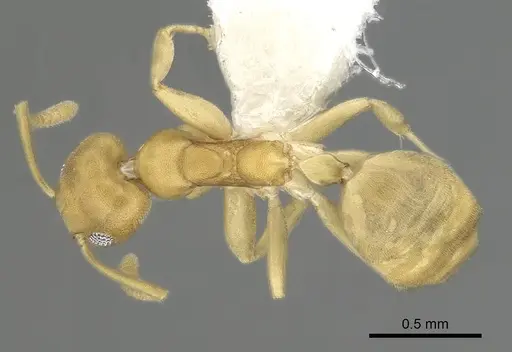
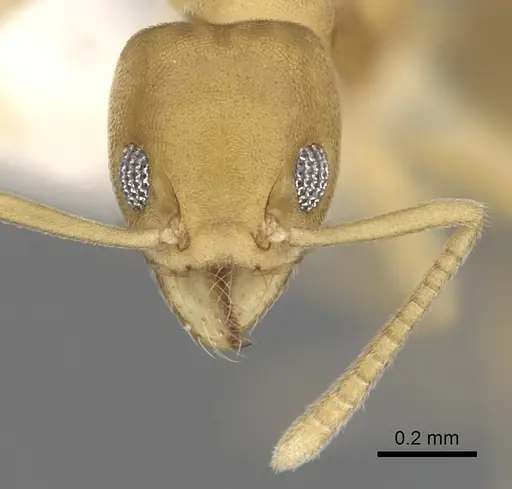
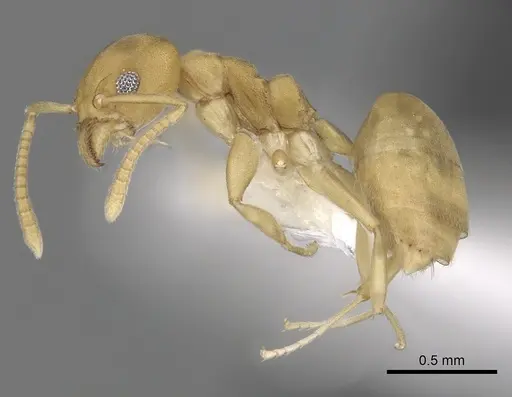
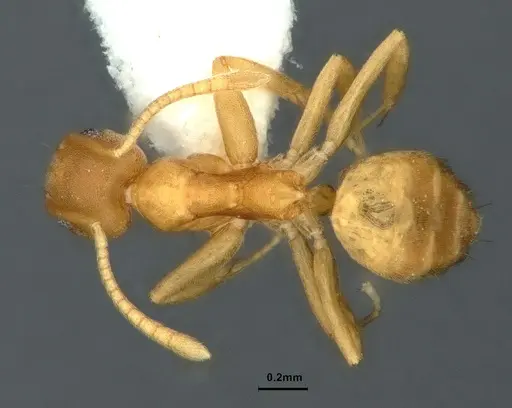
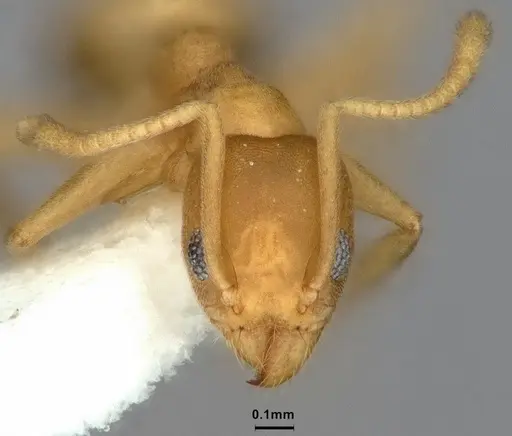
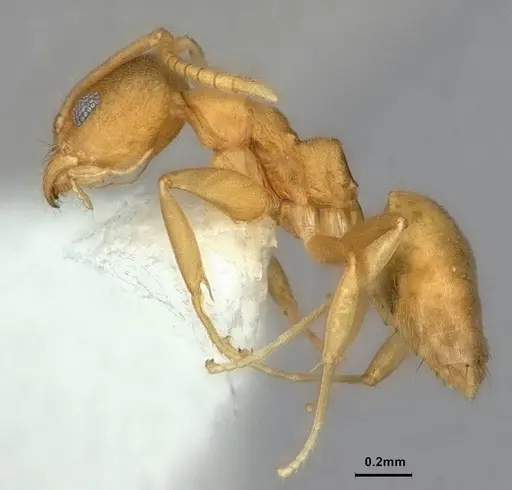
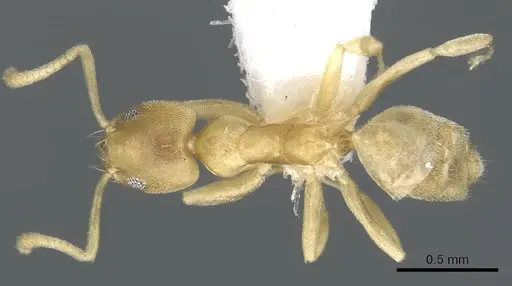
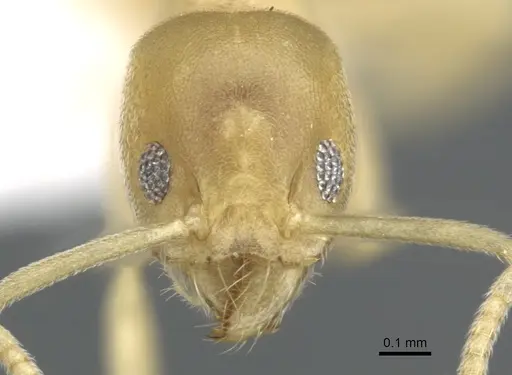
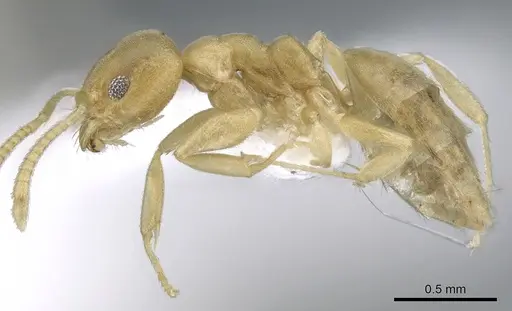
Technomyrmex dubius is a tiny yellow ant measuring just 2.0-2.5mm in total length, belonging to the Dolichoderinae subfamily [1]. Workers have a uniform dull yellow coloration throughout their head, mesosoma, petiole, gaster, and legs [1]. The species is closely related to Technomyrmex textor but can be distinguished by its smaller eyes, the outer margins of the eyes are conspicuously inset from the sides of the head, a distance almost equal to the basal width of the scape [1]. This species is part of the Technomyrmex textor group and has been documented across Southeast Asia, including Thailand, Malaysia, Indonesia, Brunei, Sulawesi, and Papua New Guinea [1][2].
Quick Summary
- Difficulty: Medium
- Origin & Habitat: Tropical Southeast Asia, found in lowland dipterocarp forests and primary dry evergreen forests, both in the canopy and leaf litter [2][1]
- Colony Type: Colony structure is unconfirmed. Based on related Technomyrmex species, likely monogyne (single queen) but this requires verification.
- Size & Growth:
- Queen: Unconfirmed, queen has not been described
- Worker: 2.0-2.54mm [1]
- Colony: Unknown for this species. Related Technomyrmex species typically form moderate colonies.
- Growth: Unknown, estimated based on small size and tropical distribution
- Development: Unconfirmed, estimated 4-6 weeks based on related species patterns (Development timeline is unconfirmed for this species. Tropical species typically develop faster than temperate ones.)
- Antkeeping:
- Temperature: Keep at 24-28°C, these are tropical forest ants that prefer warm, stable conditions. A gentle gradient is recommended.
- Humidity: Maintain moderate to high humidity (60-80%). Their natural habitat in tropical forests and leaf litter suggests they prefer damp conditions with good ventilation to prevent mold.
- Diapause: No, as a tropical species, they do not require hibernation. Keep temperatures stable year-round.
- Nesting: They nest in leaf litter and the canopy in the wild. In captivity, a small test tube setup or Y-tong nest with tight chambers works well. The tiny size of these ants means chambers should be appropriately scaled.
- Behavior: These are small, generally docile ants that forage in the canopy and leaf litter layer. As Dolichoderinae, they do not have a functional stinger but will spray formic acid as a defense. They are likely generalist foragers, similar to other Technomyrmex species. Escape prevention is critical due to their very small size, they can squeeze through standard gaps easily.
- Common Issues: escape prevention is critical, their tiny size allows them to squeeze through the smallest gaps, tropical species requires stable warm temperatures, cold can be fatal, small colony size means losses have bigger impact, each worker matters, wild-caught colonies may have parasites that are difficult to detect, overfeeding can cause mold issues in small enclosures
Temperature and Care
Technomyrmex dubius originates from tropical Southeast Asian forests, so they need warm conditions to thrive. Keep the nest area at 24-28°C, this range supports normal activity and any potential brood development. Unlike temperate species, they do not require a cooling period or hibernation. A heating cable on one side of the nest can create a gentle temperature gradient, allowing workers to regulate their own exposure to warmth. Avoid temperatures below 22°C for extended periods, as this species is adapted to consistently warm conditions. Room temperature within this range is acceptable if your home stays in the low-to-mid 20s°C. [1][2]
Humidity and Water
These ants come from humid tropical forests, so aim for 60-80% humidity in their enclosure. The test tube water reservoir provides a consistent moisture source, but monitor for condensation buildup. Good ventilation is important, stagnant, overly moist air leads to mold which can devastate small colonies. The substrate (if using a naturalistic setup) should stay damp but never waterlogged. In test tube setups, keep the cotton firmly packed but allow some moisture to evaporate through the open end. Watch for condensation on the nest walls, a little is good, excessive moisture is problematic. [2][1]
Feeding and Diet
Based on related Technomyrmex species, T. dubius is likely a generalist forager that collects honeydew from aphids and tends small insects, along with scavenging dead arthropods. In captivity, offer a sugar source (honey water or sugar water) at all times, plus small protein sources like fruit flies, tiny crickets, or other appropriately-sized insects. Because these ants are so small, prey items should be appropriately sized, even a fruit fly is a substantial meal for them. Feed small amounts every few days and remove any uneaten prey within 24 hours to prevent mold. Observe whether workers readily accept different food types and adjust accordingly.
Nesting and Housing
In the wild, T. dubius has been collected from both canopy knockdown and leaf litter, suggesting they nest in elevated microhabitats and the forest floor layer. For captivity, a small test tube setup works well for founding colonies and small groups. The tiny worker size (2-2.5mm) means you need appropriately scaled chambers, standard test tube setups are suitable, but ensure connections to the outworld are tight. A Y-tong (AAC) nest with narrow chambers also works well for this species. Because of their small size, escape prevention is critical, use fine mesh on any ventilation holes and ensure all connections are secure. A small outworld area prevents them from wandering too far from the nest. [1][2]
Behavior and Temperament
Technomyrmex dubius is a small, generally docile species. As Dolichoderinae ants, they do not have a functional stinger but will defend themselves by spraying formic acid, similar to other ants in this subfamily. They are likely more active in the upper regions of the nest and foragers, given their canopy collection in the wild. Workers are small and quick-moving. The colony will likely establish a foraging trail to food sources. These ants are not aggressive toward keepers but their small size makes them hard to handle and easy to lose. Always use excellent escape prevention, even a tiny gap is an escape route for these ants.
Frequently Asked Questions
How long does it take for Technomyrmex dubius to produce first workers?
The exact development timeline is unconfirmed for this species. Based on related Technomyrmex species and their small size, expect approximately 4-6 weeks from egg to worker at optimal temperature (around 26°C). Smaller species often develop slightly faster than larger ones.
Can I keep Technomyrmex dubius in a test tube setup?
Yes, a test tube setup is ideal for this tiny species. The small worker size (2-2.5mm) means standard test tubes work well, but ensure the connection to the outworld is secure with fine mesh or cotton. The test tube provides consistent humidity and works well for founding colonies.
What do Technomyrmex dubius eat?
Based on related species, they are generalist foragers. Offer a constant sugar source (honey water or sugar water) plus small protein sources like fruit flies, tiny crickets, or other small insects. Remove uneaten prey within 24 hours to prevent mold in their small enclosure.
Do Technomyrmex dubius need hibernation?
No. As a tropical species from Southeast Asia, they do not require hibernation or a cooling period. Keep temperatures stable year-round in the 24-28°C range. Sudden temperature drops can be harmful to these tropical ants.
How big do Technomyrmex dubius colonies get?
The maximum colony size is unconfirmed for this species. Based on related Technomyrmex species, colonies likely reach several hundred workers. Their small size and the fact they've been collected as single specimens suggest they may form smaller colonies than some other Technomyrmex species.
Are Technomyrmex dubius good for beginners?
This species is rated as medium difficulty. While their small size presents some challenges (escape prevention, appropriately sized prey), they are generally docile and do not require complex care. The main challenges are maintaining proper temperature and humidity while ensuring they cannot escape.
Why are my Technomyrmex dubius dying?
Common causes include: temperatures below 22°C (tropical species are cold-sensitive), poor escape prevention (they will escape through tiny gaps), mold from overfeeding or poor ventilation, and stress from too much handling. Ensure stable warmth, excellent escape barriers, and feed appropriately sized amounts.
When should I move Technomyrmex dubius to a formicarium?
Wait until the colony has at least 20-30 workers before moving to a larger formicarium. For this tiny species, a small Y-tong or acrylic nest with appropriately scaled chambers works well. Moving too early can stress the colony. Ensure the new nest maintains similar humidity and has tight connections.
Can I keep multiple Technomyrmex dubius queens together?
The colony structure is unconfirmed for this species. Combining unrelated queens is not recommended as it has not been documented and could result in aggression. If you obtain a wild-caught colony, it likely has a single queen (monogyne) based on typical Technomyrmex patterns.
References

This caresheet is licensed under CC BY-SA 4.0 .
Literature
Loading...Loading products...