

Tapinoma schreiberi
- Scientific Name
- Tapinoma schreiberi
- Tribe
- Tapinomini
- Subfamily
- Dolichoderinae
- Author
- Hamm, 2010
- Distribution
- Found in 1 countries
Tapinoma schreiberi Overview
Tapinoma schreiberi is an ant species of the genus Tapinoma. It is primarily documented in 1 countries , including United States of America. Detailed taxonomic data and occurrence records can be further explored via authoritative databases such as AntWeb or the Global Biodiversity Information Facility (GBIF).
Tapinoma schreiberi
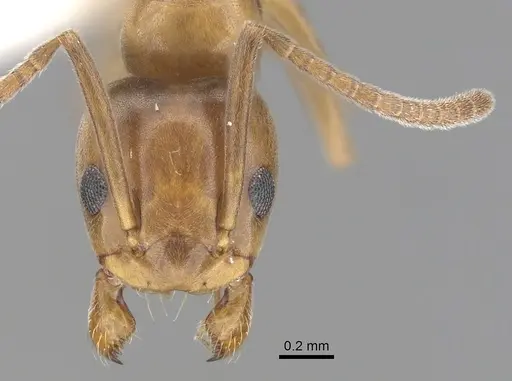
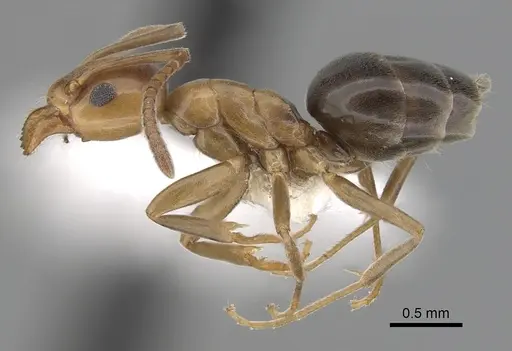
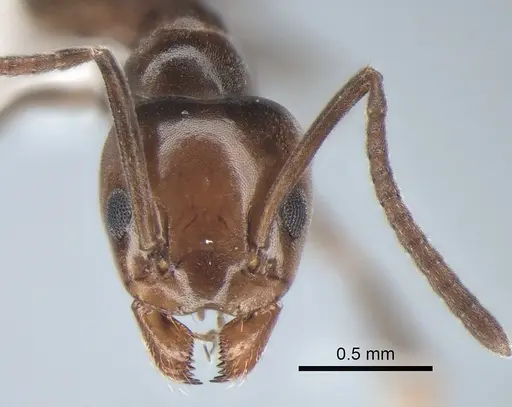
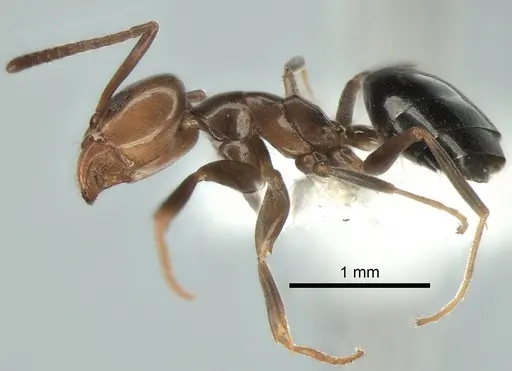
Tapinoma schreiberi is a small bicolored ant native to the western United States. Workers measure around 2.5-3mm with a distinctive two-tone appearance: the head and mesosoma are rufous (reddish-orange) while the gaster is black to dark brown, fading to gray in older workers [1]. Queens are slightly larger at about 3mm and share the same bicolored pattern [1]. This species was formally described in 2010 and is larger than its close relative Tapinoma sessile, with which it shares its range but never forms mixed colonies [1]. The type specimens were collected in a pine-fir forest at 1,920 meters elevation in Nevada County, California [1].
Quick Summary
- Difficulty: Easy
- Origin & Habitat: Native to the mountains of southern Nevada and central to southern California in the Nearctic Region. Found in pine-fir forest habitats at high elevation (around 1,920m) [1][2].
- Colony Type: Single-queen colonies (monogyne), typical for the genus Tapinoma. Colony structure is inferred from typical genus patterns since specific founding data is not available.
- Colony: Monogyne
- Founding: Claustral
- Size & Growth:
- Queen: Approximately 3mm (HL 0.93mm, HW 1.03mm) [1]
- Worker: Approximately 2.5-3mm (HL 0.77mm, HW 0.75mm) [1]
- Colony: Unknown for this species specifically, related Tapinoma species typically reach a few hundred workers
- Growth: Moderate, inferred from typical Tapinoma development patterns
- Development: Estimated 6-8 weeks based on typical Dolichoderinae development at warm temperatures (Development time is estimated from related species, specific data for T. schreiberi is not available)
- Antkeeping:
- Temperature: Keep at room temperature (20-24°C). Based on their high-elevation pine-fir forest origin, they prefer cooler conditions than tropical species but handle standard room temperatures well.
- Humidity: Moderate humidity (50-70%). These are forest-floor ants that tolerate typical indoor conditions but appreciate occasional misting of the outworld.
- Diapause: Yes, as a temperate species from high elevation, they benefit from a winter rest period (6-8 weeks at 5-10°C).
- Nesting: Will readily accept test tubes, Y-tong (AAC), or plaster nests. They prefer dark, snug chambers. A small formicarium with narrow passages scaled to their tiny size works well.
- Behavior: These ants are active and fast-moving, typical of Tapinoma species. Workers are moderately aggressive when defending the nest and will spray formic acid as their primary defense (standard for Dolichoderinae). They are not particularly large or dangerous to keepers. Escape prevention is important due to their small size, use fine mesh and tight-fitting lids. Workers are generalist feeders that tend aphids for honeydew and hunt small insects.
- Common Issues: escape prevention is critical due to their tiny size, they can squeeze through standard gaps, small colony size means slow growth, beginners may lose patience, high-elevation origin means they need cooler temperatures than tropical ants, formic acid spray can irritate eyes, handle gently and avoid disturbing the nest
Housing and Nest Setup
Tapinoma schreiberi is a small ant that does well in standard setups. Test tubes work perfectly for founding colonies, use a water reservoir connected to a cotton plug, with the queen in the dry portion. Once the colony reaches 20-30 workers, you can move them to a formicarium. Y-tong (AAC) nests are ideal because the narrow chambers match their small size and the condensation system makes humidity control easy. Plaster or acrylic nests also work well. Keep the nest dark, these forest-floor ants prefer dim conditions. The outworld should have a small foraging area where you offer food. Use a barrier of fluon or talc powder around the edges since their small size makes them good escape artists. [1]
Feeding and Diet
Like other Tapinoma species, these ants are generalists that accept both sugar and protein. Offer sugar water (1:1 ratio) or honey diluted with water as a constant energy source. For protein, small insects like fruit flies, pinhead crickets, and mealworms work well. They will also scavenge dead insects. In the wild, workers tend aphids and scale insects for honeydew, so they appreciate sweet liquids. Feed protein 2-3 times per week, and keep sugar water available at all times. Remove uneaten prey after 24-48 hours to prevent mold.
Temperature and Seasonal Care
Keep your colony at room temperature, ideally 20-24°C. Their high-elevation origin (1,920m in California) means they tolerate cooler conditions better than tropical ants. During summer, standard room temperature is fine. In winter, they benefit from a diapause period, reduce temperature to 5-10°C for 6-8 weeks in winter (November-February for Northern Hemisphere keepers). This mimics their natural seasonal cycle and helps the colony rest. Do not feed during diapause. Return to normal temperatures gradually in spring. [1]
Behavior and Defense
Workers are active and fast-moving, patrolling their territory constantly. When threatened, they use their primary defense mechanism: spraying formic acid. This is standard for Dolichoderinae ants, they have a gland that produces formic acid instead of a stinger. The spray can irritate skin and eyes, so handle gently and avoid blowing on or poking the nest. They are not aggressive toward keepers but will defend vigorously if their nest is disturbed. Workers communicate using chemical trails and can recruit nestmates to food sources quickly.
Colony Development
A newly mated queen will seal herself in a small chamber and lay eggs. She feeds the first brood from her stored fat reserves (claustral founding). The first workers, called nanitics, are smaller than normal workers and emerge after 6-8 weeks. After that, the colony grows progressively as the queen continues laying eggs. Growth rate is moderate, expect the colony to reach 50 workers within the first year under good conditions. Maximum colony size is not documented for this species but related Tapinoma typically reach a few hundred workers. [1]
Frequently Asked Questions
How long does it take for Tapinoma schreiberi to produce first workers?
Expect first workers (nanitics) to emerge in 6-8 weeks after the queen lays her first eggs. This is typical for Dolichoderinae ants at room temperature (20-24°C). The exact timing depends on temperature, warmer conditions slightly speed development.
What do Tapinoma schreiberi eat?
They are generalist feeders. Offer sugar water or honey as a constant energy source, and protein sources like small insects (fruit flies, pinhead crickets, mealworms) 2-3 times per week. They will scavenge dead insects too.
Are Tapinoma schreiberi good for beginners?
Yes, they are a good beginner species. They are small, easy to house in test tubes or small formicariums, and have straightforward care requirements. The main challenges are escape prevention (due to their tiny size) and providing proper winter diapause.
Do Tapinoma schreiberi need hibernation?
Yes, as a temperate species from high elevation, they benefit from a winter rest period. Reduce temperature to 5-10°C for 6-8 weeks during winter (roughly November to February). Do not feed during this period. This diapause helps maintain colony health.
How big do Tapinoma schreiberi colonies get?
Colony size is not specifically documented, but related Tapinoma species typically reach several hundred workers. Expect moderate growth over 1-2 years to reach 50-100 workers, with larger colonies developing over several years.
Can I keep multiple queens together?
This species is likely single-queen (monogyne) in structure. Combining unrelated queens is not recommended as they would likely fight. Only one queen should be kept per colony.
When should I move my colony to a formicarium?
Move from test tube to formicarium once the colony reaches 20-30 workers. Before then, the test tube provides ideal founding conditions. Make sure the formicarium has appropriately sized chambers, these are small ants that prefer snug spaces.
Why are my Tapinoma schreiberi escaping?
Their small size makes them excellent escape artists. Check that your setup has no gaps larger than 1mm. Apply fluon or talc powder to barrier edges, use tight-fitting lids, and ensure any connections between nest and outworld are sealed. Check for cracks in acrylic nests.
What temperature is best for Tapinoma schreiberi?
Keep them at room temperature, ideally 20-24°C. They come from high-elevation pine-fir forests, so they prefer cooler conditions than tropical ants. Standard room temperature works well, avoid overheating.
References

This caresheet is licensed under CC BY-SA 4.0 .
CASENT0249769
View on AntWeb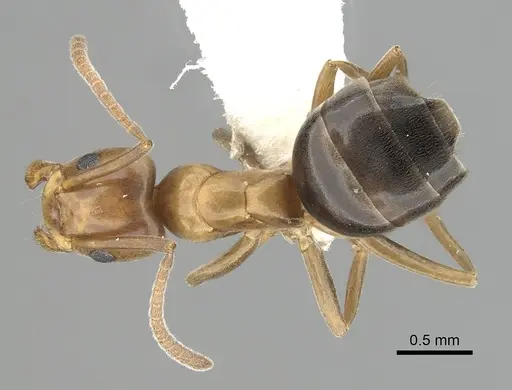
CASENT0882241
View on AntWeb
Literature
Loading...Loading products...