

Tapinoma pygmaeum
- Scientific Name
- Tapinoma pygmaeum
- Tribe
- Tapinomini
- Subfamily
- Dolichoderinae
- Author
- Dufour, 1857
- Distribution
- Found in 3 countries
Tapinoma pygmaeum Overview
Tapinoma pygmaeum is an ant species of the genus Tapinoma. It is primarily documented in 3 countries , including Belgium, Spain, France. Detailed taxonomic data and occurrence records can be further explored via authoritative databases such as AntWeb or the Global Biodiversity Information Facility (GBIF).
Tapinoma pygmaeum
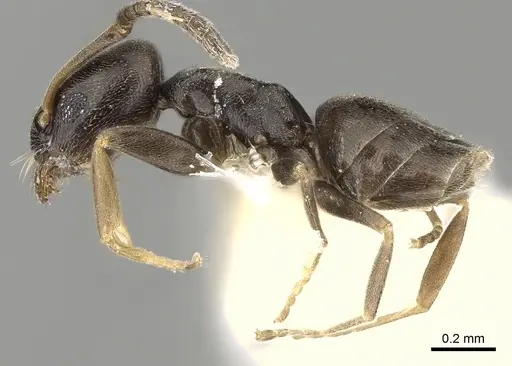
Tapinoma pygmaeum is one of the smallest ants you can keep, workers measure just 0.5mm, making them barely visible to the naked eye. These tiny ants have a dark brown head and mesosoma with noticeably lighter antennae and legs. They belong to the Dolichoderinae subfamily, meaning they spray formic acid for defense rather than stinging. Originally described from Saint-Sever in southwest France by Dufour in 1857,this species was historically confused with the similar-looking Plagiolepis pygmaea, which explains why it was considered rare for so long [1][2].
What makes T. pygmaeum fascinating is its adaptability, it's found from sea level all the way up to nearly 2000m in the Pyrenees, showing remarkable frost resistance for such a tiny ant. Colonies can have multiple queens (polygynous) and frequently relocate to follow food sources. They've even been found nesting in active beehives, using the warmth to survive. This species is expanding its range northward, likely due to climate change, with established populations now in Belgium and southern England [1][2].
Quick Summary
- Difficulty: Medium
- Origin & Habitat: Native to the Mediterranean region (Spain, southern France, Italy) with recent findings in Switzerland, Belgium, Netherlands, and southern England. Found in diverse habitats from riparian forests and mountain meadows to city parks and gardens. Nests under stones, in rock crevices, dead wood, and even in plant stems [1][2].
- Colony Type: Polygynous (multiple queens per colony). Documented colonies have over 10 queens with 300-400 workers, though French colonies typically stay under 100 workers. Frequently relocates nest sites for better food access [1].
- Colony: Optionally polygyne
- Size & Growth:
- Queen: Unconfirmed, estimated 3-4mm based on genus (no direct measurements found)
- Worker: 0.48-0.52mm (cephalic size ~488μm) [1]
- Colony: Typically under 100 workers in natural colonies, up to 300-400 in some populations [1]
- Growth: Moderate, inferred from small colony sizes
- Development: Estimated 6-8 weeks at room temperature (based on typical Dolichoderinae development) (Development time not directly studied, estimate based on related Tapinoma species)
- Antkeeping:
- Temperature: Room temperature (18-24°C) works well. This species tolerates a wide range including cool conditions, found at altitudes where January temperatures drop to -4°C [1]. Avoid overheating.
- Humidity: Moderate, they nest in varied conditions from relatively dry to damp areas. Keep substrate slightly moist but not wet. Provide a moisture gradient so ants can choose their preferred zone.
- Diapause: Yes, frost resistance documented in wild populations from high altitudes. Provide a cool period (10-15°C) over winter if keeping outdoors, though indoor colonies may not require formal hibernation.
- Nesting: Tiny size requires very small chambers. Test tubes with cotton barriers work for founding colonies. For established colonies, use small acrylic nests or Y-tong with tight chambers scaled to their minute size. They readily accept artificial nests but may relocate frequently in captivity.
- Behavior: Generally peaceful and non-aggressive. Workers are active foragers that search for honeydew and small prey. Because of their extremely small size, escape prevention is critical, they can squeeze through gaps too small for other ants. Not a stinging species (Dolichoderinae spray formic acid). Colonies may show polygynous behavior with multiple egg-laying queens.
- Common Issues: escape prevention is critical due to tiny size, use fine mesh barriers and tight-fitting lids, small colony size means slow population growth, don't expect rapid expansion, frequent nest relocation may stress colonies if disturbed too often, may be confused with Plagiolepis species when establishing, verify identification, wild-caught colonies may have parasites that can devastate small populations
Housing and Escape Prevention
Housing Tapinoma pygmaeum requires attention to their minute size. Workers are barely 0.5mm, meaning they can escape through gaps that other ants would never fit through. Use test tubes with cotton barriers for founding colonies, switching to small acrylic or Y-tong nests once the colony reaches 20-30 workers. Whatever nest you choose, ensure chambers are appropriately scaled, these ants need tight, small spaces rather than the larger chambers suitable for bigger species. Apply fluon or similar barriers to all escape routes, and inspect regularly as even tiny gaps can lead to escapes. A magnifying glass helps with daily checks [1].
Feeding and Diet
Like other Tapinoma species, T. pygmaeum likely feeds on honeydew from aphids and scale insects, plus small insects and nectar. In captivity, offer diluted honey water or sugar water as a constant carbohydrate source. For protein, provide tiny prey items like fruit flies, pinhead crickets, or aphids. Because of their small size, prey items should be appropriately scaled, what seems tiny to you is actually substantial for these ants. Feed protein 2-3 times per week and keep sugar water available constantly. Remove uneaten prey within 24 hours to prevent mold [2].
Temperature and Seasonal Care
This species shows remarkable temperature tolerance. In the wild, colonies survive at altitudes up to 1944m in the Pyrenees where January temperatures drop to -4°C, indicating good cold tolerance [1]. Keep colonies at room temperature (18-24°C) for normal activity. If you want to simulate seasonal cycles, provide a cool period around 10-15°C during winter months, this matches their natural conditions and may improve colony health long-term. Avoid temperatures above 28°C as Mediterranean ants generally don't tolerate extreme heat well. A heating cable on one side of the nest creates a temperature gradient allowing ants to self-regulate.
Colony Structure and Multi-Queen Care
Tapinoma pygmaeum is polygynous, meaning colonies naturally have multiple queens, sometimes over 10 in a single nest [1]. This differs from many ant species that have just one queen per colony. The multiple queens coexist and all lay eggs, which can lead to faster colony growth than single-queen species. French colonies typically max out around 100 workers, but introduced populations in Belgium have reached several hundred workers, showing the potential for larger colonies in optimal conditions [1]. When keeping this species, you don't need to separate queens, they naturally coexist. However, this also means colony founding may be pleometrotic (multiple queens starting together), which can lead to aggression during colony establishment, monitor closely when combining unrelated foundresses.
Identification and Similar Species
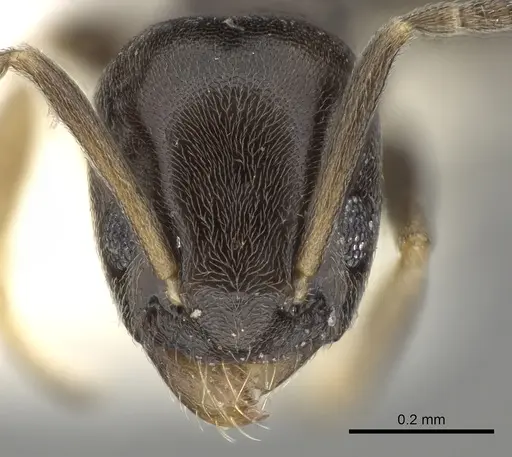
Correctly identifying T. pygmaeum is crucial because they're easily confused with Plagiolepis species, which is why they were considered rare for so long [1][2]. Key identifying features include: extremely small size (workers around 0.5mm), dark brown head and mesosoma with notably lighter antennae and legs, very short antennal scapes, and four conspicuous long hairs on the front of the clypeus (face plate). They also have a very large postocular distance, the space behind the eyes is unusually wide for such a tiny ant. If your 'T. pygmaeum' has a distinctly lighter-colored abdomen contrasting with a dark head and body, you may actually have Tapinoma pygmaeum (now recognized as a color morph of T. pygmaeum) or the similar T. melanocephalum [1].
Growth Expectations and Patience
Don't expect rapid colony growth with T. pygmaeum. French colonies in the wild rarely exceed 100 workers, and they frequently relocate their entire nest to follow food sources [1]. This means your colony will likely stay modest in size compared to species like Lasius or Camponotus. The tiny size of workers also means each individual contributes less to colony function. Be patient, a healthy founding colony might take a year or more to reach 50 workers. The reward is an interesting species with unusual behaviors, including their tolerance of cool temperatures and their polygynous colony structure. These ants are best suited for keepers who enjoy observing subtle behaviors rather than those wanting rapid colony expansion.
Frequently Asked Questions
How long does it take for Tapinoma pygmaeum to produce first workers?
Based on typical Tapinoma development, expect first workers (nanitics) around 6-8 weeks after the queen lays eggs, assuming room temperature (20-24°C). Development time has not been directly studied for this species, so this is an estimate. The first workers will be very tiny, even smaller than mature workers [1].
Can I keep multiple Tapinoma pygmaeum queens together?
Yes, this species is naturally polygynous with multiple queens per colony. However, when combining unrelated foundresses, monitor for aggression during the initial establishment period. It's generally safer to let a single queen found a colony, or introduce additional queens very carefully when the colony is small [1].
Why are my Tapinoma pygmaeum escaping?
Their tiny size (workers around 0.5mm) means they can squeeze through impossibly small gaps. Check for gaps around lid seams, tubing connections, and any cracks in the nest. Apply fluon or similar barrier to all potential escape routes. Inspect under magnification, gaps invisible to your naked eye are large enough for these ants [1].
Do Tapinoma pygmaeum need hibernation?
Yes, they benefit from a cool period. Wild colonies survive at high altitudes where winter temperatures drop well below freezing, showing good frost resistance. A cool period around 10-15°C during winter months mimics their natural conditions. Indoor colonies may skip formal hibernation, but a slight temperature reduction helps maintain natural cycles [1].
How big do Tapinoma pygmaeum colonies get?
Colonies typically stay under 100 workers in natural populations, though some documented populations reach 300-400 workers. Don't expect large colonies, these are tiny ants with modest population sizes compared to most common ant pets [1].
What do Tapinoma pygmaeum eat?
They feed on honeydew (the sugary waste from aphids), nectar, and small insects. In captivity, provide sugar water or honey water constantly, plus tiny protein sources like fruit flies, aphids, or small cricket pieces. Scale prey to their minute size, even a fruit fly is substantial for these tiny workers [2].
Is Tapinoma pygmaeum good for beginners?
Medium difficulty, not ideal for complete beginners due to their tiny size requiring excellent escape prevention, but easier than some exotic species. They're temperature-tolerant and don't require specialized heating. The main challenge is preventing escapes and being patient with slow colony growth. If you can provide secure housing and don't need rapid results, they're rewarding to keep [1].
When should I move my Tapinoma pygmaeum to a formicarium?
Wait until the colony has 30-50 workers and the test tube is becoming crowded. These ants prefer small chambers, so choose a nest with appropriately sized passages. They also frequently relocate, so don't be surprised if they move to different nest areas within your formicarium [1].
Why is my Tapinoma pygmaeum colony dying?
Common causes include: escape (check for tiny gaps), stress from too much disturbance (they relocate frequently and may be sensitive), parasites (wild-caught colonies are especially vulnerable), and poor nutrition. Also verify identification, they're often confused with Plagiolepis. Check that sugar water is always available and protein is offered regularly. Small colonies are vulnerable to sudden collapse [1][2].
References

This caresheet is licensed under CC BY-SA 4.0 .
CASENT0280679
View on AntWeb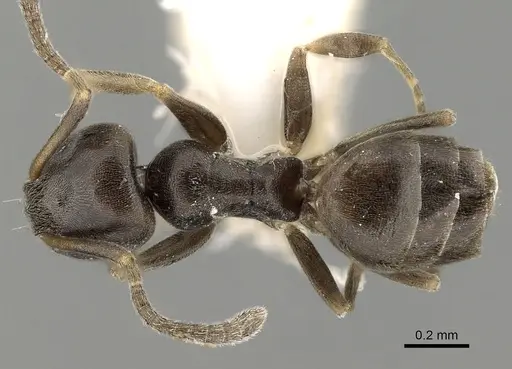
Literature
Loading...Loading products...