

Tanipone aversa
- Scientific Name
- Tanipone aversa
- Subfamily
- Dorylinae
- Author
- Bolton & Fisher, 2012
- Distribution
- Found in 1 countries
Tanipone aversa Overview
Tanipone aversa is an ant species of the genus Tanipone. It is primarily documented in 1 countries , including Madagascar. Detailed taxonomic data and occurrence records can be further explored via authoritative databases such as AntWeb or the Global Biodiversity Information Facility (GBIF).
Tanipone aversa
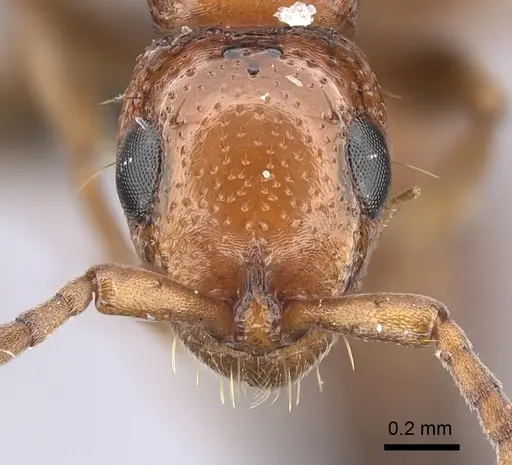
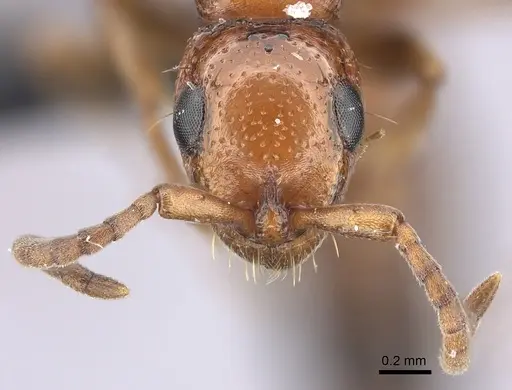
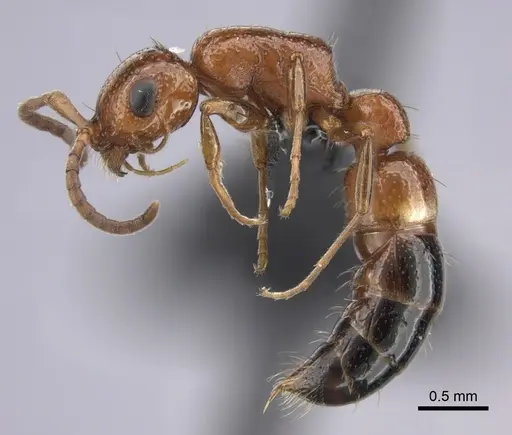
Tanipone aversa is a small ant species native to Madagascar, specifically found in the Makay Mountains region of Toliara Province. Workers measure approximately 0.87-0.90mm in head length, making them relatively small ants [1]. They have a distinctive two-tone coloration: the head, mesosoma, and front abdominal segments are orange, while the rear portion of the abdomen (from AIV onward) is black [1]. This species belongs to the maculata species group and is closely related to Tanipone varia, from which it can be distinguished by its narrower second abdominal segment and the continuous pale band at the rear of the third abdominal segment rather than paired spots [2].
All known specimens of this species were collected from burned savannah habitat at 575m elevation, suggesting they prefer open, warm areas that experience periodic fire regimes [1]. As a member of the Dorylinae subfamily (army ants), they are predatory by nature, though specific prey preferences are unconfirmed for this species.
Quick Summary
- Difficulty: Expert
- Origin & Habitat: Madagascar (Toliara Province, Makay Mountains), burned savannah habitat at 575m elevation [1]
- Colony Type: Unconfirmed, only three specimens known from the original collection, colony structure has not been studied
- Size & Growth:
- Queen: Unknown, queen caste has not been described for this species
- Worker: 0.87-0.90mm head length,0.70-0.72mm head width [1]
- Colony: Unknown, colony size has not been documented
- Growth: Unknown, growth rate has not been studied
- Development: Unconfirmed, no development data exists for this species. Based on typical Dorylinae patterns, expect 4-8 weeks at warm temperatures, but this is an estimate. (Development timeline is unconfirmed. Dorylinae ants typically develop relatively quickly compared to some other subfamilies, but specific data for Tanipone aversa does not exist.)
- Antkeeping:
- Temperature: Provide warm conditions around 24-28°C based on their Madagascar savannah origin. A heating gradient allows ants to self-regulate
- Humidity: Moderate to high humidity, burned savannah areas experience seasonal moisture. Keep nest substrate lightly moist but allow some drying between waterings
- Diapause: Unknown, Madagascar species may have reduced diapause requirements compared to temperate ants. Consider a brief cool period (2-4 weeks at 15-18°C) during winter months if colony becomes less active
- Nesting: Natural nesting is unconfirmed. As Dorylinae, they likely prefer soil nests or will accept test tubes and acrylic nests with appropriate moisture. Provide a dark, secure nesting area
- Behavior: As Dorylinae ants, they are predatory and likely form smaller colonies than typical army ants. They probably forage in small groups or individually, hunting small invertebrates. Their small size (under 1mm) means escape prevention is critical, they can squeeze through tiny gaps. Temperament is likely defensive but they are too small to pose any sting risk to humans. Activity level is probably moderate to high, with workers actively hunting prey.
- Common Issues: extremely limited availability, this species is only known from three type specimens and is not commonly available in the antkeeping hobby, no established care protocols, all recommendations are inferences from genus patterns and habitat, not direct experience, escape prevention is critical due to their tiny size, use fine mesh and seal all gaps, prey acceptance is uncertain, start with small live prey like springtails and fruit flies, colony failure risk is high due to lack of species-specific knowledge
Species Identification and Distinction
Tanipone aversa is a member of the maculata species group and falls within the varia complex. It can be distinguished from its close relative Tanipone varia by several key features: the third abdominal segment (AIII) is entirely orange with a continuous pale band at the rear (varia has paired spots), the second abdominal segment (AII) is longer and narrower (AIIW/AIIL ratio 1.09-1.11 versus 1.15-1.30 in varia), and AII width is always less than pronotum width (PW) whereas in varia it is typically greater [1]. Workers are small at approximately 0.87-0.90mm head length, with a distinctive orange head, mesosoma, and front abdomen contrasting against a black rear abdomen [1].
Natural Habitat and Distribution
This species is known only from the Makay Mountains in Toliara Province, southwestern Madagascar. The type specimens were collected from burned savannah at 575m elevation in December 2010 [1]. The burned savannah habitat indicates preference for open, fire-maintained grassland areas with sparse tree cover. Madagascar's climate in this region is tropical with distinct wet and dry seasons. The elevation of 575m suggests they tolerate warm conditions typical of lowland Madagascar. This extremely limited distribution makes Tanipone aversa one of the rarest ant species in the hobby, with only three specimens ever collected scientifically [1].
Taxonomy and Classification
Tanipone aversa was formally described in 2012 by Bolton and Fisher as part of a major revision of the cerapachyine ant genera. It belongs to the subfamily Dorylinae (army ants), genus Tanipone. The species name 'aversa' refers to the pale band on the abdomen being turned or directed backward. The genus Tanipone contains several Madagascar-endemic species, all of which are relatively poorly studied. As Dorylinae, they share characteristics with army ants including predatory behavior and potentially nomadic colony movements, though these traits are not confirmed specifically for T. aversa [1][2].
Housing and Care Recommendations
Since this species has never been kept in captivity, all recommendations are educated guesses based on genus patterns and habitat. Use a small test tube setup or acrylic nest with chambers scaled to their tiny size (under 1mm workers). Maintain temperatures of 24-28°C with a slight gradient. Keep substrate moderately moist but allow drying between waterings. For feeding, offer small live prey, springtails, fruit flies, and tiny crickets are appropriate sizes. Sugar water may be accepted but protein prey is likely the primary food source given their Dorylinae classification. Escape prevention is critical due to their minute size, use fine mesh barriers and ensure all connections are sealed. Start with very small colony fragments if available, as founding colonies are most challenging to maintain.
Challenges and Ethical Considerations
Tanipone aversa represents one of the most challenging species to keep due to the complete lack of captive husbandry information. Only three specimens have ever been collected, making wild harvesting nearly impossible and ecologically irresponsible. If colonies ever become available through breeding, they would require expert-level care and significant experimentation to establish protocols. The scientific community has minimal knowledge of this species, even basic information like queen morphology and colony size remains unknown. Potential keepers should consider whether they have the resources and expertise to contribute to knowledge rather than simply observing. Supporting conservation efforts in Madagascar may be more impactful than attempting to keep this extremely rare species.
Frequently Asked Questions
Is Tanipone aversa available for purchase in the antkeeping hobby?
No, Tanipone aversa is extremely rare and not commercially available. Only three worker specimens have ever been collected, all from the same location in Madagascar. This species is known primarily from scientific literature and is not established in captive breeding programs.
What do Tanipone aversa ants eat?
Diet is unconfirmed for this species. As members of the Dorylinae subfamily (army ants), they are presumed to be predatory on small invertebrates. In captivity, you should offer small live prey such as springtails, fruit flies, and tiny crickets. Sugar water may be accepted but protein prey is likely their primary food source.
How big do Tanipone aversa colonies get?
Colony size is unknown, this species has never been documented in the wild beyond three worker specimens. Based on their small worker size (under 1mm) and typical Dorylinae patterns, colonies likely remain relatively small, possibly 50-200 workers. The queen caste has not been described.
What temperature should I keep Tanipone aversa at?
Provide warm conditions around 24-28°C based on their Madagascar savannah origin. A heating gradient allowing self-regulation is ideal. This recommendation is inferred from habitat, not confirmed through captive experience.
Do Tanipone aversa ants sting?
Dorylinae ants have functional stingers, though this species is too small to cause any meaningful pain to humans. Their tiny size (under 1mm worker length) means any sting would be negligible. However, they may use their stinger defensively if handled roughly.
Is Tanipone aversa suitable for beginners?
No. This species is rated Expert difficulty due to complete lack of captive care information, extreme rarity, and the need to develop husbandry protocols through experimentation. Even experienced antkeepers should approach this species with caution and only if they can contribute meaningful observations to advance our knowledge.
Where does Tanipone aversa come from?
Tanipone aversa is endemic to Madagascar, specifically the Makay Mountains in Toliara Province. All known specimens were collected from burned savannah habitat at 575m elevation. This is one of the rarest ant species in the world with only three known specimens.
How do I set up a nest for Tanipone aversa?
Use small, appropriately scaled housing, test tubes or small acrylic nests with narrow chambers suitable for their tiny size (under 1mm workers). Provide moderate humidity and a dark nesting area. This recommendation is inferred since no captive colonies have ever been established.
Does Tanipone aversa need hibernation?
Diapause requirements are unknown for this species. As a Madagascar species from a warm, tropical region, they likely have minimal or no true hibernation. A brief cool period (2-4 weeks at 15-18°C) during winter may be appropriate if the colony shows reduced activity, but this is speculative.
Why is so little known about Tanipone aversa?
This species was only described in 2012 and is known from just three worker specimens collected during a single biodiversity survey. The Makay Mountains region is remote and understudied. Basic biology including queen morphology, colony structure, development, and behavior remains completely undocumented in scientific literature.
References

This caresheet is licensed under CC BY-SA 4.0 .
CASENT0207894
View on AntWeb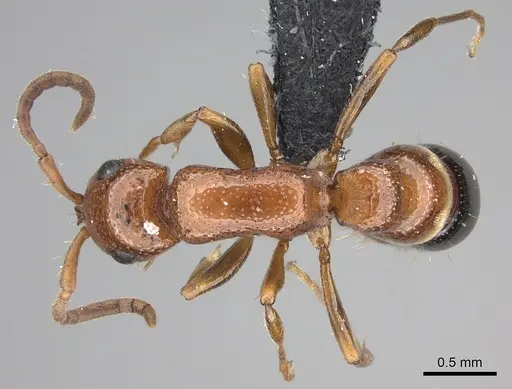
Literature
Loading...Loading products...