

Syllophopsis ferodens
- Scientific Name
- Syllophopsis ferodens
- Tribe
- Solenopsidini
- Subfamily
- Myrmicinae
- Author
- Heterick, 2006
- Distribution
- Found in 1 countries
Syllophopsis ferodens Overview
Syllophopsis ferodens is an ant species of the genus Syllophopsis. It is primarily documented in 1 countries , including Madagascar. Detailed taxonomic data and occurrence records can be further explored via authoritative databases such as AntWeb or the Global Biodiversity Information Facility (GBIF).
Syllophopsis ferodens
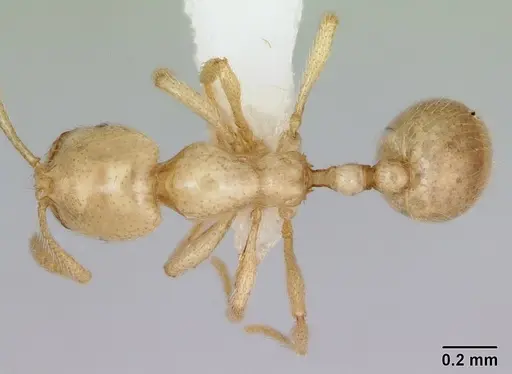
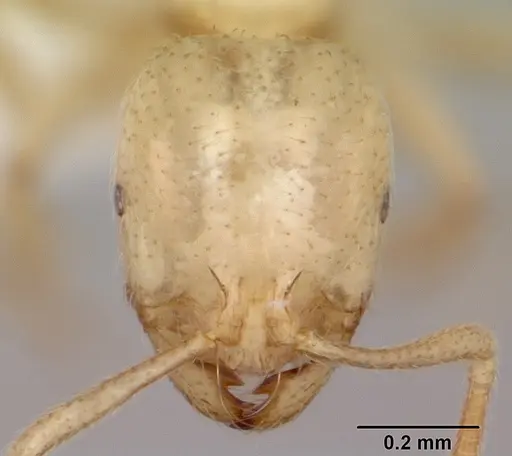
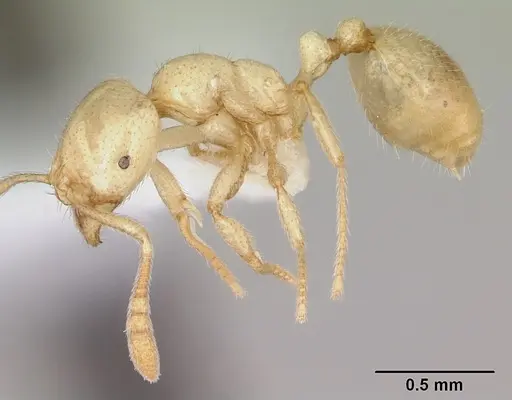
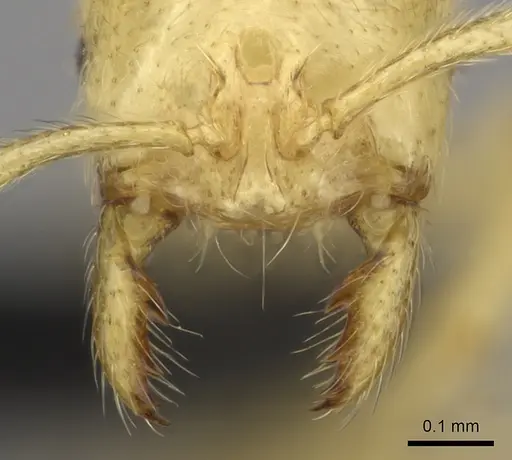
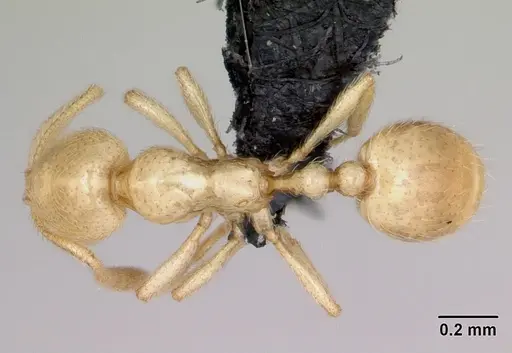
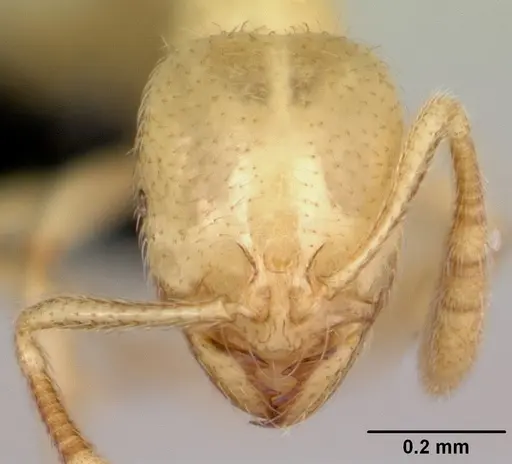
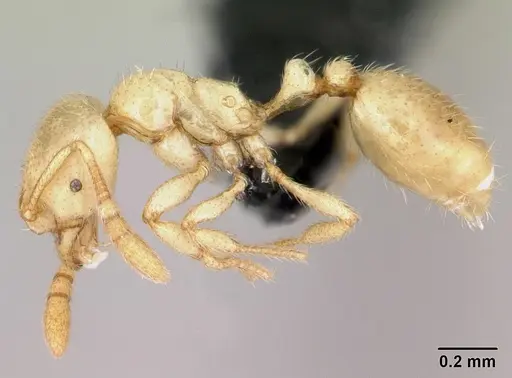
Syllophopsis ferodens is a tiny, pale yellow ant native to the rainforests of Madagascar. Workers measure just 1.2-1.6mm in total length, making them one of the smaller ant species kept in captivity [1]. The species is characterized by its unique palp formula of 3,2 (three segments on the maxillary palps, two on the labial palps), four mandibular teeth with the basal tooth notably enlarged and down-curved, and a pale, almost depigmented yellow coloration [1][2]. The head is rectangular with small eyes, and the body surface is largely smooth and shining [1]. This species is comparatively rare in the wild, known from only four sites in Fianarantsoa and Toliara Provinces, all collected from sifted leaf litter and rotten wood in rainforest habitats [1][3]. Queens and males remain unknown to science, meaning colony structure and founding behavior have not been documented [1].
Quick Summary
- Difficulty: Medium
- Origin & Habitat: Madagascar, specifically Fianarantsoa and Toliara Provinces. All specimens have been collected from sifted leaf litter (leaf mold and rotten wood) in rainforest habitats at elevations around 1275m [1][3].
- Colony Type: Unknown, queens and males have not been described, so colony structure (monogyne vs polygyne) is unconfirmed [1].
- Size & Growth:
- Queen: Unknown, queens have not been described [1]
- Worker: 1.21-1.57mm (total body length), HW 0.37-0.47mm, HL 0.45-0.57mm [1]
- Colony: Unknown, only small numbers of workers have been collected in the wild [1]
- Growth: Unknown, no colony development data exists
- Development: Unknown, no direct observations of development exist. Based on typical Monomorium and related genera patterns, expect 4-8 weeks at optimal temperature. (Development timeline is unconfirmed. Related small Myrmicinae species typically complete development in 4-8 weeks at warm temperatures.)
- Antkeeping:
- Temperature: Inferred: Keep around 22-26°C, mimicking warm rainforest conditions. Madagascar is tropical, so these ants likely prefer warmer temperatures. Provide a gentle temperature gradient allowing workers to self-regulate.
- Humidity: High humidity required, they come from rainforest leaf litter where conditions are consistently moist. Keep the nest substrate damp but not waterlogged, with some drier areas for escape. Aim for 70-85% relative humidity.
- Diapause: Unknown, no data on overwintering requirements. As a tropical species from Madagascar, they likely do not require true hibernation but may reduce activity during cooler periods.
- Nesting: Preferred nest types: Small test tubes with cotton or small acrylic/plaster nests scaled to their tiny size. They naturally nest in leaf litter and rotting wood, so a naturalistic setup with small passages and moist substrate works well. The tiny worker size means chambers and passages must be very small.
- Behavior: Temperament: Likely peaceful and non-aggressive based on typical Monomorium-group behavior. They are tiny litter ants that probably forage individually or in small groups through the substrate. Escape risk: EXTREMELY HIGH, their very small size (under 2mm) means they can squeeze through the tiniest gaps. Excellent escape prevention is essential, use fine mesh, tight-fitting lids, and reliable barriers like fluon. Foraging style: Likely scavengers or omnivores, possibly tending aphids for honeydew like related species.
- Common Issues: escape prevention is critical, they are tiny enough to squeeze through standard barrier setups, queen and colony structure unknown makes captive breeding challenging, wild-caught colonies may be difficult to establish due to unknown founding requirements, high humidity needs can lead to mold if ventilation is poor, small size makes them vulnerable to drying out, consistent moisture is essential
Housing and Setup
Because of their extremely small size, Syllophopsis ferodens requires specialized housing. Test tubes work well for founding colonies, use small diameter tubes (around 10-12mm) with a water reservoir secured with cotton. The tiny workers will need access to very small spaces. For established colonies, a small acrylic nest or Y-tong style setup with narrow chambers and passages scaled to their 1.2-1.6mm size is ideal. Avoid large, open spaces that can disorient these tiny ants. A naturalistic setup with moist soil and small hiding spots mimics their natural leaf litter habitat. Escape prevention is absolutely critical, these ants can squeeze through gaps that larger species cannot. Use fine mesh (at least 0.5mm or finer), apply fluon to barrier edges, and check all connections regularly [1].
Feeding and Diet
Based on related Monomorium species, Syllophopsis ferodens is likely an omnivore that accepts both sugar sources and protein. Offer small drops of sugar water, honey, or diluted syrup regularly. For protein, small live prey like fruit flies, pinhead crickets, or tiny insects are appropriate given their minute size. They may also accept honeydew from small aphids. Feed small amounts initially and observe what the colony takes. Remove uneaten food after 24-48 hours to prevent mold. Because they are so small, even tiny portions are significant to them. A varied diet including both sugar and protein sources will support brood development.
Temperature and Humidity
As a Madagascar rainforest species, these ants need warm, humid conditions. Maintain temperatures in the range of 22-26°C, which supports normal activity and likely brood development. A heating cable on one side of the nest can create a temperature gradient, allowing workers to regulate their own temperature by moving between warmer and cooler areas. Place the heating element on top of the nest to avoid drying out the substrate too quickly. Humidity should be high, aim for 70-85% relative humidity inside the nest area. Keep the substrate consistently moist but not waterlogged. The nest should show condensation periodically, but standing water should be avoided. Mist the outworld occasionally and monitor substrate moisture, rehydrating when the surface begins to dry. [1]
Colony Establishment
Establishing Syllophopsis ferodens in captivity presents challenges because queens have never been described. If you obtain a colony, it will likely be a queenless worker colony or a queen may need to be found. Without documented queen behavior, assume standard claustral founding if a queen is discovered, the queen would seal herself in a chamber and raise the first workers on stored fat reserves. For existing worker colonies, focus on providing optimal conditions: appropriate temperature, humidity, and food. These ants are rarely kept, so expect a period of adjustment as you learn what they accept. Be patient, small colonies grow slowly, and their development timeline is not well understood. Monitor for signs of stress such as workers dying rapidly or avoiding the nest area. [1]
Behavior and Temperament
Syllophopsis ferodens is a tiny, likely peaceful ant species. Based on typical behavior of related Monomorium-group ants, they are probably not aggressive and will not defend territory aggressively. Workers likely forage through leaf litter and soil, searching for small food items. Their small size makes them vulnerable, so they probably avoid confrontation with larger ants. In captivity, they will likely establish quiet colonies that go about their business without bothering other ant species. However, their tiny size also means they can be bullied or killed by larger ant species if housed together. They are probably crepuscular or nocturnal in activity patterns, matching the cooler, more humid conditions of the rainforest floor. Provide them with a dark, quiet location away from direct sunlight and vibrations. [1]
Frequently Asked Questions
How long does it take for Syllophopsis ferodens to produce first workers?
The egg-to-worker timeline is unconfirmed, queens have never been described so no one has observed their complete development. Based on typical Monomorium and related small Myrmicinae patterns, expect approximately 4-8 weeks from egg to first worker at optimal temperature (around 24-26°C). This is an estimate based on genus-level patterns, not species-specific data.
Can I keep multiple queens together in a Syllophopsis ferodens colony?
This is unknown. Queens and males have never been described for this species, so we do not know whether they are monogyne (single queen) or polygyne (multiple queens). Without this basic information, combining unrelated queens is not recommended. If you obtain a queen, house her alone for founding.
What do Syllophopsis ferodens ants eat?
Based on related Monomorium species, they are omnivores that accept both sugar and protein. Offer small drops of sugar water, honey, or diluted syrup for carbohydrates. For protein, provide tiny live prey such as fruit flies, small crickets, or other micro-insects. They may also accept honeydew from aphids. Start with small amounts and remove uneaten food after 24-48 hours.
Are Syllophopsis ferodens good for beginners?
This species is not recommended for beginners. Basic biology including queen description, colony structure, and founding behavior remains unknown. Additionally, their extremely small size creates challenges with escape prevention and housing. They require high humidity and warm temperatures, and established colonies are rarely available in the antkeeping hobby. Consider starting with better-documented species like Monomorium pharaonis or other common pet ants.
How big do Syllophopsis ferodens colonies get?
Colony size is unknown. In the wild, only small worker series have been collected (up to 20 workers in type series), suggesting colonies may remain relatively small. The related Monomorium species typically form colonies of a few hundred workers at most. Expect a small to moderate colony size if established in captivity.
What temperature should I keep Syllophopsis ferodens at?
Keep them at 22-26°C. This range mimics their native Madagascar rainforest habitat. Provide a gentle temperature gradient so workers can self-regulate by moving between warmer and cooler areas of the nest. A heating cable on one side of the nest can achieve this. Avoid temperatures below 20°C or above 30°C.
Do Syllophopsis ferodens need hibernation?
Hibernation requirements are unknown. As a tropical species from Madagascar, they likely do not require a true diapause period. However, they may reduce activity during cooler periods. If you notice reduced activity in winter, simply lower temperatures slightly (by 2-4°C) for a few weeks rather than implementing a full hibernation protocol.
References

This caresheet is licensed under CC BY-SA 4.0 .
Literature
Loading...Loading products...