

Strumigenys turpis
- Scientific Name
- Strumigenys turpis
- Tribe
- Attini
- Subfamily
- Myrmicinae
- Author
- Bolton, 2000
- Distribution
- Found in 2 countries
Strumigenys turpis Overview
Strumigenys turpis is an ant species of the genus Strumigenys. It is primarily documented in 2 countries , including Guatemala, Mexico. Detailed taxonomic data and occurrence records can be further explored via authoritative databases such as AntWeb or the Global Biodiversity Information Facility (GBIF).
Strumigenys turpis
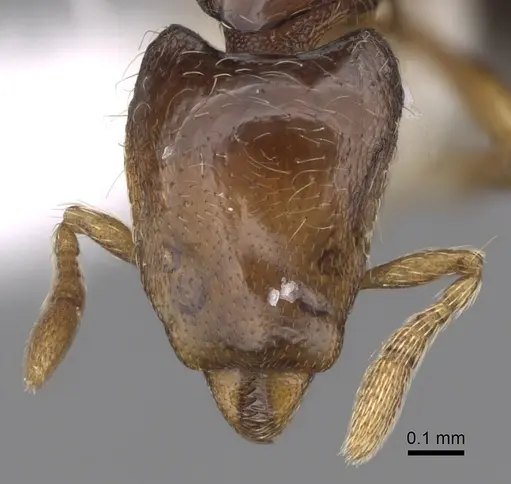
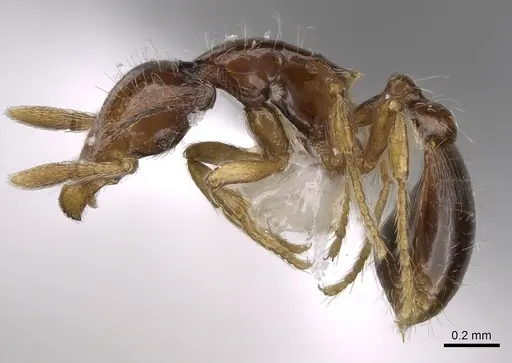
Strumigenys turpis is a tiny predatory ant measuring just 2.0mm in total length, native to the Neotropical region including southern Mexico, Guatemala, and Costa Rica [1]. These ants belong to the Strumigenys excisa species group and are characterized by their short, downward-curving trap-jaw mandibles and distinctive spongiform tissue on the waist segments. Workers have a dark brown to black coloration with a teardrop-shaped gaster and lack spongiform tissue on the ventral surface of the petiole and postpetiole, a key identification feature that separates them from similar species. They inhabit cloud forests and are typically collected from leaf litter samples, indicating they live in damp, shaded microhabitats on the forest floor [2].
These ants are specialized predators with one of the fastest recorded trap-jaw mechanisms in the ant world, capable of snapping their mandibles shut in milliseconds to capture prey. Unlike many ants that forage openly, S. turpis is a ground-dwelling species that hunts primarily among leaf litter and decaying wood where humidity remains consistently high. Their small size and cryptic lifestyle make them challenging to find in the wild, they are known from only a handful of specimens [3].
Quick Summary
- Difficulty: Expert
- Origin & Habitat: Cloud forests of southern Mexico, Guatemala, and Costa Rica in the Neotropical region. They inhabit leaf litter on the forest floor in damp, shaded microhabitats [1][2].
- Colony Type: Likely monogyne (single queen colonies) based on typical Strumigenys colony structure. Colony size is small, known from very few specimens suggests colonies remain modest in size.
- Colony: Monogyne
- Founding: Claustral
- Size & Growth:
- Queen: Undescribed, queens have not been documented in scientific literature
- Worker: 2.0mm total length (TL), HL 0.54mm, HW 0.44mm
- Colony: Likely small, under 100 workers based on limited collection data and typical Strumigenys colony sizes [3]
- Growth: Slow, based on typical Strumigenys development patterns
- Development: Estimated 8-12 weeks at optimal temperature based on related Strumigenys species (Development time is estimated from genus-level data since species-specific studies are lacking. Small colony size suggests slow growth rate.)
- Antkeeping:
- Temperature: Keep at 22-26°C, these are tropical forest ants requiring warm, stable conditions. Avoid temperature drops below 20°C.
- Humidity: High humidity is essential, maintain 70-85% relative humidity. Keep the nest substrate consistently moist but not waterlogged. These ants naturally live in damp leaf litter environments.
- Diapause: No, as a tropical species, they do not require hibernation. Maintain warm conditions year-round.
- Nesting: Provide a humid nest setup such as a moist plaster nest, naturalistic terrarium with leaf litter layer, or a well-hydrated acrylic nest. They do well in setups that retain moisture while allowing some ventilation. A layer of decaying leaf litter or rotting wood in the outworld provides hunting opportunities.
- Behavior: Strumigenys turpis is a specialized predator that uses its trap-jaw mandibles to capture small prey, primarily springtails and other micro-arthropods found in leaf litter. Workers are slow-moving and secretive, spending most of their time hunting among the substrate. They are not aggressive toward humans and cannot sting. Their small size (2mm) means they can escape through tiny gaps, excellent escape prevention is critical. They are not colony aggressive and typically ignore each other when foraging in the same area. Workers do not recruit aggressively to food sources, they hunt individually.
- Common Issues: Escape prevention is critical due to their tiny 2mm size, they can squeeze through standard mesh barriers, High humidity requirements make them prone to mold issues if ventilation is poor, Specialized diet means they may refuse standard ant foods, live micro-prey is essential, Slow growth and small colony sizes mean colonies develop slowly and may appear stagnant, Captive colonies often fail due to inability to establish proper humid leaf litter habitat
Housing and Setup
Strumigenys turpis requires a carefully designed setup that recreates their natural leaf litter habitat. A naturalistic terrarium works best, use a shallow container filled with moist, decaying leaf litter (oak or maple leaves work well) over a layer of moist soil or plaster. The substrate should remain damp but not waterlogged, with good ventilation to prevent mold. Alternatively, a moist plaster nest or well-hydrated acrylic nest with a small outworld containing leaf litter and moss can work. The key is maintaining high humidity throughout while allowing some air flow. Temperature should be maintained at 22-26°C using a heating mat if needed, but avoid direct heat on the nest area. Lighting is not critical, these ants are adapted to dim forest floor conditions [2].
Feeding and Diet
Strumigenys turpis is an obligate predator that requires live small prey. Their primary diet in the wild consists of springtails (Collembola), tiny soil mites, and other micro-arthropods found in leaf litter. In captivity, you must provide a constant supply of live springtails, this is their essential food source and they will not thrive on dead prey or sugar. Other small live prey such as booklice (Psocoptera), fruit flies (Drosophila), and tiny isopods may be accepted experimentally, but springtails should form the core of their diet. Do not offer sugar water or honey, these ants are strict predators and will not accept carbohydrate sources. Feed every 2-3 days, removing any uneaten prey after 24 hours to prevent mold. The hunting substrate in the outworld should contain live springtail cultures so workers can hunt naturally. [1]
Temperature and Seasonal Care
As a tropical species from Central American cloud forests, Strumigenys turpis requires warm, stable temperatures year-round. Maintain the nest area at 22-26°C, this range supports normal activity and brood development. Avoid temperatures below 20°C as this can suppress activity and potentially harm the colony. Unlike temperate ant species, they do not require any diapause or winter rest period. Seasonal changes in the wild involve only minor shifts in humidity and rainfall patterns, not temperature drops. If your room temperature falls below 22°C, use a small heating cable or mat placed on top of (not under) the nest to raise temperatures gently. Always provide a temperature gradient so ants can choose their preferred zone. High humidity is equally important, aim for 70-85% relative humidity around the nest. [1][2]
Behavior and Colony Dynamics
Strumigenys turpis workers are solitary hunters that patrol through leaf litter searching for prey. Their trap-jaw mandibles can snap shut in milliseconds when triggered by movement or vibration, this is one of the fastest known animal movements. Unlike ants that recruit nestmates to food sources, these ants hunt alone and typically ignore other workers even when crossing paths. Colonies remain small, likely reaching only a few dozen to perhaps a hundred workers at maturity based on the limited specimens collected in the wild. Queens have not been described in scientific literature, suggesting they may be claustral founders that seal themselves away during the founding stage, similar to other Strumigenys species. Workers are not defensive and will not bite or sting, their primary defense is remaining hidden in the substrate. The slow colony growth means founding colonies may appear stagnant for months before showing visible growth. [3][1]
Frequently Asked Questions
How long does it take for Strumigenys turpis to produce first workers?
Based on typical Strumigenys development patterns, expect 8-12 weeks from egg to first worker at optimal temperature (24-26°C). However, this is an estimate since the specific development timeline has not been documented for this species. Small colony sizes in the wild suggest slow growth rates.
Can I keep Strumigenys turpis in a test tube setup?
Test tubes are not ideal for Strumigenys turpis. These ants require a humid leaf litter environment to thrive, a naturalistic setup with moist substrate and leaf litter is essential. A small naturalistic terrarium or moist plaster nest works much better than a bare test tube.
What do Strumigenys turpis eat?
They are strict predators that require live springtails as their primary food source. They will not accept dead prey, sugar, or honey. Other small live prey like booklice and tiny isopods may be accepted, but springtails are essential for long-term survival.
Are Strumigenys turpis good for beginners?
No, this species is not recommended for beginners. They require specialized care including live springtail cultures, high humidity, and a naturalistic setup. They are also known from very few specimens, suggesting they are challenging to keep in captivity.
How big do Strumigenys turpis colonies get?
Colony size is likely small, probably under 100 workers at maturity. The limited collection data from the wild (only a few specimens known) suggests colonies remain modest in size compared to many other ant species.
Why are my Strumigenys turpis dying?
Common causes include: lack of live springtail prey (they will starve without constant access to live micro-prey), low humidity (below 70%), temperatures below 20°C, poor escape prevention allowing them to escape, and mold from overwatering with poor ventilation. Address these factors systematically.
Do Strumigenys turpis need hibernation?
No, they do not require hibernation. As tropical cloud forest ants, they need warm temperatures year-round (22-26°C). Do not attempt to cool them down or reduce feeding in winter.
When should I move Strumigenys turpis to a formicarium?
For this species, a naturalistic setup with leaf litter is preferable to traditional formicariums. If you do use a formicarium, wait until the colony reaches at least 20-30 workers and shows consistent activity. However, most keepers find success by maintaining them in naturalistic terrariums from the start.
Can I keep multiple Strumigenys turpis queens together?
Combining unrelated queens has not been documented for this species and is not recommended. Based on typical Strumigenys behavior, queens are likely territorial during the founding stage. Start with a single queen if you obtain a founding colony.
References

This caresheet is licensed under CC BY-SA 4.0 .
CASENT0281950
View on AntWeb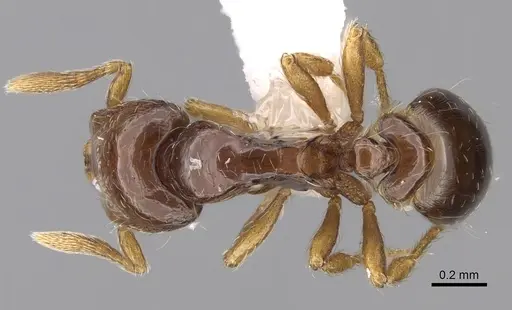
Literature
Loading...Loading products...