

Strumigenys sydorata
- Scientific Name
- Strumigenys sydorata
- Tribe
- Attini
- Subfamily
- Myrmicinae
- Author
- Bolton, 2000
- Distribution
- Found in 5 countries
Strumigenys sydorata Overview
Strumigenys sydorata is an ant species of the genus Strumigenys. It is primarily documented in 5 countries , including China, Hong Kong, Lao People's Democratic Republic. Detailed taxonomic data and occurrence records can be further explored via authoritative databases such as AntWeb or the Global Biodiversity Information Facility (GBIF).
Strumigenys sydorata
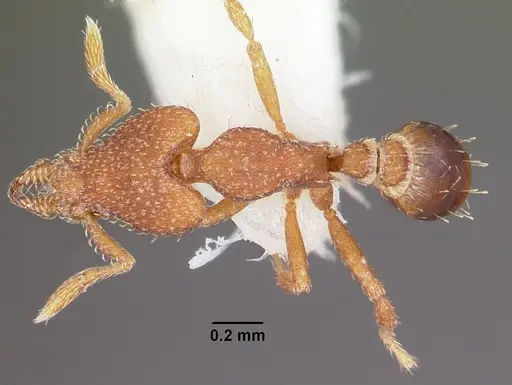
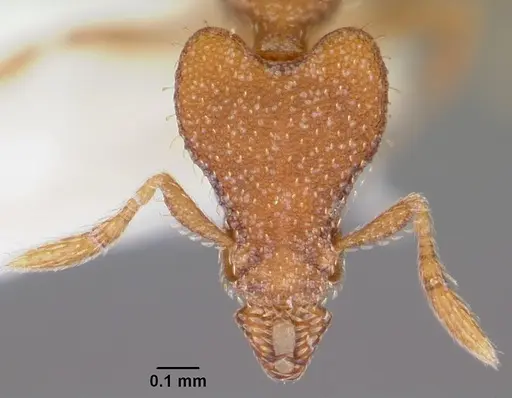
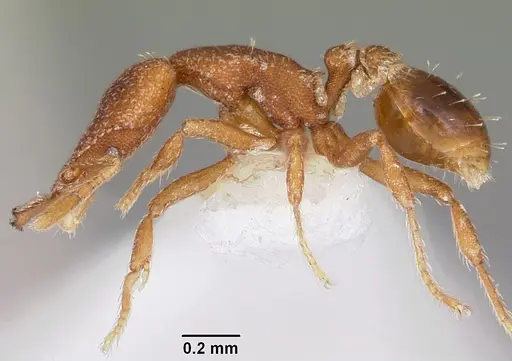
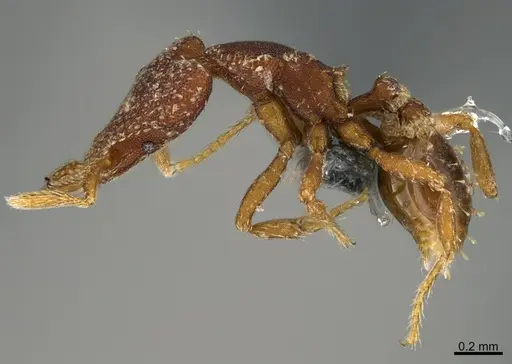
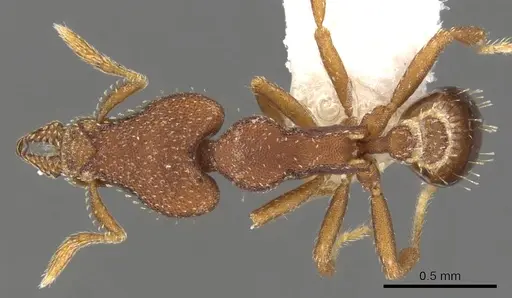
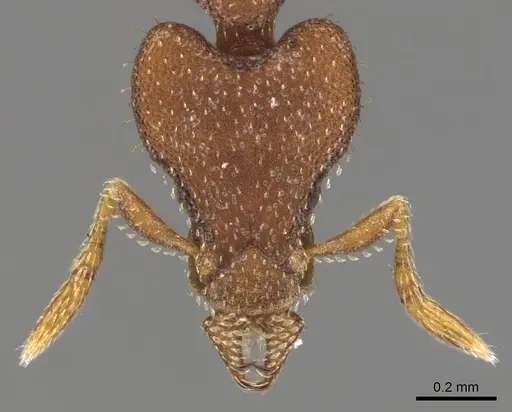
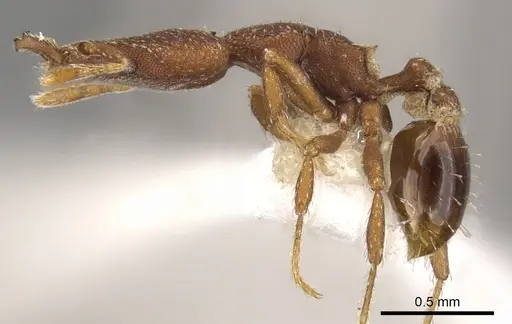
Strumigenys sydorata is a tiny predatory ant measuring just 2.4-2.6mm in total length [1]. Workers have distinctive trap-jaw mandibles used to capture small prey like springtails and mites [2]. This species belongs to the lyroessa-complex within the Strumigenys lyroessa-group, characterized by pronotal humeral hairs, a smooth first gastral tergite, and a well-developed lamella along the propodeal declivity [1]. The species can be distinguished from its close relative S. arrogantia by its larger preapical tooth compared to the apicodorsal tooth on the mandibles [1].
These ants inhabit secondary forests, Feng Shui woods, and leaf litter layers across Southeast Asia, from Hong Kong and southern China through Thailand and Vietnam to Indonesia (Java and Sumatra) [1][3][4]. Colonies are small, typically containing around 24 individuals including one queen and her workers [3]. This is a rare species in Hong Kong but more common in other parts of its range, particularly in primary and secondary forests in Hainan and similar habitats in Thailand and Vietnam [1][4].
Quick Summary
- Difficulty: Medium
- Origin & Habitat: Southeast Asia, found in Hong Kong, southern China (Yunnan, Hainan), Thailand, Vietnam, Singapore, and Indonesia (Java, Sumatra). Inhabits secondary forests, Feng Shui woods, and leaf litter layers at elevations from 15-170m [1][4]. Also collected in mature forest and rubber plantations [4].
- Colony Type: Single-queen colonies (monogyne) with small colony sizes of approximately 24 individuals [3]. Queens are dealate (wingless) after mating.
- Colony: Monogyne
- Size & Growth:
- Queen: Approximately 2.5mm total length based on colony observation (one dealate queen + 23 workers) [3]
- Worker: 2.4-2.6mm total length [1]
- Colony: Small colonies of approximately 24 individuals [3]
- Growth: Moderate, small colony size suggests slower development
- Development: Unknown, no specific development data available for this species. Based on related Strumigenys species, expect 6-10 weeks at optimal temperature. (Development timeline unconfirmed for this specific species. Related Strumigenys species typically take 6-10 weeks from egg to worker.)
- Antkeeping:
- Temperature: Keep at 22-26°C, these are tropical/subtropical ants from warm, humid forests. A gentle temperature gradient allows them to regulate their conditions.
- Humidity: High humidity required, think damp forest floor. Keep the nest substrate consistently moist but not waterlogged. These ants live in leaf litter and dead twigs in nature, which maintain constant moisture.
- Diapause: No, these are tropical ants that do not require hibernation. Maintain warm conditions year-round.
- Nesting: Small colonies nest in dead twigs, leaf litter, and similar microhabitats. In captivity, a small test tube setup or Y-tong nest with tight chambers works well. The tiny colony size means you don't need large spaces.
- Behavior: These are tiny, cryptic ants that spend most of their time hunting micro-prey in the leaf litter. Workers have trap-jaw mandibles and use them to capture small arthropods. They are not aggressive and will flee from disturbance. Escape prevention is critical due to their very small size, they can squeeze through the tiniest gaps. They are slow-moving compared to many ants and rely on their cryptic lifestyle rather than aggression for survival.
- Common Issues: small colony size means colonies are vulnerable to stress and population fluctuations, escape prevention is critical due to tiny 2-4mm size, they easily slip through standard barriers, high humidity requirements can lead to mold if ventilation is inadequate, limited availability in the antkeeping hobby makes this a challenging species to acquire, slow growth and small colony size may frustrate keepers expecting rapid development
Housing and Nest Setup
Strumigenys sydorata requires a small, humid enclosure that mimics their natural leaf litter habitat. A small test tube setup works well for founding colonies, while established colonies can be kept in a Y-tong (acrylic) nest with tight chambers scaled to their tiny size. The key is providing small, humid spaces, these ants are not suited to large, open formicaria that would dry out quickly. Use a water tube or moisture reservoir to maintain humidity, and add a small outworld for feeding. Because they are tiny (under 3mm), ensure all connections and barriers are secure, even standard test tube adapters may need extra sealing. A naturalistic setup with damp soil and leaf litter can also work well if you maintain proper humidity levels. [1][3][4]
Feeding and Diet
Strumigenys sydorata is a specialized predator that hunts micro-arthropods. In captivity, their primary food should be live springtails, these are the ideal size and mimic their natural prey in leaf litter. Other small live prey such as booklice (psocids), tiny mites, and fruit fly larvae may also be accepted. Unlike many ants, they do not typically accept sugar water or honey as they are obligate predators. Feed small prey items every 2-3 days, adjusting based on colony consumption. Remove uneaten prey after 24 hours to prevent mold. Because colonies are small, even a few springtails per feeding is sufficient, overfeeding can quickly cause mold problems in their humid environment. [2]
Temperature and Humidity
Maintain temperatures between 22-26°C, which matches their tropical to subtropical range. A slight temperature gradient is beneficial but not strictly necessary for such small colonies. Humidity is more critical, aim for 70-85% relative humidity within the nest. The substrate should feel consistently damp but never waterlogged. Use a water tube setup and check regularly that the nest material hasn't dried out. In dry environments, you may need to mist the outworld occasionally or use a moisture tray. Avoid placing the colony near air conditioning or heating vents that could cause rapid drying. Room temperature in most homes (20-24°C) is acceptable, but warmth helps with activity and feeding response. [1][4]
Colony Dynamics and Growth
This species forms small colonies of approximately 24 individuals including one queen [3]. Colonies observed in the wild consistently show this small size, suggesting they do not form large colonies like many other ant species. The queen is dealate (wingless) after mating, and colonies appear to have a single queen. Growth is likely moderate, expect slow expansion from founding to established colony. Do not expect rapid colony growth, these are naturally small-colony ants. Be patient with founding colonies, as stress from frequent disturbance can cause queen abandonment or worker mortality. Once established, colonies are relatively stable but remain small.
Behavior and Temperament
Strumigenys sydorata is a cryptic, non-aggressive species that avoids confrontation. Workers are slow-moving and spend most of their time hunting in the leaf litter layer. Their trap-jaw mandibles are used for capturing tiny prey, not for defense against larger threats. When disturbed, they will typically flee rather than attack. This makes them fascinating to observe but unspectacular in terms of dramatic behaviors. They are not suited for keepers who want active, visible ants, these are cryptic hunters that prefer to stay hidden. Their tiny size also means they are easily overlooked in the nest. Handle with care during transfers as they are fragile. [2]
Frequently Asked Questions
How long does it take for Strumigenys sydorata to produce first workers?
The exact timeline is unconfirmed for this species, but based on related Strumigenys species, expect 6-10 weeks from founding to first workers emerging. Patience is essential as colonies grow slowly and remain small even when established.
Can I keep Strumigenys sydorata in a test tube?
Yes, a small test tube setup works well for founding colonies. Use a small diameter tube appropriate for their tiny size, with a water reservoir to maintain humidity. Ensure the cotton barrier is secure as these small ants can sometimes slip through standard setups.
What do Strumigenys sydorata ants eat?
They are specialized predators that need live micro-prey. Springtails are the ideal food, they are the right size and provide proper nutrition. Other small live prey like booklice, tiny mites, and fruit fly larvae may also be accepted. They do not typically accept sugar sources.
How big do Strumigenys sydorata colonies get?
Colonies remain small, approximately 24 individuals in natural observations. This is one of the smaller Strumigenys species in terms of colony size. Do not expect large colonies, even mature colonies will likely only reach 30-50 workers at most.
Are Strumigenys sydorata good for beginners?
This is not an ideal beginner species due to their specific humidity requirements, need for live micro-prey, tiny size making them escape-prone, and slow growth. However, experienced antkeepers interested in predatory ants will find them fascinating. If you're new to antkeeping, start with more forgiving species.
Do Strumigenys sydorata need hibernation?
No, they are tropical/subtropical ants from Southeast Asia and do not require hibernation. Keep them warm year-round at 22-26°C. Cold temperatures below 18°C for extended periods can be harmful.
Why are my Strumigenys sydorata escaping?
Their tiny 2-4mm size means they can slip through the smallest gaps. Use fine mesh on all openings, seal test tube adapters with fluon or tape, and ensure any connections between nest and outworld are tight. Check barriers regularly, even small gaps that other ants can't pass will allow these tiny ants to escape.
When should I move my colony to a formicarium?
Given their small colony size and humidity needs, they can remain in a test tube or small Y-tong setup long-term. Only consider moving if the colony has outgrown the setup significantly, which may take a year or more. A small Y-tong nest is often a better choice than a large formicarium.
Can I keep multiple queens together?
This species is monogyne (single-queen) based on field observations showing one dealate queen per colony. Combining unrelated queens is not recommended and has not been documented. Multiple queens would likely result in fighting.
References

This caresheet is licensed under CC BY-SA 4.0 .
Literature
Loading...Loading products...