

Strumigenys rugithorax
- Scientific Name
- Strumigenys rugithorax
- Tribe
- Attini
- Subfamily
- Myrmicinae
- Author
- Kempf, 1959
- Distribution
- Found in 1 countries
Strumigenys rugithorax Overview
Strumigenys rugithorax is an ant species of the genus Strumigenys. It is primarily documented in 1 countries , including Brazil. Detailed taxonomic data and occurrence records can be further explored via authoritative databases such as AntWeb or the Global Biodiversity Information Facility (GBIF).
Strumigenys rugithorax
Strumigenys rugithorax is a tiny predatory ant measuring just 2.4-2.6mm in total length, native to southern Brazil [1]. Workers have a distinctive appearance with a clypeus that curves upward away from the mandibles in profile view, a unique feature that helps identify this species within the Strumigenys splendens group [2]. Their overall coloration is dark with distinctive pilosity featuring flagellate hairs on the mesonotum and other body parts. This species was originally described as Strumigenys rugithorax in 1959 before being moved to Pyramica and eventually Strumigenys [1].
What makes this species particularly interesting is its extreme habitat specialization, it's a primary forest specialist that has never been found in secondary forest or human-modified landscapes like rubber plantations [3]. This makes it one of the more specialized and harder-to-keep Strumigenys species, as it requires pristine forest conditions to thrive.
Quick Summary
- Difficulty: Expert
- Origin & Habitat: Southern Brazil, specifically Santa Catarina region including Nova Teutônia and Blumenau. Found at elevations of 300-500m in primary Atlantic Forest [1][4]. This is a habitat specialist restricted to primary forest, it has never been recorded from secondary forest or plantation environments [3].
- Colony Type: Colony structure is unconfirmed. Like other Strumigenys, this species likely forms small colonies with a single queen, but no direct observations of founding or colony structure exist.
- Colony: Monogyne
- Founding: Claustral
- Size & Growth:
- Queen: Unknown, no queen measurements available in scientific literature [2]
- Worker: 2.4-2.6mm total length, HL 0.72-0.78mm, HW 0.50-0.53mm [2]
- Colony: Likely small, typical Strumigenys colonies rarely exceed 100-200 workers. Based on genus patterns, estimated at under 100 workers
- Growth: Slow, Strumigenys are slow-growing ants that produce few workers at a time
- Development: Unconfirmed, no direct development data exists. Based on related Strumigenys species, estimate 8-12 weeks at optimal temperature (Development timeline is unconfirmed for this specific species. Related Strumigenys species typically take 2-3 months from egg to worker.)
- Antkeeping:
- Temperature: Keep around 22-26°C, warm, stable conditions mimicking primary forest understory. Avoid temperatures below 20°C or above 30°C. Provide a gentle temperature gradient if possible
- Humidity: High humidity required, think damp forest floor. Keep substrate consistently moist but not waterlogged. Provide a humid outworld area. These are litter-dwelling ants that need moisture
- Diapause: No, this is a tropical species from southern Brazil with no cold tolerance. Year-round warm conditions are required
- Nesting: Prefers tight, humid chambers. Y-tong (AAC) nests or plaster nests work well for these tiny ants. Provide multiple small chambers and keep the nest material consistently moist. Natural setups with leaf litter and soil also work
- Behavior: Strumigenys are specialized predators using their trap-jaw mandibles to capture springtails and other micro-arthropods. Workers are active hunters that search through leaf litter and soil. They are not aggressive toward humans and cannot sting, their primary defense is escape. Their tiny size (2.4-2.6mm) means escape prevention is critical, they can squeeze through standard test tube barriers.
- Common Issues: primary forest specialist, very difficult to establish in captivity due to specific habitat requirements, tiny size makes escape prevention challenging, use fine mesh barriers, specialized predator requiring live micro-prey, cannot survive on sugar alone, slow growth means colonies develop very slowly and require patience, high humidity requirements can lead to mold issues if ventilation is poor
Housing and Nest Setup
Strumigenys rugithorax requires careful housing due to its tiny size and specific humidity needs. Use a Y-tong (AAC) nest or plaster nest with small, tight chambers scaled to their 2.4-2.6mm body size. The nest material must stay consistently moist but never waterlogged. These ants live in leaf litter and soil in nature, so a naturalistic setup with a layer of humid forest floor material works well [5]. The outworld should also be humid, consider using a small container with damp soil and leaf litter for foraging. Escape prevention is critical because of their tiny size, use fine mesh (at least 0.5mm) on all openings and consider applying Fluon to barrier surfaces.
Feeding and Diet
This species is a specialized predator that requires live micro-arthropods as its primary food source. In captivity, offer small live springtails (which are their natural prey), tiny isopods, and other micro-critters found in forest floor habitats. Strumigenys have trap-jaw mandibles designed for catching small, fast-moving prey. They will not thrive on sugar water or honey alone, protein from live prey is essential. Feed small prey items every 2-3 days, adjusting based on colony size and consumption. Remove uneaten prey after 24 hours to prevent mold. Some colonies may accept small pieces of mealworm or other protein sources, but live prey should form the basis of their diet.
Temperature and Humidity
Keep these ants warm and humid year-round, they are tropical and have no tolerance for cool or dry conditions. Maintain temperatures between 22-26°C with minimal fluctuation. Room temperature in most homes may be too cool, so consider using a heating cable on one side of the nest to create a gentle gradient. Humidity should be high, the nest material should feel consistently damp to the touch. These are primary forest specialists from the Brazilian Atlantic Forest, where humidity remains consistently high [3]. Avoid placing the nest near air conditioning vents or in drafty areas. A small water reservoir in the outworld can help maintain humidity levels.
Colony Development and Patience
Expect very slow colony development. Strumigenys colonies grow slowly, producing only a few workers at a time. A founding colony may take many months to produce its first nanitic workers, and reaching even 20-30 workers can take a year or more. This species is not recommended for beginners who want to see rapid growth. The slow growth is natural, Strumigenys are not fast-growing ants. Do not overfeed in an attempt to speed growth, as excess food leads to mold in the humid conditions they require. Monitor the colony regularly but avoid disturbing the nest frequently. Patience is essential with this species.
Where They Live
Strumigenys rugithorax is known only from southern Brazil, specifically the Santa Catarina region. The type locality is Nova Teutônia at 300-500m elevation, and specimens have also been recorded from Blumenau [4][1]. This species is extremely habitat-specific, it has never been found in secondary forest or human-modified landscapes like rubber plantations, making it one of the more specialized Strumigenys species [3]. In nature, they live in leaf litter and upper soil layers of primary Atlantic Forest, which explains their high humidity requirements and sensitivity to habitat disturbance.
Frequently Asked Questions
Is Strumigenys rugithorax good for beginners?
No, this is an expert-level species. They require live micro-prey, very high humidity, stable warm temperatures, and have extremely slow colony growth. They are also primary forest specialists that are difficult to keep in captivity. This species is not recommended for anyone new to antkeeping.
What do Strumigenys rugithorax ants eat?
They are specialized predators that require live micro-arthropods. Their primary food should be live springtails, this is their natural prey in the wild. They may also accept tiny isopods, booklice, and other small forest floor creatures. Sugar sources are generally not accepted or required. Do not attempt to keep this species without a reliable source of live micro-prey.
How long does it take for Strumigenys rugithorax to produce first workers?
The exact timeline is unconfirmed, but based on related Strumigenys species, expect 8-12 weeks from egg to first worker at optimal temperature (around 24-26°C). Colony development is very slow, a founding colony may take many months to establish itself. Do not expect rapid growth.
Can I keep multiple Strumigenys rugithorax queens together?
This has not been studied for this specific species. Based on typical Strumigenys behavior, they likely form single-queen colonies. Combining unrelated queens is not recommended as it may result in aggression. If you obtain multiple foundresses, house them separately.
What size colony do Strumigenys rugithorax colonies reach?
Colony size is unconfirmed but likely small, probably under 100 workers. Strumigenys species typically form small colonies compared to many other ants. This species is considered rare even in its native habitat, which suggests small natural colony sizes.
Do Strumigenys rugithorax need hibernation?
No, this is a tropical species from southern Brazil with no cold tolerance. They require year-round warm conditions (22-26°C) and high humidity. Do not expose them to temperatures below 20°C.
Why are my Strumigenys rugithorax dying?
Common causes include: temperature too cool (below 20°C), humidity too low (they need consistently damp conditions), lack of live prey (they cannot survive without protein), escape due to tiny size, or mold from overwatering. Review all care parameters and ensure you have a reliable source of live micro-prey. This species is challenging to keep and losses can occur even with optimal care.
What nest type is best for Strumigenys rugithorax?
Y-tong (AAC) nests or plaster nests with small chambers work well. The key is maintaining high humidity in the nest material while providing adequate ventilation to prevent mold. Naturalistic setups with damp soil and leaf litter also work. Ensure all connections and openings use fine mesh to prevent escapes.
Where is Strumigenys rugithorax found in the wild?
Only in southern Brazil, specifically Santa Catarina state. Known localities include Nova Teutônia (300-500m elevation) and Blumenau. They are restricted to primary Atlantic Forest and have never been found in secondary forest or plantations [3][1].
References

This caresheet is licensed under CC BY-SA 4.0 .
CASENT0281987
View on AntWeb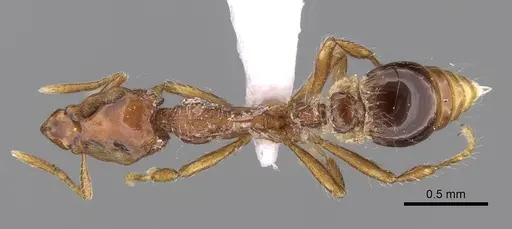
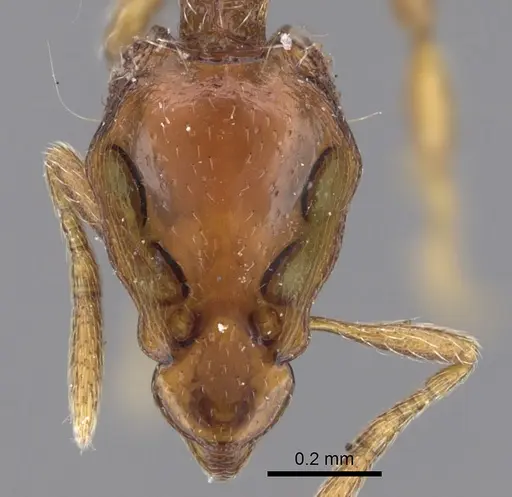
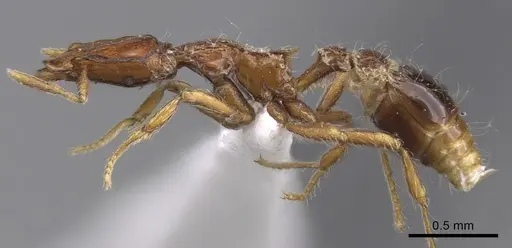
Literature
Loading...Loading products...