

Strumigenys rallarhina
- Scientific Name
- Strumigenys rallarhina
- Tribe
- Attini
- Subfamily
- Myrmicinae
- Author
- Bolton, 2000
- Distribution
- Found in 4 countries
Strumigenys rallarhina Overview
Strumigenys rallarhina is an ant species of the genus Strumigenys. It is primarily documented in 4 countries , including China, Hong Kong, Lao People's Democratic Republic. Detailed taxonomic data and occurrence records can be further explored via authoritative databases such as AntWeb or the Global Biodiversity Information Facility (GBIF).
Strumigenys rallarhina
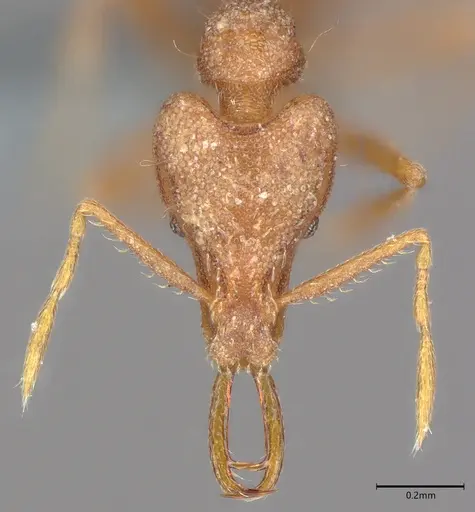
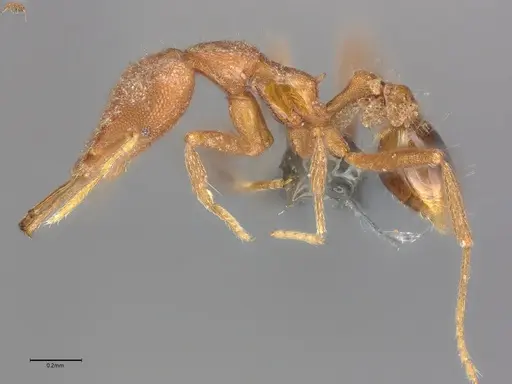
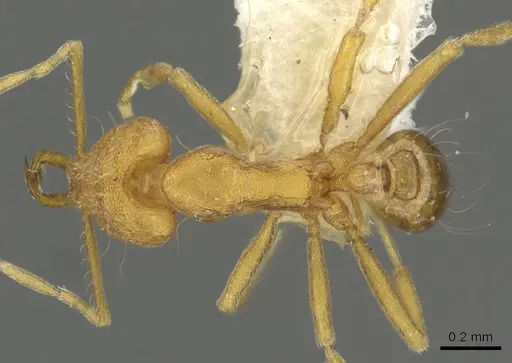
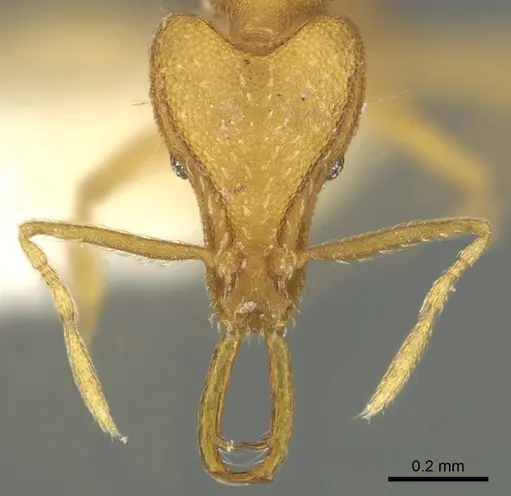
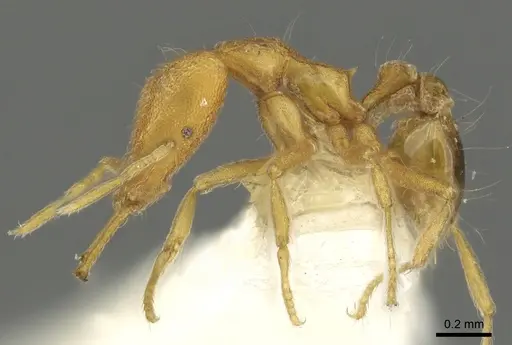
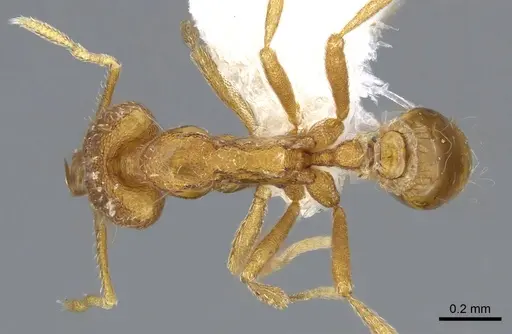
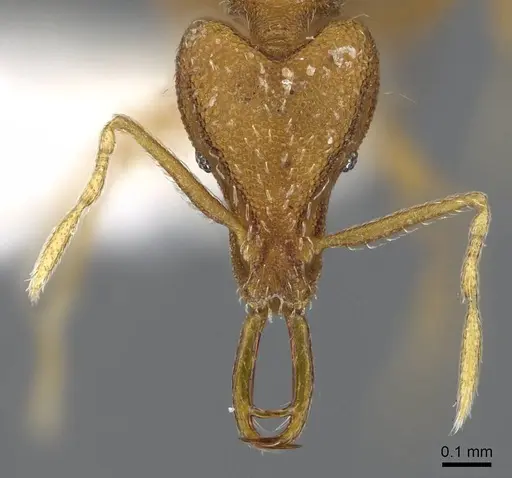
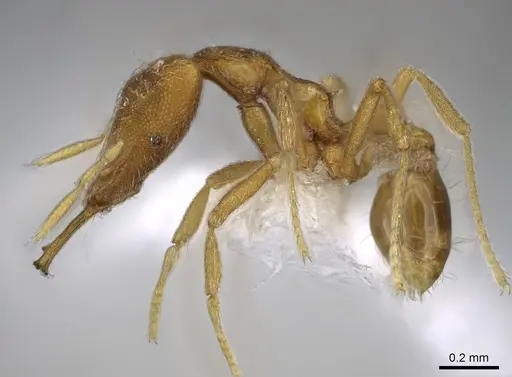
Strumigenys rallarhina is a tiny predatory ant measuring just 2.1-2.2mm in total length, belonging to the Myrmicinae subfamily and Attini tribe [1]. Workers have distinctive elongated mandibles with a spiniform preapical tooth that is roughly one-third longer than the maximum width of the mandible, a key identifying feature that separates this species from its close relative S. exilirhina [1][2]. The species is part of the Strumigenys mayri group, specifically the feae complex.
This ant is a litter-dwelling predator native to southern China and northern Vietnam, where it inhabits rainforest and forest edge environments at elevations ranging from 50 to 1190 meters [3][4]. In Hong Kong, it has been recorded across a remarkably wide range of habitats including grassland, roadside areas, shrubland, bamboo forest, secondary forest, and Feng Shui woods [5]. The species shows a strong preference for forest environments, with highest abundance in primary rainforest habitats [6].
Quick Summary
- Difficulty: Hard
- Origin & Habitat: Native to southern China (Guangdong, Guangxi, Hainan, Hong Kong, Tibet, Yunnan) and northern Vietnam [4]. Inhabits rainforest litter and forest edge environments at elevations from 50 to 1190 meters [3][4]. Shows preference for primary and secondary forest habitats [6].
- Colony Type: Colony structure is unconfirmed. Based on typical Strumigenys patterns, likely single-queen colonies. No documented ergatoid replacement reproductives for this specific species.
- Size & Growth:
- Queen: Undescribed, estimated 3-4mm based on worker size
- Worker: 2.1-2.2mm total length, HL 0.59-0.65mm, HW 0.41-0.44mm
- Colony: Unknown, likely small colonies typical of litter-dwelling Strumigenys (dozens to low hundreds)
- Growth: Slow, based on typical Strumigenys development patterns
- Development: Estimated 8-12 weeks at optimal temperature, typical for small Myrmicinae in warm conditions (Direct development data unavailable for this species, estimates based on genus-level patterns for small litter-dwelling Strumigenys)
- Antkeeping:
- Temperature: Keep at 22-26°C, these are warm-climate rainforest ants that need stable temperatures within this range [3][4]. Avoid temperatures below 20°C or above 28°C.
- Humidity: High humidity required, think damp forest floor conditions. Keep nest substrate consistently moist but not waterlogged. Provide a humidity gradient with a moist chamber and slightly drier areas for the ants to regulate their own conditions.
- Diapause: Likely no true diapause, this is a tropical/subtropical species from southern China and Vietnam. However, a slight cool period during winter months (15-18°C for 2-3 months) may benefit colony health if it mimics natural seasonal variation [5].
- Nesting: Natural nesting occurs in leaf litter and soil. In captivity, a naturalistic setup with moist substrate (like a mixture of soil and leaf litter) or a small acrylic/plaster nest with tight chambers works well. The tiny worker size means chambers should be appropriately scaled.
- Behavior: This is a cryptic, slow-moving predatory ant that hunts small soil micro-arthropods. Workers are not aggressive and will avoid confrontation. They use their elongated mandibles to capture prey. Escape prevention is critical due to their very small size, they can easily slip through standard barrier setups. Activity level is low, these are ambush predators that spend much time waiting in or near their nest chambers.
- Common Issues: escape prevention is critical, tiny workers squeeze through standard barriers easily, slow growth means colonies develop slowly and beginners may lose patience, high humidity requirements can lead to mold problems if ventilation is inadequate, wild-caught colonies may contain parasites that can devastate captive populations, prey acceptance can be difficult, they prefer live micro-prey and may reject larger food items
Housing and Nest Setup
Strumigenys rallarhina is a tiny litter-dwelling ant that requires careful housing setup. A naturalistic setup with a shallow container filled with moist forest floor substrate (a mix of soil, sand, and decomposed leaf litter) works best, this mimics their natural leaf litter environment and provides hunting grounds [3][5]. Alternatively, a small acrylic nest with appropriately scaled chambers can work, but ensure the passages are narrow enough for these tiny workers.
Escape prevention is absolutely critical. These ants are only 2mm in size and can squeeze through gaps that seem impossible. Use fine mesh barriers (at least 0.5mm) and ensure all lid seams are sealed with fluon or similar barriers. Even small gaps in tubing connections can lead to escapes. A humidity-retaining setup is essential, these ants desiccate quickly in dry conditions.
Feeding and Diet
Strumigenys rallarhina is a specialized predator that hunts small soil micro-arthropods. In captivity, their primary food should be live small prey such as springtails, tiny isopods, and collembola (springtails) [7]. They may also accept other small live prey like fruit fly larvae, but acceptance can be inconsistent.
These ants are not sugar-feeding specialists, they lack the typical honeydew-seeking behavior of many Myrmicinae. Do not rely on sugar water or honey as primary food sources. Some keepers report success with very small pieces of dead insects, but live prey is always preferred. Feed small amounts every few days and remove uneaten prey to prevent mold issues in the humid setup they require.
Temperature and Seasonal Care
Maintain temperatures in the 22-26°C range for optimal colony health and development [3][4]. This species comes from warm subtropical environments in southern China and Vietnam where temperatures remain relatively stable year-round. Avoid temperature drops below 20°C as this can slow activity and potentially harm the colony.
A slight seasonal variation may be beneficial. During winter months in temperate climates, you might reduce temperatures to 15-18°C for 2-3 months to provide a rest period, but this is not a true diapause requirement, these are essentially non-diapausing tropical ants [5]. Always provide a temperature gradient so the ants can self-regulate by moving to warmer or cooler areas of the nest.
Humidity and Water
High humidity is essential for this species. Keep the nest substrate consistently moist, it should feel damp to the touch but not be waterlogged. The substrate should never dry out completely. A shallow water dish in the outworld can help with hydration, but ensure it is shallow enough that tiny workers cannot drown.
Good ventilation is also important to prevent mold growth, which can be a major problem in high-humidity setups. Balance is key: enough moisture to keep the ants healthy and the substrate damp, but enough airflow to prevent stagnant conditions. If you see condensation constantly pooling on the nest walls, increase ventilation slightly.
Behavior and Observation
Strumigenys rallarhina is a cryptic, slow-moving ant that spends much of its time hunting in the leaf litter layer. Workers are not aggressive and will typically retreat from confrontation rather than fight. This makes them fascinating to observe but less interactive than larger ant species.
Their hunting strategy involves waiting and ambushing prey rather than active foraging. You may observe workers stationary for extended periods, then suddenly capturing nearby prey with their specialized mandibles. This patient hunting style means they do not need large foraging areas, a modest outworld space is sufficient. Colony activity is generally low compared to many ant species.
Frequently Asked Questions
How long does it take for Strumigenys rallarhina to produce first workers?
The exact timeline is unconfirmed for this species, but based on typical Strumigenys development patterns, expect 8-12 weeks from founding to first workers emerging. Growth is slow, these are tiny ants with a measured development pace. Patience is essential during the claustral founding period when the queen is sealed in her chamber.
Can I keep Strumigenys rallarhina in a test tube setup?
A test tube setup can work for founding colonies, but you will need to monitor humidity closely. These ants require high humidity, and test tubes can dry out or flood. A naturalistic setup with moist substrate is often better long-term. If using test tubes, ensure the water reservoir is appropriately sized and check regularly.
What do Strumigenys rallarhina eat?
They are specialized predators that hunt small soil micro-arthropods. Feed live springtails, tiny isopods, and collembola. They are not sugar-feeders and do not typically accept honey or sugar water. Live prey is essential, they are ambush predators that require moving prey to trigger hunting behavior.
Are Strumigenys rallarhina good for beginners?
No, this is a difficult species to keep. Their tiny size makes escape prevention challenging, they require high humidity, they are slow-growing, and they have specific prey requirements. They are best suited for experienced antkeepers who can provide the stable, humid conditions they need.
How big do Strumigenys rallarhina colonies get?
Colony size is unconfirmed but likely reaches only dozens to low hundreds of workers. This is typical for litter-dwelling Strumigenys species, they never form the large colonies seen in many other ant genera. Do not expect rapid population explosions.
Do Strumigenys rallarhina need hibernation?
No true diapause is required. This is a tropical/subtropical species from southern China and Vietnam. However, a slight cool period (15-18°C for 2-3 months during winter) may benefit colony health if it mimics natural seasonal variation, but this is optional rather than essential.
Why are my Strumigenys rallarhina dying?
Common causes include: escape through tiny gaps (check all barriers), low humidity causing desiccation, mold from poor ventilation, accepting unsuitable prey, or stress from temperature fluctuations. Wild-caught colonies may also carry parasites. Review each of these factors and adjust your setup accordingly.
When should I move Strumigenys rallarhina to a formicarium?
Move only when the colony is well-established with at least 20-30 workers and the test tube setup is becoming cramped. These ants prefer small, tight spaces and do not need large formicaria. A naturalistic setup often works better than traditional formicaria for this litter-dwelling species.
Can I keep multiple Strumigenys rallarhina queens together?
Combining unrelated queens has not been documented for this species and is not recommended. Based on typical Strumigenys behavior, queens are likely territorial during founding. If you acquire multiple founding queens, house them separately to prevent fighting.
References

This caresheet is licensed under CC BY-SA 4.0 .
Literature
Loading...Loading products...