

Strumigenys ferocior
- Scientific Name
- Strumigenys ferocior
- Tribe
- Attini
- Subfamily
- Myrmicinae
- Author
- Brown, 1973
- Distribution
- Found in 1 countries
Strumigenys ferocior Overview
Strumigenys ferocior is an ant species of the genus Strumigenys. It is primarily documented in 1 countries , including Australia. Detailed taxonomic data and occurrence records can be further explored via authoritative databases such as AntWeb or the Global Biodiversity Information Facility (GBIF).
Strumigenys ferocior
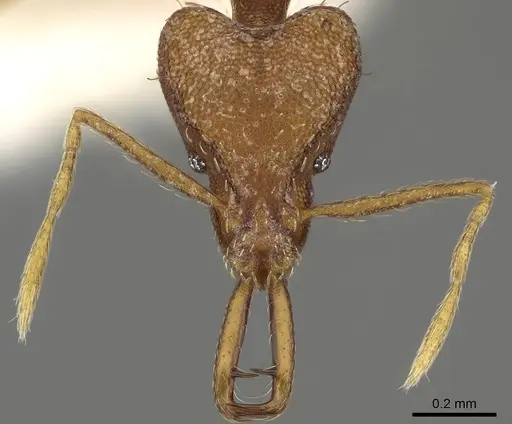
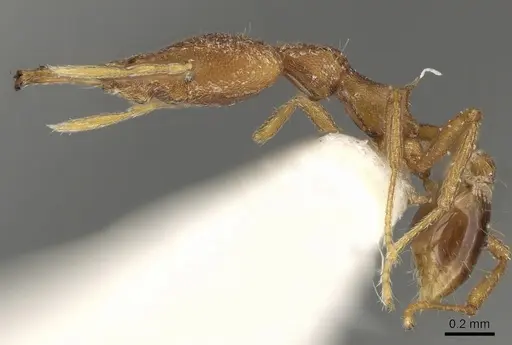
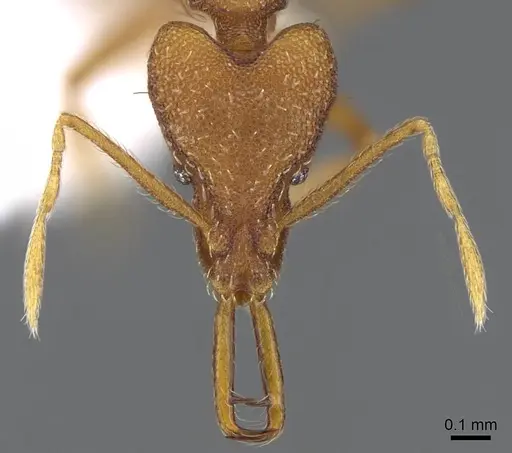
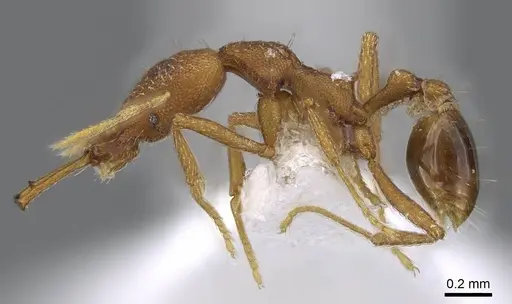
Strumigenys ferocior is a tiny predatory ant measuring just 2.5-2.7mm for workers and 3.0mm for queens [1]. These small ants belong to the dacetine tribe (Attini), known for their specialized trap-jaw mandibles used to capture prey. They have a light rusty ferruginous color with a slightly darker, brownish gaster [1]. This species is part of the Strumigenys mayri group and is closely related to S. mayri and S. missina, they are sibling species that can be found together in the same location [1]. First described by Brown in 1973 from specimens collected in Iron Range, Cape York Peninsula, Queensland, Australia, these ants live in rainforest leaf litter where they hunt small prey [1].
Quick Summary
- Difficulty: Hard
- Origin & Habitat: Northern Queensland, Australia and New Guinea. Found in rainforest leaf litter (berlesate samples) in tropical humid environments [1][2].
- Colony Type: Likely monogyne (single queen colony) based on typical Strumigenys patterns. Colony size appears small, likely under a few hundred workers based on related species.
- Colony: Monogyne
- Founding: Claustral
- Size & Growth:
- Antkeeping:
- Temperature: Keep at 24-28°C, these are tropical rainforest ants that need warm, stable conditions. A heating cable on one side of the nest creates a suitable gradient.
- Humidity: High humidity is essential. Keep the nest substrate consistently moist but not waterlogged, think damp rainforest floor. Provide a water tube and mist regularly, but ensure ventilation prevents mold.
- Diapause: No, these are tropical ants that do not require hibernation. Keep them warm year-round.
- Nesting: These tiny ants live in leaf litter and small cavities in rotting wood. In captivity, a naturalistic setup with moist substrate (like a mixture of soil and rotting wood fragments) works well. Y-tong nests with very small chambers can also work, but ensure the passages are appropriately sized for their tiny 2.5mm workers.
- Behavior: Strumigenys are specialized predators with trap-jaw mandibles. They hunt small prey like springtails, mites, and other micro-arthropods found in leaf litter. They are not aggressive toward humans and cannot sting. Their small size means escape prevention is critical, they can squeeze through tiny gaps. Colonies are typically slow-moving and secretive, spending most of their time in the nest or hunting in the substrate.
- Common Issues: specialized diet makes them difficult to feed, they need live micro-prey like springtails, tiny size means escape prevention must be excellent, use fine mesh barriers, slow colony growth can frustrate keepers who overfeed or disturb the nest, high humidity requirements can lead to mold if ventilation is poor, wild-caught colonies may have parasites that kill them in captivity
Housing and Nest Setup
Strumigenys ferocior are tiny ants that need appropriately scaled housing. A naturalistic setup with a moist substrate mixture of soil and rotting wood fragments mimics their natural rainforest leaf litter habitat. The substrate should be kept consistently damp but never waterlogged. Because of their very small size (workers are only 2.5-2.7mm), escape prevention is critical, use fine mesh on any openings and ensure all connections are sealed tightly. Y-tong nests with small chambers can work, but the passages must be narrow enough that the ants feel secure. A test tube setup with a water reservoir works well for founding colonies, but you may need to use a very small diameter tube or modify it for these tiny ants. [1][2]
Feeding and Diet
This species is a specialized predator that hunts small invertebrates. In captivity, their primary food should be live springtails, these are the closest match to their natural prey in leaf litter. Other acceptable foods include tiny soil mites, small isopods, and other micro-arthropods. Strumigenys have trap-jaw mandibles designed for catching fast-moving small prey, so offering live food is important for their hunting instincts. Sugar sources are generally not accepted by this genus, they are obligate predators. Feed small amounts of live prey every few days, removing any uneaten prey after 24 hours to prevent mold. A constant water source should be available. [2]
Temperature and Humidity
As tropical rainforest ants from northern Queensland, Strumigenys ferocior need warm and humid conditions. Keep the nest area at 24-28°C, use a heating cable on one side of the nest if your room temperature is below this range. Place the heating cable on top of the nest, not underneath, to avoid evaporating moisture too quickly. High humidity is essential, the substrate should feel damp to the touch, and you should see condensation on the nest walls occasionally. However, you must balance this with adequate ventilation to prevent mold growth. Avoid both stagnant air (causes mold) and excessive airflow (causes drying). A water tube connected to the nest helps maintain humidity. [1]
Colony Development
Colony growth is slow, as is typical for Strumigenys species. Queens measure 3.0mm and workers are 2.5-2.7mm. The first workers (nanitics) will be smaller than normal workers and may take 8-12 weeks to develop from egg to worker at optimal temperature. Colonies likely remain small, probably under a few hundred workers even at maturity. Do not disturb the founding queen unnecessarily. Avoid the temptation to overfeed or check on the nest too frequently, as this can stress the colony. Patience is essential with this species, slow growth is normal, not a sign of problems. [1]
Behavior and Temperament
These are peaceful, non-aggressive ants that pose no danger to keepers. They cannot sting and are not known to bite aggressively. Their small size and secretive nature mean they spend most of their time in the nest or hunting in the substrate. They are not escape artists in the traditional sense, they don't climb smooth surfaces aggressively, but their tiny size means they can squeeze through remarkably small gaps. Excellent escape prevention is still essential. Workers are slow-moving compared to many ants and rely on their trap-jaw mandibles to capture prey. They are best observed through the nest walls rather than being handled. [1][2]
Frequently Asked Questions
Can I keep Strumigenys ferocior in a test tube?
Yes, a test tube setup works well for founding colonies. Use a small diameter tube since these are tiny ants (workers only 2.5mm). Keep the tube horizontal with a water reservoir at one end, and ensure the cotton is packed firmly to prevent escapes. Cover any openings with fine mesh.
What do Strumigenys ferocior ants eat?
They are specialized predators that need live prey. Feed them live springtails as their primary food, these are the closest match to their natural diet of leaf litter micro-arthropods. They may also accept tiny soil mites and small isopods. Sugar sources are generally not accepted. Remove uneaten prey after 24 hours.
How long does it take for the first workers to emerge?
Based on related Strumigenys species, expect 8-12 weeks from egg to first worker at optimal temperature (24-28°C). The first workers (nanitics) will be smaller than normal workers. Colony growth is slow, patience is essential.
Do they need hibernation?
No, these are tropical rainforest ants from northern Queensland and New Guinea. They do not require hibernation or cooling periods. Keep them warm year-round at 24-28°C.
Are Strumigenys ferocior good for beginners?
No, this is a difficult species to keep. Their specialized diet (live springtails), high humidity needs, tiny size requiring excellent escape prevention, and slow growth make them challenging. They are best suited for experienced antkeepers who can provide the specific conditions they need.
How big do colonies get?
Based on related Strumigenys species, colonies likely remain small, probably under 500 workers even at maturity. They are not large colony ants.
Why are my Strumigenys ferocior dying?
Common causes include: wrong humidity (too dry causes death, too wet causes mold), temperature issues (too cold slows activity and can kill), stress from disturbance during founding, and most importantly, not providing appropriate live prey. Wild-caught colonies may also carry parasites. Ensure you are offering live springtails and maintaining proper humidity.
When should I move them to a formicarium?
Wait until the colony has at least 20-30 workers and the test tube is becoming crowded. For these small, slow-growing ants, this may take a year or more. When moving, use a gentle connection method and ensure the new setup has appropriately sized chambers and passages.
Can I keep multiple queens together?
This has not been studied for this specific species. Based on typical Strumigenys behavior, single-queen colonies are most common. Combining unrelated queens is not recommended unless you have specific evidence they will accept each other.
References

This caresheet is licensed under CC BY-SA 4.0 .
CASENT0280751
View on AntWeb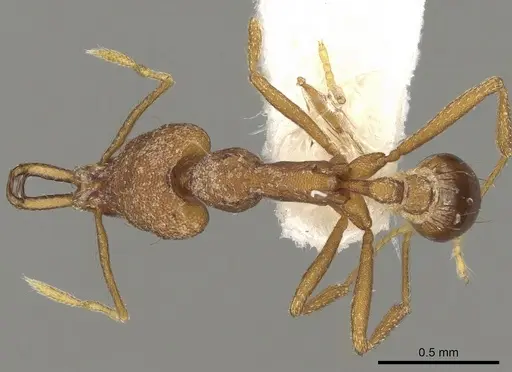
CASENT0914792
View on AntWeb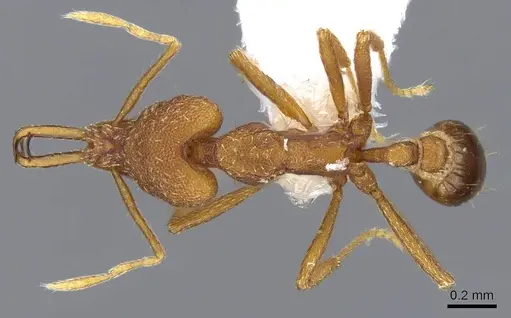
Literature
Loading...Loading products...