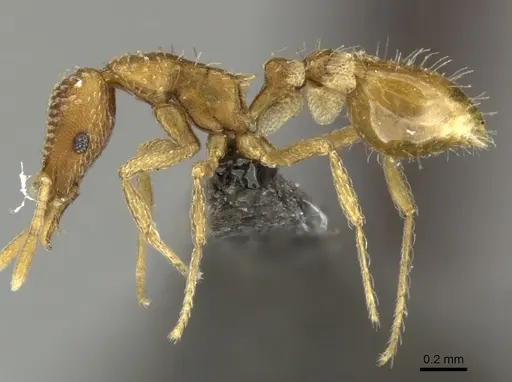
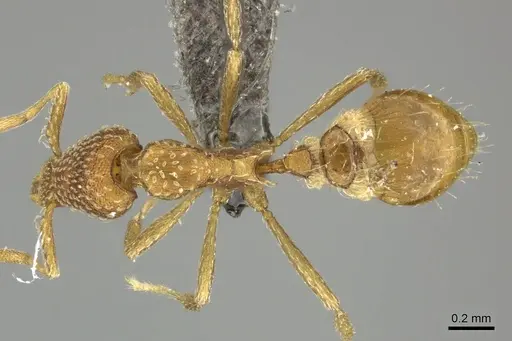
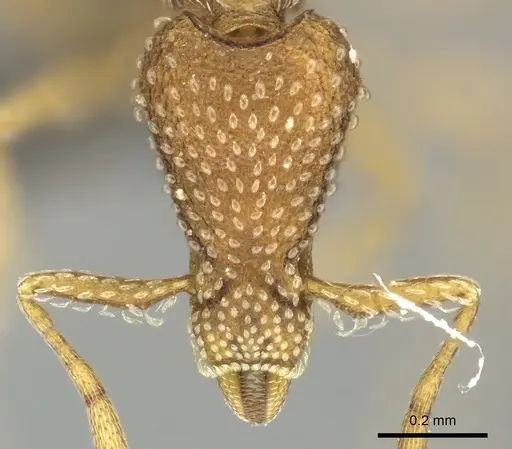
Strumigenys emarginata - "Trap-Jaw Ant (General Strumigenys)"
Strumigenys emarginata is a fascinating, small ant species known for its distinctive 'trap-jaw' mandibles, which snap shut at incredible speeds to capture prey. Workers of this species are typically small, ranging from 2.4-2.5 mm in total length, with a yellowish to medium brown coloration, though their gaster (abdomen) can sometimes be darker. They possess unique spoon-shaped hairs on their head and antennae, and their bodies often have a sculptured appearance. These ants are primarily found in the leaf litter, where their cryptic nature and specialized hunting skills make them formidable predators of small arthropods.
- Difficulty: Medium
- Origin & Habitat: Africa (specifically Afrotropical region, with type material from South Africa) in Forests (primary and secondary), leaf litter, under rocks/wood, and sometimes in disturbed urban habitats..
- Colony Type: Monogyne, claustral founding.
- Size & Growth:
- Queen: Not specified
- Worker: 2.4-2.5mm
- Colony: Small (hundreds). Slow growth.
- Antkeeping:
- Temperature: Maintain temperatures between 22°C and 26°C. Consistent temperatures within this range are crucial for their well-being, avoiding any extreme fluctuations..
- Humidity: High humidity is essential for Strumigenys emarginata, ideally between 60-80%. This mimics their natural leaf litter environment and helps prevent desiccation..
- Diapause: Not required. Not specified at Not specified.
- Nesting: These ants prefer small, enclosed nests that replicate their subterranean or leaf litter habitats. Nests with multiple small chambers and a suitable foraging area are recommended. Materials like Ytong, acrylic, or naturalistic setups with soil and decaying wood can work well..
- Behavior: Low aggressiveness.
- Common Issues: Mold in nest, Mites, Colony stalling, Humidity fluctuations, Lack of suitable live prey.
Keeping Strumigenys emarginata requires a keen eye for detail, particularly regarding their specialized diet. These ants are obligate predators, primarily targeting small arthropods like springtails (Collembola). It's crucial to provide a consistent supply of appropriately sized live prey. Some keepers also report success with micro-crickets, but springtails should be a staple. Cultivating a steady supply of these tiny prey insects is key to a thriving colony.
Their cryptic nature means these ants are rarely seen above ground in their natural habitat, preferring to nest and forage within leaf litter or the upper layers of soil. In captivity, this translates to a need for a setup that allows them to exhibit this behavior. A formicarium with ample substrate and interconnected tunnels will help them feel secure and encourage natural foraging. Observing their unique trap-jaw mechanism in action on live prey is a highlight of keeping this species, but it requires patience and a proper setup.
Humidity is paramount for Strumigenys emarginata. Coming from moist, shaded environments, they are highly susceptible to desiccation. Maintaining a consistent humidity level between 60-80% is non-negotiable. This can be achieved through various methods, such as moistening a portion of the substrate, using a humidity chamber, or selecting a nest material that retains moisture well. Regular monitoring with a hygrometer is essential to prevent common issues like colony stalling or queen stress due to inadequate humidity.
Colony growth for Strumigenys emarginata is generally slow, and their colonies remain relatively small, typically numbering in the hundreds of workers. Unlike some other popular ant species that explode in numbers, these ants prioritize quality over quantity. This means you won't need massive setups, but it also means that any losses within the colony can be more impactful. Patience is a virtue when keeping these delicate predators, as their slow growth allows for more detailed observation of their intricate behaviors.
While Strumigenys emarginata are not known for being aggressive towards handlers, their specialized hunting behavior is fascinating to observe. They are slow-moving normally but can exhibit quick bursts of speed when disturbed or ambushing prey. Their unique mandibles are a marvel of evolution, designed for precision strikes. Keepers should be aware that their small size makes them prone to escape if the setup isn't escape-proof, and their specific dietary needs mean they aren't as forgiving as generalist ant species.
Frequently Asked Questions
What's the best way to feed Strumigenys emarginata to ensure they get enough protein?
To keep your Strumigenys emarginata thriving, it's best to offer a consistent supply of live springtails (Collembola) directly into their foraging area. These tiny critters are their primary natural food source. Some ant keepers have also had success with very small micro-crickets. It's crucial to make sure the prey are appropriately sized for these small ants. Regularly introduce small batches of prey rather than large quantities to prevent waste and keep the environment clean.
My Strumigenys emarginata colony seems very inactive. Is this normal?
Yes, it's quite common for Strumigenys emarginata colonies to appear inactive. These ants are naturally cryptic, meaning they prefer to stay hidden within their nest or deep in the substrate, mimicking their leaf litter habitat. You might not see much surface activity compared to other ant species. As long as you observe a healthy queen and brood development when checking their nest, and they are consuming the prey you offer, their 'inactivity' is likely just their normal, secretive behavior.
How do I maintain the high humidity levels Strumigenys emarginata needs?
Maintaining high humidity for Strumigenys emarginata is vital. You can achieve this by keeping a portion of their nest substrate consistently moist, but not waterlogged, using distilled water. Many keepers opt for formicariums designed to retain moisture well, such as those made from Ytong or specific acrylic setups with hydration systems. Regularly misting the foraging area lightly can also help, but avoid spraying the ants directly. Using a hygrometer to monitor humidity levels is a smart move to ensure consistency.
Are Strumigenys emarginata suitable for a beginner ant keeper?
Strumigenys emarginata are generally considered a 'Medium' difficulty species, making them a bit of a challenge for absolute beginners. Their specialized diet of live prey (like springtails) and strict humidity requirements can be tricky to manage if you're new to antkeeping. While they are fascinating, it's often recommended that beginners start with more forgiving species that have broader dietary and environmental tolerances before diving into the world of 'trap-jaw' ants.
What kind of nest setup is best for Strumigenys emarginata?
For Strumigenys emarginata, a nest that simulates their natural leaf litter and subterranean environment is ideal. Formicariums with multiple small, interconnected chambers are preferred, allowing them to spread out their brood and feel secure. Naturalistic setups using a mix of sand, loam, and decaying wood in a controlled environment can also work beautifully. The key is to provide a stable, humid environment with ample opportunities for tunneling and hiding.
Do Strumigenys emarginata sting, and are they aggressive?
Strumigenys emarginata are not known to sting, and their aggressiveness towards handlers or other non-prey insects is considered low. Their primary defense and hunting mechanism is their specialized trap-jaw mandibles, which are used for quick strikes on small arthropod prey. While they are formidable hunters of their specific food, they are generally shy and non-confrontational when it comes to human interaction.
Why is my Strumigenys emarginata colony not growing?
Colony stalling in Strumigenys emarginata can be due to several factors. The most common reasons include insufficient or incorrect prey, inadequate humidity leading to stress, or unstable temperatures. Ensure you are providing a consistent supply of live springtails or suitable micro-insects. Double-check your humidity and temperature settings to make sure they are within the recommended ranges (60-80% humidity, 22-26°C). These ants have a naturally slow growth rate, so patience is key, but environmental stressors can bring growth to a halt.
Do Strumigenys emarginata need a diapause (hibernation)?
No, Strumigenys emarginata are typically found in tropical and subtropical regions, which means they do not require a diapause period. Maintaining stable temperatures year-round within their preferred range (22-26°C) is important for their continuous activity and development.
What happens if mold appears in my Strumigenys emarginata nest?
Mold is a common issue in high-humidity setups. If you spot mold in your Strumigenys emarginata nest, it's crucial to act quickly. Small amounts can sometimes be removed with a cotton swab, but persistent mold indicates a ventilation issue or too much moisture. Improving airflow in the outworld and ensuring the substrate isn't waterlogged are important steps. If the mold is extensive or in the nest chambers, a full colony transfer to a clean setup might be necessary to protect the ants' health.
How large do Strumigenys emarginata colonies get?
Strumigenys emarginata colonies are on the smaller side compared to many other ant species. On average, a healthy colony will typically consist of a few hundred workers. They are not known to form massive supercolonies. This makes them a great choice for keepers who prefer smaller, more manageable setups and enjoy observing intricate behaviors on a smaller scale.
What are 'trap-jaw' mandibles and how do they work in Strumigenys emarginata?
'Trap-jaw' mandibles are a remarkable evolutionary adaptation found in Strumigenys and other dacetine ants. They function like a spring-loaded trap: the mandibles are held open under tension, and when trigger hairs on their head detect prey, they snap shut with incredible speed and force. This mechanism allows Strumigenys emarginata to quickly stun or kill their small, fast-moving arthropod prey, such as springtails, making them highly efficient predators in the leaf litter.
Can I keep multiple queens of Strumigenys emarginata together (pleometrosis)?
Strumigenys emarginata colonies are typically monogyne, meaning they naturally have only one queen. Attempting pleometrosis (keeping multiple queens together) is not recommended as it often leads to conflict and the eventual death of all but one queen. For the best chances of success and colony stability, focus on establishing a single-queen colony.