

Strumigenys simulans
- Scientific Name
- Strumigenys simulans
- Tribe
- Attini
- Subfamily
- Myrmicinae
- Author
- Santschi, 1931
- Distribution
- Found in 1 countries
Strumigenys simulans Overview
Strumigenys simulans is an ant species of the genus Strumigenys. It is primarily documented in 1 countries , including Cuba. Detailed taxonomic data and occurrence records can be further explored via authoritative databases such as AntWeb or the Global Biodiversity Information Facility (GBIF).
Strumigenys simulans
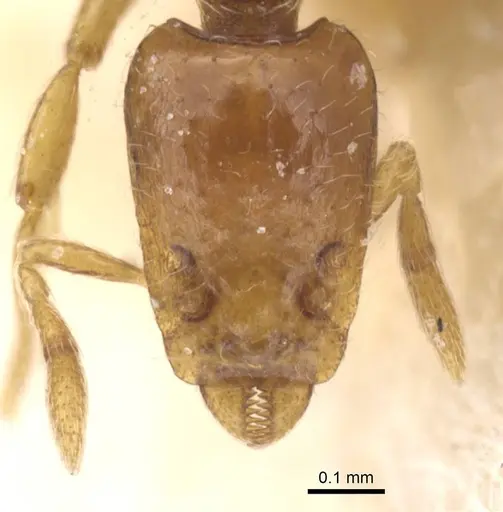
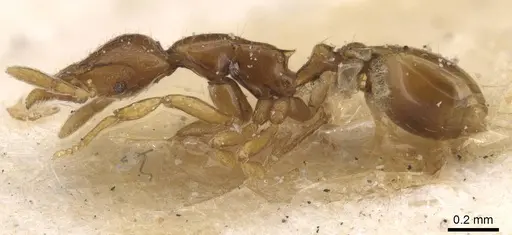
Strumigenys simulans is an exceptionally rare tiny ant endemic to Cuba, measuring just 1.8mm in total length [1]. This species is remarkable for having only 4-segmented antennae, a very unusual trait shared by only one other Neotropical species [1]. Workers have smooth, shining bodies with distinctive short curved hairs on the head and mesosoma, and a pair of longer erect hairs on the mesonotum [1]. The species belongs to the tribe Attini and possesses specialized trap-jaw mandibles with 9-10 interlocking teeth [1]. Found only in Cuba's Greater Antilles region, specifically in the Sierra Maestra and Nipe-Sagua-Baracoa mountain ranges [2].
Quick Summary
- Difficulty: Expert
- Origin & Habitat: Endemic to Cuba in the Greater Antilles. Found in mountain regions of Sierra Maestra and Nipe-Sagua-Baracoa, associated with pluviforest, pastures, and coffee plantations [2][3].
- Colony Type: Colony structure is unconfirmed. This is a rarely collected species with no published colony data.
- Size & Growth:
- Queen: Unknown, queen has not been described
- Worker: 1.8mm total length [1]
- Colony: Unknown, no colony size data exists
- Growth: Unknown, likely slow given tiny colony sizes typical of Strumigenys
- Development: Unconfirmed, no development data exists for this species (Based on related Strumigenys species, development likely takes several months. These are very slow-growing ants.)
- Antkeeping:
- Temperature: Unconfirmed, suggest keeping at 22-26°C based on Cuban rainforest conditions. Provide a gentle gradient.
- Humidity: High humidity required, think damp forest floor. Keep substrate consistently moist but not waterlogged.
- Diapause: Unknown, Cuban populations may not require true hibernation but may have reduced activity in cooler months.
- Nesting: In captivity, use tight chambers scaled to their tiny size. Y-tong (AAC) nests or plaster nests work well. Provide high humidity and minimal disturbance.
- Behavior: These are tiny, cryptic leaf-litter ants that are rarely seen in the wild. They are predatory on micro-arthropods like springtails. Workers are non-aggressive and will flee from threats. Escape prevention is critical due to their very small size, they can squeeze through standard barrier gaps. Colonies are expected to be small.
- Common Issues: escape prevention is critical due to tiny 1.8mm size, no published care information makes successful keeping challenging, likely requires live micro-prey (springtails) which is difficult to maintain, slow growth may lead to colony failure from neglect or overfeeding, high humidity needs can cause mold problems if ventilation is poor
Why This Species Is So Challenging
Strumigenys simulans is one of the rarest ants in the antkeeping hobby because virtually nothing is known about its biology in captivity [4]. This is not a species for beginners, even experienced antkeepers struggle with species that have no established care protocols. The only published information comes from taxonomic descriptions of museum specimens. You will essentially be pioneering captive husbandry for this species, which means trial and error, careful observation, and likely many failures along the way. Only attempt this if you have extensive experience with difficult micro-ant species and are prepared for a long-term project with uncertain outcomes.
Housing and Escape Prevention
Because workers are only 1.8mm long, escape prevention is absolutely critical. Standard test tube setups may have gaps that allow these ants to squeeze through. Use fine mesh barriers (at least 0.5mm or smaller) on any openings. Y-tong (AAC) nests with very narrow chambers work better than standard formicariums. The nest should have tight-fitting connections and all seams should be sealed with fluon or similar barriers. These ants live in leaf litter in nature, so a naturalistic setup with a deep layer of moist substrate can work, but watch for mold. Keep disturbance to an absolute minimum, these are cryptic ants that thrive in stable, quiet environments. [1]
Feeding and Diet
Strumigenys ants are specialized predators that hunt micro-arthropods. In captivity, their primary food should be live springtails, this is non-negotiable for most Strumigenys species. Other small live prey like micro-arthropods, tiny isopods, or collembola may be accepted experimentally. Do not rely on sugar sources, these ants are predatory and unlikely to accept honey or sugar water. Feed small amounts of live prey frequently, removing any uneaten prey after 24-48 hours. The challenge is establishing a sustainable springtail culture that can support the ant colony long-term. [4]
Temperature and Humidity
As a Cuban species from pluviforest habitats, Strumigenys simulans likely requires warm, humid conditions. Aim for temperatures in the 22-26°C range with a gentle gradient so ants can choose their preferred zone. Humidity should be high, think damp forest floor conditions. The substrate should feel consistently moist but never waterlogged. Use a hydration system that maintains moisture without flooding. Avoid both drying out and stagnant wet conditions. Ventilation must be adequate to prevent mold while retaining humidity. [2]
Colony Expectations
Based on related Strumigenys species, expect very small colonies, likely under 100 workers even at maturity. Growth will be extremely slow. First workers (nanitics) may take many months to appear after founding. Colonies may remain small and fragile for their entire lives. Do not expect the rapid growth seen in species like Lasius or Camponotus. Patience is essential, this is a multi-year project. Do not disturb the nest during founding or when the colony is small. Multiple queens have never been documented, so assume single-queen colonies. [4]
Frequently Asked Questions
Is Strumigenys simulans a good species for beginners?
No. This is an expert-level species with no established captive care protocols. Nothing is known about their biology in captivity, and they are extremely small (1.8mm) with very specific humidity and dietary requirements. Do not attempt this species unless you have years of experience with difficult micro-ant species.
What do Strumigenys simulans ants eat?
They are specialized predators that require live micro-prey, primarily springtails. Sugar sources are unlikely to be accepted. Establishing a sustainable springtail culture is essential for keeping this species alive long-term.
How long does it take for Strumigenys simulans to produce first workers?
Unknown, no captive data exists. Based on related Strumigenys species, expect many months (possibly 6+ months) from founding to first nanitic workers. Growth is extremely slow.
Can I keep Strumigenys simulans in a test tube?
A test tube setup may work but escape prevention must be excellent due to their tiny 1.8mm size. Standard cotton barriers may not be sufficient, use fine mesh and fluon barriers. The tube should be kept dark and undisturbed.
How big do Strumigenys simulans colonies get?
Unknown, but likely under 100 workers based on genus patterns. These are tiny colonies that remain small throughout their lives.
Do Strumigenys simulans need hibernation?
Unknown, Cuban populations likely experience mild seasonal changes rather than true hibernation. Do not force hibernation unless you observe clear seasonal slowdowns in activity.
Why are my Strumigenys simulans dying?
Without established care protocols, colony failure is extremely common. Common causes include: escape and desiccation, mold from overwatering, starvation (no springtails), temperature extremes, and disturbance during founding. This species requires near-perfect conditions to survive.
Can I keep multiple Strumigenys simulans queens together?
Not documented. Do not attempt combining unrelated queens, the risks of aggression and colony failure are too high for such a rare species.
Where does Strumigenys simulans live in the wild?
This species is endemic to Cuba, found only in the Sierra Maestra and Nipe-Sagua-Baracoa mountain ranges. It lives in leaf litter in pluviforest, pastures, and coffee plantations.
What makes Strumigenys simulans special?
It is one of only two Neotropical ant species with 4-segmented antennae, making it taxonomically unique. It is also extremely rare, known from very few specimens collected in Cuba's mountains.
Is Strumigenys simulans endangered?
Its conservation status is not formally assessed, but being endemic to Cuba with a restricted mountain distribution and only a handful of known specimens suggests it is potentially vulnerable.
References

This caresheet is licensed under CC BY-SA 4.0 .
CASENT0912827
View on AntWeb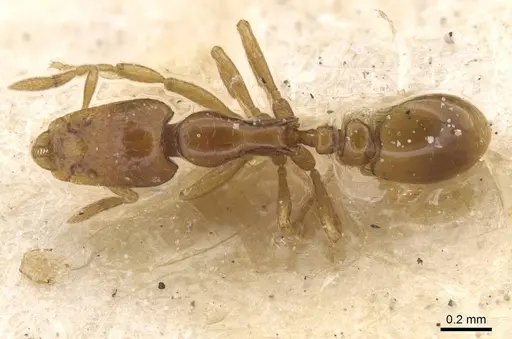
Literature
Loading...Loading products...