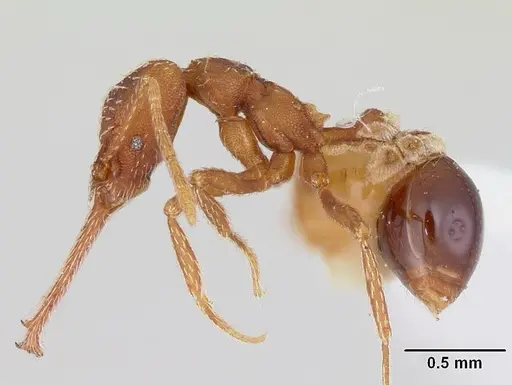
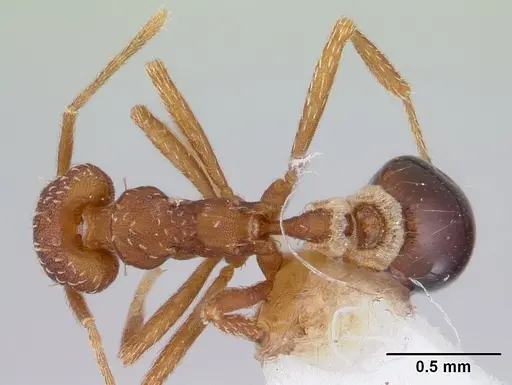
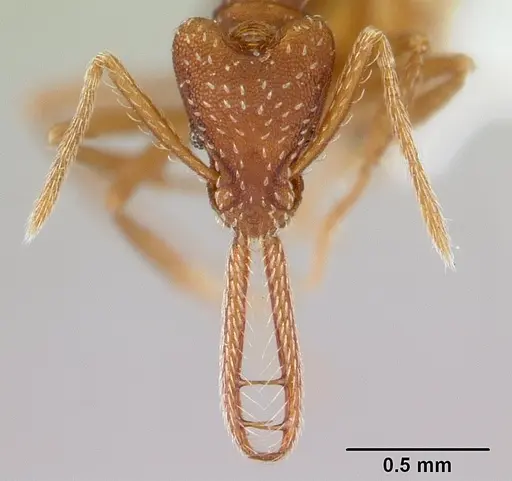
Strumigenys cordovensis - "Trap-jaw Ant"
Strumigenys cordovensis is a fascinating, tiny ant species known for its remarkably long, trap-jaw mandibles. These unique jaws can snap shut incredibly fast, used to stun and capture their specialized prey. Workers are small, typically ranging from 3.5 to 4.0 mm in length, with distinctive stiff, projecting hairs on their head and alitrunk. Their bodies are generally light brown to brown, and a defining feature is the presence of sponge-like tissue on their waist segments. This species is part of the larger Strumigenys genus, which includes over 880 described species, many of which are cryptic and primarily found in leaf litter and decaying wood.
- Difficulty: Medium
- Origin & Habitat: Neotropics (Southern Mexico south to Brazil and Paraguay) in Forest floor leaf litter in dry and wet forest habitats, often found in soil and rotting wood..
- Colony Type: Monogyne (single queen) or potentially polygyne (multiple queens) as some Strumigenys species can be polygynous, although specific information for S. cordovensis is limited., claustral founding.
- Size & Growth:
- Queen: Not specified
- Worker: 3.5-4.0mm
- Colony: Small (tens to hundreds, typically 15-400 individuals).. Slow growth.
- Antkeeping:
- Temperature: Maintain a temperature range between 22°C and 26°C. Avoid extreme temperature fluctuations..
- Humidity: High humidity is crucial, ideally between 60% and 80%..
- Diapause: Not required. Not specified at Not specified.
- Nesting: Prefers nests that mimic their natural environment of soil and decaying wood. Small formicariums with easy-to-access chambers are recommended. Naturalistic setups with leaf litter are highly beneficial..
- Behavior: Low (towards handler, primarily focused on prey) aggressiveness.
- Common Issues: Lack of suitable prey (springtails), Low humidity leading to desiccation, Mold in nest (due to high humidity if ventilation is poor), Colony stalling due to inadequate diet or environment.
One of the most remarkable aspects of Strumigenys cordovensis is their highly specialized feeding behavior. These ants are expert predators, primarily hunting small arthropods like springtails (Collembola). Their elongated, trap-jaw mandibles are not just for show; they operate with a lightning-fast kinetic strike, stunning their prey before grasping and lifting it. This unique hunting style means their diet in captivity must closely mimic their natural prey, so a steady supply of tiny live insects like springtails is essential for their well-being.
Due to their cryptic nature and small colony sizes, Strumigenys cordovensis can be a bit challenging to observe. They typically nest and forage within the leaf litter and soil, making them less visible than many other ant species. When disturbed, they are usually slow-moving but can move surprisingly quickly. Providing a naturalistic outworld with plenty of leaf litter and small pieces of decaying wood will encourage more natural foraging behaviors and provide ample hiding spots for these shy ants.
Maintaining stable high humidity is perhaps the most critical factor for successfully keeping Strumigenys cordovensis. Coming from humid forest habitats, they are very sensitive to dry conditions. A proper formicarium setup should incorporate features that help retain moisture, such as a moist substrate or integrated hydration systems. Regular misting of the foraging area can also contribute to the required humidity levels, preventing desiccation and promoting a healthy environment for your colony.
While some Strumigenys species are known to be temporary social parasites, invading host colonies to establish their own, Strumigenys cordovensis is generally not categorized as such. Most Strumigenys species are independent nesters, forming small colonies in the soil or rotting wood. This means a founding queen will likely establish her colony on her own, without the need for host workers. However, due to their small size and specific needs, they are often considered suitable for more experienced antkeepers.
User blogs will be displayed here.