

Strumigenys cabira
- Scientific Name
- Strumigenys cabira
- Tribe
- Attini
- Subfamily
- Myrmicinae
- Author
- Fisher, 2000
- Distribution
- Found in 1 countries
Strumigenys cabira Overview
Strumigenys cabira is an ant species of the genus Strumigenys. It is primarily documented in 1 countries , including Madagascar. Detailed taxonomic data and occurrence records can be further explored via authoritative databases such as AntWeb or the Global Biodiversity Information Facility (GBIF).
Strumigenys cabira
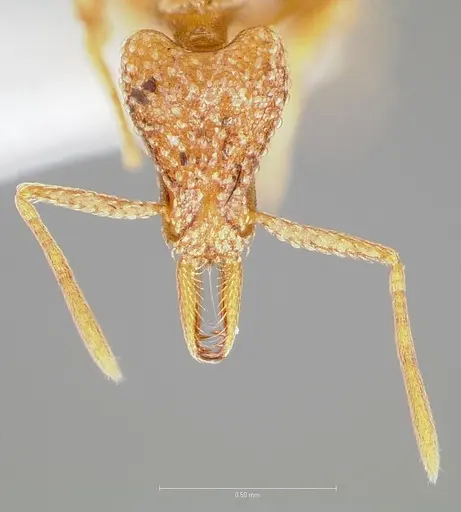
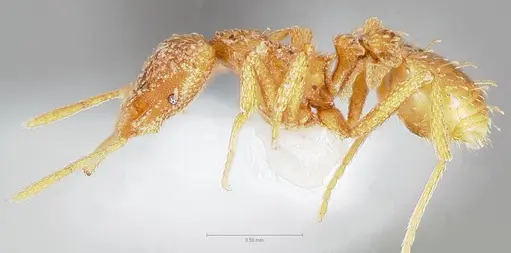
Strumigenys cabira is a tiny ant species from Madagascar, measuring just 2.8-3.0mm in total length. Workers have a distinctive dull yellowish-brown coloration and belong to the Strumigenys scotti species group, characterized by their elongated mandibles with a notable gap between them at the clypeal margin. The mandibles are nearly straight and run parallel except at the base, with a narrow lamella along the inner margin. These ants feature characteristic clavate (club-shaped) hairs on their head, mesonotum, and body, giving them a somewhat fuzzy appearance. The postpetiole disc is mostly shiny with only faint punctures, helping distinguish this species from related forms like S. balux and S. tegar which have more distinctly reticulate-punctate postpetiole discs.
This species is part of the Attini tribe, the fungus-growing ants, though many Strumigenys species are specialized predators. Found only in Madagascar's rainforests at elevations between 800-1250m, these ants live in leaf litter and rotting wood on the forest floor. Their small size and specialized habitat requirements make them a challenging but fascinating species for experienced antkeepers.
Quick Summary
- Difficulty: Expert
- Origin & Habitat: Endemic to Madagascar, found in montane and lowland rainforests at 800-1250m elevation. Workers live in leaf litter and rotting wood on the forest floor.
- Colony Type: Unknown colony structure, founding behavior and queen number have not been documented in scientific literature. Based on related Strumigenys species, likely single-queen colonies.
- Size & Growth:
- Queen: Unconfirmed, not described in original description
- Worker: 2.8-3.0mm total length, HL 0.64-0.66mm, HW 0.47-0.48mm
- Colony: Unknown, no colony size data available
- Growth: Unknown, likely slow given small body size
- Development: Estimated 8-12 weeks based on typical Myrmicinae development at optimal temperature (Development timeline unconfirmed for this species, estimates based on genus-level patterns)
- Antkeeping:
- Temperature: Keep around 22-24°C. These are rainforest floor ants from Madagascar, so they prefer warm, stable conditions with moderate heat. Avoid temperatures below 20°C or above 28°C.
- Humidity: High humidity required, aim for 70-85%. These leaf-litter ants from humid rainforests need consistently moist substrate. Keep the nest substrate damp but not waterlogged, with some variation allowing ants to self-regulate.
- Diapause: Unknown, no documented hibernation requirement. Madagascar has a mild climate, so a reduced activity period in winter months may be appropriate but has not been studied.
- Nesting: Best kept in naturalistic setups with moist substrate (soil/leaf litter mix) or in tight acrylic/plaster nests. They naturally nest in rotting wood and leaf litter, so provide material they can tunnel through. Y-tong nests with very small chambers may work given their tiny size.
- Behavior: These are very small, slow-moving ants that forage in leaf litter. They are likely specialized predators, possibly on springtails or other micro-arthropods given their genus membership in Attini. Their large mandibles suggest predatory behavior. They are not aggressive and pose no threat to humans, their tiny size and lack of sting means they cannot harm keepers. Escape prevention is critical due to their minute size, they can squeeze through extremely small gaps. They are likely nocturnal or crepuscular based on their rainforest floor habitat.
- Common Issues: escape prevention is critical, they are extremely tiny and can slip through gaps too small for most ants, high humidity needs make them prone to mold issues if ventilation is poor, specialized diet requirements are poorly understood, may need live micro-prey, slow growth and small colony sizes mean colonies are fragile, wild-caught colonies may have parasites or fail to adapt to captivity
Housing and Nest Setup
Strumigenys cabira requires careful housing due to their extremely small size and humidity needs. A naturalistic setup with a soil/leaf litter mixture works well, these ants naturally live in rotting wood and leaf litter on the rainforest floor, so they need material they can move through. Use a tight-sealing container with excellent escape prevention, even standard test tube setups may allow escapes given their minute size. If using acrylic or Y-tong nests, ensure chambers are appropriately scaled, these are tiny ants at under 3mm. Provide a water reservoir to maintain humidity without flooding the nest. A layer of moist sphagnum moss or leaf litter on top helps maintain humidity. Because they are terricolous (ground-dwelling) and prefer humid conditions [1], the outworld should also maintain some moisture. Use fine mesh for any ventilation, standard ant mesh may not contain them.
Feeding and Diet
The diet of Strumigenys cabira is not directly documented, but Strumigenys species are typically specialized predators. In the wild, they likely hunt springtails, mites, and other micro-arthropods in leaf litter. In captivity, offer small live prey such as springtails, tiny isopods, or fruit fly larvae. Some Strumigenys may accept honey or sugar water, but this should be offered sparingly and only as a supplement to protein. Given their membership in the Attini tribe (fungus-growers), some species have been associated with fungal cultivation, though many Strumigenys are predatory. Start with live micro-prey as the primary food source and experiment with small amounts of honey or sugar water to test acceptance. Feed small amounts every 2-3 days and remove uneaten prey to prevent mold.
Temperature and Humidity
Maintain temperatures between 22-24°C for optimal colony health. These ants come from Madagascar rainforests at 800-1250m elevation, where conditions are warm and humid year-round. They prefer humid conditions, the research indicates humid=1 in their habitat preferences [1]. Aim for 70-85% humidity in the nest area. Use a water reservoir or moist substrate to maintain humidity, and mist occasionally if needed. Avoid temperature drops below 20°C, which could stress the colony. A heating cable on one side of the nest can create a gentle gradient, but ensure the warm side stays below 28°C. Stable temperatures are preferred, avoid fluctuations. If your room temperature is within this range, they may do well without additional heating.
Behavior and Temperament
Strumigenys cabira is a docile, non-aggressive species that poses no danger to keepers. They are tiny and lack a functional stinger, so they cannot harm humans. Their large mandibles are adapted for catching small prey, not for defense against larger threats. Workers move slowly and methodically through leaf litter, searching for prey. They are likely nocturnal or crepuscular based on their rainforest floor habitat. Colonies are probably small, likely under 100 workers given their tiny size and litter-dwelling habits. The main behavioral concern is escape, their minute size means they can slip through incredibly small gaps. Always use excellent escape prevention with fine mesh barriers and tight-fitting lids. Do not confuse this species with more aggressive ants, they are completely harmless to keep.
Colony Establishment
Establishing Strumigenys cabira colonies in captivity presents challenges. Wild-caught colonies may struggle to adapt to captive conditions, and founding behavior is unconfirmed for this species. If obtaining a colony, ensure it was collected professionally and check for signs of stress or parasite infestation. Quarantine new colonies and monitor for health issues. Given the lack of documented colony structure information, assume standard single-queen founding until proven otherwise. Queens (if obtained) would likely be claustral based on typical Myrmicinae patterns, sealing themselves in to raise first workers. However, this is an inference rather than confirmed behavior. Patience is essential, these are slow-growing ants with likely long development times. Do not disturb founding colonies unnecessarily.
Frequently Asked Questions
How long does it take for Strumigenys cabira to produce first workers?
The exact development timeline is unconfirmed for this species. Based on typical Myrmicinae patterns and their small body size, expect 8-12 weeks from egg to worker at optimal temperature (22-24°C). Growth is likely slow, so patience is essential.
Can I keep Strumigenys cabira in a test tube?
Test tubes can work but escape prevention is critical, these tiny ants can slip through standard cotton plugs. Use a tight-fitting sponge or cotton, and consider wrapping the opening with fine mesh. Ensure the test tube has a water reservoir and maintains high humidity.
What do Strumigenys cabira ants eat?
They are likely specialized predators on micro-arthropods. Offer live springtails, tiny isopods, or fruit fly larvae as primary food. Some individuals may accept honey or sugar water experimentally, but protein should be the main diet.
Are Strumigenys cabira ants dangerous?
No, they are completely harmless. These tiny ants lack a functional stinger and are not aggressive. They pose no danger to keepers or other animals.
Do Strumigenys cabira ants need hibernation?
Diapause requirements are unknown. Madagascar has a mild climate without harsh winters, so a formal hibernation may not be necessary. A slight reduction in activity during winter months may occur naturally.
Why are my Strumigenys cabira escaping?
Their minute size makes them expert escape artists. Use fine mesh (at least 0.5mm or finer), tight-fitting lids, and barrier tape. Check all seams and gaps, they can slip through unbelievably small spaces.
Are Strumigenys cabira good for beginners?
No, this is an expert-level species. Their tiny size, high humidity needs, poorly understood diet, and escape-prone nature make them challenging. They are best suited for experienced antkeepers.
How big do Strumigenys cabira colonies get?
Colony size is unconfirmed but likely remains small, probably under 100 workers. Their tiny body size and litter-dwelling habits suggest small, slow-growing colonies.
What temperature do Strumigenys cabira need?
Keep them at 22-24°C. This matches their native Madagascar rainforest habitat. Avoid temperatures below 20°C or above 28°C.
Why are my Strumigenys cabira dying?
Common causes include: escape and desiccation, improper humidity (too dry or too wet causing mold), temperature stress, and inadequate diet. These fragile ants require precise conditions. Wild-caught colonies may also carry parasites.
When should I move Strumigenys cabira to a formicarium?
Wait until the colony is well-established with at least 20-30 workers. These tiny ants do well in naturalistic setups rather than commercial formicariums. Ensure any formicarium has appropriately sized chambers and excellent escape prevention.
References

This caresheet is licensed under CC BY-SA 4.0 .
CASENT0004369
View on AntWeb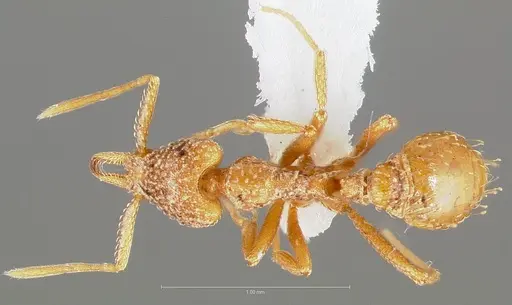
Literature
Loading...Loading products...