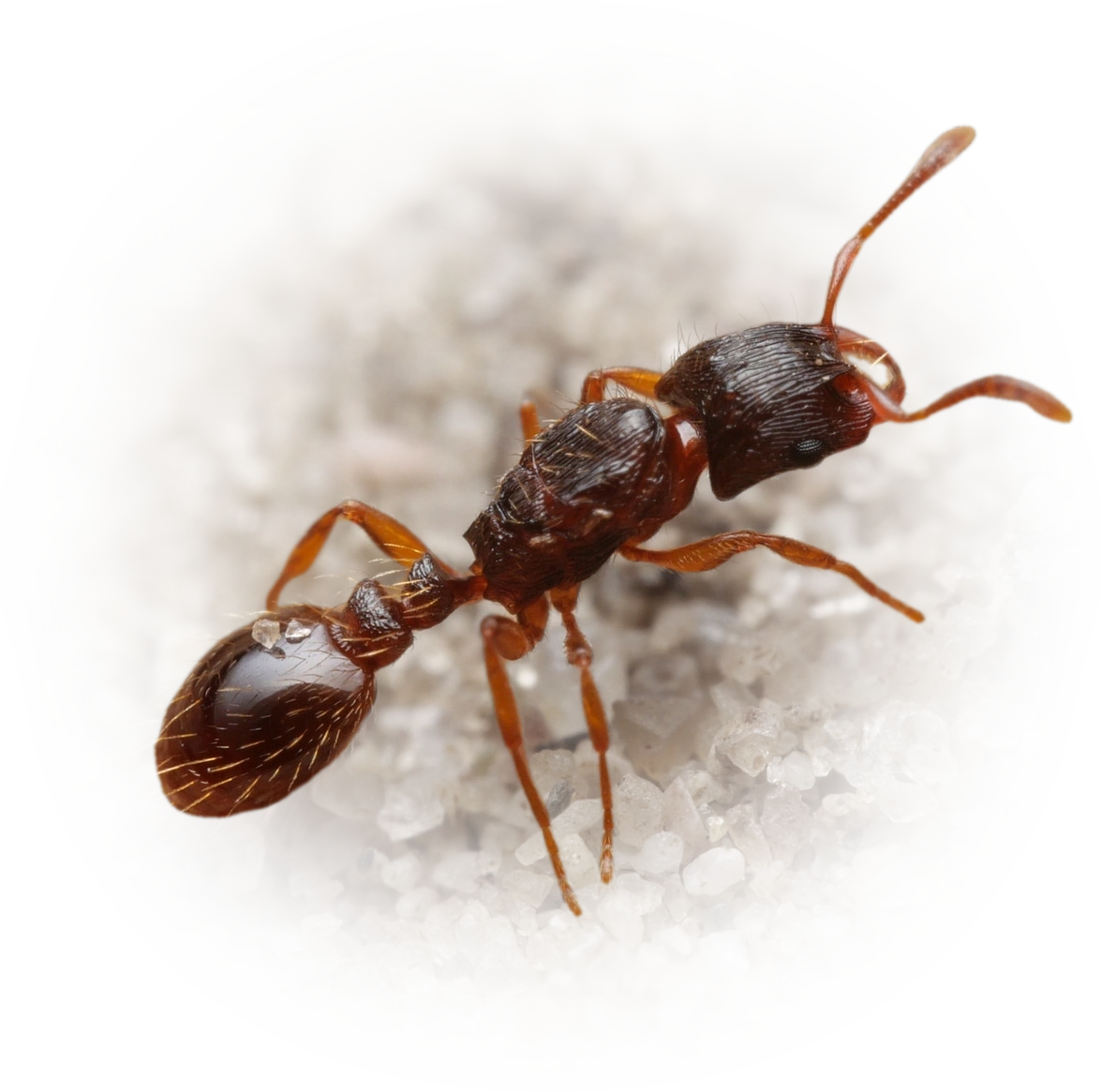

Strongylognathus testaceus
- Scientific Name
- Strongylognathus testaceus
- Tribe
- Crematogastrini
- Subfamily
- Myrmicinae
- Author
- Schenck, 1852
- Distribution
- Found in 11 countries
Strongylognathus testaceus Overview
Strongylognathus testaceus is an ant species of the genus Strongylognathus. It is primarily documented in 11 countries , including Belgium, Switzerland, Germany. Detailed taxonomic data and occurrence records can be further explored via authoritative databases such as AntWeb or the Global Biodiversity Information Facility (GBIF).
Strongylognathus testaceus
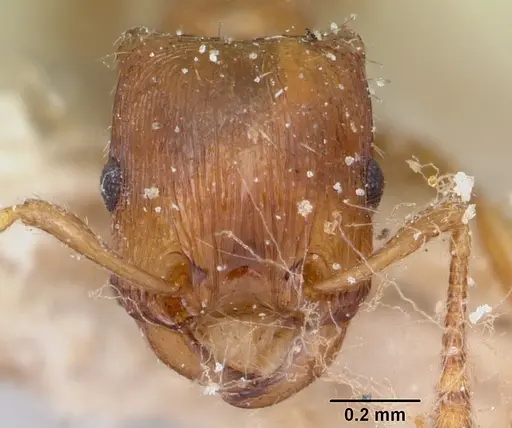
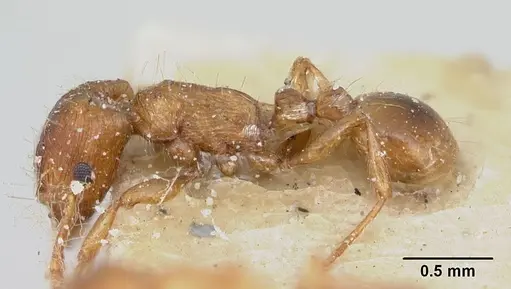
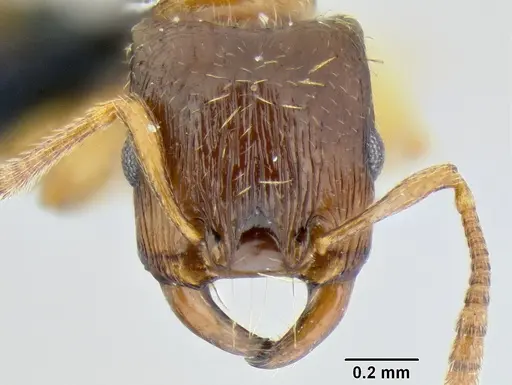
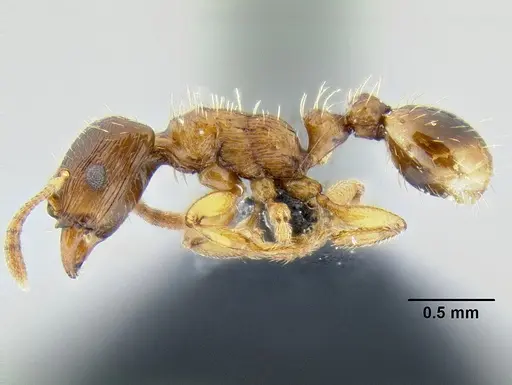
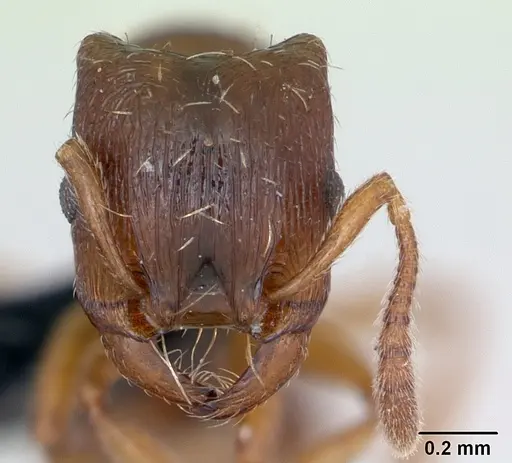
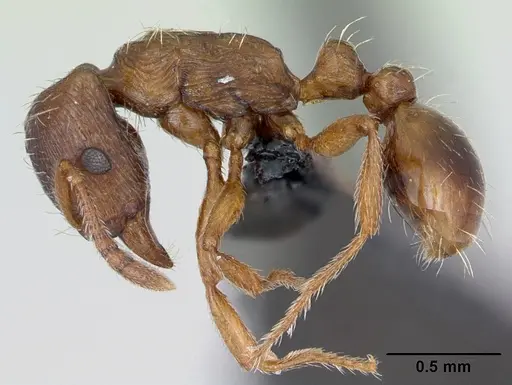
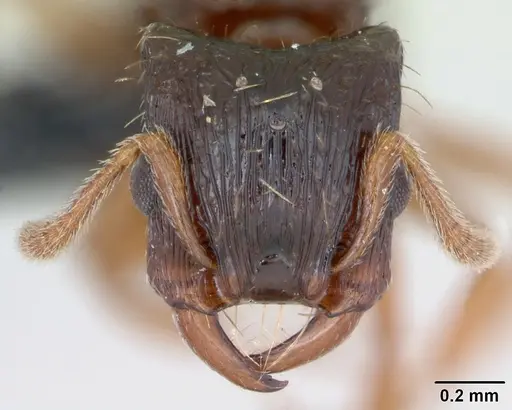
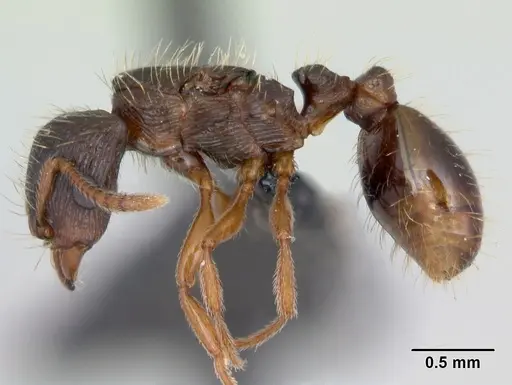
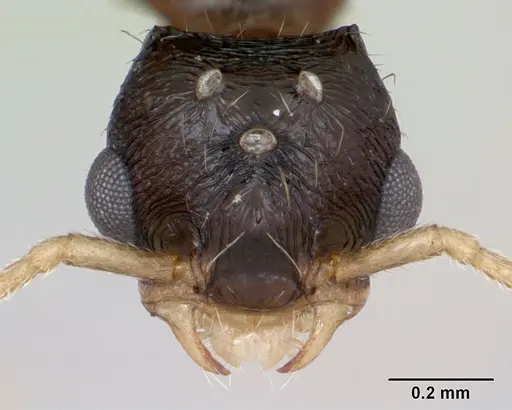
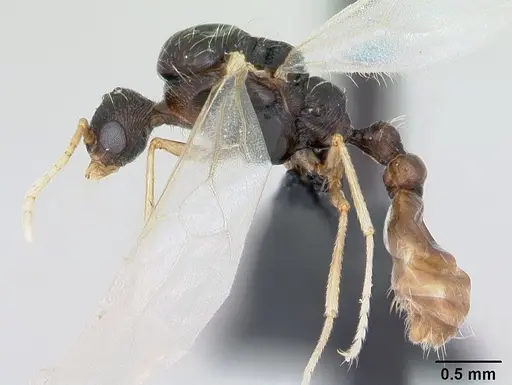
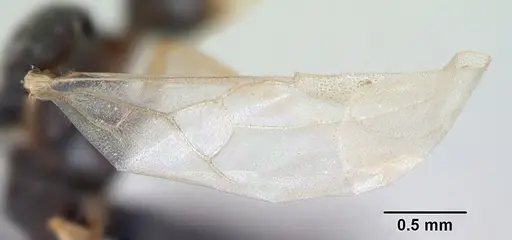
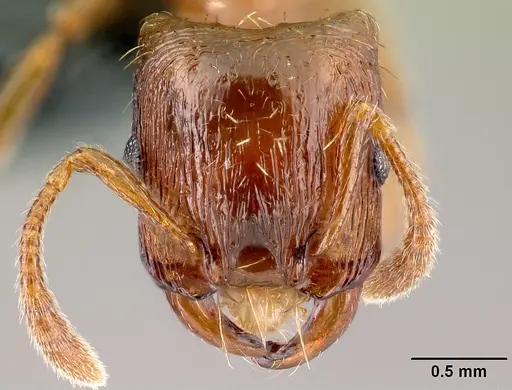
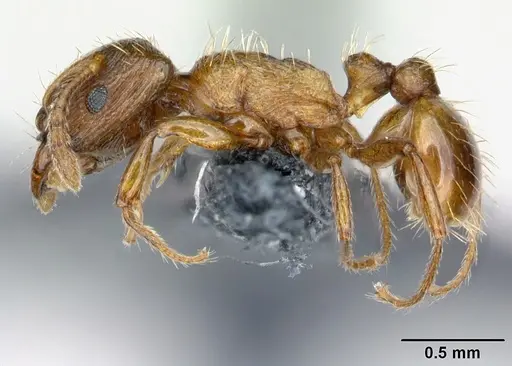
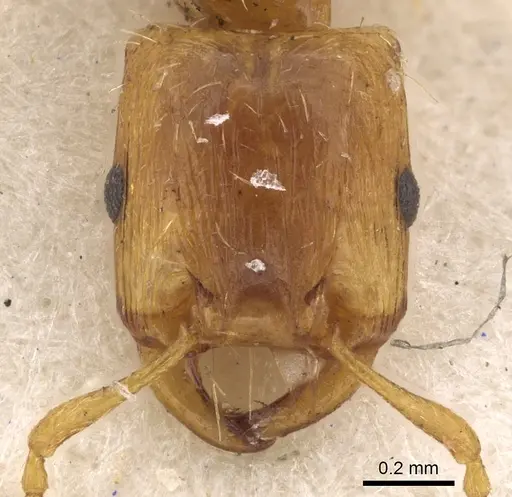
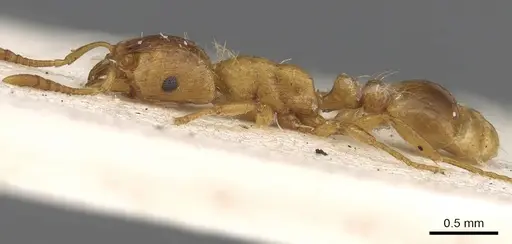
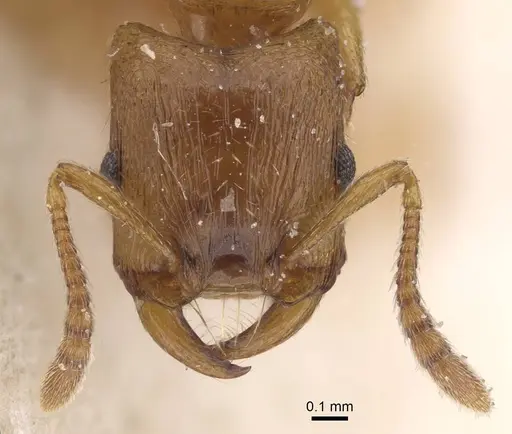
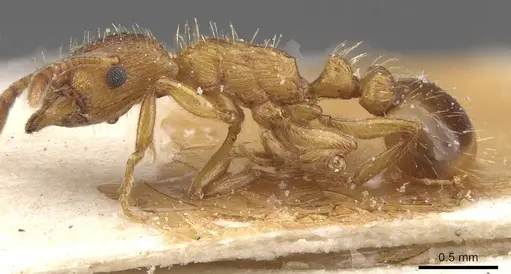
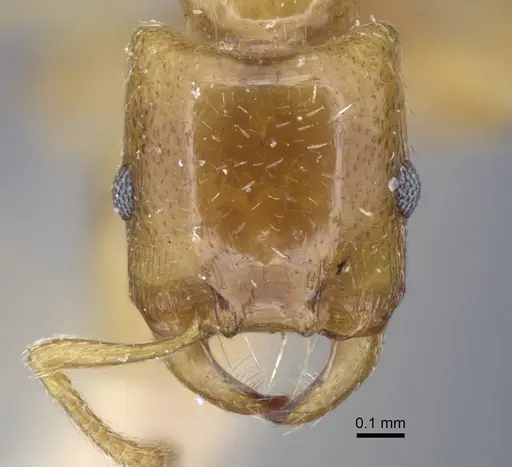
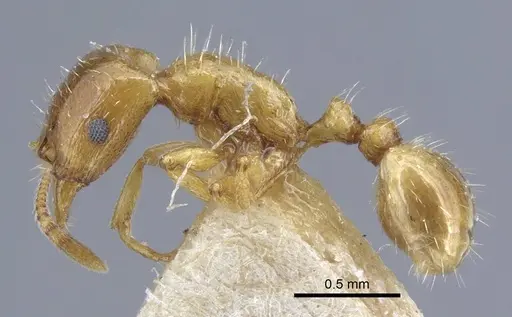
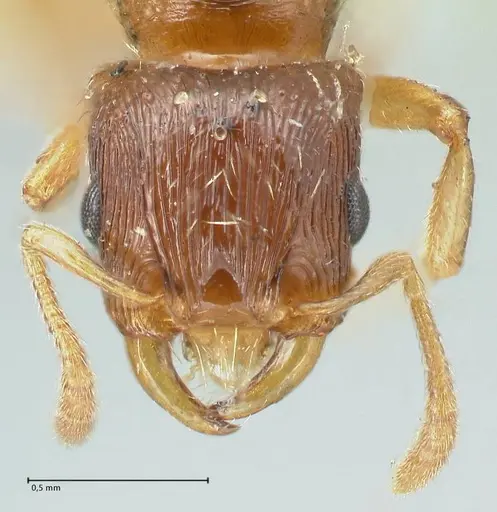
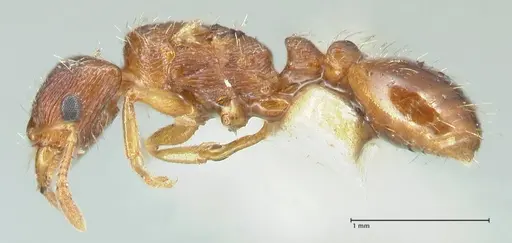
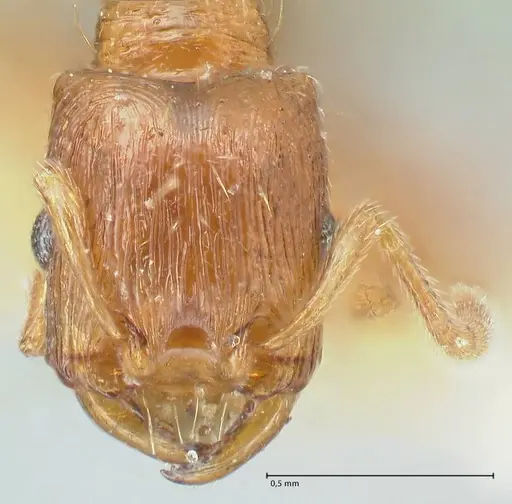
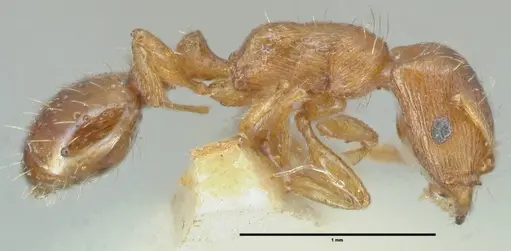
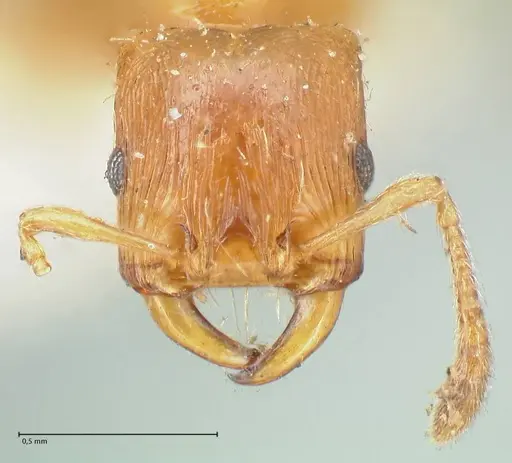
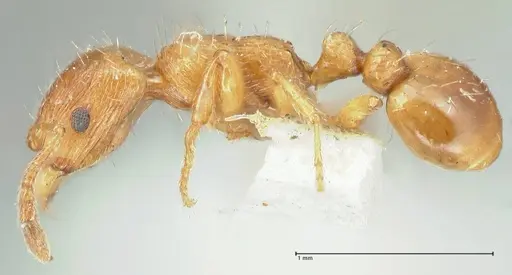
Strongylognathus testaceus is a small parasitic ant measuring 2-3.6mm with yellowish-brown coloration and distinctive sickle-shaped mandibles [1]. The species is easily recognized by its deeply excised (notched) back of the head and paler color compared to its dark host Tetramorium species [2]. This ant occurs across the Palaearctic region from the Pyrenees to Ukraine and from northern Italy to Sweden [3]. Unlike typical ants, S. testaceus cannot survive without its host, it is a permanent social parasite that lives exclusively in nests of Tetramorium species, primarily T. caespitum and T. impurum [4]. The parasite queen does not kill the host queen but instead uses pheromones to suppress the host's production of sexual offspring, allowing both queens to coexist in the same nest [5].
Quick Summary
- Difficulty: Expert
- Origin & Habitat: Found across Central and Southern Europe, the Caucasus, and parts of Western Siberia in warm, dry habitats like steppe grasslands, pine forests, rocky slopes, and open forest edges [3][6]. Prefers similar microhabitats to its host Tetramorium caespitum, dunes, heathlands, calcareous grasslands, and sunny forest edges [1].
- Colony Type: Mixed colonies containing both the parasitic Strongylognathus queen and the host Tetramorium queen. The parasite queen is queen-tolerant (inquiline), she does not kill the host queen but coexists with her [4]. Parasitic workers typically make up only 1-5% of the total worker population [7].
- Colony: Monogyne
- Queen: Socially parasitic
- Founding: Pleometrosis
- Size & Growth:
- Queen: 3.2-4 mm [1]
- Worker: 2.0-3.6 mm
- Colony: Mixed colonies can reach up to 20,000 individuals when host colonies are large [8]
- Growth: Slow
- Development: Unknown, development occurs within the host colony and has not been specifically studied (Workers develop more slowly than host workers since they receive less attention from host workers)
- Antkeeping:
- Temperature: Keep at room temperature (20-24°C), similar to what Tetramorium caespitum requires. Avoid temperature extremes [8]
- Humidity: Moderate humidity is acceptable. The host species Tetramorium caespitum prefers dry to moderately damp conditions, so follow similar guidelines [8]
- Diapause: Likely requires a winter rest period. The host species tolerates cooler temperatures in winter, so a hibernation period at 5-10°C for 2-3 months is recommended
- Nesting: This species cannot be kept without its host. You must maintain a healthy Tetramorium caespitum or T. impurum colony first, then attempt to introduce the parasite queen. Natural nests are found under stones in warm, sunny locations [6]
- Behavior: Extremely docile and passive. S. testaceus workers cannot feed themselves and must be fed by host workers [9]. They show no aggression and cannot perform colony tasks, they are essentially useless to the mixed colony [10]. The workers do not participate in raids or any work activities [11]. The species is considered a 'degenerate slave-maker' that has lost its raiding ability entirely [4]. Escape risk is low since they are small and not particularly active [8].
- Common Issues: This species CANNOT be kept without a host Tetramorium colony, attempting to keep S. testaceus alone will result in death, Maintaining two species simultaneously is extremely difficult and expensive, you need a thriving Tetramorium host colony first, The parasite queen may be rejected by host workers initially, they will try to push her out until she is accepted [1], S. testaceus workers are nearly non-functional, they cannot feed themselves and receive priority for food over host workers, Finding a mated queen is extremely difficult in the wild, this species is rare and cryptic
Understanding the Parasitic Lifestyle
Strongylognathus testaceus represents a fascinating evolutionary intermediate between true slave-makers and permanent social parasites (inquilines). Unlike slave-making ants that raid other colonies to steal pupae, this species has lost the ability to conduct raids entirely [4]. The parasite queen enters a Tetramorium nest and is accepted by the host workers. She does not kill the host queen but instead uses pheromonal signals to suppress the host colony's production of sexual offspring (queens and males) [5]. Both queens coexist in the same nest, laying eggs that host workers care for. The S. testaceus workers that hatch are fed and cared for by host workers but contribute almost nothing to colony function [10]. This species is sometimes called a 'degenerate slave-maker' because it evolved from slave-making ancestors that could raid colonies but has since lost this ability [12]. The workers have reduced functionality, they cannot feed themselves and must be fed by host workers [9]. This makes them completely dependent on their host for survival.
The Critical Host Requirement
This cannot be stressed enough: Strongylognathus testaceus cannot survive without a host Tetramorium colony. You must first establish a healthy colony of Tetramorium caespitum or T. impurum before attempting to keep the parasite [8]. The host colony provides all essential functions, foraging, nest maintenance, brood care, and feeding both the host and parasite queens and their offspring. In mixed colonies, S. testaceus workers typically make up only 1-5% of the total worker population [7]. The host workers raise the parasite's brood alongside their own. When the parasite queen dies, the host queen continues producing workers. If the host queen dies, the parasite queen may be able to continue with the remaining host workers, but this is rare. This species is NOT suitable for beginners, it requires advanced antkeeping skills and the ability to maintain two species simultaneously.
Colony Foundation and Introduction
In the wild, colony foundation occurs when a newly mated S. testaceus queen joins a founding Tetramorium queen. Observations from ant keepers show that the Tetramorium queen will lick and groom the smaller parasite queen, likely helping her acquire the colony's chemical signature [8]. The nuptial flights occur from July to September, with parasite queens swarming simultaneously with their host species or a few days later [8]. To establish a mixed colony in captivity, you would need to introduce a mated S. testaceus queen into an established Tetramorium colony. The introduction process can be stressful, host workers may initially reject and attack the intruder [1]. Successful colonies have been observed where both species' queens cooperate and produce workers. The parasite queen can establish a nest without a host queen in some cases, but this is very difficult to achieve [9].
Feeding and Nutrition
S. testaceus workers cannot feed themselves and must be fed by host workers [9]. This means you do not directly feed the parasite ants, you feed the host colony, and the host workers distribute food to both species. The host Tetramorium workers are omnivorous, accepting sugars (honey water, sugar water), protein sources (insects, small prey), and seeds [8]. The host workers will prioritize feeding their own queen and brood, but they also feed the parasite queen and her offspring. In laboratory observations, S. testaceus workers showed no interest in food items presented to them, they only briefly contacted prey with their antennae but did not consume anything [9]. This complete dependence on host workers is why the parasite workers are considered 'useless' to the colony.
Legal and Ethical Considerations
Strongylognathus testaceus is a protected species in many European countries and is considered endangered or threatened in several regions [13][14]. Before attempting to keep this species, check your local regulations regarding the collection and possession of native parasitic ants. In Belgium, for example, it is considered extinct in Wallonia and endangered in Flanders [15]. The species has declined significantly due to habitat loss and the decline of its host species. If you do find a mixed colony in the wild, collecting should be done responsibly and with permission. Given the extreme difficulty of maintaining this species and its protected status, it is generally not recommended to keep S. testaceus in captivity unless you are an experienced researcher or conservationist working with proper permits.
Frequently Asked Questions
Can I keep Strongylognathus testaceus without a host colony?
No. Strongylognathus testaceus is an obligate social parasite that cannot survive without a host Tetramorium colony. The parasite workers cannot feed themselves and depend entirely on host workers for survival. You must first establish a healthy Tetramorium caespitum or T. impurum colony before attempting to keep this species.
How do I establish a mixed colony?
You need to introduce a mated S. testaceus queen into an established Tetramorium colony. The process can be difficult as host workers may initially reject the intruder. Some ant keepers have reported success by introducing the parasite queen when the host colony is relatively small. The Tetramorium queen may lick and groom the parasite queen, helping her integrate into the colony [8]. This method has limited success and requires significant experience.
What do Strongylognathus testaceus eat?
You do not directly feed S. testaceus, you feed the host Tetramorium colony. The host workers are omnivorous and accept sugar sources (honey water, sugar water) and protein (insects, small prey). The host workers then distribute food to both the host and parasite queens and their brood [8]. S. testaceus workers cannot feed themselves and must be fed by host workers [9].
Is Strongylognathus testaceus a good species for beginners?
No. This is an expert-level species that requires maintaining two ant species simultaneously. The extreme dependency on the host species, the difficulty of obtaining a mated queen, and the complex social dynamics make this unsuitable for beginners. Even experienced ant keepers struggle with this species. It is also protected in many European countries.
Do Strongylognathus testaceus workers do anything in the colony?
No. S. testaceus workers are essentially non-functional. They cannot feed themselves, cannot care for brood, cannot defend the colony, and do not participate in any colony tasks [10]. They are fed by host workers and exist as a small percentage (typically 1-5%) of the mixed colony [7]. This is why the species is called a 'degenerate slave-maker', it has lost the worker caste's functionality entirely.
How long do nuptial flights occur?
Nuptial flights occur from July to September [5][1]. The parasite queens typically swarm simultaneously with their host Tetramorium species, or a few days later. This synchronization helps ensure the parasite queen can find a host colony to invade.
Why is this species considered endangered?
S. testaceus is considered endangered or threatened in many European countries due to its extreme rarity and dependence on stable host populations [13][14]. It is estimated that only about 1 in 50 Tetramorium colonies are parasitized [8]. The species has declined significantly due to habitat loss, the decline of its host species, and its cryptic lifestyle. It is protected in several countries including Belgium and Austria.
What happens if the host queen dies?
If the host queen dies, the parasite queen may be able to continue with the remaining host workers, but this is rare and difficult to achieve in captivity [9]. The parasite queen cannot found a colony alone, she needs host workers to survive and raise her brood. If the parasite queen dies, the host queen can continue producing workers normally.
How can I identify Strongylognathus testaceus?
S. testaceus workers are small (2-3.6mm) with yellowish-brown coloration, noticeably paler than the dark brown to black Tetramorium host workers [2]. The most distinctive feature is the deeply excised (notched) back of the head and the sickle-shaped (saber) mandibles without teeth [1]. The workers stand out among the darker host workers due to their lighter color.
References

This caresheet is licensed under CC BY-SA 4.0 .
CASENT0103240
View on AntWeb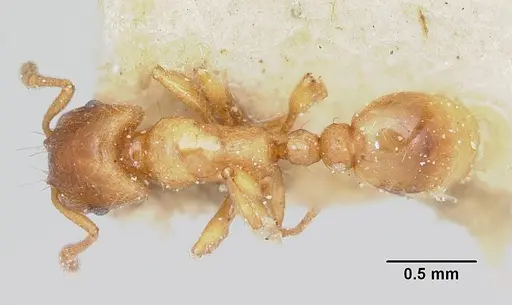
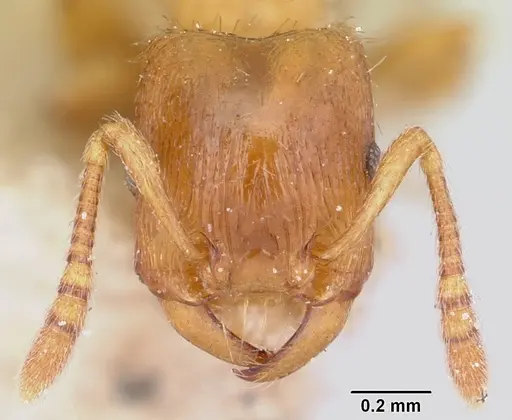
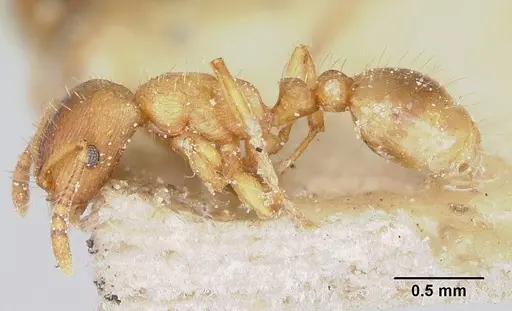
CASENT0103241
View on AntWeb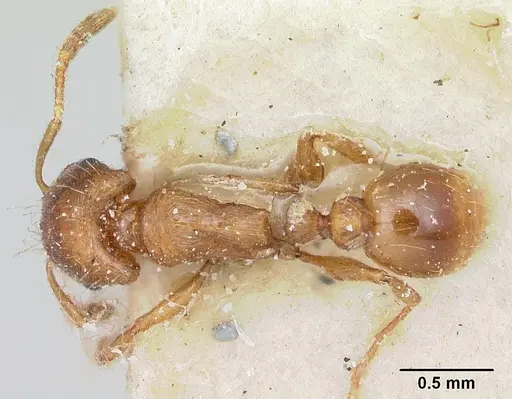
CASENT0106266
View on AntWeb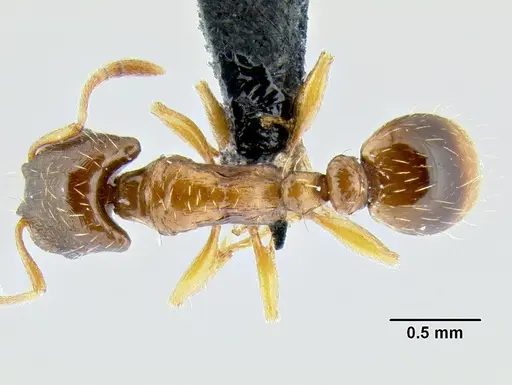
CASENT0173184
View on AntWeb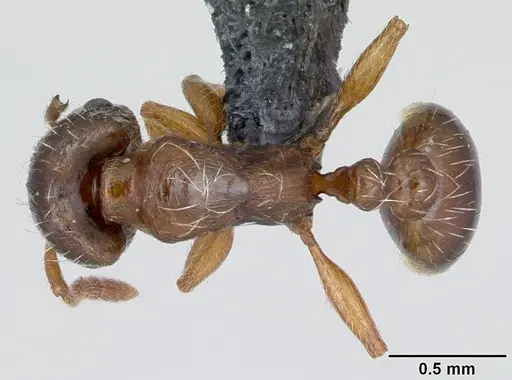
CASENT0173185
View on AntWeb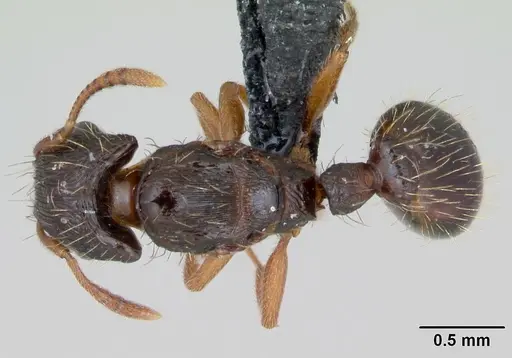
CASENT0173196
View on AntWeb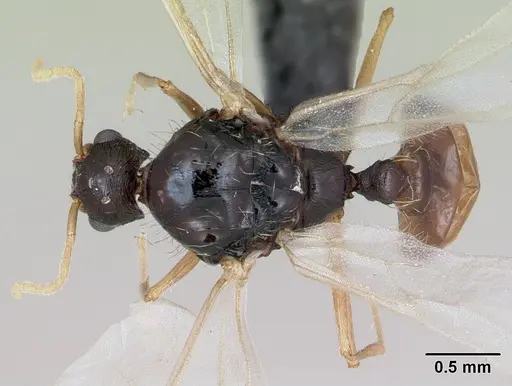
CASENT0179944
View on AntWeb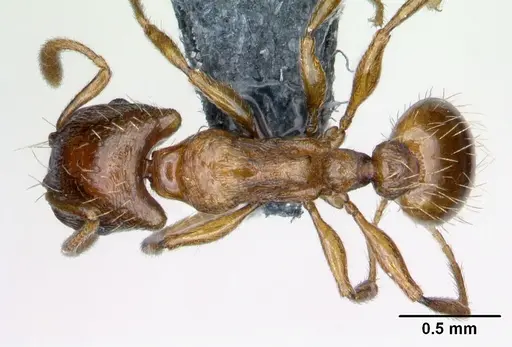
CASENT0901023
View on AntWeb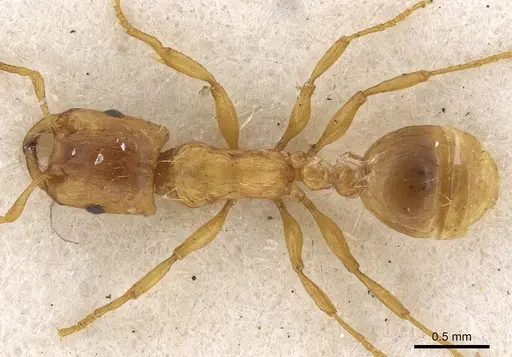
CASENT0913977
View on AntWeb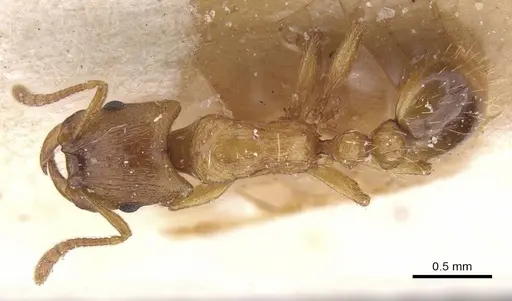
CASENT0917084
View on AntWeb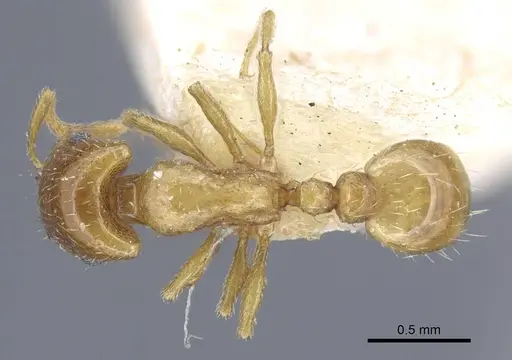
FOCOL2109
View on AntWeb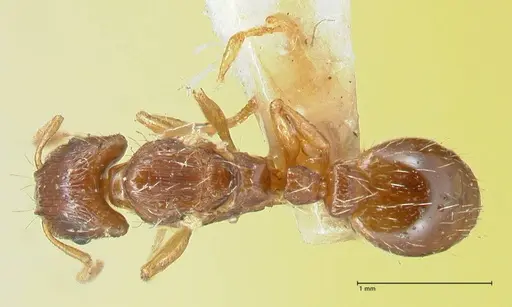
FOCOL2110
View on AntWeb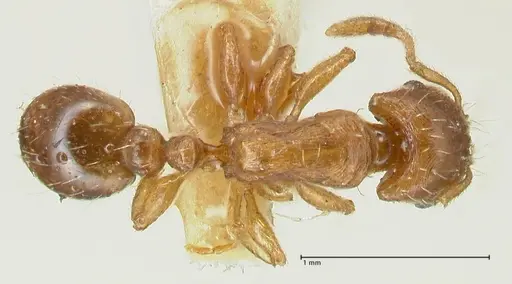
FOCOL2111
View on AntWeb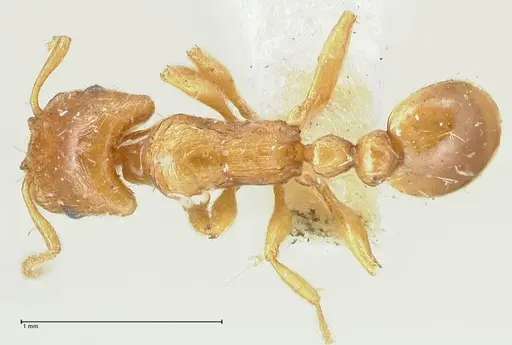
Literature
Loading...Loading products...