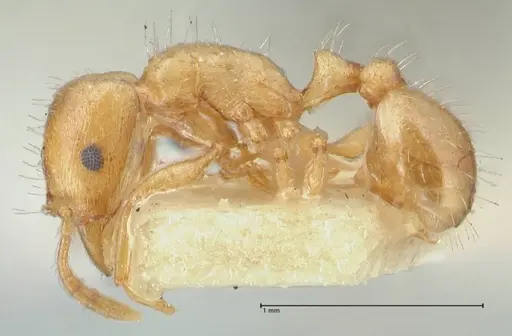
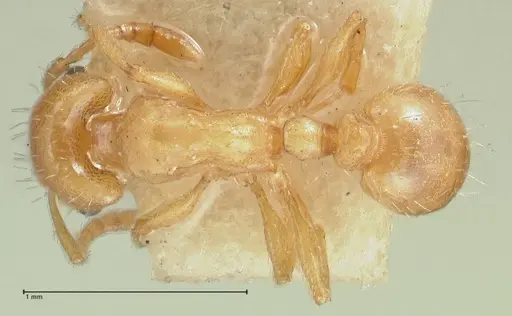
Strongylognathus karawajewi - "Karawajew's Slave-maker Ant (though a queen-tolerant inquiline)"
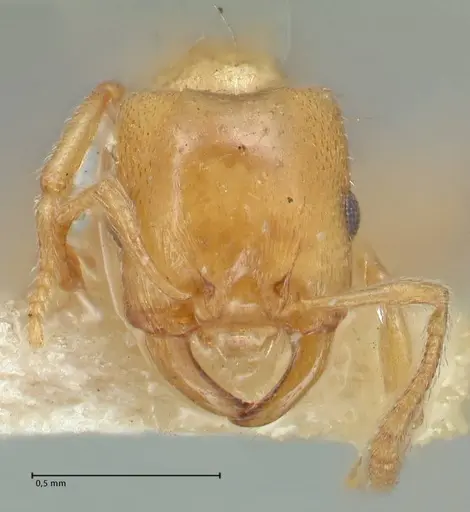
Strongylognathus karawajewi is a fascinating and highly specialized ant species, known for its unique social parasitic lifestyle. Unlike many ants that establish their own colonies, this species is an obligate inquiline, meaning its queens establish themselves permanently within the nests of existing host colonies, typically various species of Tetramorium. These ants are notable for their distinct morphology, featuring elongated, sickle-shaped, and toothless mandibles, which are quite different from those of typical ants. The workers often have a smooth and shiny head dorsum. As a member of the 'testaceus-group' of Strongylognathus, they are considered queen-tolerant parasites, coexisting with the host queen rather than replacing or killing her. This species is quite rare and currently holds a vulnerable conservation status, making encounters with them in the wild, or in captivity, a unique experience for any ant enthusiast. While specific size ranges for queens and workers are not widely documented, they are generally small, fitting discreetly within their host's living space.
- Difficulty: Expert
- Origin & Habitat: Palaearctic Region (documented in Ukraine - its type locality, Armenia, Bulgaria, Kazakhstan, SW Russia, Tajikistan, Türkiye, Turkmenistan, and Greece) in Extremely xerothermic (hot, dry) sites, often found in the ground under stones. Some Strongylognathus species are also found in steppe habitats and pine forests, indicating adaptability within arid to semi-arid environments..
- Colony Type: Parasitic (Inquiline), temporary parasitic (queen infiltrates and co-exists with a host tetramorium queen) founding.
- Size & Growth:
- Queen: Not specified
- Worker: Not specified
- Colony: Small (hundreds of Strongylognathus individuals, within a much larger host colony of thousands). Slow (for the parasitic ants themselves, as their numbers are always significantly lower than the host workers) growth.
- Antkeeping:
- Temperature: Maintain temperatures similar to their host species, Tetramorium, generally a room temperature range with a slight heating gradient. Aim for 22-26°C during the active season, allowing a slight drop at night..
- Humidity: Given their natural habitat in xerothermic sites, moderate humidity levels are suitable, likely around 50-70% in the nest, with lower humidity in the foraging area. Proper ventilation is crucial to prevent mold..
- Diapause: Required. 3-4 months at 5-10°C.
- Nesting: Requires a setup that can house a host Tetramorium colony. Ytong, plaster, or naturalistic setups with soil/sand are ideal, mimicking their natural preference for nesting underground, often under stones. A foraging arena (outworld) is essential for the host colony..
- Behavior: Low (towards handler; low aggression towards host queen due to queen-tolerant inquilinism) aggressiveness.
- Common Issues: Difficulty obtaining a suitable host colony, Successful queen introduction to host colony, Maintaining a healthy host colony, Colony stalling if host colony declines, Humidity fluctuations impacting host colony health.
Keeping Strongylognathus karawajewi presents a unique challenge as they are obligate social parasites and cannot survive without a host colony. As inquilines, their queens must be introduced into an established nest of a compatible Tetramorium species. This isn't a simple 'dump and pray' scenario; successful introduction requires a careful understanding of both species' behaviors and often involves patience and a bit of luck to ensure the host colony accepts the parasitic queen. Many antkeepers find this introduction process to be the most critical and challenging aspect of their care.
A key characteristic of S. karawajewi from the testaceus species-group is their 'queen-tolerant' parasitism. Unlike some more aggressive parasitic ants that eliminate the host queen, Strongylognathus karawajewi queens can coexist peacefully with the original Tetramorium queen. This means you’ll often observe both queens living side-by-side in the same formicarium, a truly remarkable sight! This cohabitation also means that the host colony will continue to produce its own workers, which will significantly outnumber the small contingent of Strongylognathus workers.
The distinctive sickle-shaped, toothless mandibles of Strongylognathus karawajewi workers are not just for show; they reflect their specialized predatory and parasitic lifestyle. These mandibles are used in their unique interactions within the host colony, though they are not designed for direct slave-raiding, unlike some other Strongylognathus species. Observing these unique mouthparts under magnification is a highlight for many keepers, showcasing the incredible diversity of ant morphology and adaptation within the ant world.
Given their status as a vulnerable species in the wild, acquiring Strongylognathus karawajewi can be challenging. It's crucial for antkeepers interested in this species to ensure they source colonies ethically and legally, without contributing to pressure on wild populations. Their rarity also means that detailed care information, particularly regarding specific environmental parameters, might be less abundant than for more common species. Therefore, keeping these ants often requires a dedicated antkeeper willing to research extensively and adapt based on observations of their specific colony and host interaction.
Maintaining a healthy host colony is paramount for the success of Strongylognathus karawajewi. Since the parasitic ants rely entirely on their hosts for all colony functions, from foraging to brood care, the well-being of the Tetramorium colony directly dictates the survival and growth of the Strongylognathus individuals. This means providing optimal conditions for the host species, including a consistent food supply, appropriate temperature and humidity, and a secure nesting environment. Any stress or decline in the host colony will inevitably impact the parasitic ants.
Frequently Asked Questions
What makes Strongylognathus karawajewi an 'expert' level ant for antkeepers?
Keeping Strongylognathus karawajewi is definitely for the experienced antkeeper! These ants are obligate social parasites, which means they can't start a colony on their own. You need to successfully introduce a Strongylognathus queen into an existing Tetramorium host colony. This introduction process can be incredibly tricky and requires a deep understanding of ant behavior and patience, making them a significant challenge compared to self-founding species.
What kind of host ants does Strongylognathus karawajewi require?
Strongylognathus karawajewi are specialized parasites of various Tetramorium species. Known hosts include Tetramorium caespitum (including subspecies), T. sulcinode, T. inerme, T. ferox, T. feroxoide, T. hungaricum, and T. chefketi. Finding a healthy, appropriately sized host colony is the first major hurdle for a potential keeper.
Does the Strongylognathus karawajewi queen kill the host queen?
One of the most remarkable aspects of Strongylognathus karawajewi is their 'queen-tolerant inquilinism.' Unlike many parasitic ants that usurp and kill the host queen, S. karawajewi queens can actually coexist peacefully with the Tetramorium queen. You’ll often find both queens sharing the nest, a truly fascinating example of social parasitism!
Do Strongylognathus karawajewi workers forage or care for brood?
The Strongylognathus karawajewi workers are largely dependent on their Tetramorium hosts. While they do have distinct mandibles, they don't typically participate in foraging outside the nest in the same way host workers do. They also don't directly care for their own brood or the host's brood; the Tetramorium workers handle all the colony maintenance tasks, including foraging and raising all the brood, both host and parasite.
What do Strongylognathus karawajewi colonies eat?
Since the Strongylognathus karawajewi ants are completely reliant on their host colony, they consume whatever the Tetramorium host colony forages. This typically includes a diet of insect protein (like crickets, roaches, or mealworms) and sugar sources (such as sugar water, honey, or fruit). Essentially, you feed the host colony, and the parasitic ants indirectly benefit.
What kind of formicarium setup is best for this species?
Given their reliance on a host colony, you'll need a formicarium suitable for a Tetramorium colony, such as a ytong, plaster, or a naturalistic soil/sand setup. Good ventilation is crucial. The setup should include a spacious outworld for the host foragers, allowing them ample space to collect food. The main challenge isn't the physical setup, but integrating the parasitic queen successfully into the host's home.
Is diapause required for Strongylognathus karawajewi?
Yes, as a species native to the Palaearctic region with temperate climates, Strongylognathus karawajewi absolutely requires a diapause (hibernation) period. Typically, a cooling period of 3-4 months at temperatures between 5-10°C is necessary to ensure the long-term health and reproductive cycle of the colony.
How do Strongylognathus karawajewi queens establish their colonies?
Strongylognathus karawajewi queens establish their colonies through temporary parasitism, but in a very specific way for an inquiline. A newly mated queen infiltrates an existing Tetramorium colony. Rather than killing the resident queen (as some parasitic species do), she coexists with her. The host workers then care for her and her brood, essentially expanding their existing colony to include the parasitic lineage. This makes initial founding by keepers extremely difficult without a pre-established host colony.
What do the mandibles of Strongylognathus karawajewi workers look like?
The mandibles of Strongylognathus karawajewi workers are quite distinctive! They are described as falcate, which means sickle-shaped, and they are notably toothless. This unique morphology is a key identifying feature for the species and highlights their highly specialized adaptations for their parasitic lifestyle within host nests, rather than for typical foraging or defense.
Are Strongylognathus karawajewi common in the wild?
Unfortunately, Strongylognathus karawajewi is not common in the wild. It holds a vulnerable conservation status, indicating that its populations are in decline or are at risk. Their patchy distribution across their range and reliance on specific host species contribute to their rarity, making them a species of conservation concern and a rare sight for ant enthusiasts.
What is the typical colony size for Strongylognathus karawajewi?
The 'colony size' for Strongylognathus karawajewi is a bit misleading, as they live within a host colony. You might only have dozens to a few hundred Strongylognathus individuals (including queens and workers), but they are supported by a much larger host Tetramorium colony that can number in the thousands, sometimes tens of thousands. The parasitic ants are always greatly outnumbered by their hosts, often at a ratio of 1:100 or more.
Are there any specific risks or considerations when keeping this species?
The main risks revolve around the delicate balance required for a parasitic colony. The primary concern is successfully integrating the Strongylognathus queen into a Tetramorium colony, which can fail. After integration, maintaining the health of the host colony is paramount, as any decline in the Tetramorium population will directly impact the survival of the Strongylognathus. These ants are not known to sting humans, and their aggressiveness towards handlers is low.