

Strongylognathus christophi
- Scientific Name
- Strongylognathus christophi
- Tribe
- Crematogastrini
- Subfamily
- Myrmicinae
- Author
- Emery, 1889
- Distribution
- Found in 1 countries
Strongylognathus christophi Overview
Strongylognathus christophi is an ant species of the genus Strongylognathus. It is primarily documented in 1 countries , including Russian Federation. Detailed taxonomic data and occurrence records can be further explored via authoritative databases such as AntWeb or the Global Biodiversity Information Facility (GBIF).
Strongylognathus christophi
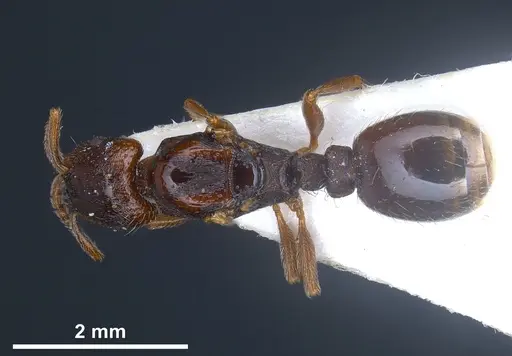
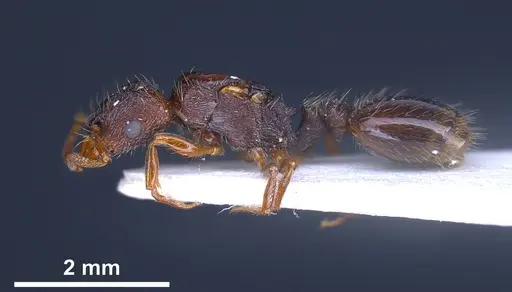
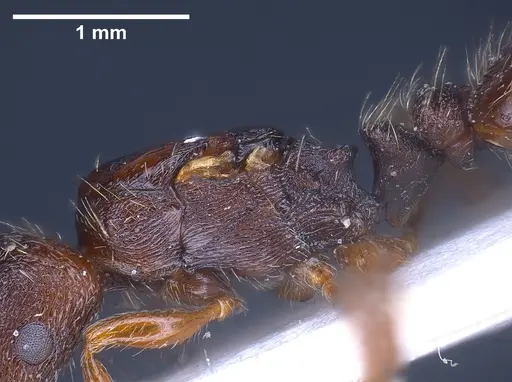
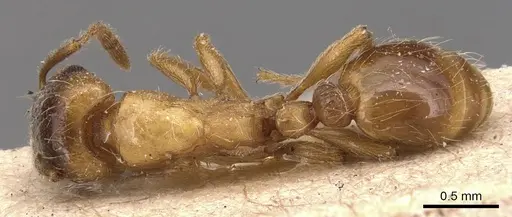
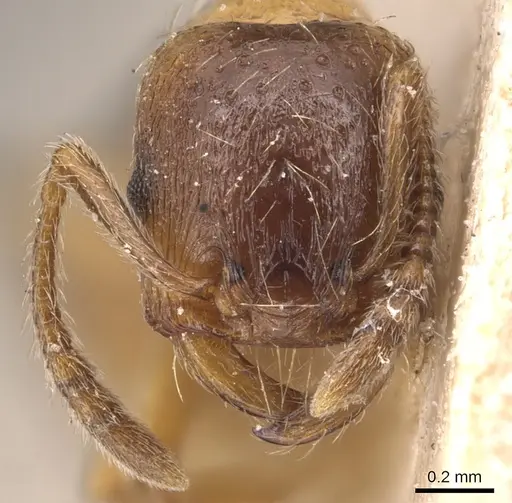
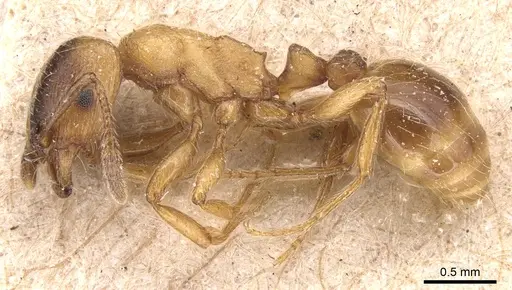
Strongylognathus christophi is a small to medium-sized myrmicine ant measuring around 4-6mm for workers, belonging to the tribe Crematogastrini [1]. This species is a dedicated social parasite, it cannot establish its own colony independently. Instead, the queen invades nests of Tetramorium species (particularly Tetramorium caespitum and Tetramorium cf. impurum), kills or replaces the host queen, and uses the host workers to raise her own brood [2][3]. This relationship is called dulosis, or slave-making, the Strongylognathus workers cannot survive without their Tetramorium hosts.
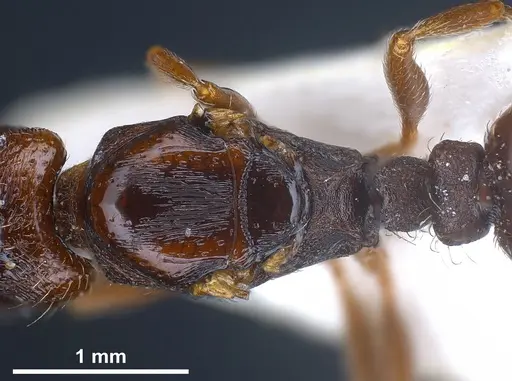
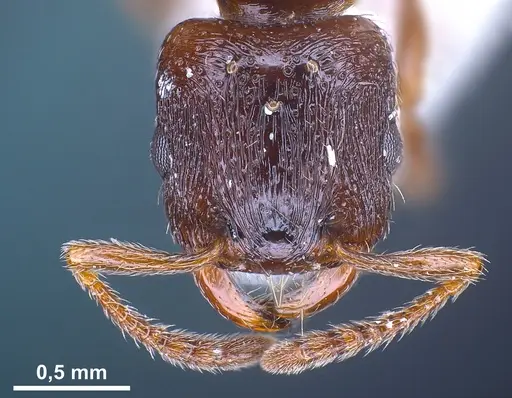
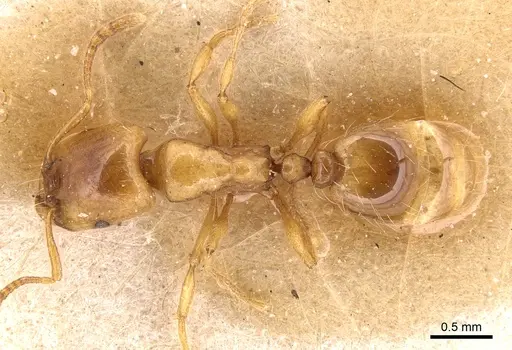
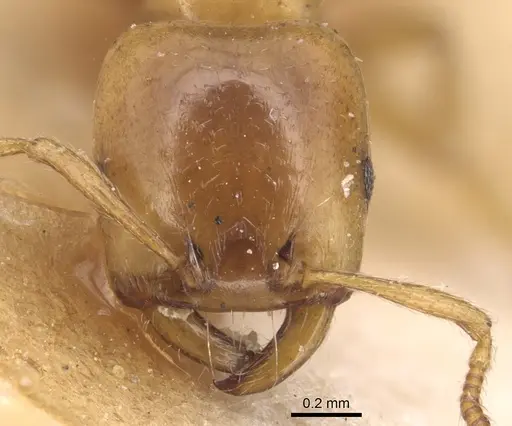
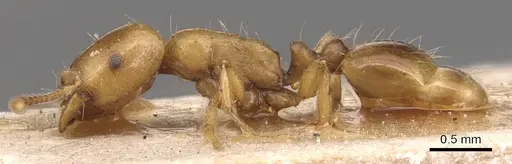
The species belongs to the S. huberi species-group and shows very low genetic differentiation from other species in this group [1][2]. Workers have distinctive morphological features including a more developed head and stronger mandibles compared to typical myrmicines. The species ranges from Southern Ukraine through Kyrgyzstan, with isolated populations in Iran and Bulgaria [1][4]. In Russia, they are found in the European part (East, South, North Caucasus, Crimea), the Urals, and the Caucasus region [5].
Quick Summary
- Difficulty: Expert
- Origin & Habitat: Palaearctic region including steppe habitats in Russia and Ukraine, Caspian moist littoral area in Iran, and grassland zones across Kyrgyzstan and Bulgaria [3][6][4]. This species thrives in warm, dry to moderately humid steppe environments where its Tetramorium host species are abundant.
- Colony Type: Obligate social parasite, requires Tetramorium host colony to survive. The queen invades host nests, eliminates the host queen, and uses host workers for colony maintenance and brood care [2]. This is not a colony you can found or maintain independently.
- Colony: Monogyne
- Queen: Socially parasitic
- Special: Slave-making
- Size & Growth:
- Queen: Approximately 6-7mm based on related species in the huberi group [1]
- Worker: 4-6mm [1]
- Colony: Colony size is dependent on host colony, typically small to moderate numbers of parasite workers supported by the host colony
- Growth: Growth rate is tied to host colony success
- Development: Unconfirmed, development is entirely dependent on host colony dynamics (This species relies entirely on host workers for brood care, so standard development timelines do not apply)
- Antkeeping:
- Temperature: Warm conditions around 22-26°C, matching typical Tetramorium preferences [7]
- Humidity: Moderate to low humidity, steppe species prefer drier conditions [7]
- Diapause: Likely requires winter dormancy similar to host species, approximately 3-4 months at 5-10°C
- Nesting: Cannot be kept independently, requires established Tetramorium host colony. In nature, they occupy the host nest within the substrate
- Behavior: This is an aggressive slave-making species. Workers conduct raids on other Tetramorium colonies to steal pupae, which emerge as slaves that maintain the parasite colony [2][8]. The Strongylognathus workers themselves are poorly equipped for basic colony tasks and depend entirely on host workers. They bridge the gap between pure parasitism and active slave-raiding behavior [8]. Escape risk is moderate, workers are active foragers but colony establishment requires host acquisition.
- Common Issues: This species CANNOT be kept as an independent colony, it requires a host Tetramorium colony, Acquiring a host colony is extremely difficult and rarely successful, Slave raids may weaken or destroy the host colony over time, Expert-level knowledge of ant social parasitism is required, Very few keepers have successfully maintained this species long-term
Understanding Social Parasitism in S. christophi
Strongylognathus christophi represents one of the most challenging ant species to keep because it is an obligate social parasite. Unlike typical ants where a queen founds a new colony alone, S. christophi queens cannot survive or reproduce without invading an established Tetramorium colony [2]. The queen enters the host nest, kills or displaces the host queen, and uses chemical mimicry to integrate with the host workers. These host workers then care for the parasite brood as if it were their own [3].
This species practices dulosis, a form of slave-making where workers raid neighboring Tetramorium colonies to steal pupae [2]. The stolen pupae emerge as adult workers that join the mixed colony and perform all normal colony tasks: foraging, nursing brood, maintaining the nest, and caring for the parasite queen. The Strongylognathus workers themselves have reduced abilities for these tasks and rely heavily on their slaves [8]. This complex relationship makes the species entirely dependent on host availability.
The Challenge of Keeping This Species
Keeping Strongylognathus christophi is an expert-level undertaking that very few antkeepers attempt. The fundamental challenge is that you cannot establish an independent colony, you must somehow introduce a parasite queen to an established Tetramorium host colony and have both survive the integration process [2]. Success rates are extremely low, and even successful introductions often result in the death of one or both queens.
Even if you successfully establish a mixed colony, maintaining it long-term presents ongoing challenges. The host colony may decline over time due to the parasitic burden, and the parasite workers cannot survive without their hosts. If the host colony dies, the Strongylognathus colony will also die. Additionally, conducting slave raids can stress or destroy nearby Tetramorium colonies if you're keeping multiple ant setups [2].
For these reasons, S. christophi is not recommended for any keeper except those with extensive experience in social parasitism and a specific research interest in these complex ant relationships.
Housing and Care Requirements
If you are attempting to keep this species, you would need to maintain both the parasite colony and a healthy Tetramorium host colony. The host colony should be established first and thriving, typically requiring 6-12 months of growth before introducing the parasite queen [7].
Temperature should be maintained at 22-26°C, matching the preferences of both species [7]. Humidity should be moderate, these are steppe species that prefer drier conditions than many tropical ants. Use a naturalistic setup or test tube setup for the Tetramorium host, then attempt introduction in a controlled manner.
Feeding requirements are complex: you must feed both the host colony and the parasite workers. Tetramorium typically accepts protein sources (insects, seeds) and sugar water. The Strongylognathus workers will also accept these foods but rely on hosts for most tasks. This dual-feeding requirement adds significant complexity to their care.
Legal and Ethical Considerations
Before attempting to keep this species, check your local regulations regarding ant keeping. Strongylognathus christophi is not widely available in the antkeeping hobby, and collecting wild colonies may be restricted in some regions where the species is protected [3]. The species is associated with steppe habitats that may be protected areas.
Additionally, consider whether keeping this species is ethical given its extreme difficulty and low success rates. The species is fascinating from a biological perspective, but captive breeding success is rare. Supporting established breeders who work with host species may be a better approach for those interested in studying these remarkable ants.
Frequently Asked Questions
Can I keep Strongylognathus christophi in a test tube like other ants?
No, this species cannot be kept independently in any standard setup. It requires an established Tetramorium host colony to survive. Even in a test tube, the queen would die without host workers.
How do I start a Strongylognathus christophi colony?
You cannot start an independent colony. The queen must invade and寄生 an existing Tetramorium colony. This is extremely difficult to achieve in captivity and requires expert-level knowledge. Most attempts fail because the host colony rejects or kills the intruding queen.
What do Strongylognathus christophi eat?
They accept the same foods as their Tetramorium hosts, protein sources like insects and sugar water or honey. However, they rely entirely on host workers to process and distribute food throughout the colony.
Are Strongylognathus christophi good for beginners?
Absolutely not. This is an expert-level species that requires keeping both the parasite and a host colony simultaneously. The success rate for establishing mixed colonies is extremely low. Do not attempt this species unless you have extensive experience with social parasites.
Do Strongylognathus christophi ants sting?
As a Myrmicinae species, they have a functional stinger. However, they are rarely kept in captivity, so there is little information on their sting potency or behavior.
How big do Strongylognathus christophi colonies get?
Colony size is entirely dependent on the host Tetramorium colony. The parasite workers typically make up a minority of the colony population, with host workers forming the bulk of the functional workforce.
Do they need hibernation?
Likely yes, as a species from temperate regions (Ukraine, Russia, Kyrgyzstan), they probably require a winter dormancy period similar to their Tetramorium hosts, typically 3-4 months at 5-10°C.
Why are they called slave-making ants?
They practice dulosis, a behavior where workers raid nearby Tetramorium colonies and steal pupae. The stolen pupae emerge as adult workers that become 'slaves' performing all colony tasks. The Strongylognathus workers cannot survive independently and rely on these host-derived workers [2][8].
Can I keep multiple queens together?
This has not been documented and would be extremely unlikely to succeed. In nature, only one parasite queen typically establishes per host colony. Multiple queens would likely fight or be rejected by the host workers.
What is the natural habitat of Strongylognathus christophi?
They inhabit steppe environments across their range, from Ukraine and Russia through Kyrgyzstan to Iran. They are found in warm, dry to moderately humid grassland areas where their Tetramorium host species are abundant [3][6][4].
Are these ants dangerous or aggressive?
They are not dangerous to humans, but they are aggressive toward their host species. The slave-raiding behavior can be intense during raids on other Tetramorium colonies. They pose no threat to keepers beyond typical ant considerations.
Where can I get Strongylognathus christophi?
This species is extremely rare in the antkeeping hobby. It is not commonly available from breeders because of the difficulty in establishing and maintaining colonies. If interested, you would need to find a specialized breeder working with social parasites, but expect very limited availability.
References

This caresheet is licensed under CC BY-SA 4.0 .
Literature
Loading...Loading products...