

Strongylognathus italicus
- Scientific Name
- Strongylognathus italicus
- Tribe
- Crematogastrini
- Subfamily
- Myrmicinae
- Author
- Finzi, 1924
- Distribution
- Found in 1 countries
Strongylognathus italicus Overview
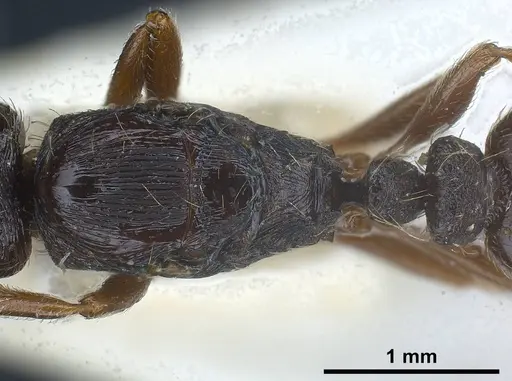
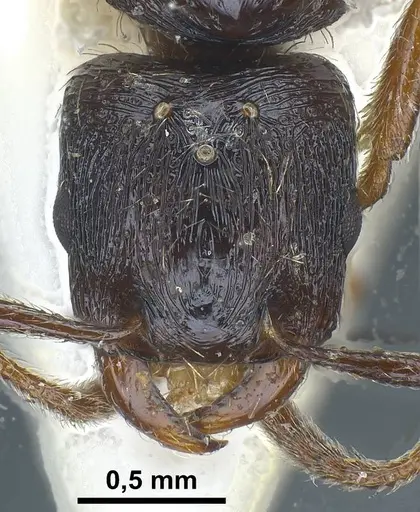
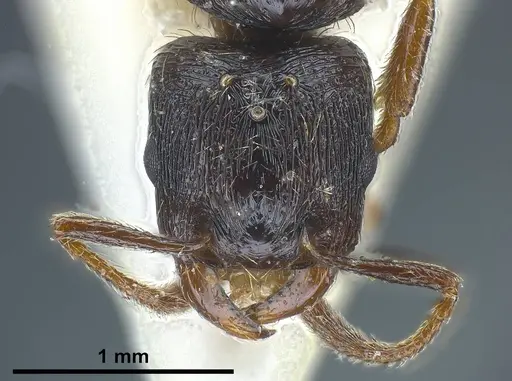
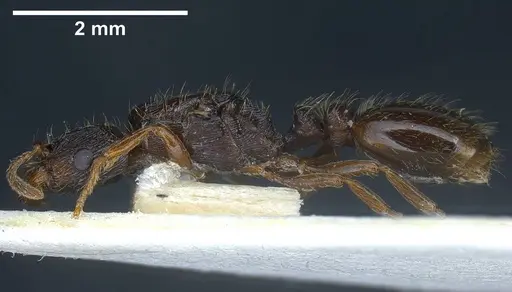
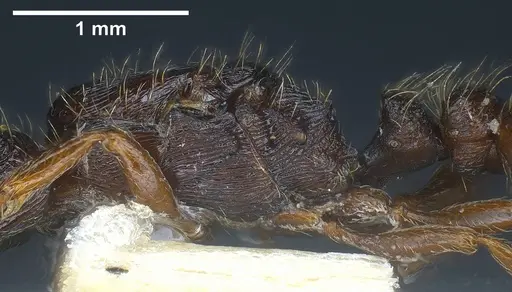
Strongylognathus italicus is an ant species of the genus Strongylognathus. It is primarily documented in 1 countries , including Switzerland. Detailed taxonomic data and occurrence records can be further explored via authoritative databases such as AntWeb or the Global Biodiversity Information Facility (GBIF).
Strongylognathus italicus
0.70) compared to related species [1]. Queens have been recorded from the Island of Elba and Florence Province in Italy [1].
This species is almost certainly a dulotic (slave-making) ant, though this remains officially unconfirmed, it has been found living within nests of its host species Tetramorium impurum and Tetramorium chefketi [2][1]. This makes S. italicus an obligate social parasite that cannot establish a colony without a host. The biology of this species in the wild is essentially unknown, and it represents one of the most challenging ants to keep in captivity due to its parasitic lifestyle.
Quick Summary
- Difficulty: Expert
- Origin & Habitat: Mediterranean region, Italy (Elba Island, Florence Province) and recently documented in Bulgaria (Eastern Rhodopes at 650m elevation in xerothermic grassland) [1]. Found in nests of host Tetramorium species.
- Colony Type: Dulotic (slave-making) species, obligate social parasite requiring host colony. Queens live within host nests and rely on host workers for colony functioning. Single-queen colonies likely.
- Colony: Monogyne
- Queen: Socially parasitic
- Special: Slave-making
- Size & Growth:
- Queen: Approximately 5-6mm (described from Elba Island specimen) [3]
- Worker: 3-4mm total length (HL 0.811mm, HW 0.736mm, ML 1.012mm) [1]
- Colony: Unknown, likely small colonies given parasitic lifestyle
- Growth: Unknown
- Development: Unknown, no development data available (No direct observations of colony development exist. As a social parasite, development likely tied to host colony resources.)
- Antkeeping:
- Temperature: Unknown, no thermal studies exist. Likely similar to Tetramorium hosts (20-25°C range). Start around 22°C and observe colony activity.
- Humidity: Unknown, likely moderate like other Mediterranean Tetramorium species. Standard antkeeping humidity (50-70%) likely appropriate.
- Diapause: Unknown, no documented hibernation requirements. Mediterranean origin suggests some winter dormancy may occur.
- Nesting: In nature, found exclusively within nests of host Tetramorium species. In captivity, would require maintaining both the parasite colony AND a healthy host colony (T. impurum or T. chefketi) in the same setup.
- Behavior: Extremely poorly documented. As a likely dulotic species, they probably exhibit raid behavior to steal brood from host colonies. Workers are tiny and likely cannot survive without host workers. Escape risk unknown but likely moderate given small size. Aggression toward host workers is likely minimal to avoid detection.
- Common Issues: This is an OBLIGATE SOCIAL PARASITE, cannot survive without a host Tetramorium colony, Biology is essentially unknown, no established care protocols exist, Requires maintaining TWO colonies simultaneously (parasite + host), Very rare in the antkeeping hobby with almost no captive breeding success, Wild-caught colonies may fail due to stress, parasites, or inability to integrate with host
Understanding This Species
Strongylognathus italicus is one of the most challenging ants you could attempt to keep, and honestly, it's not recommended for anyone except the most experienced antkeepers with specific research goals. This species is an obligate social parasite, a dulotic ant that cannot survive without a host colony of Tetramorium ants [2]. In the wild, queens invade Tetramorium impurum or Tetramorium chefketi nests and integrate with the host colony, using host workers to raise their own brood [2][1].
The species was described by Finzi in 1924 from a single queen collected on the Island of Elba, Italy [1]. Since then, it's been found in mainland Italy (Florence Province) and more recently in Bulgaria, where a colony was discovered at 650m elevation in xerothermic grassland [1]. Seifert (2018) determined that S. italicus and S. alboini are the same species, with alboini becoming a junior synonym [1]. The conservation status is listed as Vulnerable D2,meaning it faces high risk of extinction in the wild due to small or restricted populations [1].
Why This Species Is So Difficult
The fundamental problem with keeping S. italicus is that it's a social parasite, it has evolved to rely entirely on another species for survival. Unlike free-living ants that you can feed and house normally, these ants have lost the ability to function independently. A queen cannot found a colony on her own, she must find a Tetramorium host nest and integrate into it [2]. Even if you obtain a colony, the workers cannot forage for themselves or care for their own brood without host workers.
This means you would need to maintain TWO colonies simultaneously: the S. italicus colony AND a healthy Tetramorium host colony (either T. impurum or T. chefketi) [2][1]. The two colonies must be kept in a way that allows interaction, typically through a connected setup where slave-making raids can occur. This is exponentially more difficult than keeping any free-living ant species. Additionally, because the biology is essentially unknown, there are no established protocols to follow, you're essentially conducting your own research with every decision.
Housing Requirements
If you were to attempt keeping this species, you would need a specialized setup with two connected formicariums, one housing the Tetramorium host colony and one for the Strongylognathus. The connection between them must allow for the characteristic dulotic raids where Strongylognathus workers enter the host nest and steal pupae to raise as slaves. The nests should be appropriately sized for tiny ants, Tetramorium species are small (around 3-5mm), so tight chambers and narrow passages work well.
Temperature and humidity requirements are not documented, but you should aim to match conditions preferred by Tetramorium species: typically room temperature around 20-25°C with moderate humidity (50-70%) [3]. The setup would need excellent escape prevention, both species are small and can slip through tiny gaps. However, we cannot stress enough that this setup has essentially never been successfully maintained in captivity, and the probability of success is extremely low.
Legal and Ethical Considerations
Strongylognathus italicus is listed as Vulnerable (VU D2) on the IUCN Red List [1][4]. This means wild populations are small and face threats. Collecting this species from the wild would be ethically questionable and potentially illegal, depending on local regulations. Additionally, since it's only found in Italy and recently Bulgaria, obtaining specimens legally would be difficult.
More importantly, even if you could obtain specimens, the likelihood of establishing a sustainable captive colony is extremely low given our complete lack of knowledge about their biology and the fundamental challenges of maintaining a social parasite. The stress of captivity likely causes colony failure, and removing individuals from already-small wild populations could harm local populations of this rare species.
Frequently Asked Questions
Can I keep Strongylognathus italicus like other ant species?
No. This is an obligate social parasite that cannot survive without a host Tetramorium colony. Unlike free-living ants, they cannot forage, care for brood, or function independently. You would need to maintain both the parasite colony AND a host colony simultaneously, something that has essentially never been accomplished in captivity.
What do Strongylognathus italicus eat?
Unknown. As a likely dulotic species, they probably rely on host workers to feed them and tend to their brood. In captivity, they would likely accept food brought to them by host workers. The specific diet has never been documented.
How long do Strongylognathus italicus workers live?
No data exists on worker longevity. Given their parasitic lifestyle and likely reduced foraging behavior, they may have different lifespans than free-living ants, but this is entirely unstudied.
Do Strongylognathus italicus ants sting?
Unknown. As Myrmicinae, they have a stinger, but stinging behavior has never been documented. Given their small size and parasitic lifestyle, they likely rely on chemical deception rather than direct confrontation.
Are Strongylognathus italicus good for beginners?
Absolutely not. This is one of the most difficult ant species to keep, requiring simultaneous maintenance of two colonies (parasite and host), extensive knowledge of both species, and tolerance for high failure probability. Even expert antkeepers should think very carefully before attempting this species.
Can I keep multiple queens together?
Unknown. While colonies are likely monogyne (single queen) in nature, the social structure within host colonies is unstudied. Combining unrelated queens has never been documented and would not be recommended given how little we know about this species.
Do Strongylognathus italicus need hibernation?
Unknown. No documented diapause requirements exist. The Mediterranean origin suggests some winter dormancy may occur, but this has never been studied. If you attempt to keep them, observe colony behavior for signs of seasonal slowing.
Why are they called slave-making ants?
Strongylognathus species are believed to conduct raids on other ant colonies (specifically Tetramorium species), entering the nest and stealing pupae. These stolen pupae hatch as workers that serve the slave-making colony, they forage, care for brood, and maintain the nest just like they would for their own species [2]. This behavior is called dulosis.
How big do Strongylognathus italicus colonies get?
Unknown. No colony size data exists in the scientific literature. As a rare social parasite with likely small host colonies, they probably remain small, possibly under 100 workers even in established colonies.
Where can I get Strongylognathus italicus?
You almost certainly cannot obtain this species legally or ethically. It's listed as Vulnerable, found only in Italy and Bulgaria, and is extremely rare in the wild. No captive breeding programs exist. Even if available, the challenges of maintaining them make acquisition irresponsible. We strongly recommend choosing a different species.
References

This caresheet is licensed under CC BY-SA 4.0 .
ANTWEB1038032
View on AntWeb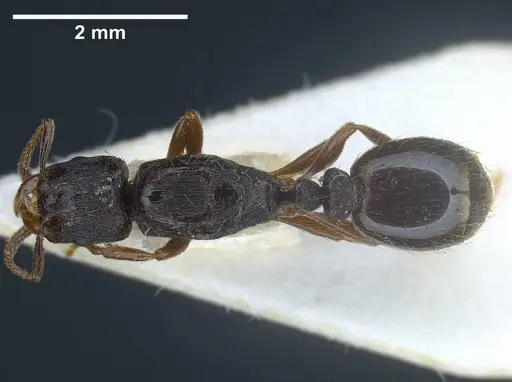
Literature
Loading...Loading products...