

Strongylognathus huberi
- Scientific Name
- Strongylognathus huberi
- Tribe
- Crematogastrini
- Subfamily
- Myrmicinae
- Author
- Forel, 1874
- Distribution
- Found in 4 countries
Strongylognathus huberi Overview
Strongylognathus huberi is an ant species of the genus Strongylognathus. It is primarily documented in 4 countries , including Bulgaria, Switzerland, Spain. Detailed taxonomic data and occurrence records can be further explored via authoritative databases such as AntWeb or the Global Biodiversity Information Facility (GBIF).
Strongylognathus huberi
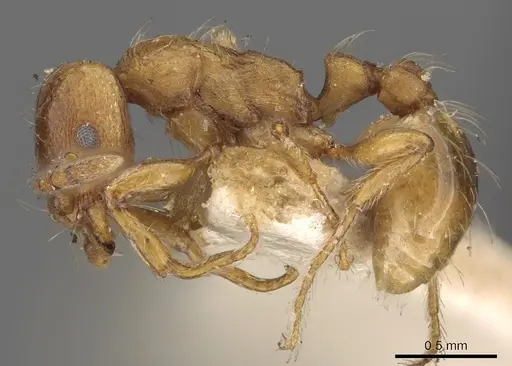
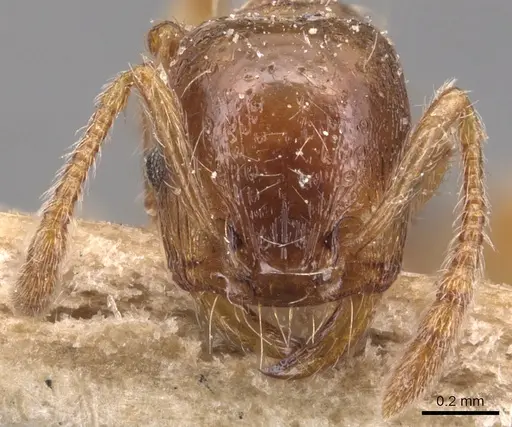
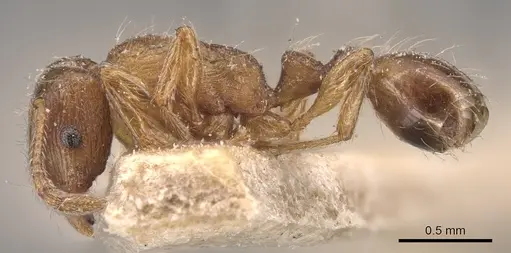
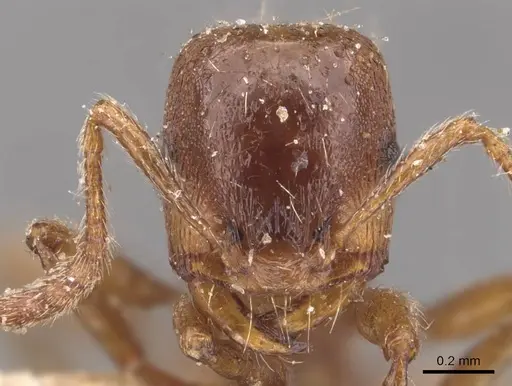
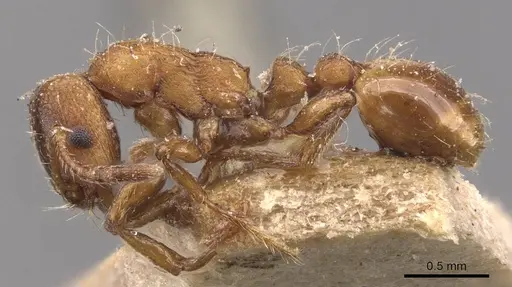
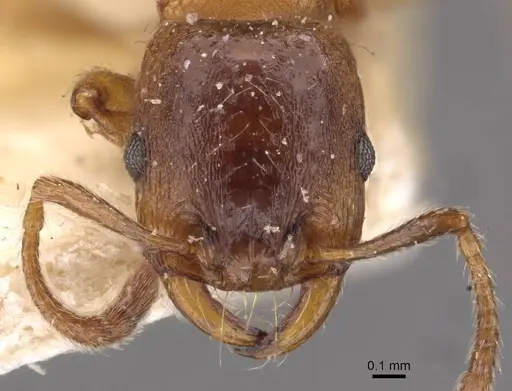
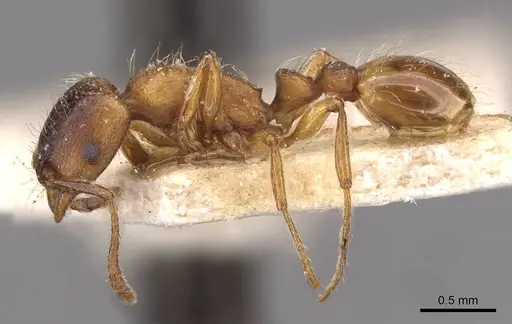
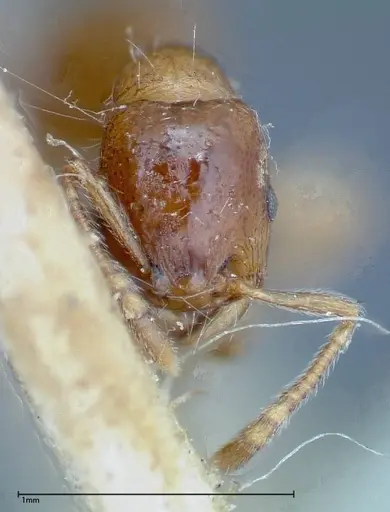
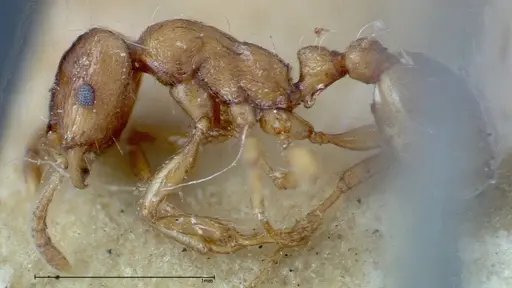
Strongylognathus huberi is a small slave-making ant species native to the Mediterranean region of Europe. Workers measure 2-3mm with distinctive sword-like mandibles and a straight rear margin on the head. They are pale yellow when young and darken to brown with age. This species is a permanent social parasite, it cannot establish its own colony and must invade nests of Tetramorium host species (particularly Tetramorium caespitum, T. impurum, and T. semilaeve) to survive. The parasite queen kills the host queen and uses host workers to raise her brood. Once established, the colony consists of both S. huberi workers and the enslaved Tetramorium workers [1][2].
What makes S. huberi particularly interesting is their raiding behavior, they conduct organized raids on other Tetramorium colonies to steal larvae and nymphs, which are raised as additional slaves. This dulotic (slave-making) behavior is rare among European ants and makes them a fascinating species to observe. However, their parasitic lifestyle also makes them challenging to keep, as they cannot survive without a host colony [2][3].
Quick Summary
- Difficulty: Expert
- Origin & Habitat: Mediterranean Europe, found in France, Switzerland, Italy, Spain, Portugal, Greece (including Crete), Turkey, and recently Bulgaria. Inhabits sun-exposed stony pastures and open habitats, typically nesting under stones. Also found in coastal dune environments and juniper forests at elevations from sea level to 1500m [4][1][5].
- Colony Type: Permanent social parasite, requires Tetramorium host colony to survive. The parasite queen invades a Tetramorium nest, kills the host queen, and uses host workers to raise her brood. Mixed colonies contain both Strongylognathus huberi workers and enslaved Tetramorium workers [2][3].
- Colony: Monogyne
- Queen: Socially parasitic
- Special: Slave-making
- Size & Growth:
- Queen: 1.60mm typical for species group) [6]
- Worker: 2-3mm [1]
- Colony: Small colonies, mixed colonies with up to 126 S. huberi workers and 80 Tetramorium workers have been documented [7]
- Growth: Slow, dependent on host colony resources
- Development: Unknown, development tied to host colony dynamics (Development is entirely dependent on the host Tetramorium colony. The parasite cannot raise its own brood without host workers.)
- Antkeeping:
- Temperature: Keep at room temperature (20-24°C), avoid temperature extremes. Mediterranean species so they tolerate warmth but do not require heating [4]
- Humidity: Standard antkeeping humidity (40-60%) is appropriate. They nest under stones in the wild, so they tolerate drier conditions than many species [4]
- Diapause: Likely requires winter rest period (diapause) matching temperate climate patterns, 2-3 months at 10-15°C
- Nesting: Test tube setup works for founding. Established colonies require keeping both the parasite and host species together. Naturalistic setups with stones on soil allow for natural colony structure [4]
- Behavior: Peaceful toward their own colony but aggressive toward other species during raids. Workers are not particularly aggressive defensively but will attack during slave-raiding expeditions. They do not have a functional stinger, Myrmicinae use biting and chemical defenses. Escape risk is low as they are small but not particularly active climbers [2].
- Common Issues: establishing colonies is extremely difficult, you must obtain both parasite and host ants together, host colony death means the parasite colony will also die, you must maintain healthy Tetramorium hosts, mixed colonies may be rejected if the host workers do not accept the parasite queen, they cannot forage for themselves, entirely dependent on host workers, very small colony sizes mean any stress can be fatal
Understanding Their Parasitic Lifestyle
Strongylognathus huberi is a permanent social parasite that cannot survive without a host colony. Unlike some parasites that only temporarily use hosts, S. huberi queens must find and invade an existing Tetramorium nest. The queen enters the host colony, kills the resident queen (or is accepted if the host colony is queenless), and then uses the host workers to raise her own offspring [2].
This means you cannot start a colony from a single queen like you would with most ant species. The founding queen cannot raise her own first workers, she needs host workers immediately. In established colonies, the parasite workers live alongside enslaved Tetramorium workers, and both species work together in the nest. The S. huberi workers participate in raids to capture more brood from other Tetramorium colonies [3][1].
For antkeepers, this fundamentally changes how you must approach keeping this species. You need to obtain both the parasite and host species together, and you must maintain both species' health for the colony to survive.
Housing the Colony
Housing S. huberi requires keeping two species together, the parasite and its host. The simplest setup is a standard test tube or acrylic nest for the colony, but you must also maintain a healthy population of Tetramorium to serve as hosts and food source for raids.
In the wild, they nest under stones in sunny, open areas with stony soil. A naturalistic setup works well, a container with soil and flat stones on top allows the ants to create natural tunnel systems. The nest should be kept at room temperature in a low-light area, as they prefer dark, quiet conditions [4].
Because both species are small (2-3mm), escape prevention is straightforward, standard barrier methods work well. However, you need to ensure the host colony has enough space and resources to thrive, as the parasite depends entirely on them.
Feeding and Nutrition
Feeding is complicated by the dual-species nature of the colony. The enslaved Tetramorium workers will forage for food and feed both themselves and the S. huberi workers through trophallaxis (sharing food mouth-to-mouth). You should feed the colony as you would a Tetramorium colony, small insects, sugar water, and honey [4].
The host workers will also raid other Tetramorium colonies in the setup to capture larvae and nymphs, which become additional enslaved workers. This natural raiding behavior is fascinating to observe but means you may need to maintain separate Tetramorium colonies as 'raid targets' if you want to observe this behavior.
Do not overfeed, excess food mold is harmful to small colonies. Remove uneaten prey after 24-48 hours.
Obtaining a Colony
Finding S. huberi colonies in the wild is the only practical way to start keeping them. Look in sunny, stony pastures in Mediterranean Europe where Tetramorium colonies are present. The nests are typically under stones, and mixed colonies contain both the pale yellow S. huberi workers and the darker Tetramorium workers [7][1].
When you collect a colony, you must get both species, the parasite cannot survive without its host. Look for colonies where both worker types are present and active. Transport them carefully in soil from the original nest site to minimize stress.
It is worth noting that in some countries, collecting this species may be protected or restricted. Check local regulations before collecting from the wild.
Behavior and Slave Raids
The most fascinating aspect of S. huberi behavior is their slave-raiding raids. Organized groups of workers will leave the nest to attack nearby Tetramorium colonies. They target the brood, larvae and pupae, and carry them back to their own nest. These captured brood are raised by host workers and become additional enslaved workers [1][2].
This raiding behavior is similar to that of the famous Polyergus (American slave-maker ants) but on a smaller scale. The raids are coordinated and workers return with captured brood. In established colonies, you may observe these raids if you provide target colonies nearby.
Outside of raids, the colony appears peaceful. S. huberi workers are smaller than their hosts and do not typically engage in direct confrontation. The enslaved Tetramorium workers perform most of the foraging and nest maintenance.
Frequently Asked Questions
Can I keep Strongylognathus huberi in a test tube?
Yes, test tubes work for housing established mixed colonies. However, you must also maintain a separate Tetramorium colony as a food source for raids. The test tube should be kept dark and quiet at room temperature [4].
How do I get a Strongylognathus huberi colony?
You must collect them from the wild, they cannot be started from a single queen like regular ants. Look under stones in sunny, stony pastures in Mediterranean Europe where Tetramorium is present. You need to collect BOTH the parasite and host workers together [7][1].
Do Strongylognathus huberi ants sting?
No, Strongylognathus belongs to the Myrmicinae subfamily which does not have a functional stinger. They defend themselves through biting and chemical secretions, like most small ants.
What do Strongylognathus huberi eat?
They eat whatever the host Tetramorium workers forage for them. Feed the colony small insects, sugar water, and honey. The enslaved workers will feed both species through trophallaxis [4].
Are Strongylognathus huberi good for beginners?
No, this is an expert-level species. Their parasitic lifestyle means they cannot survive without a host colony, making them extremely difficult to keep. They are only suitable for experienced antkeepers who understand social parasitism and can maintain two species together.
How big do Strongylognathus huberi colonies get?
Colonies are relatively small. Mixed colonies with 100-200 total workers (both species combined) have been documented in the wild. The parasite workers are always fewer than the host workers [7].
Do Strongylognathus huberi need hibernation?
Likely yes, as a temperate Mediterranean species, they probably require a winter rest period of 2-3 months at 10-15°C. This matches the natural cycle of their Tetramorium hosts.
Why is my Strongylognathus huberi colony dying?
The most likely cause is death of the host Tetramorium colony. The parasite cannot survive without host workers, if your Tetramorium die, the S. huberi will also die. Ensure your host colony is healthy and well-fed.
Can I keep multiple queens together?
Not applicable, Strongylognathus huberi is a permanent social parasite with one queen per colony. Multiple queens would fight. The key is maintaining the parasite-host pair, not multiple parasite queens.
When will my Strongylognathus huberi colony have nuptial flights?
Nuptial flight timing is not well documented for this species. In the Mediterranean, they likely fly in summer. However, captive breeding is extremely difficult due to their parasitic nature, you would need a mature, established mixed colony.
References

This caresheet is licensed under CC BY-SA 4.0 .
ANTWEB1041372
View on AntWeb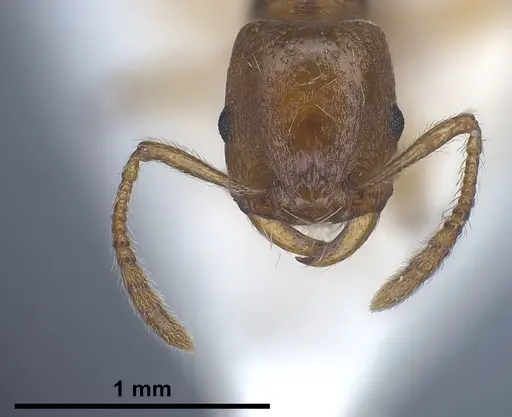
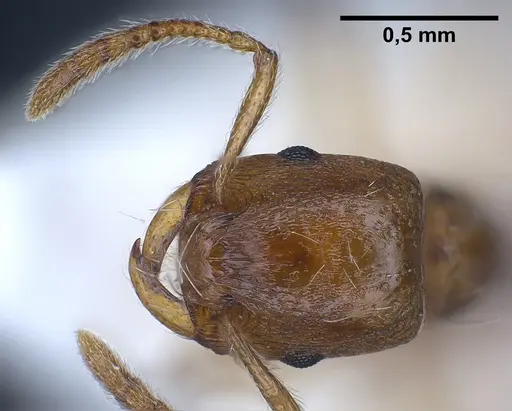
CASENT0901022
View on AntWeb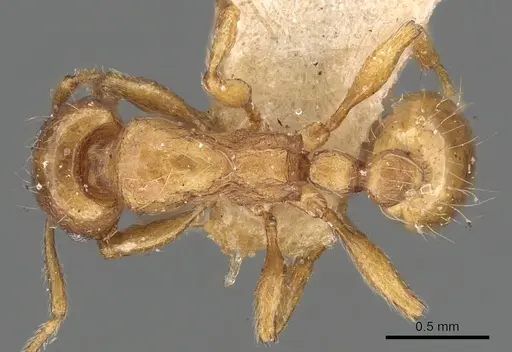
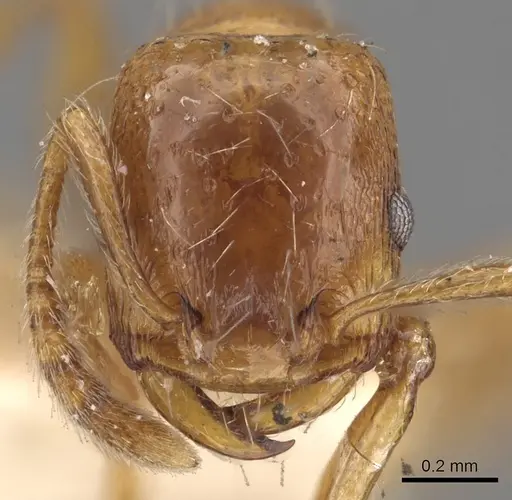
CASENT0904864
View on AntWeb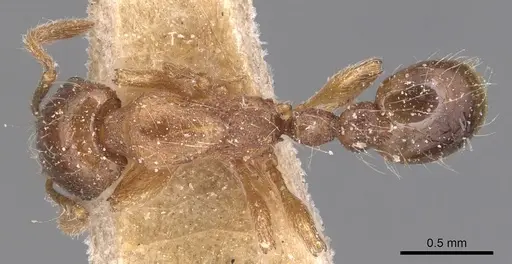
CASENT0905776
View on AntWeb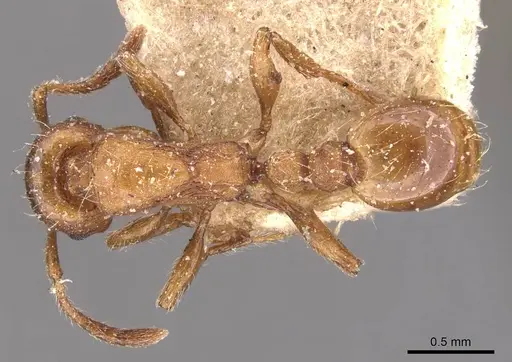
CASENT0909177
View on AntWeb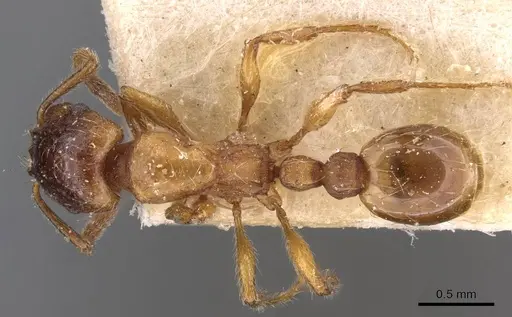
FOCOL0199
View on AntWeb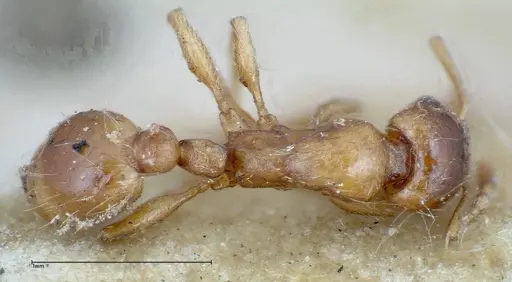
Literature
Loading...Loading products...