

Strongylognathus caeciliae
- Scientific Name
- Strongylognathus caeciliae
- Tribe
- Crematogastrini
- Subfamily
- Myrmicinae
- Author
- Forel, 1897
- Distribution
- Found in 1 countries
Strongylognathus caeciliae Overview
Strongylognathus caeciliae is an ant species of the genus Strongylognathus. It is primarily documented in 1 countries , including Spain. Detailed taxonomic data and occurrence records can be further explored via authoritative databases such as AntWeb or the Global Biodiversity Information Facility (GBIF).
Strongylognathus caeciliae
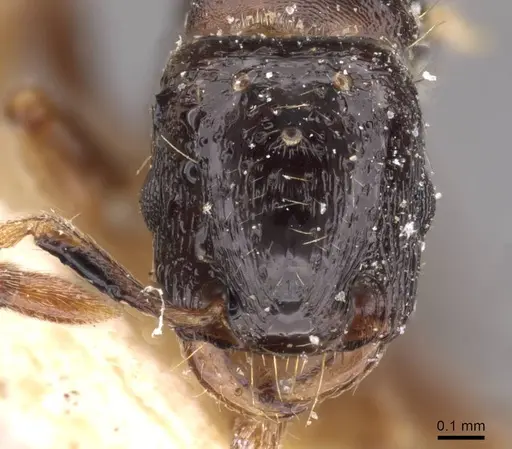
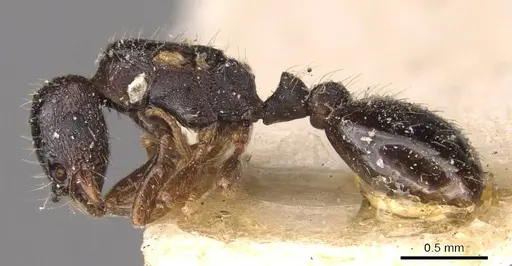
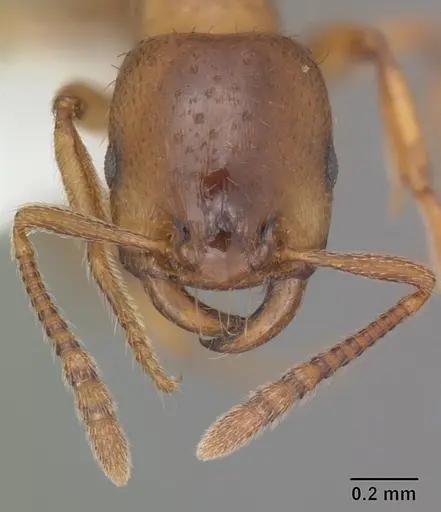
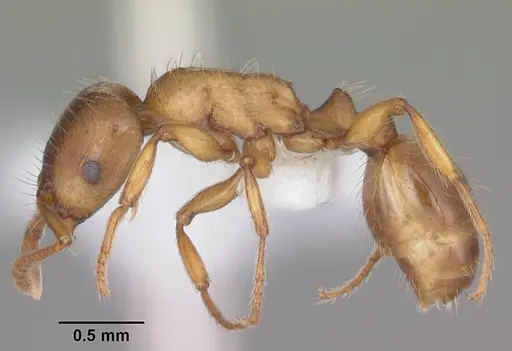
Strongylognathus caeciliae is a small, socially parasitic ant endemic to the Iberian Peninsula [1]. Workers have a polished appearance on the head, thorax, and petioles, with more pronounced metapleural spines than its close relative S. afer [1]. This species is a slave-maker (dulotic), it cannot establish colonies on its own and instead infiltrates nests of Tetramorium semilaeve and T. caespitum, using host workers to raise its brood [2][3]. The queens are parasitic, entering host colonies where they exploit the workers' care-giving behavior. This makes S. caeciliae one of the most challenging ant species to keep in captivity, you cannot maintain a healthy colony without also maintaining a thriving host colony.
Quick Summary
- Difficulty: Expert
- Origin & Habitat: Iberian Peninsula, found across Spain and Portugal in Mediterranean habitats including olive groves, Sierra Nevada montane areas (800-1000m), and various provinces including Seville, Jaén, Ciudad Real, Toledo, Madrid, Teruel, Barcelona, and recently confirmed in Portugal's Baixo Alentejo region [2][1][4].
- Colony Type: Social parasite (dulotic/slave-making). This species cannot found colonies independently, queens must infiltrate host Tetramorium colonies to survive and reproduce. The colony relies on host workers for all brood care and foraging.
- Queen: Socially parasitic
- Special: Slave-making
- Size & Growth:
- Queen: Approximately 6-7mm based on genus patterns, exact measurements not directly documented in available literature [5]
- Worker: Approximately 3-4mm, worker caste was only recently confirmed and described [5]
- Colony: Unknown, no colony size data available in research
- Growth: Unknown, no development timing studies exist
- Development: Unknown, no direct measurements available (Development is entirely dependent on host colony resources and workers)
- Antkeeping:
- Temperature: Infer from host species (Tetramorium semilaeve), aim for 20-26°C, typical Mediterranean warmth
- Humidity: Moderate, dry to average Mediterranean conditions. Avoid overly damp environments
- Diapause: Unknown for this species specifically, likely similar to Tetramorium (mild winter rest in captivity if kept cool)
- Nesting: Must be kept WITH live Tetramorium host colony. Cannot survive without host workers. Use naturalistic setup allowing interaction between parasite and host colonies
- Behavior: Aggressive slave-raider. This species conducts raids on other Tetramorium colonies to steal pupae, which hatch as workers that serve the parasite colony [3]. Workers are smaller than hosts but more aggressive during raids. Escape risk is moderate, standard antkeeping barriers suffice. The species is non-aggressive toward humans and does not possess a significant stinger.
- Common Issues: This is a social parasite, it WILL NOT survive without a live Tetramorium host colony. Do not attempt to keep this species without understanding the parasitic relationship., Slave-making behavior means you must maintain TWO colonies (the parasite and its host), making this one of the most complex ant species to keep., Finding a host colony (Tetramorium semilaeve or T. caespitum) may be difficult depending on your location, these are not always common in the hobby., The parasitic relationship is delicate, if the host colony weakens or dies, the Strongylognathus colony will also perish., This species has rarely been kept in captivity and there is no established care protocol, you are essentially pioneering husbandry.
Understanding Slave-Making Ants
Strongylognathus caeciliae is a dulotic species, meaning it is a slave-making ant. This is one of the most complex social structures in the ant world. Unlike typical ants where the queen founds a new colony alone, S. caeciliae queens must find an established colony of their host species (Tetramorium semilaeve or T. caespitum) and infiltrate it [2]. Once inside, the parasite queen manipulates the host workers into caring for her eggs and larvae. The resulting workers are host species that have been 'enslaved', they don't know they are raising parasites instead of their own brood. Slave-making ants represent a fascinating evolutionary strategy but make them extraordinarily difficult to keep in captivity because you cannot have one without the other.
Housing and Host Requirements
This species CANNOT be kept in a standard ant setup. You must maintain both the parasite colony AND a healthy Tetramorium host colony simultaneously. The ideal setup would be a naturalistic formicarium with multiple chambers or connected sections, one area for the Tetramorium host colony and a connected area for the Strongylognathus. The two colonies must be able to interact, as the slave-makers will conduct raids to acquire new host workers. Some keepers have attempted this by introducing a S. caeciliae queen into an established Tetramorium colony, but success is rare and the balance is delicate. If the host colony dies or weakens significantly, the parasite colony will also perish because it depends entirely on host workers for all foraging, brood care, and nest maintenance [3].
Feeding
Based on the host species (Tetramorium semilaeve), these ants are generalist omnivores typical of Mediterranean ants. They likely accept protein sources (small insects, mealworms) and carbohydrates (honey, sugar water). However, since the HOST workers do all the foraging, you will essentially be feeding the host colony, the Strongylognathus workers will consume food brought back by host workers. In established parasite colonies, you may observe Strongylognathus workers accompanying host foragers during raids, but they rely on the host workforce for sustenance. Feed the host colony a varied diet of protein and sugars, and the parasite colony will benefit indirectly. [2][1]
Temperature and Seasonal Care
Since this species is endemic to the Iberian Peninsula with records from sea level (238m) up to 1000m in mountain areas, it likely tolerates a range of temperatures [4][1]. Based on its Mediterranean distribution and the preferences of its host species, maintain temperatures in the low-to-mid 20s Celsius (around 20-26°C). There is no specific data on diapause requirements, but given the Mediterranean climate of its range, a mild winter rest period (reducing to 10-15°C for 2-3 months) would likely be beneficial if you can establish a thriving colony. The key challenge is that you must also maintain the host colony through winter, which may have different temperature preferences, this adds another layer of complexity to keeping this species.
Challenges and Expert Requirements
This species is listed as EXPERT for very good reasons. First, the fundamental biology requires a host, without Tetramorium semilaeve or T. caespitum, the colony cannot survive. Second, even if you obtain both species, introducing a parasitic queen to a host colony is extremely difficult and rarely successful in captivity. Third, maintaining the balance between parasite and host is tricky, too many parasite raids weaken the host, but without periodic raids, the parasite colony lacks enough host workers to function. Fourth, there is essentially no captive breeding history or established protocols for this species. If you are determined to attempt keeping S. caeciliae, you would essentially be pioneering captive husbandry for this species. For these reasons, this species is NOT recommended for any but the most experienced antkeepers with specific interest in socially parasitic species [5][1].
Frequently Asked Questions
Can I keep Strongylognathus caeciliae in a test tube like other ants?
No. This is a social parasite that cannot survive without a host colony. A test tube setup would result in certain death. You must maintain both the parasite AND a Tetramorium host colony in a setup that allows interaction between them.
How do I start a Strongylognathus caeciliae colony?
You cannot start a traditional colony. The only approach would be to obtain a mated queen and introduce her to an established Tetramorium semilaeve or T. caespitum colony, a process with very low success rates. There are no commercial sources for this species, and wild collection is extremely difficult since they are rare and live within host nests.
Are Strongylognathus caeciliae good for beginners?
Absolutely not. This is an expert-only species requiring advanced knowledge of ant social parasitism. You need to understand dulotic relationships, maintain two simultaneous colonies, and balance their interactions. Even experienced antkeepers should not attempt this species without extensive research.
Do Strongylognathus caeciliae ants sting?
Strongylognathus belongs to the Myrmicinae subfamily, which does include species with stingers. However, this genus is not known for aggressive stinging behavior. The primary defense mechanism is raiding other ant colonies, not stinging predators. They pose no danger to humans.
What do Strongylognathus caeciliae eat?
They eat whatever their host workers forage. Based on Tetramorium preferences, this includes small insects, arthropods, honeydew, and sugar sources. You feed the host colony, and the parasite colony benefits from the host workers bringing food back.
Where is Strongylognathus caeciliae found in the wild?
This species is endemic to the Iberian Peninsula, found throughout Spain and recently confirmed in Portugal. It lives in Mediterranean habitats including olive groves, montane areas, and various provinces from Seville to Barcelona. It is always found in association with its Tetramorium host species [1][2].
How big do Strongylognathus caeciliae colonies get?
Unknown, no colony size data exists in scientific literature. Being a social parasite dependent on host workers, colony size is limited by how many host workers can be 'enslaved' and maintained. This is another aspect of their biology that remains unstudied.
Do I need to hibernate Strongylognathus caeciliae?
There is no specific data on diapause requirements. However, given the Mediterranean climate of their range, a mild winter rest at reduced temperatures (10-15°C) for 2-3 months would likely be appropriate. You must also maintain the host colony through this period.
Can I keep multiple queens together?
This has not been studied. In the wild, colonies are established by a single queen infiltrating a host nest. Multiple-queen arrangements in parasitic species are complex and not recommended. Focus on establishing one parasite queen with one host colony.
Why is this species so difficult to keep?
Strongylognathus caeciliae is a slave-making ant that cannot survive without its Tetramorium host. This obligate parasitism means you must maintain two colonies in balance, the parasite and the host. There is no captive breeding history, no established protocols, and the introduction success rate is extremely low. This makes it one of the most challenging ant species in the world to keep.
References

This caresheet is licensed under CC BY-SA 4.0 .
CASENT0909176
View on AntWeb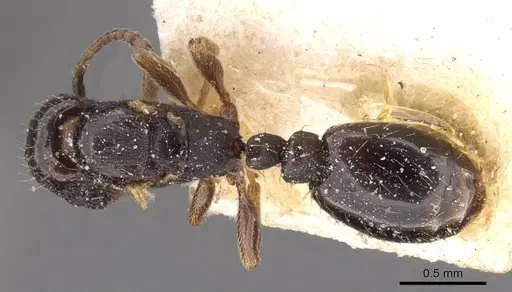
MB619-2
View on AntWeb
Literature
Loading...Loading products...