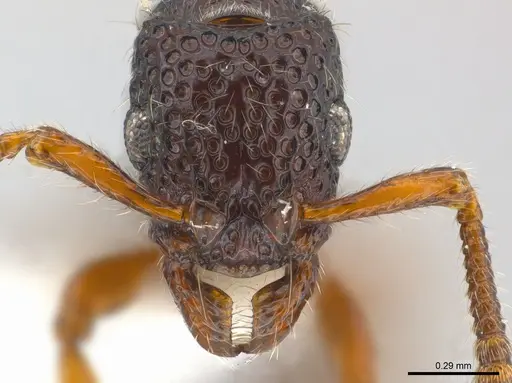
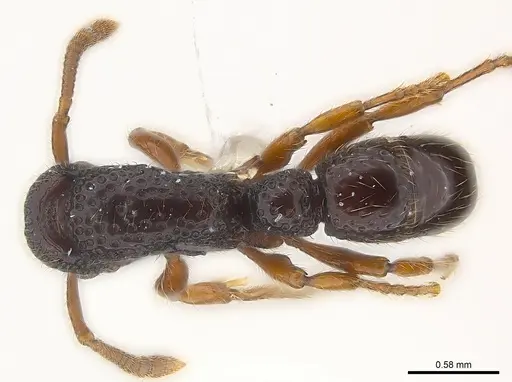
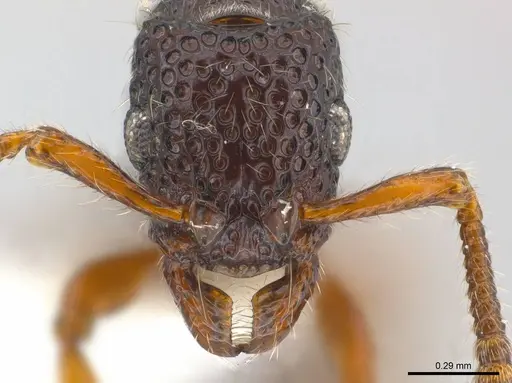
Stictoponera chapmani - "Chapman's Stictoponera Ant"
Stictoponera chapmani is an ant species characterized by its ferruginous brown to brown body, with lighter legs and antennae. Workers have a distinctive head shape with straight, slightly convergent sides in frontal view, and a convex occipital lamella. Their mesosoma and petiole are mostly smooth with some foveolae (small pits), and the subpetiolar process (a structure on the underside of the petiole) can vary in shape. This species is part of the 'Ectatomminae' subfamily, known for their predatory habits.
- Difficulty: Medium
- Origin & Habitat: Southeast Asia, including Indonesia (Java), Malaysia (Peninsula, Sabah, Sarawak), Philippines (Negros, Romblon), Thailand, and Vietnam. in Mesic forested areas. They are known to nest in rotting wood, tree fern stems, under moss on rocks, and potentially in soil..
- Colony Type: Monogyne, claustral founding.
- Size & Growth:
- Queen: Not specified
- Worker: 0.73-1.16mm
- Colony: Small (hundreds). Slow growth.
- Antkeeping:
- Temperature: Aim for a stable temperature between 24-28°C (75-82°F) to encourage optimal brood development and activity. Avoid sudden temperature drops..
- Humidity: Maintain a humidity level of 60-80%. This can be achieved by providing a consistently moist area within the nest, such as a water-filled test tube or a humidifying sponge/substrate..
- Diapause: Not required. Not specified at Not specified.
- Nesting: Given their natural nesting habits in rotting wood and other natural cavities, a nest setup that mimics these conditions is ideal. This could include a Ytong or plaster nest with good moisture retention, or a naturalistic setup with decaying wood in a humid outworld. They prefer pre-existing cavities..
- Behavior: Medium (towards handler, food or other ants) aggressiveness.
- Common Issues: Mold in nest, Mites, Humidity fluctuations, Lack of suitable prey.
Stictoponera chapmani are fascinating ants from Southeast Asia, known for their predatory nature and unique appearance. They are often found in tropical, forested environments, where they forage on foliage and establish their small colonies in decaying wood or under moss. Replicating a humid, natural environment within your formicarium is crucial for their well-being, as they thrive in conditions that mimic their native rainforest homes. These ants might be a bit shy at first, so patience is key when observing their foraging behavior in the outworld.
One interesting aspect of Stictoponera, including species like S. menadensis, is their ability to reproduce through 'gamergates,' which are fertile workers that can lay eggs. While Stictoponera chapmani is typically monogyne (having a single queen), the presence of gamergates in related species suggests a potentially flexible reproductive strategy within the genus. Keep an eye on your colony's development; observing such behaviors can be a truly rewarding part of antkeeping.
For these ants, diet is paramount. As predators, they require a consistent supply of small insects. Offering a varied diet of different insect types can help ensure they receive all necessary nutrients. Remember to always offer prey that is appropriately sized for their workers to handle, and remove any uneaten food promptly to prevent mold growth, which can be detrimental to the colony's health.
Humidity is a critical factor for Stictoponera chapmani. They come from naturally moist environments, so maintaining consistent humidity levels within their nesting area is non-negotiable. Dry conditions can quickly lead to stress and decline in the colony. Regular misting of the outworld or providing a nest with a reliable hydration system will be essential to their long-term survival and prosperity.
Frequently Asked Questions
What is the ideal nest setup for Stictoponera chapmani?
For these captivating ants, a nest that mimics their natural decaying wood habitat is best. Think Ytong, plaster, or even a naturalistic setup with some rotting wood in a humid outworld. The key is good moisture retention and pre-existing cavities for them to move into.
What do Stictoponera chapmani eat?
As predatory ants, Stictoponera chapmani thrive on a diet of small insects. Crickets, roaches, and other feeder insects are excellent choices. Ensure the prey is small enough for your workers to manage and always remove any uneaten food to keep the nest clean and prevent mold.
Do Stictoponera chapmani have a queen?
Yes, Stictoponera chapmani colonies are typically monogyne, meaning they have a single queen. However, it's worth noting that some related Stictoponera species can have 'gamergates,' which are fertile workers capable of laying eggs, adding an interesting dynamic to their colony structure.
Are Stictoponera chapmani difficult to keep?
While not for absolute beginners, Stictoponera chapmani are considered a 'Medium' difficulty species. Their specific humidity and feeding requirements mean they need a bit more attention than some common starter species. With proper care and research, they can certainly thrive in captivity.
How big do Stictoponera chapmani colonies get?
These ants typically form small colonies, usually numbering in the hundreds of workers. This makes them a manageable species for many antkeepers, as they won't quickly outgrow their initial setup.
Do Stictoponera chapmani sting?
Yes, Stictoponera chapmani workers are capable of stinging. While generally not aggressive towards handlers unless provoked, it's always wise to exercise caution when interacting with their formicarium.
What temperature and humidity do Stictoponera chapmani need?
They prefer a warm environment, ideally between 24-28°C (75-82°F), and require high humidity levels, ranging from 60-80%. Maintaining consistent humidity is crucial for their well-being, reflecting their tropical origins.
Where are Stictoponera chapmani found in the wild?
These fascinating ants are native to Southeast Asia, with documented presence in countries like Indonesia, Malaysia, the Philippines, Thailand, and Vietnam. They thrive in mesic forested areas, often nesting in natural cavities.
Do Stictoponera chapmani need diapause?
No, Stictoponera chapmani does not require a diapause period. They are tropical ants and should be kept at stable temperatures year-round.
What are common issues when keeping Stictoponera chapmani?
Antkeepers might encounter issues such as mold growth in the nest if humidity is too high without adequate ventilation, mites, or the colony stalling if proper feeding or humidity levels aren't maintained. Consistent monitoring and cleanliness are key to avoiding these problems.