

Stictoponera posteropsis
- Scientific Name
- Stictoponera posteropsis
- Tribe
- Ectatommini
- Subfamily
- Ectatomminae
- Author
- Gregg, 1951
- Distribution
- Found in 1 countries
Stictoponera posteropsis Overview
Stictoponera posteropsis is an ant species of the genus Stictoponera. It is primarily documented in 1 countries , including Malaysia. Detailed taxonomic data and occurrence records can be further explored via authoritative databases such as AntWeb or the Global Biodiversity Information Facility (GBIF).
Stictoponera posteropsis
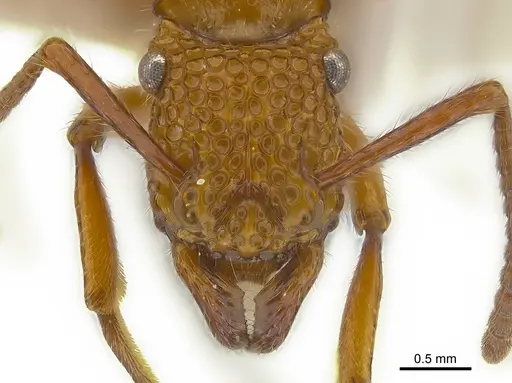
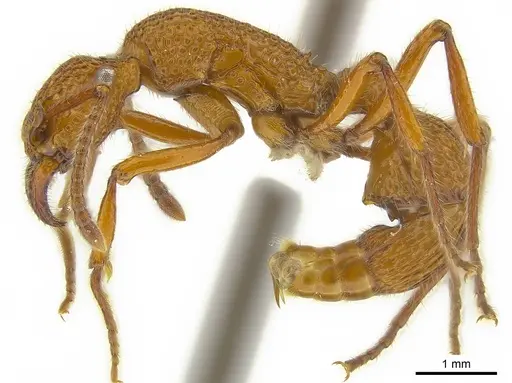
Stictoponera posteropsis is a medium-sized predatory ant native to Southeast Asia, found in Borneo, Malaysia, the Philippines, Sumatra, and Singapore [1]. Workers measure 1.09-1.74mm in head length (approximately 4.5-7mm total length), while queens reach 1.80mm head length (around 7mm). The species is instantly recognizable by its uniquely positioned eyes, placed far back on the head, almost at the vertex, combined with a distinctive keel running along the gaster and a deep transverse groove on the fourth abdominal segment. Their body coloration ranges from reddish to dark brown, with lighter brown mandibles, antennae, and legs. This striking appearance, along with their specialized predatory morphology, makes them a fascinating species for experienced antkeepers.
This species was originally described as Stictoponera posteropsis in 1951 but spent decades classified as Stictoponera posteropsis before molecular work recently returned it to the original genus. They are predatory ants that hunt in leaf litter and on vegetation in tropical rainforest environments [1]. The unusual eye position and body structures suggest specialized hunting behaviors, though their exact prey and hunting strategies remain poorly documented in scientific literature.
Quick Summary
- Difficulty: Expert
- Origin & Habitat: Tropical rainforests of Southeast Asia, Borneo, Malaysia, Philippines, Sumatra, and Singapore. They inhabit leaf litter in humid forest environments and are often collected from leaf-mold samples or found foraging on vegetation [1].
- Colony Type: Colony structure is unconfirmed. Related Gnamptogenys species in the region typically have single-queen colonies, but specific data for S. posteropsis is lacking.
- Size & Growth:
- Queen: Approximately 7mm (HL 1.80mm, HW 1.42mm)
- Worker: Approximately 4.5-7mm (HL 1.09-1.74mm, HW 0.92-1.35mm)
- Colony: Unknown for this species. Related Gnamptogenys in the region typically form colonies of several dozen to a few hundred workers.
- Growth: Unknown, likely moderate based on typical Ponerine development patterns.
- Development: Estimated 8-12 weeks at tropical temperatures (25-28°C), based on typical Ponerine development. (Ponerine ants typically have slower development than many common ant species. Development time is temperature-dependent, with warmer conditions generally accelerating growth.)
- Antkeeping:
- Temperature: Keep at 24-28°C, these are tropical ants requiring warm, stable conditions. A slight temperature gradient allows workers to self-regulate. Avoid temperatures below 22°C.
- Humidity: High humidity is essential, aim for 70-85% relative humidity. Keep the nest substrate consistently moist but not waterlogged. This species comes from humid rainforest leaf litter, so drying out is a serious risk.
- Diapause: No, as a tropical species, they do not require hibernation. Maintain warm conditions year-round.
- Nesting: Provide a humid nest with fine chambers scaled to their medium size. Y-tong (AAC) nests or well-humified plaster nests work well. The nest should have moisture retention capabilities since they require high humidity. Avoid dry, airy setups.
- Behavior: These ants are predatory and likely hunt small invertebrates in the leaf litter. They are probably relatively calm but capable of using their stinger (Ponerinae have functional stingers). Workers are medium-sized and may be moderately active foragers. Escape prevention should be moderate, they are not tiny but can climb smooth surfaces. Expect them to be more secretive than many common ants, staying within the nest and foraging in covered areas. Their unique eye position suggests they may hunt in low-light leaf litter conditions.
- Common Issues: high humidity maintenance is critical, drying out kills colonies quickly, tropical species cannot tolerate cool temperatures or temperature drops, predatory diet requires live prey, they cannot survive on just sugar water, slow colony growth can frustrate keepers expecting fast development, wild-caught colonies may carry parasites that cause captive failures, limited availability makes this an advanced species for experienced keepers
Housing and Nest Setup
Stictoponera posteropsis requires a humid, well-contained nest environment. Y-tong (AAC) nests or plaster nests with good moisture retention work best for this species. The chambers should be appropriately sized for medium-sized ants, roughly 5-8mm wide passages suit their worker size. Because they come from humid rainforest leaf litter, the nest must maintain moisture without becoming waterlogged. A water tube or moisture reservoir connected to the nest helps maintain humidity. Place the setup in a warm area (24-28°C) away from direct sunlight and drafts. The outworld should be simple with easy access to food and water, but ensure escape barriers are in place since they can climb smooth surfaces reasonably well.
Feeding and Diet
As a predatory ant, S. posteropsis requires live protein prey. Offer small invertebrates appropriate to their size, flightless fruit flies, small crickets, mealworms cut into pieces, and other small arthropods. They likely hunt in leaf litter, so prey that moves and triggers their predatory instincts works best. While not confirmed for this specific species, related Gnamptogenys are known to accept sugar sources occasionally, but protein should form the primary diet. Feed every 2-3 days, adjusting based on colony size and consumption. Remove uneaten prey after 24-48 hours to prevent mold. A shallow water dish should always be available.
Temperature and Seasonal Care
Maintain temperatures between 24-28°C year-round. This tropical species cannot tolerate cool conditions, temperatures below 22°C for extended periods can weaken or kill colonies. Use a heating cable or mat on one side of the nest to create a gentle temperature gradient, allowing workers to self-regulate. Place the heating element on top of the nest, not underneath, to avoid drying out the substrate. No hibernation or diapause is required or recommended. Keep humidity high (70-85%) by misting occasionally or using a moisture reservoir. Monitor condensation levels as an indicator of humidity balance.
Behavior and Temperament
This species is predatory and likely relatively calm in temperament. As a member of the subfamily Ponerinae, they possess a functional stinger and can defend themselves if threatened, though they are not typically aggressive toward keepers. Workers probably forage in the leaf litter layer, hunting small invertebrates. The uniquely positioned eyes (far back on the head) suggest they may be adapted for hunting in low-light conditions under leaf litter. They are likely more secretive than many common ant species, preferring to stay within the nest and outworld corridors rather than out in the open. Colony activity is probably moderate rather than hyperactive.
Colony Establishment
Establishing a colony of this species can be challenging. Wild-caught colonies are the most common source, but these may carry internal parasites or be stressed from collection and transport. Quarantine and observe new colonies carefully before introducing them to established setups. If obtaining a queen (rare), she would need to be housed in a claustral setup until workers emerge. Given the limited availability and expert-level difficulty, this species is best suited for experienced antkeepers who have successfully kept other Ponerine or predatory ants. Patience is essential, expect slower growth than common ant species.
Frequently Asked Questions
Is Stictoponera posteropsis good for beginners?
No, this is an expert-level species not recommended for beginners. They require high humidity, warm tropical temperatures, a predatory diet of live prey, and slow-growing colonies. Their limited availability and specific care requirements make them suitable only for experienced antkeepers who have kept other predatory ant species.
What do Stictoponera posteropsis ants eat?
They are predatory ants requiring live protein prey. Offer small live invertebrates like flightless fruit flies, small crickets, small mealworms, and other tiny arthropods. They may occasionally accept sugar water or honey, but protein should form the bulk of their diet. Remove uneaten prey after 24-48 hours to prevent mold issues.
Do Stictoponera posteropsis ants sting?
Yes, as members of the subfamily Ponerinae, they possess functional stingers. However, they are not typically aggressive and will usually flee or only sting when severely threatened. The sting is likely painful but not medically significant for healthy humans.
What temperature do Stictoponera posteropsis need?
Keep them at 24-28°C consistently. These are tropical ants that cannot tolerate cool temperatures, avoid letting temperatures drop below 22°C. Use a heating cable or mat to maintain warmth, especially in cooler climates. Place heating on top of the nest to avoid drying.
How long does it take for first workers to emerge?
Estimated 8-12 weeks from egg to worker at optimal tropical temperatures (25-28°C). This is based on typical Ponerine development patterns, as specific development data for this species is lacking. Expect slower growth than common ant species like Lasius or Tetramorium.
Do Stictoponera posteropsis need hibernation?
No, they are tropical ants from Southeast Asian rainforests and do not require hibernation. Maintain warm, humid conditions year-round. Temperatures below 22°C for extended periods can be harmful to the colony.
Can I keep multiple queens together?
This is not documented for this species. Related Gnamptogenys species typically form single-queen colonies. Combining unrelated queens is not recommended without specific evidence that they can coexist. Stick to single-queen colonies for best success.
How big do Stictoponera posteropsis colonies get?
Colony size is not well documented for this species. Based on related Gnamptogenys species in the region, colonies likely reach several dozen to a few hundred workers over time. They are not among the largest ant species, and growth is relatively slow.
What humidity level do they need?
High humidity is essential, aim for 70-85% relative humidity. Keep the nest substrate consistently moist but not waterlogged. This species comes from humid rainforest leaf litter environments where drying out is a major risk. Monitor condensation as an indicator of proper humidity.
References

This caresheet is licensed under CC BY-SA 4.0 .
CASENT0179959
View on AntWeb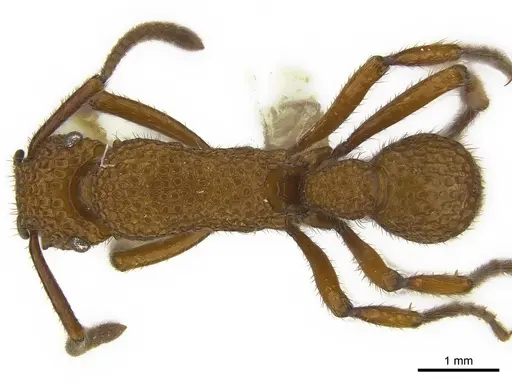
Literature
Loading...Loading products...