

Stenamma longinoi
- Scientific Name
- Stenamma longinoi
- Tribe
- Stenammini
- Subfamily
- Myrmicinae
- Author
- Branstetter, 2013
- Distribution
- Found in 1 countries
Stenamma longinoi Overview
Stenamma longinoi is an ant species of the genus Stenamma. It is primarily documented in 1 countries , including Mexico. Detailed taxonomic data and occurrence records can be further explored via authoritative databases such as AntWeb or the Global Biodiversity Information Facility (GBIF).
Stenamma longinoi
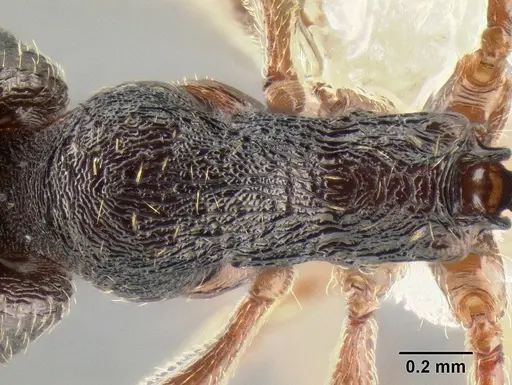
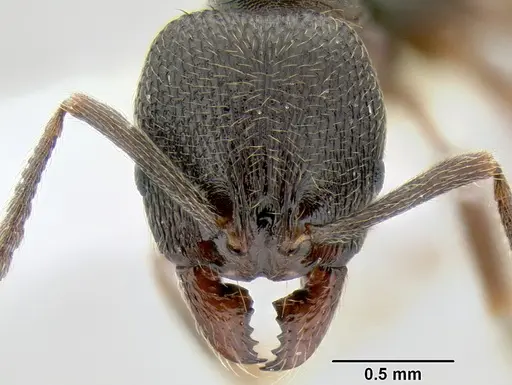
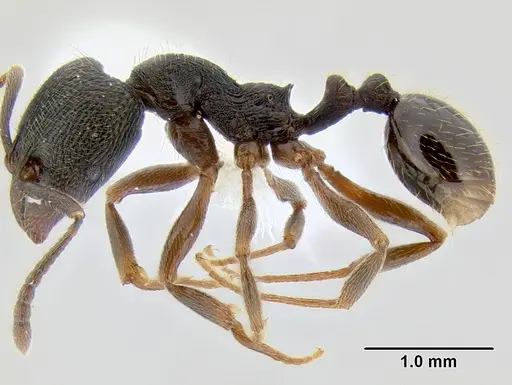
Stenamma longinoi is a large, dark-colored ant species native to southern Mexico, specifically the Chiapas region. Workers measure 1.02-1.13mm in head length, making them relatively large for the Stenamma genus [1]. They have a distinctive appearance with dark brown to dark red-brown integument, relatively small eyes, and short propodeal spines. The gaster and dorsal surfaces feature a layer of thickened suberect to subdecumbent setae, giving them a somewhat fuzzy appearance [1]. This species is known only from a single collection event in mesophyll forest at 1680m elevation, where workers were found under epiphytes in a treefall, suggesting an arboreal lifestyle [2]. Over 100 leaf litter samples from the same site yielded no additional specimens, making this one of the rarest and most poorly known Stenamma species.
Quick Summary
- Difficulty: Expert
- Origin & Habitat: Southern Mexico (Chiapas), mesophyll forest at 1680-1860m elevation. Found under epiphytes in treefall areas, indicating an arboreal or semi-arboreal lifestyle in wet forest habitats [2][1].
- Colony Type: Unknown, only worker caste has been described. No queens or males have been documented. Based on related Stenamma species, likely single-queen colonies, but this is unconfirmed.
- Size & Growth:
- Queen: Unknown, queen caste has not been described [1]
- Worker: HL 1.02-1.13mm, HW 0.92-1.05mm [1]
- Colony: Unknown, only known from a few workers collected in a single event [1]
- Growth: Unknown
- Development: Unknown, no breeding data exists for this species. Based on related Stenamma species, estimate 8-12 weeks at optimal temperature. (Development timeline is unconfirmed. Related Stenamma species typically take 2-3 months from egg to worker.)
- Antkeeping:
- Temperature: Keep around 20-24°C. This species comes from a tropical montane forest at elevation, so moderate temperatures with high humidity are likely ideal. Avoid overheating.
- Humidity: High humidity required, think damp forest floor conditions. Keep nest substrate consistently moist but not waterlogged. Provide a water tube and mist occasionally.
- Diapause: Unknown, no data on overwintering requirements. Given its tropical montane origin (1680m), it may not require true hibernation but may have reduced activity during cooler/drier seasons.
- Nesting: Likely arboreal or semi-arboreal in nature, found under epiphytes in treefall. In captivity, a naturalistic setup with moist substrate, pieces of bark, and epiphyte material (or artificial equivalents like moss) would be most appropriate. Y-tong or plaster nests may work if kept humid.
- Behavior: Behavior is poorly documented. Based on related species, likely cryptic and slow-moving. Workers probably forage individually in leaf litter and on vegetation. Escape risk is moderate, workers are not tiny but can fit through small gaps. Handle with care as they may bite if provoked, though Stenamma ants are not particularly aggressive.
- Common Issues: This species is known only from a few workers, captive colonies may be extremely difficult or impossible to obtain, No queen has been described, so true captive breeding may not be possible with current knowledge, High humidity requirements make mold a constant concern, Extremely rare in the hobby, likely not available from commercial suppliers, Limited data means care recommendations are largely speculative
Species Discovery and Rarity
Stenamma longinoi was described in 2013 by Michael Branstetter based on only four worker specimens collected from a single location in Chiapas, Mexico [1]. The species was named in honor of Jack Longino, a prominent myrmecologist and leader of the LLAMA project. What makes this species remarkable is its apparent rarity, despite extensive leaf litter sampling at the type locality (over 100 samples), no additional specimens were ever found [1]. This suggests either a very small population, highly specialized microhabitat requirements, or possibly arboreal habits that make ground-level sampling ineffective. The single collection event was from under epiphytes in a treefall area, pointing to an arboreal or canopy-dwelling lifestyle [2]. For antkeepers, this means S. longinoi is one of the most obscure and rarely kept Stenamma species, if it's kept at all.
Identification and Distinguishing Features
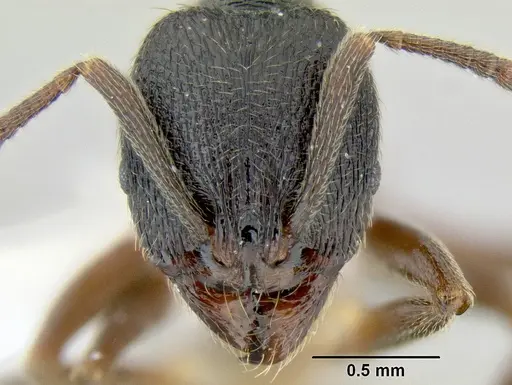
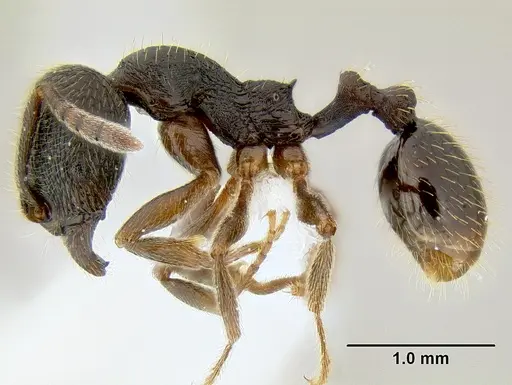
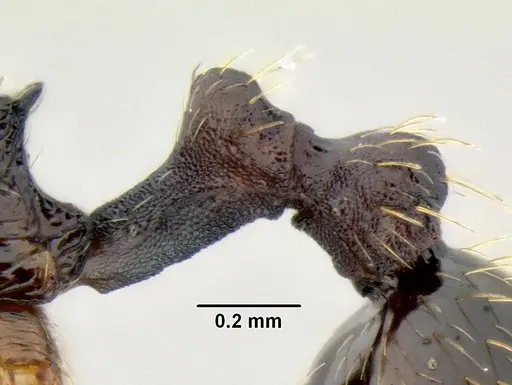
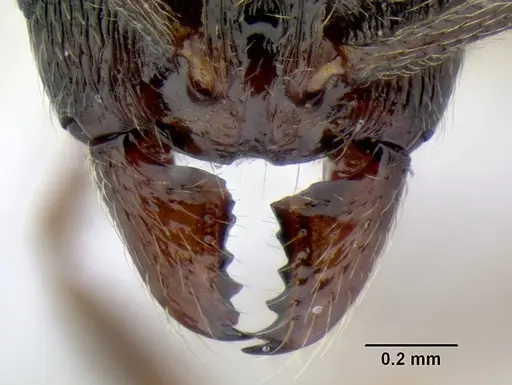
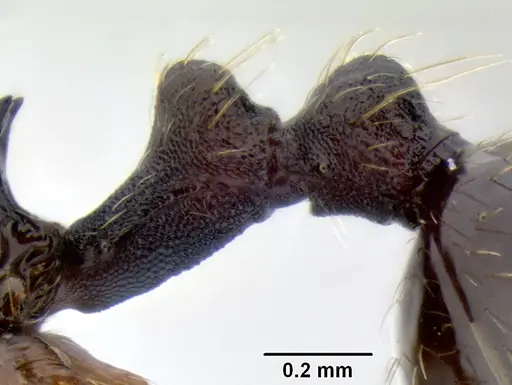
This is a relatively large species for Stenamma, with workers measuring over 1mm in head length [1]. The most distinctive features include: dark brown to dark red-brown body color, small eyes (only 6-7 ommatidia at greatest diameter), short propodeal spines, and a layer of thickened standing setae on the gaster and dorsal surfaces [1]. The lateral margin of the hypostomal bridge has a projecting quadrate lobe, a feature shared with only a few related species (S. leptospinum, S. manni, S. muralla) but S. longinoi is easily separated by its punctate sculpture and thickened setae [1]. The 4-segmented antennal club is somewhat indistinct, and the scape is relatively short, not reaching the posterior margin of the head when laid back [1]. These identification notes matter for keepers because accurate species identification is crucial, misidentification could lead to improper care.
Habitat and Natural History
S. longinoi is known only from mesophyll (moist tropical) forest in the Chiapas highlands of southern Mexico at approximately 1680-1860m elevation [2][1]. The type locality is Custepec, a region known for its cloud forests and high rainfall. The collection data (under epiphytes in a treefall) strongly suggests this species is arboreal or at least frequently forages in elevated microhabitats [1]. This differs from many Stenamma species which are primarily ground-nesting leaf litter ants. The wet forest habitat indicates high humidity requirements. The elevation suggests it experiences cooler temperatures than lowland tropical ants, roughly 15-20°C based on typical montane forest temperatures at this latitude. No nuptial flight data, colony structure, or detailed behavior has been documented.
Care Recommendations (Highly Speculative)
Because this species has never been kept in captivity and no queen has ever been described, all care recommendations are highly speculative and based on related Stenamma species. If you somehow obtain workers, keep them in a humid, naturalistic setup. Use a small container with moist substrate (coconut fiber or soil mix), pieces of bark or moss to simulate epiphyte material, and a small water tube. Temperature should be moderate, around 20-24°C. Feed small insects (fruit flies, pinhead crickets, small mealworms) and occasional sugar sources (honey water, sugar water). However, obtaining this species is extremely unlikely since no queen or colony has ever been documented, and it appears to be one of the rarest ants in the world. Most antkeepers will not encounter this species. [1]
Related Species for Comparison
If you're interested in Stenamma ants but cannot obtain S. longinoi, several related species are more commonly kept. Stenamma manni and Stenamma muralla are similar species that share the distinctive hypostomal lobe feature [1]. Many Stenamma species are leaf-litter ants that prefer moist, shaded conditions and can be kept in naturalistic setups. The genus Stenamma contains about 90 species distributed across North and Central America. They are sometimes called 'leaf-litter ants' or 'forest floor ants' due to their cryptic habits. Related species like Stenamma diegoense and Stenamma californicum are more commonly available in the antkeeping hobby and can serve as stand-ins for learning Stenamma husbandry. Remember that S. longinoi's apparent arboreal habits may make its care quite different from typical ground-nesting Stenamma.
Frequently Asked Questions
Can I keep Stenamma longinoi ants?
Almost certainly no. This species is known only from four workers collected in a single event in 2008, no queen has ever been described, and no live colonies exist in captivity. It's one of the rarest ant species in the world. If you're interested in Stenamma ants, look for more common species like Stenamma manni or Stenamma diegoense.
What does Stenamma longinoi look like?
Workers are large for the genus (HL 1.02-1.13mm) with dark brown to dark red-brown coloration. They have relatively small eyes, short propodeal spines, and distinctive thick standing setae on the gaster and dorsal body surfaces. A unique feature is the projecting quadrate lobe on the lateral margin of the hypostomal bridge, visible behind the mandible in profile [1].
Where does Stenamma longinoi live?
Only in southern Mexico (Chiapas) at elevations around 1680-1860m. Specifically at Custepec in mesophyll forest. Workers were found under epiphytes in a treefall, suggesting an arboreal lifestyle, quite unusual for Stenamma ants [1][2].
How big do Stenamma longinoi colonies get?
Unknown. The species is known only from four workers collected in a single event. No colony size data exists. Even the queen caste has never been described [1].
Do Stenamma longinoi ants sting?
Stenamma belongs to the subfamily Myrmicinae, which includes many species with functional stingers. However, Stenamma ants are not known for aggressive stinging behavior. They are cryptic ants that typically avoid confrontation. If threatened, they may bite, but the sting potency of this specific species is unstudied.
What do Stenamma longinoi eat?
Undocumented. Based on related Stenamma species, they likely eat small insects and arthropods, and probably tend aphids for honeydew. Their arboreal habits suggest they may forage on vegetation as well as in leaf litter.
Is Stenamma longinoi available for purchase?
Extremely unlikely. This is one of the rarest ant species in the world, known only from four worker specimens. No queen has ever been found or described. It's not available from any commercial ant suppliers and likely never will be unless a new population is discovered.
What temperature and humidity do Stenamma longinoi need?
Based on their origin (tropical montane forest at 1680m elevation), they likely prefer cool-to-moderate temperatures (roughly 18-22°C) and high humidity. The mesophyll forest habitat indicates constant moisture. However, since no live specimens have ever been kept, this is entirely speculative.
Why is Stenamma longinoi so rare?
Several factors likely contribute: 1) They may have a very small geographic range limited to one region in Chiapas,2) Their apparent arboreal lifestyle makes them hard to find via ground-based sampling,3) They may naturally have small populations,4) The single collection event in 2008 despite extensive sampling suggests they are genuinely uncommon. This combination makes them one of the most poorly known ants in the world.
Are there similar ants that are easier to keep?
Yes. Other Stenamma species like Stenamma manni, Stenamma diegoense, and Stenamma californicum are more commonly available. Many are leaf-litter ants that prefer humid, naturalistic setups. These related species can give you a good idea of Stenamma husbandry while S. longinoi remains a scientific mystery.
References

This caresheet is licensed under CC BY-SA 4.0 .
JTLC000007475
View on AntWeb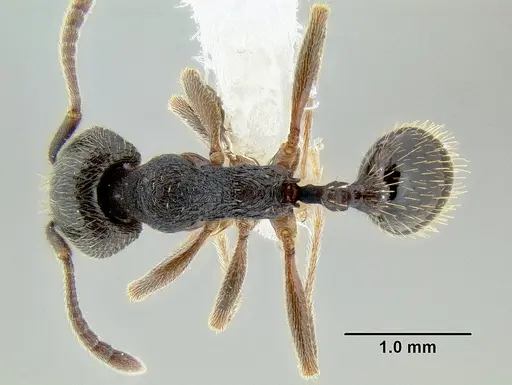
JTLC000007476
View on AntWeb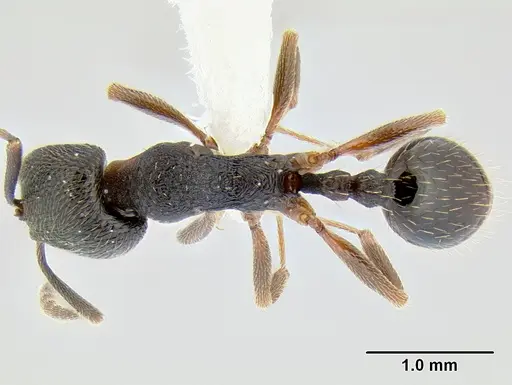
Literature
Loading...Loading products...