

Stenamma leptospinum
- Scientific Name
- Stenamma leptospinum
- Tribe
- Stenammini
- Subfamily
- Myrmicinae
- Author
- Branstetter, 2013
- Distribution
- Found in 1 countries
Stenamma leptospinum Overview
Stenamma leptospinum is an ant species of the genus Stenamma. It is primarily documented in 1 countries , including Mexico. Detailed taxonomic data and occurrence records can be further explored via authoritative databases such as AntWeb or the Global Biodiversity Information Facility (GBIF).
Stenamma leptospinum
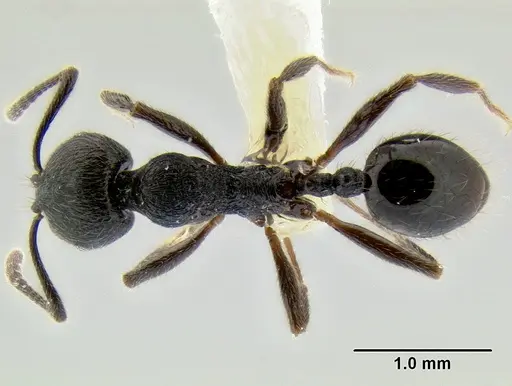
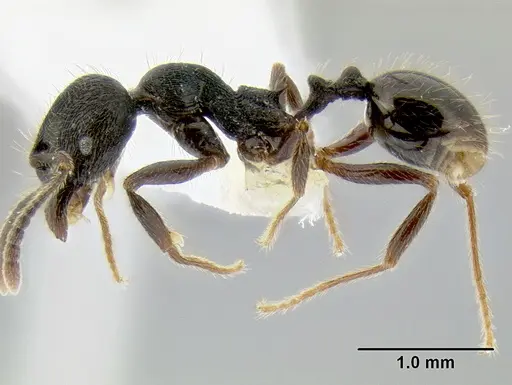
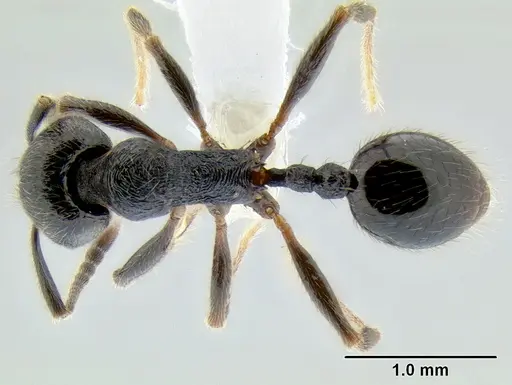
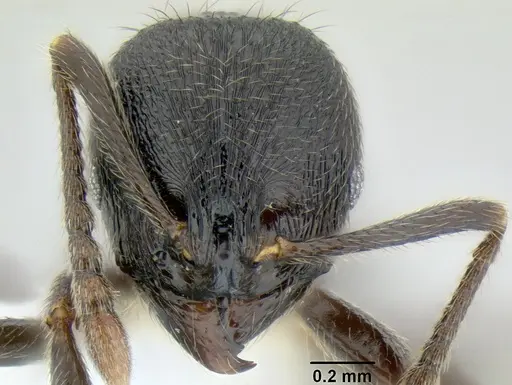
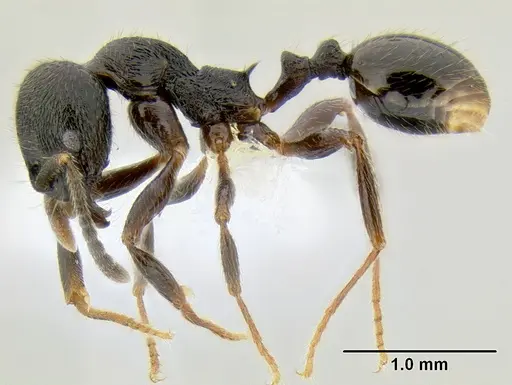
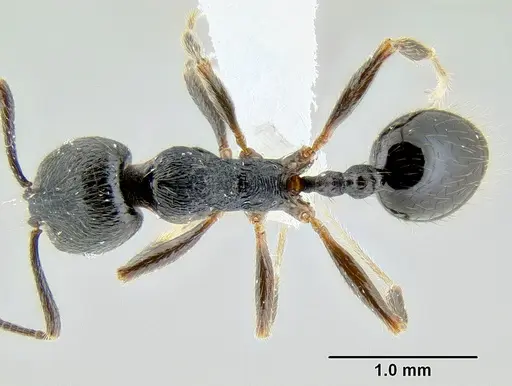
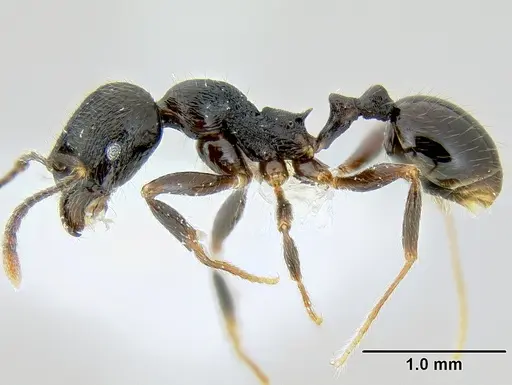
Stenamma leptospinum is a medium-sized ant species with workers measuring 0.80-0.93mm in head length [1]. Workers have a dark brown to brown body with notably long and slender propodeal spines, the feature that gives this species its name 'leptospinum' meaning 'slender spine' [1][2]. The head and mesosoma are densely sculptured with carinulae (ridge-like structures), and they have relatively large eyes for a Stenamma species [1]. This ant is known only from the Sierra Juarez Mountains in Oaxaca, Mexico, where it lives in montane wet forest habitats at elevations between 1650-2000 meters [1][2].
This species is one of the more cryptic ants in the hobby, it's only been collected through specialized leaf litter sampling methods (Winkler and Berlese extracts), meaning these ants live deep within the forest floor litter layer [1][2]. The queen caste has never been documented, making this one of the least-studied Stenamma species available [1].
Quick Summary
- Difficulty: Expert
- Origin & Habitat: Southern Mexico (Oaxaca), Sierra Juarez Mountains. Found in montane wet forest and cloud forest at 1650-2000m elevation [1][2].
- Colony Type: Unknown, only worker caste has been documented. The genus Stenamma typically forms single-queen colonies, but colony structure for this specific species has not been studied [1].
- Size & Growth:
- Queen: Unknown, queen caste has never been described [1]
- Worker: 0.80-0.93mm head length,0.70-0.87mm head width,1.02-1.18mm mesosoma length [1][2]
- Colony: Unknown, no colony size data available
- Growth: Unknown
- Development: Unconfirmed, no development data exists for this species (Based on related Stenamma species, expect development of several months from egg to worker at optimal temperatures)
- Antkeeping:
- Temperature: Inferred: Keep around 20-24°C, mimicking cool montane forest conditions. Avoid overheating, these ants come from high-elevation cloud forest [2].
- Humidity: High humidity required, they inhabit damp cloud forest floor litter. Keep substrate consistently moist but not waterlogged.
- Diapause: Unknown, no seasonal data available. The high-elevation Mexican location suggests some tolerance for cooler conditions.
- Nesting: Inferred: Naturally nests in rotting wood and leaf litter on the forest floor. In captivity, a naturalistic setup with moist substrate (like a dirt colony or acrylic nest with high humidity) works well. They prefer tight, humid chambers.
- Behavior: These ants are cryptic forest floor dwellers, they forage slowly through leaf litter rather than maintaining obvious trails [1]. They are not aggressive and likely avoid confrontation. Escape risk is moderate due to their small size, standard barriers should suffice. Their large eyes suggest they may rely more on visual cues than some other Stenamma species [1].
- Common Issues: queen unavailability limits breeding, only workers have ever been collected, extreme difficulty finding mated queens since nuptial flight timing is unknown, slow growth and cryptic nature makes colony monitoring difficult, humidity management is critical, they die quickly in dry conditions, wild-caught colonies may be stressed from collection methods
Discovery and Collection
Stenamma leptospinum was described in 2013 by Michael Branstetter as part of a major revision of the Middle American Stenamma clade [1]. The species is known only from a handful of specimens collected in the Sierra Juarez Mountains of Oaxaca, Mexico, one of the most restricted distributions of any Stenamma species [1][2]. All specimens have been collected using Winkler extractors and Berlese funnels from sifted leaf litter, meaning these ants live entirely within the forest floor decomposition layer [1]. The type locality is at 1990m elevation,22.4km southwest of Valle Nacional [2]. This is a species that most antkeepers will never encounter because it requires specialized extraction methods to find.
Identification and Morphology
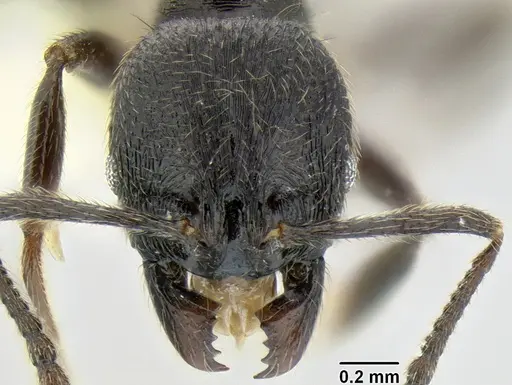
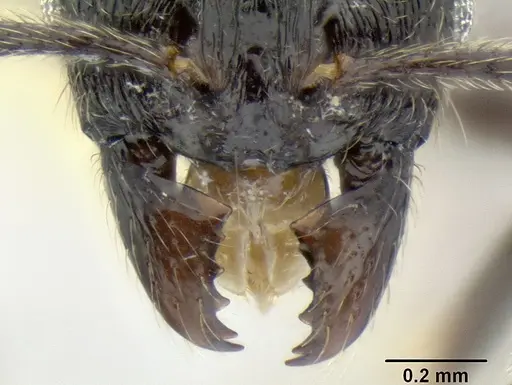
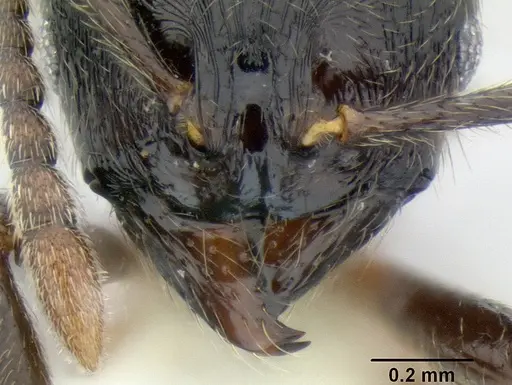
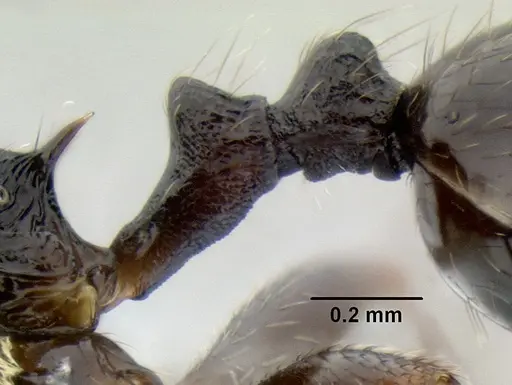
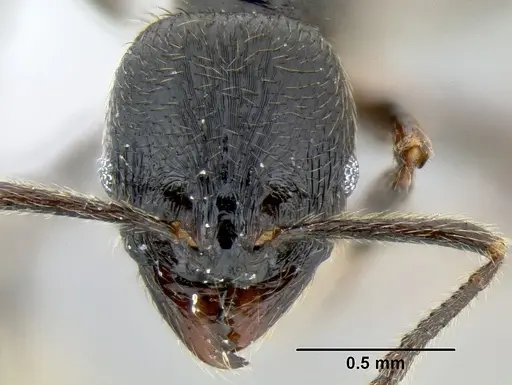
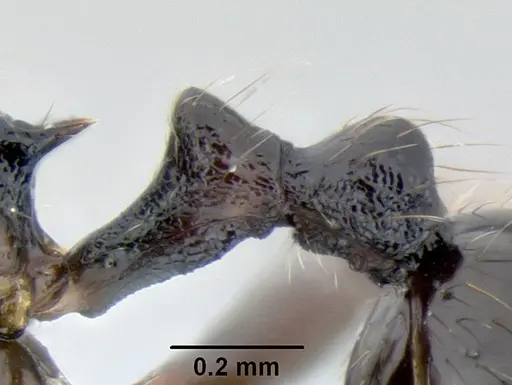
This species can be identified by its combination of dense carinulate sculpture on the head and mesosoma, and notably long slender propodeal spines (PSL 0.17-0.22,PSI 1.9-2.2) [1]. The eyes are relatively large for Stenamma (EL 0.13-0.15,REL 16-19), with 6-8 ommatidia at the greatest diameter [1]. The petiolar node is subconical with a well-defined, almost sharp apex, while the postpetiolar node is anteroposteriorly compressed [1]. The gaster has two layers of setae: long suberect hairs and a sparse layer of shorter decumbent hairs [1]. It may be confused with Stenamma longinoi, S. manni, or S. muralla, but the dense carinulate sculpture and long slender spines distinguish it [1].
Housing and Nest Setup
Since this species is known only from leaf litter samples, it requires high-humidity housing that mimics the damp forest floor. A naturalistic setup with moist substrate (like a mix of soil and rotting wood) works best, or a well-hydrated acrylic/plaster nest. The nest chambers should be relatively small and tight, these are tiny ants that feel exposed in large open spaces. Keep the nest area consistently moist but avoid standing water. A water reservoir or moist cotton in a test tube setup can work if the colony is small. Provide a foraging area with leaf litter and small hiding spots to encourage natural behavior. Because they are cryptic and slow-moving, they do best with minimal disturbance.
Feeding and Diet
The feeding habits of S. leptospinum have not been directly studied, but Stenamma species are generally omnivorous with a preference for small arthropods and honeydew [3]. In captivity, offer small live prey like fruit flies, springtails, or tiny crickets. They likely accept sugar sources (honey water) but may be slow to discover them given their cryptic foraging style. Feed small amounts of protein 2-3 times per week and keep a sugar source available at all times. Remove uneaten prey after 24 hours to prevent mold.
Temperature and Seasonal Care
This species comes from cool montane forest at 1650-2000m elevation, so keep temperatures on the cooler side, aim for 20-24°C [2]. Avoid temperatures above 28°C, which could be stressful. Room temperature (around 20-22°C) is likely ideal for this species. No specific diapause requirements have been documented, but the high-elevation Mexican location suggests they may tolerate or even benefit from a slight cool period in winter (around 15-18°C) for several weeks. Monitor colony activity, if they become less active in winter, reduce feeding and allow cooler temperatures.
Challenges and Limitations
This is one of the most challenging Stenamma species to keep because the queen has never been documented or described [1]. This means there is no established method for breeding this species in captivity, and wild-caught colonies are extremely rare. The entire knowledge base comes from a handful of worker specimens collected via specialized extraction methods [1]. For these reasons, S. leptospinum is best considered an expert-only species for advanced antkeepers interested in studying rare Mexican montane forest ants. Most antkeepers interested in Stenamma should consider more commonly available species like Stenamma manni or Stenamma debile.
Frequently Asked Questions
Can I keep Stenamma leptospinum in a test tube?
A test tube setup can work for a small colony, but these ants require high humidity and likely prefer a naturalistic setup with moist substrate. If using a test tube, ensure the water reservoir is adequate and the cotton stays moist. They are very small (under 1mm) so escape prevention is important, use fine mesh barriers.
How long does it take for Stenamma leptospinum to develop from egg to worker?
This has not been documented. Based on related Stenamma species, expect development to take several months (possibly 3-6 months) from egg to first worker at optimal temperatures around 20-24°C.
Are Stenamma leptospinum good for beginners?
No. This species is rated Expert difficulty because the queen has never been documented, making captive breeding essentially impossible. They are extremely rare in the antkeeping hobby and require specialized high-humidity setups. Most antkeepers should start with more common Stenamma species like S. manni.
Do Stenamma leptospinum ants sting?
Stenamma ants belong to the subfamily Myrmicinae, which includes species with stingers. However, Stenamma species are generally non-aggressive and their sting is not considered medically significant. These tiny ants are more likely to flee than to sting.
What do Stenamma leptospinum eat?
While not directly studied for this species, Stenamma species are omnivorous. Offer small live prey (fruit flies, springtails, tiny crickets) and sugar sources (honey water, sugar water). They are slow foragers so place food near their nest entrance.
Can I keep multiple Stenamma leptospinum queens together?
This is unknown. The queen caste has never been documented for this species, so colony structure is completely unconfirmed. The genus Stenamma typically has single-queen colonies, but we have no data for S. leptospinum specifically.
What temperature do Stenamma leptospinum need?
Keep them cool, around 20-24°C based on their high-elevation cloud forest origin. Avoid overheating. Room temperature is likely ideal. They come from 1650-2000m elevation in Oaxaca, Mexico, where conditions are cool and humid year-round.
Where is Stenamma leptospinum found?
Only in the Sierra Juarez Mountains of Oaxaca, southern Mexico. This is one of the most restricted Stenamma distributions known. They live at 1650-2000m elevation in cloud forest and montane oak forest.
Why is Stenamma leptospinum so rare in the antkeeping hobby?
Because it has only been collected through specialized leaf litter extraction (Winkler and Berlese samples). The queen has never been described, meaning no one has successfully bred this species in captivity. It's essentially unknown in the hobby.
Do Stenamma leptospinum need hibernation?
Not confirmed. The high-elevation Mexican location suggests some tolerance for cooler conditions, but specific diapause requirements are unknown. A slight cool period (15-18°C) for 4-8 weeks during winter may be beneficial, but this is speculative.
How big do Stenamma leptospinum colonies get?
Unknown. No colony size data exists for this species. Based on related Stenamma species, colonies are likely small to moderate (dozens to a few hundred workers).
Is Stenamma leptospinum invasive?
No. This species has an extremely restricted native range in southern Mexico and has never been documented outside that region. It poses no invasion risk.
References

This caresheet is licensed under CC BY-SA 4.0 .
Literature
Loading...Loading products...