

Solenopsis zeteki
- Scientific Name
- Solenopsis zeteki
- Tribe
- Solenopsidini
- Subfamily
- Myrmicinae
- Author
- Wheeler, 1942
- Distribution
- Found in 8 countries
Solenopsis zeteki Overview
Solenopsis zeteki is an ant species of the genus Solenopsis. It is primarily documented in 8 countries , including Barbados, Colombia, Costa Rica. Detailed taxonomic data and occurrence records can be further explored via authoritative databases such as AntWeb or the Global Biodiversity Information Facility (GBIF).
Solenopsis zeteki
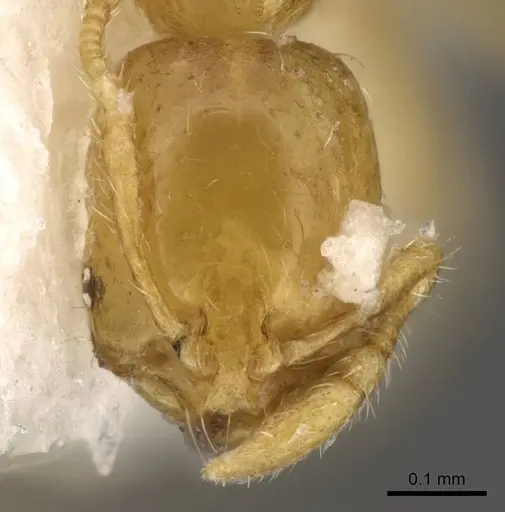
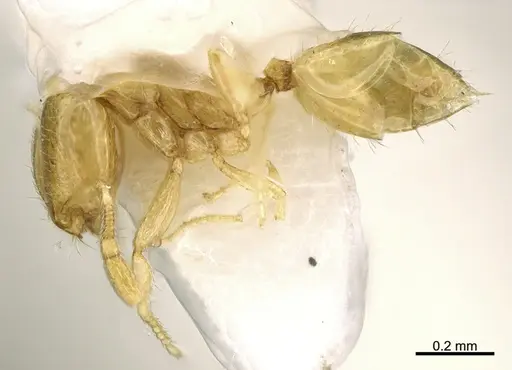
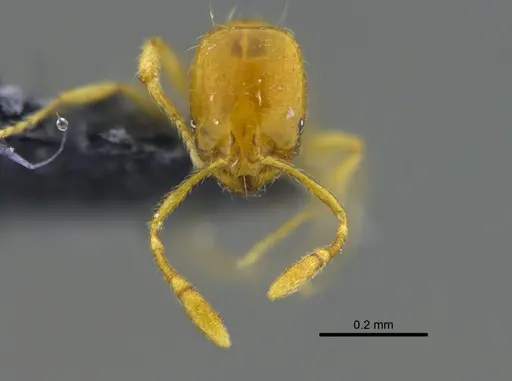
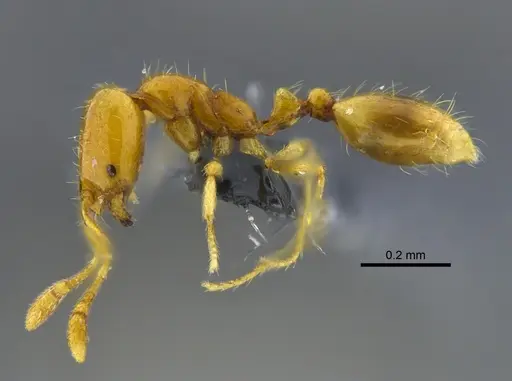
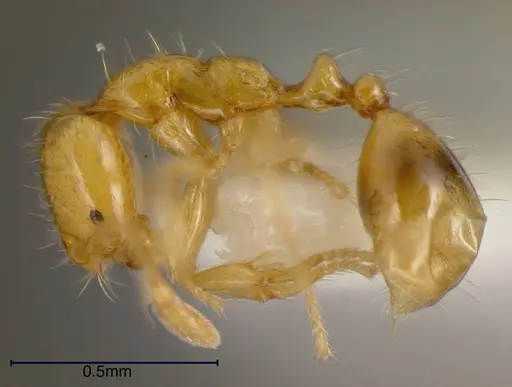
Solenopsis zeteki is a tiny thief ant belonging to the Solenopsis molesta species complex. Workers measure just 1.2-1.5mm and are a uniform pale yellow color [1]. Queens are slightly larger at 2.8-3.4mm and also pale yellow, distinguished by their remarkably large eyes that cover about half the side of the head [1][2]. This species ranges from Mexico south through Central America to Colombia, and also occurs on Caribbean islands including Puerto Rico, Mona Island, and Saint Croix [3][4]. They nest in the ground, in plant stem swellings, and in old termite galleries within dead branches [2].
What makes S. zeteki fascinating is its arboreal lifestyle and non-confrontational foraging behavior. In canopy studies, researchers found these ants in every single study tree and never observed them in aggressive interactions with other species [5]. They are classic 'insinuators', tiny ants that move through minute bark cracks and exploit food resources without alarming larger, more aggressive species [5]. This stealthy, peaceful nature makes them quite different from their famous fire ant relatives.
Quick Summary
- Difficulty: Medium
- Origin & Habitat: Tropical and subtropical regions from Mexico to Colombia, including Caribbean islands. Found in arid shrubland, dry subtropical forest, and canopy environments [2][1].
- Colony Type: Likely monogyne (single queen colonies) based on typical Solenopsis patterns. Queens are small but produce workers that can reach moderate numbers.
- Colony: Monogyne
- Founding: Claustral
- Size & Growth:
- Queen: 2.8-3.4mm [1][2], small for a Solenopsis queen
- Worker: 1.2-1.5mm [1], very tiny ants
- Colony: Likely several hundred workers based on related species in the molesta complex
- Growth: Moderate, inferred from typical Solenopsis development patterns
- Development: Estimated 5-7 weeks at tropical temperatures (24-28°C) (Direct development data unavailable, estimate based on related Solenopsis species)
- Antkeeping:
- Temperature: Keep at 24-28°C, these are tropical ants that thrive in warm conditions. A gentle gradient allows them to regulate temperature.
- Humidity: Moderate humidity around 60-70%. They naturally inhabit both dry shrubland and more humid forest canopy, so they adapt well to varied conditions.
- Diapause: No, as a tropical species, they do not require hibernation or winter dormancy
- Nesting: Prefers tight, humid spaces. Test tubes work well for founding colonies. For established colonies, a small acrylic nest or Y-tong with narrow chambers scaled to their tiny size. They accept naturalistic setups with moist substrate.
- Behavior: These ants are remarkably peaceful and non-aggressive. Workers are tiny and rarely sting. They are stealthy foragers that avoid conflict with other ants [5]. They exploit food resources quietly without triggering defensive responses from larger species. This makes them excellent tank cleaners but poor display ants, you'll often only see them when food is offered. They are arboreal and will explore vertical spaces. Escape prevention is critical due to their minute size.
- Common Issues: escape prevention is critical, they are tiny and can squeeze through standard barrier gaps, slow colony growth compared to larger ant species may frustrate beginners, wild-caught colonies may have parasites that can devastate captive populations, overfeeding leads to mold in small nest setups, difficulty observing them due to their secretive, non-aggressive nature
Housing and Nest Setup
Solenopsis zeteki requires tight, appropriately scaled housing due to their minute size. For founding colonies, a standard test tube setup works well, the small diameter matches their tiny workers and helps maintain humidity. The water reservoir should be modest to avoid flooding in such small setups.
For established colonies, use nests with narrow chambers and passages. Standard acrylic nests often have chambers too large for these 1.5mm workers. Y-tong (AAC) nests with small chambers or custom small-scale setups work best. The nest material should retain moisture well, these ants are not dry-adapted despite occurring in arid shrubland, as they naturally nest in humid microhabitats inside plant stems and dead wood.
Escape prevention is non-negotiable. These ants are among the smallest in the antkeeping hobby and can slip through gaps invisible to the human eye. Apply Fluon or similar barriers to all edges of the outworld, and use fine mesh for any ventilation. Even a tiny gap will result in escaped workers. [1][5][2]
Feeding and Diet
Like other thief ants in the Solenopsis molesta complex, S. zeteki is a generalist feeder. In the wild, they exploit a wide variety of food resources including honeydew, small insects, and scavenged items. Their tiny size limits what they can tackle, they excel at consuming minute prey and liquid foods.
Feed small protein sources like fruit flies, pinhead crickets, and small mealworms. Prey should be dead or immobilized since these tiny ants struggle with large, live prey. Offer sugar sources regularly, a drop of honey water or sugar water will be readily accepted. They are known to exploit baits quietly without alerting other ant species.
Feed small amounts 2-3 times per week for established colonies. Remove uneaten prey after 24-48 hours to prevent mold. The tiny colony size means even a single fruit fly is a substantial meal for them. [5][2]
Temperature and Seasonal Care
Keep your colony at 24-28°C (75-82°F). These are tropical ants native to Central America and the Caribbean, so they thrive in warm conditions. Room temperature in most homes is acceptable, but you may need a heating cable or mat during winter if your space cools below 24°C.
Unlike temperate species, S. zeteki does not require diapause or winter cooling. They remain active year-round in captivity. However, avoid temperatures above 30°C as this can stress the colony. A gentle temperature gradient in the outworld allows workers to choose their preferred warmth.
Their native range includes both dry arid shrubland and humid forest canopy, indicating good adaptability to varied humidity levels. However, consistently moderate humidity (60-70%) in the nest chamber works best. [1][2]
Behavior and Colony Dynamics
Solenopsis zeteki colonies are peaceful and non-aggressive. Workers are too small to deliver a painful sting, and they avoid confrontations with other ant species entirely. In canopy studies, researchers never observed these ants in aggressive interactions, they are classic 'insinuators' that quietly exploit resources without triggering defensive responses [5].
Colony growth is moderate but slower than larger Solenopsis species. A mature colony may reach several hundred workers over 1-2 years. Queens are small but productive, and the large eyes of the queen are a distinctive morphological feature that helps identify this species.
Workers are highly active foragers that explore extensively. They will readily climb and explore vertical surfaces, making them good candidates for naturalistic setups with plants. However, their small size and secretive nature mean you won't see them as often as more visible species.
Handling and Temperament
These ants are not aggressive and present no danger to keepers. Workers are too small to sting effectively, and their jaws are tiny. They are not defensive of their nest and will retreat rather than attack.
The main concern for keepers is their escape ability rather than their temperament. Their minute size means they can access food sources and explore spaces that larger ants cannot. This makes them interesting to observe in naturalistic setups but challenging to contain.
When moving or transferring colonies, use gentle techniques. These delicate ants can be damaged by rough handling. Allow them to walk into new setups rather than shaking them out of tubes. [5][2]
Frequently Asked Questions
Are Solenopsis zeteki ants good for beginners?
They are moderate difficulty. Their tiny size makes escape prevention challenging, but their peaceful nature and tropical temperature requirements are straightforward. Beginners should be prepared for excellent barrier systems and may find them less rewarding to observe than larger, more visible species.
How long does it take for Solenopsis zeteki to raise first workers?
Expect 5-7 weeks from founding to first workers (nanitics) at tropical temperatures around 26°C. This is typical for small Solenopsis species. Growth is slower than larger fire ant relatives.
What do Solenopsis zeteki eat?
They accept small protein sources like fruit flies, tiny crickets, and small mealworms, plus sugar sources like honey water or sugar water. Their tiny size limits them to small prey items.
Can I keep multiple queens together?
Not recommended. While colony structure is not fully studied, Solenopsis species typically establish single-queen colonies. Combining unrelated foundresses risks fighting.
How big do Solenopsis zeteki colonies get?
Likely several hundred workers based on related species in the molesta complex. They are not among the largest Solenopsis but can establish substantial colonies over 1-2 years.
Do they need hibernation?
No. As tropical ants from Central America and the Caribbean, they do not require diapause or winter cooling. Keep them warm year-round at 24-28°C.
Why are my ants escaping?
Their tiny 1.5mm size allows them to squeeze through gaps invisible to the human eye. Apply Fluon to all edges, use fine mesh for ventilation, and check for any cracks around connectors. Standard ant barriers may not contain them.
When should I move them to a formicarium?
Move to a proper nest setup once the colony reaches 20-30 workers. They do well in small acrylic nests or Y-tong setups with chambers scaled to their tiny size.
Are Solenopsis zeteki invasive anywhere?
They are native across their range from Mexico to Colombia and the Caribbean. They have not been documented as invasive in North America or other regions.
References

This caresheet is licensed under CC BY-SA 4.0 .
CASENT0914178
View on AntWeb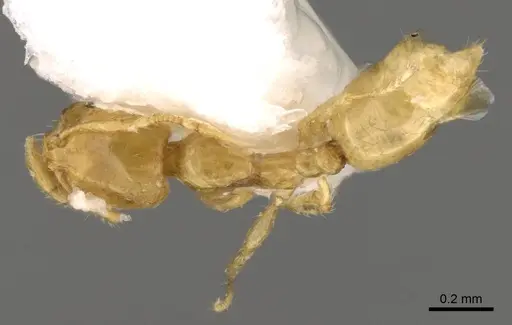
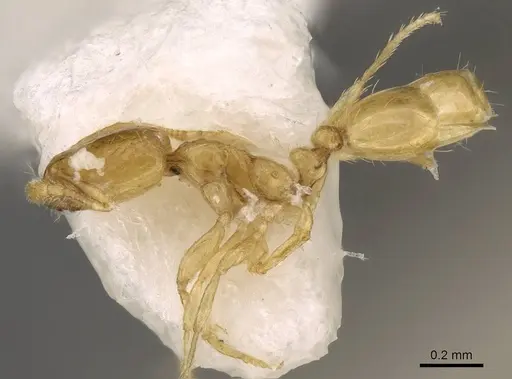
CASENT0923589
View on AntWeb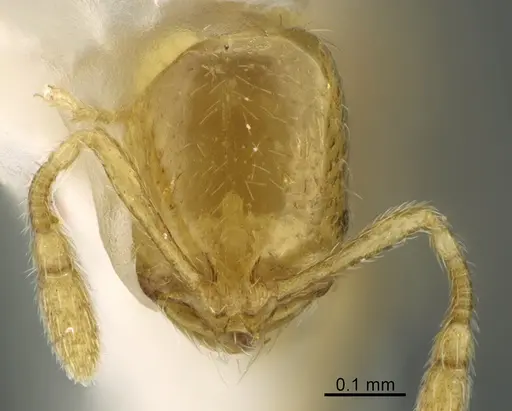
CBUMAGENT42017
View on AntWeb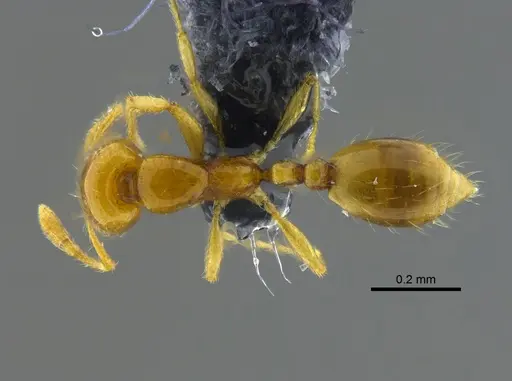
INBIOCRI001237572
View on AntWeb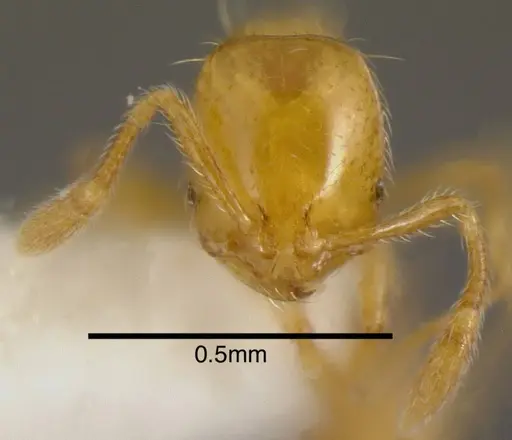
Literature
Loading...Loading products...