

Solenopsis rugiceps
- Scientific Name
- Solenopsis rugiceps
- Tribe
- Solenopsidini
- Subfamily
- Myrmicinae
- Author
- Mayr, 1870
- Distribution
- Found in 1 countries
Solenopsis rugiceps Overview
Solenopsis rugiceps is an ant species of the genus Solenopsis. It is primarily documented in 1 countries , including Colombia. Detailed taxonomic data and occurrence records can be further explored via authoritative databases such as AntWeb or the Global Biodiversity Information Facility (GBIF).
Solenopsis rugiceps
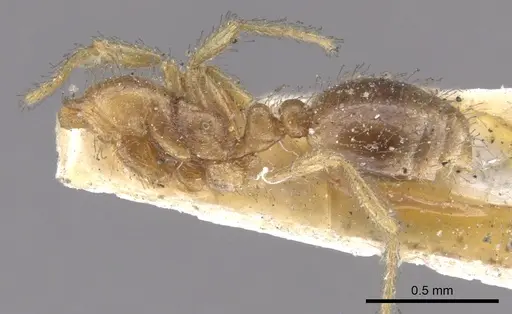
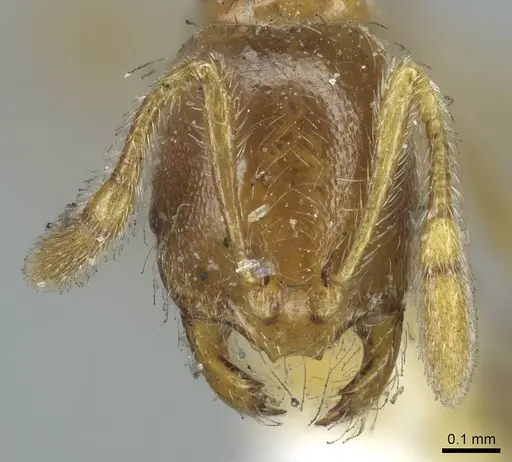
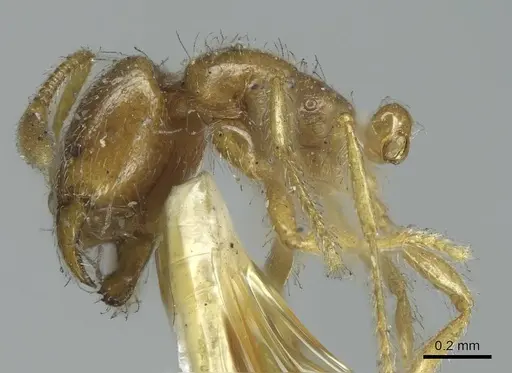
Solenopsis rugiceps is a tiny thief ant species belonging to the Solenopsis fugax species complex, native to Colombia [1]. Workers measure just 1.7-2mm in length and feature a distinctive golden-brown body with a darker brown abdomen [2]. The most striking identification feature is their coarsely sculptured head, covered in rugulae (wrinkle-like patterns) that extend from the front to the sides, while the rear of the head may be smoother and shinier [1]. This species is one of only two New World Solenopsis species with sculptured heads, making it relatively distinctive among thief ants.
These ants originate from Colombian tropical rainforests, where they have been collected from both surface and underground baits [1]. As thief ants, they likely employ stealthy foraging strategies to raid the nests of other ant species, this is the typical behavior of the fugax complex. However, detailed behavioral observations in captivity are extremely limited since this species is rarely kept in the hobby.
Quick Summary
- Difficulty: Medium
- Origin & Habitat: Colombia (Cundinamarca and Valle del Cauca regions). Found in old-growth tropical rainforests, collected from both surface and subterranean locations [3][4][1].
- Colony Type: Colony structure is unconfirmed. Only the worker caste has been described, with no published queen or male specimens available [1]. Based on related species in the fugax complex, likely forms single-queen colonies but this requires confirmation.
- Size & Growth:
- Queen: Unknown, queen caste has not been described in scientific literature
- Worker: 1.7-2mm [2][1]
- Colony: Unknown, no colony size data available
- Growth: Unknown, no development data published
- Development: Unconfirmed, no direct development data available. Based on typical Solenopsis patterns, expect 4-8 weeks at warm temperatures (Related species in the fugax complex suggest relatively fast development compared to larger ant species)
- Antkeeping:
- Temperature: Keep at 22-26°C. Based on their tropical Colombian origin (Cundinamarca, Valle del Cauca), they prefer warm, stable conditions. Avoid temperatures below 20°C.
- Humidity: High humidity preferred, think damp tropical forest floor. Keep the nest substrate consistently moist but not waterlogged. Provide a gradient with slightly drier areas available.
- Diapause: Unlikely, being from tropical Colombia, they probably do not require a true diapause. However, a slight reduction in temperature during winter months may be beneficial.
- Nesting: Use a small, tight nest scaled to their tiny 2mm size. Y-tong (AAC) nests or small acrylic setups work well. They prefer dark, humid chambers. Test tubes can work for founding colonies but may need careful moisture management.
- Behavior: As thief ants, they likely exhibit secretive, stealthy foraging behavior and may raid the nests of smaller ant species for brood and resources. Workers are small but can deliver a painful sting for their size, the Solenopsidini tribe has functional stingers. They are likely nocturnal or crepuscular foragers. Escape prevention is critical due to their tiny size, use fine mesh and tight-fitting barriers.
- Common Issues: escape prevention is critical, they are tiny ants that can squeeze through the smallest gaps, very limited availability, rarely collected or available in the antkeeping hobby, lack of published care information makes proper husbandry uncertain, stinging, they possess functional stingers and may use them defensively, slow colony growth due to small colony size potential, patience is required
Identification and Appearance
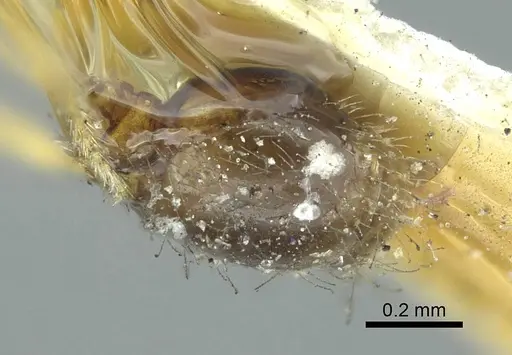
Solenopsis rugiceps workers are among the smaller ant species, measuring just 1.7-2mm in total length [2]. Their body coloration is golden brown with a distinctly darker brown gaster (abdomen) [1]. The most distinctive feature is the coarsely sculptured head, covered in rugulae (wrinkle-like ridges) that extend across the anterior portion and sides, while the posterior head may be smoother and glossy [1]. They have four well-developed teeth on the front of the clypeus (the area just above the mandibles), with the outer teeth nearly as large as the inner pair [1]. The entire body is abundantly covered with erect and suberect hairs, giving them a noticeably hairy appearance [2].
This species can be distinguished from most other New World Solenopsis by its sculptured head. The only similar species is Solenopsis vinsoni, found from Mexico to Panama, but S. vinsoni has a sculptured mesosoma, petiole, and postpetiole, while S. rugiceps has these areas predominantly smooth and glossy [1].
Distribution and Habitat
Solenopsis rugiceps is known only from Colombia, specifically the Cundinamarca and Valle del Cauca regions [3][4]. The type locality is listed as Bogotá (historically 'New Granada'), though researchers note that Bogotá's cool, high-elevation climate seems unsuitable for this apparently tropical species, suggesting the specimens were likely collected elsewhere in Colombia and shipped from Bogotá [1].
They have been collected in old-growth tropical rainforests using both surface and subterranean baits (baits placed in the ground) baited with Vienna sausage, indicating they forage at multiple levels in the soil profile [1]. This suggests they prefer humid, shaded forest environments with access to underground spaces.
Temperature and Care
Based on their tropical Colombian origin, these ants require warm conditions. Aim for temperatures between 22-26°C, with a slight gradient allowing workers to choose their preferred microclimate. Avoid temperatures below 20°C, as this species appears to be strictly tropical. A heating cable on one side of the nest can help maintain appropriate temperatures, but ensure it does not dry out the nest substrate.
Because they come from humid tropical rainforests, maintain high humidity in the nest area. The substrate should feel consistently damp but never waterlogged. A water reservoir connected to the nest (as in many acrylic nests) helps maintain humidity through evaporation. Monitor for mold growth, which can be problematic in overly humid conditions with poor ventilation.
Feeding and Diet
As member of the Solenopsis fugax species complex (thief ants), they likely employ a predatory and scavenging lifestyle typical of this group. In the wild, they have been attracted to protein baits (Vienna sausage) [1], suggesting they readily accept protein sources.
In captivity, offer small protein sources such as small mealworms, fruit flies, or other tiny insects. Sugar sources like honey water or sugar water may also be accepted, though thief ants are primarily protein-focused feeders. Feed small amounts initially and remove any uneaten food after 24-48 hours to prevent mold. Due to their tiny size, prey items should be appropriately sized, even a small mealworm can be substantial for a 2mm ant.
Nesting Preferences
Given their small size and subterranean foraging habits, provide a nest with small, tight chambers scaled to their 2mm body size. Y-tong (AAC) nests work well for small Myrmicinae, or small acrylic/formicarium setups with appropriately sized tunnels. They prefer dark, humid nest conditions.
The outworld (foraging area) should also be appropriately scaled, a small container works well since they are tiny ants. Ensure all connections and barriers are escape-proof, these small ants can exploit even microscopic gaps. Fine mesh (at least 0.5mm or tighter) is essential for any ventilation openings.
Behavior and Defense
Solenopsis rugiceps possesses a functional stinger, as the Solenopsidini tribe (which includes Solenopsis) is known for having active stingers [1]. While small, their sting can be noticeable due to their venom, so handle with care and avoid disturbing the colony.
As thief ants, they likely exhibit secretive foraging behavior, potentially raiding the nests of smaller ant species for brood and resources, this is characteristic of the fugax species complex. They are probably nocturnal or crepuscular in their foraging patterns. Workers are likely timid and may flee when disturbed, rather than aggressively defending the nest.
Frequently Asked Questions
How long does it take for Solenopsis rugiceps to develop from egg to worker?
The exact development time is unconfirmed as this species has not been studied in detail. Based on typical Solenopsis patterns and their small size, expect approximately 4-8 weeks from egg to first worker at optimal warm temperatures (around 24-26°C). Related species in the fugax complex tend to develop relatively quickly.
What do Solenopsis rugiceps eat?
Based on their classification as thief ants in the fugax complex and their attraction to protein baits in the wild, they primarily need protein sources. Offer small insects like fruit flies, tiny mealworms, or other appropriately sized arthropods. They may also accept sugar sources like honey water, though protein should form the bulk of their diet.
Are Solenopsis rugiceps good for beginners?
This species is not ideal for beginners due to several challenges: very limited availability in the antkeeping hobby, lack of published care information, their tiny size makes escape prevention difficult, and they require specific tropical conditions. If you are experienced with small Myrmicinae and can source a colony, they can be kept by intermediate to advanced keepers.
How big do Solenopsis rugiceps colonies get?
Colony size data is not available for this species. Based on related small Solenopsis species, colonies likely reach several hundred workers at maximum, but probably stay smaller than many common ant species. Their tiny foragers and subterranean habits suggest moderate-sized colonies.
Do Solenopsis rugiceps need hibernation?
Unlikely. Being from tropical Colombia (Cundinamarca, Valle del Cauca), they do not experience cold winters and likely do not require a true diapause. However, a slight reduction in temperature during winter months (perhaps dropping to 18-20°C) may be appropriate if you simulate seasonal changes, but this is not required for colony health.
Can I keep multiple Solenopsis rugiceps queens together?
The colony structure of this species is unconfirmed, only workers have been described, with no queen specimens available in scientific literature. Combining unrelated queens is not recommended since we do not know their social structure. Do not attempt pleometrosis (multiple queen founding) without evidence they tolerate it.
Why are my Solenopsis rugiceps dying?
Common causes include: temperature too cold (below 20°C), improper humidity (too dry or too wet/moldy), escape through tiny gaps, stress from disturbance, or inadequate nutrition. Ensure warm, stable temperatures around 22-26°C, consistently damp (not waterlogged) substrate, and escape-proof barriers. Also ensure they have access to appropriate protein sources.
Where is Solenopsis rugiceps found in the wild?
Solenopsis rugiceps is only known from Colombia, specifically the Cundinamarca and Valle del Cauca regions in the country's central-western area [3][4]. They inhabit old-growth tropical rainforests where they forage both on the surface and underground.
References

This caresheet is licensed under CC BY-SA 4.0 .
CASENT0902340
View on AntWeb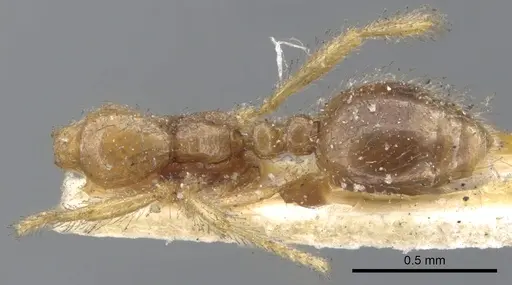
CASENT0916029
View on AntWeb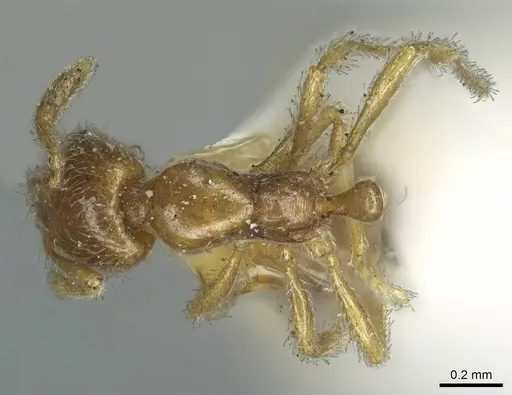
Literature
Loading...Loading products...