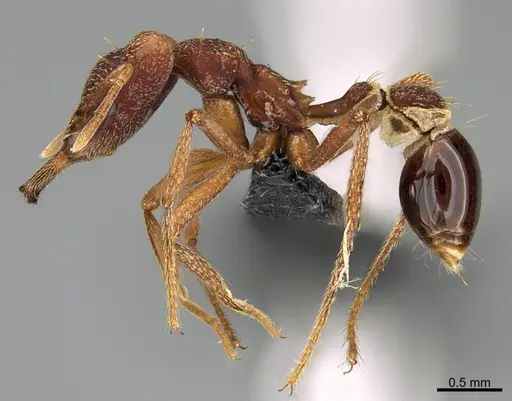
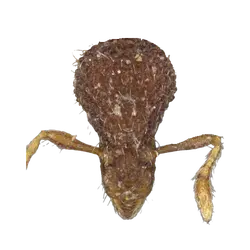
Strumigenys godmani - "Godman's Strumigenys Ant"
Strumigenys godmani is a fascinating ant species known for its relatively large size within the genus Strumigenys and its distinctive 'trap-jaw' mandibles. Workers have powerful, short, and stout mandibles with strongly bowed outer margins. They also feature densely reticulate-punctate (net-like pattern with small pits) surfaces on their head, alitrunk (thorax and propodeum), petiole, and postpetiole. The first gastral tergite (the top plate of the first segment of the gaster) is notably smooth, distinguishing it from a closely related species, Strumigenys mandibularis. These ants are primarily predators, using their specialized mandibles to ambush or stalk small arthropods, particularly springtails (Collembola), in the leaf litter.
- Difficulty: Medium
- Origin & Habitat: Neotropical Region, including Colombia, Costa Rica, Ecuador, French Guiana, Guyana, Panama (type locality), and Venezuela. in Forest and forest edge habitats, often found in leaf litter, under bark, in rotten wood, and sometimes on sidewalks. They are cryptic ants, typically nesting in soil, under or between rocks, or in and under logs..
- Colony Type: Monogyne, semi-claustral founding.
- Size & Growth:
- Queen: 4.5-5.5mm
- Worker: 4.5-5.5mm
- Colony: Small (hundreds). Slow growth.
- Antkeeping:
- Temperature: Ideally, maintain temperatures between 20-25°C. Consistent warmth is beneficial for brood development and overall colony activity..
- Humidity: High humidity is crucial for Strumigenys godmani, as they thrive in moist environments. Aim for a humidity range of 80-90%..
- Diapause: Not required. Not specified at Not specified.
- Nesting: These ants prefer naturalistic setups that mimic their native leaf litter and rotten wood habitats. Plaster nests, Ytong nests, or natural setups with a rich substrate and high humidity are suitable. Ensure plenty of hiding spots..
- Behavior: Low (towards handler and other ants) aggressiveness.
- Common Issues: Lack of suitable live prey, Humidity fluctuations, Mold in nest, Colony stalling due to stress.
Keeping Strumigenys godmani can be a rewarding experience for ant enthusiasts looking for a unique challenge. Their specialized diet and small, cryptic nature mean they require meticulous attention to their feeding and habitat conditions. Providing a varied diet of tiny live prey, especially different species of springtails, is key to their success. These ants don't typically consume sugar or honeydew, so focusing on protein sources is paramount.
Their hunting behavior is particularly fascinating to observe. Strumigenys godmani workers are stealthy predators; they will slowly approach their prey, often waiting for the springtail to move against their mandibles before striking with a powerful snap. Maintaining a thriving culture of feeder insects like springtails is almost as important as caring for the ants themselves, ensuring a continuous supply of their preferred food.
Humidity is a critical factor for this species. Coming from rainforest and forest edge environments, they are accustomed to consistently high moisture levels. Without adequate humidity, the colony can quickly decline. Misting the nest or maintaining a high-humidity outworld with damp substrate will help replicate their natural conditions and keep them healthy. Pay close attention to mold growth, however, as high humidity can also be a breeding ground for unwanted fungi.
Given their small colony size and cryptic habits, locating their nests in the wild can be quite challenging, and similarly, observing them closely in a captive setup might require patience. They are often found in leaf litter and rotten wood, suggesting they appreciate materials in their formicarium that allow them to tunnel and hide. Providing small pieces of decaying wood or bark can make their nest feel more natural and secure.
User blogs will be displayed here.