

Solenopsis gayi
- Scientific Name
- Solenopsis gayi
- Tribe
- Solenopsidini
- Subfamily
- Myrmicinae
- Author
- Spinola, 1851
- Distribution
- Found in 2 countries
Solenopsis gayi Overview
Solenopsis gayi is an ant species of the genus Solenopsis. It is primarily documented in 2 countries , including Chile, Colombia. Detailed taxonomic data and occurrence records can be further explored via authoritative databases such as AntWeb or the Global Biodiversity Information Facility (GBIF).
Solenopsis gayi
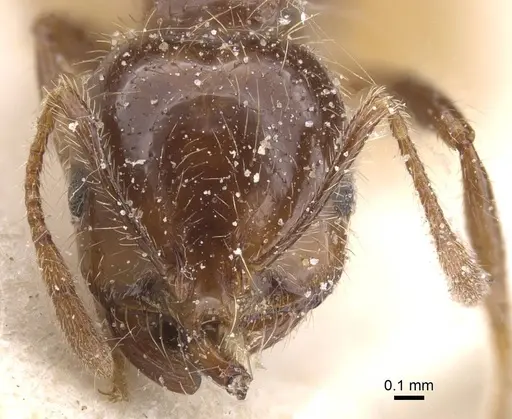
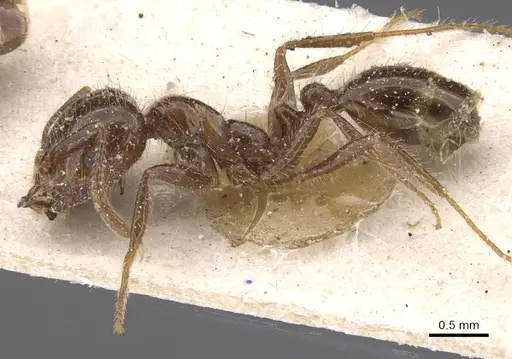
Solenopsis gayi is a small but aggressive fire ant native to Chile, Colombia, and Peru. Workers measure 3-4mm and have a reddish-brown coloration with a distinctly waisted body and pointed gaster [1]. This species is the smallest polymorphic South American fire ant, meaning colonies contain different sizes of workers including larger soldiers in some populations [2]. Unlike many ants, S. gayi lives in polygynous colonies, multiple queens work together in the same nest [3].
One of the most fascinating aspects of this species is its unusual relationship with another Chilean ant, Camponotus morosus. In Chile, these two species sometimes form parabiotic associations, living in mixed nests where they tolerate each other. Research shows S. gayi workers are accepted by C. morosus workers, while C. morosus aggressively rejects most other ants but accepts their S. gayi nestmates [3]. This species is also very aggressive toward other ant species in general, maintaining hermetic (tightly sealed) societies with little tolerance for intruders [1].
Quick Summary
- Difficulty: Medium
- Origin & Habitat: Native to Chile, Colombia, and Peru. Found in the Chilean spiny savanna (matorral), dry forest zones, and semi-arid ecosystems. Nests are built in soil and can be either uncovered or protected by stones, sticks, or animal dung [4][5].
- Colony Type: Polygynous, colonies contain multiple queens working together [3]. The soldier caste (larger workers) is present in northern populations but absent in southern populations [6].
- Size & Growth:
- Queen:{.size-link} Estimated 5-7mm based on genus patterns
- Worker:{.size-link} 3-4mm [7][1]
- Colony: Unknown maximum, but colonies are smaller than other South American fire ants due to their status as the smallest polymorphic species in the region [2]
- Growth: Moderate, inferred from related fire ant species
- Development: Estimated 5-8 weeks at optimal temperature based on related Solenopsis species (Development time inferred from genus-level data for Solenopsis, specific timeline for S. gayi not directly studied)
- Antkeeping:
- Temperature: Keep at 20-26°C. This species is found in temperate to warm regions of central Chile and adapts to variable conditions. Provide a temperature gradient allowing workers to choose their preferred warmth [8].
- Humidity: Moderate humidity around 50-70%. In their natural habitat of matorral and savanna, they experience dry summers and wetter winters. Allow the nest substrate to dry partially between waterings.
- Diapause: Yes, this species is native to temperate Chile and experiences seasonal changes. Reduce temperature to 10-15°C for 2-3 months during winter to simulate their natural cycle [4].
- Nesting: Soil-nesting species. In captivity, a naturalistic setup with compact soil or a plaster/acrylic nest works well. They prefer nests with multiple chambers connected by narrow passages. Avoid overly wet conditions that could cause mold.
- Behavior: Very aggressive and territorial. Workers will readily attack intruders including other ant species. They maintain columnar foraging trails between the nest and food sources [9]. This species is known for hermetic societies, tight colony boundaries with little tolerance for conspecifics from other colonies [1]. They are excellent escape artists due to their small size, so escape prevention must be excellent. They can deliver a painful sting like other fire ants. Workers are active foragers that will collect seeds, tend homopteran pests for honeydew, and hunt small insects [1].
- Common Issues: escape prevention is critical, their tiny 3-4mm size means they can squeeze through the smallest gaps, aggressive behavior means they will attack and potentially kill colony intruders, careful when housing near other ant species, colonies may fight if queens are introduced from different colonies, S. gayi is very territorial, winter die-off can occur if diapause conditions aren't provided in temperate climates, agricultural pest status means they may damage plants in captivity, avoid overfeeding fresh fruit
Housing and Nest Setup
Solenopsis gayi is a soil-nesting species that does well in naturalistic setups with compact substrate. Use a mix of sandy soil and clay to create a compactable substrate that holds tunnels well. A depth of 5-10cm allows them to build proper nest chambers. Alternatively, acrylic or plaster nests with narrow chambers work well for observation. Because they are small (3-4mm), ensure all connections and barriers are tight, these ants are excellent escape artists. Provide an outworld area for foraging with easy access to food and water. Include some cover objects like small stones or pieces of bark in the foraging area to make workers feel secure when venturing out [4][1].
Feeding and Diet
S. gayi is an omnivorous feeder with a varied diet. In the wild, they consume seeds (particularly from Erodium and Plantago species), nectar, and insects [9]. They are known to tend homopteran pests like aphids for honeydew and have been observed removing bark from fruit trees to access sap, they can damage mandarin trees and pepino dulce plants [1]. They also rob nectar from flowers, piercing the base of closed flowers to access nectar [7]. In captivity, offer a varied diet: protein sources like small insects (fruit flies, pinhead crickets) 2-3 times weekly, sugar water or honey as an energy source, and occasional seeds. Their small size means prey items should be appropriately sized, tiny insects and arthropods work best. They maintain foraging trails, so place food in a consistent location to encourage columnar foraging behavior [9].
Temperature and Seasonal Care
This species tolerates a range of temperatures from 18-28°C, with optimal development around 22-26°C. In their native Chile, they experience distinct seasons and population peaks occur at different times depending on latitude, in northern areas peaks happen in July and November, while southern populations peak in May and December [4]. During summer months in captivity, ensure they have access to water and avoid overheating. In winter, provide a diapause period of 2-3 months at reduced temperatures (10-15°C) to match their natural cycle. This cooling period helps trigger reproductive behavior and maintains colony health. Monitor for signs of stress, workers should be active but not clustering excessively near heat sources [8][4].
Behavior and Colony Dynamics
S. gayi is notable for its aggressive, hermetic society structure. Unlike many ants that tolerate some intruders, this species maintains strict boundaries, workers will attack and often kill ants from other colonies, including fighting to the death [1]. They exhibit columnar foraging activity, moving in defined trails between the nest and food sources [9]. The species is polygynous, meaning multiple queens coexist in a single colony. Interestingly, the soldier caste (larger workers) is geographically variable, present in northern Chile but absent in southern populations, possibly linked to diet differences (northern populations eat more seeds and need soldiers to process them) [6]. When keeping multiple colonies together, be extremely cautious as they may fight. Queens are accepted within their own colony but will be attacked if introduced from an unfamiliar source [1].
Defense and Sting Risk
As a fire ant species, S. gayi can deliver a painful sting. The venom contains alkaloids similar to other Solenopsis species (cis and trans-2-undecyl-6-methylpiperidine) [2]. When threatened, workers will swarm and sting repeatedly. Handle with caution and use appropriate escape prevention, these small ants can crawl through standard barrier setups. Their aggressive nature means they will readily defend the nest, so avoid disturbing colonies unnecessarily. If stung, the pain is typically sharp and burning, similar to other fire ant stings. Keep escape prevention excellent due to their small 3-4mm size, they can slip through gaps that larger ants cannot [2][1].
Frequently Asked Questions
Can I keep Solenopsis gayi in a test tube setup?
Test tubes can work for founding colonies, but S. gayi is polygynous (multiple queens) and will need more space as the colony grows. A test tube is fine for a single founding queen, but transfer to a larger naturalistic or formicarium setup once workers reach 10-15. Their small size means use a cotton plug that's tightly packed to prevent escapes.
How long does it take for Solenopsis gayi to produce first workers?
Based on related fire ant species, expect first workers (nanitics) approximately 5-8 weeks after the queen lays eggs, at optimal temperatures around 22-26°C. Development is faster in warmer conditions and slower if temperatures drop. The first workers will be smaller than mature workers.
Are Solenopsis gayi good for beginners?
This species is rated as medium difficulty. While they are hardy once established, their small size, aggressive nature, and specific temperature requirements make them better suited for keepers with some experience. Their escape prevention needs are high, and they require winter diapause. They are fascinating but not ideal as a first species.
Can I keep multiple Solenopsis gayi queens together?
Yes, this species is naturally polygynous, multiple queens coexist in established colonies. However, introducing unrelated queens to an existing colony is risky due to their aggressive, hermetic nature. If you want to start a colony with multiple queens, collect them from the same founding cluster or introduce them very carefully during the claustral founding phase.
What do Solenopsis gayi eat?
They are omnivorous. Offer small insects (fruit flies, tiny crickets) as protein 2-3 times weekly, sugar water or honey constantly, and occasionally seeds. They also will eat fruit and nectar. In the wild they consume seeds, insects, and honeydew from homopterans. Avoid overfeeding fresh fruit as they can damage plants.
Do Solenopsis gayi need hibernation?
Yes, they benefit from a winter diapause. Reduce temperatures to 10-15°C for 2-3 months during winter. This matches their natural cycle in temperate Chile where they experience seasonal population fluctuations tied to temperature and rainfall patterns.
Why are my Solenopsis gayi dying?
Common causes include: escape due to inadequate barriers (they are tiny), temperature stress from being too cold or too hot, insufficient protein in diet, mold from overly wet conditions, or stress from disturbance. Also check for parasites, they can be attacked by decapitating flies (Pseudacteon species) in the wild. Ensure proper humidity without saturation, adequate food variety, and minimal disturbance.
How big do Solenopsis gayi colonies get?
Colony size is smaller than typical fire ant colonies, this is the smallest polymorphic South American fire ant species. Exact maximum is unknown but likely reaches several hundred workers. Growth is moderate. Colonies contain multiple queens which helps sustain population.
Report an Issue
The current care sheet is based fully on literature. See inconsistencies, or something that's incorrect? Please , it will be resolved after review from an admin. Contributing to the blogs tab also helps providing information, to make us be able to further improve the caresheets. Thank you for your support!
References

This caresheet is licensed under CC BY-SA 4.0 .
CASENT0913892
View on AntWeb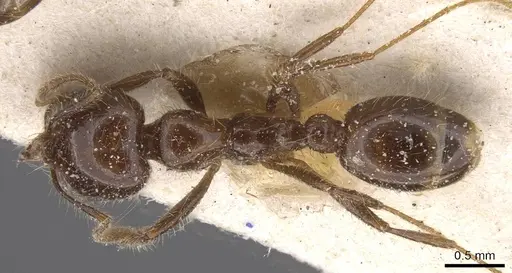
Literature
Loading...Loading products...