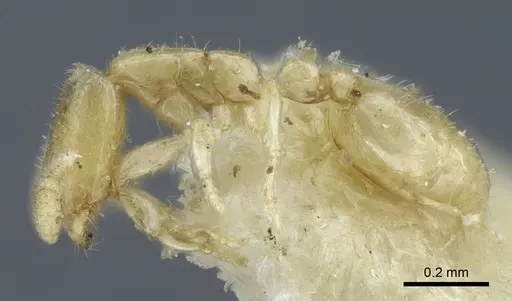
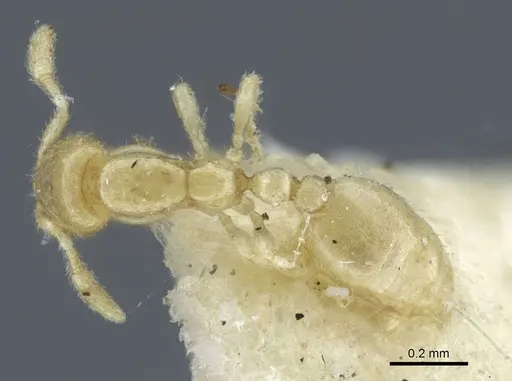
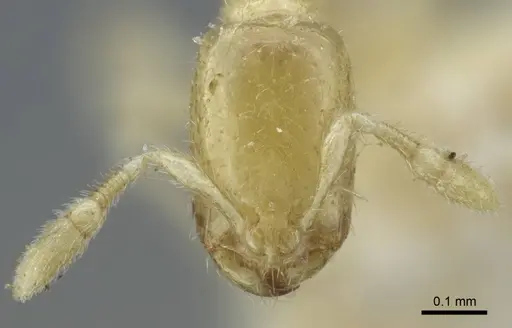
Solenopsis deserticola - "Desert Fire Ant"
Solenopsis deserticola is a species of ant belonging to the genus Solenopsis, commonly known as fire ants or thief ants. Like other Solenopsis, they are typically small, with workers ranging from around 1.2 mm to 2.7 mm, though specific sizes for S. deserticola are not widely detailed in readily available public information. Queens are often larger, for example, queens of S. molesta (a related thief ant) can be up to 3.8mm, and S. invicta queens are 6-8mm. They are known for their ability to thrive in arid environments. While information specific to S. deserticola is limited, many Solenopsis species are characterized by their aggressive nature, rapid colony growth, and a painful sting.
- Difficulty: Medium
- Origin & Habitat: Palaearctic Region (Armenia, Azerbaijan, Kazakhstan, Russian Federation, Turkmenistan, Tajikistan, Uzbekistan) in Deserts, steppes, and potentially other arid regions..
- Colony Type: Data not specifically available for S. deserticola, but other Solenopsis species exhibit both monogyne and polygyne forms., claustral (based on typical solenopsis founding, where queens seal themselves in a chamber to raise their first brood). founding.
- Size & Growth:
- Queen: Not specified
- Worker: Not specified
- Colony: Medium to Large (tens of thousands, potentially hundreds of thousands, based on typical Solenopsis colony sizes like S. invicta which can reach 400,000 workers).. Fast (typical for Solenopsis species, with rapid brood development). growth.
- Antkeeping:
- Temperature: Aim for a temperature range of 24-30°C. Many Solenopsis species prefer warmer conditions, and brood development is faster at higher temperatures..
- Humidity: Maintain a humidity gradient from 50-70%. While worker ants alone may not show strong humidity preferences, brood-tending workers prefer saturated atmospheres (near 100% RH) to protect the vulnerable brood from desiccation..
- Diapause: Required. 2-3 months at 10-15°C.
- Nesting: Prefers nests with an intricate network of rigid tunnels and numerous small chambers, mimicking their natural subterranean mounds. Acrylic nests are recommended due to their ability to chew through other materials..
- Behavior: High (towards handler, food or other ants) aggressiveness.
- Common Issues: Escapes, Rapid growth requiring frequent upgrades, Stings, Maintaining high humidity for brood, Colony stalling if conditions are not met.
Keeping Solenopsis deserticola can be a rewarding, yet challenging experience, particularly given their reputation as 'fire ants.' These ants are known for their incredibly fast growth rate, especially once the colony reaches around 200 workers. What starts as a small group can quickly explode in numbers, rapidly filling up their formicarium. This rapid expansion means you’ll need to be prepared with larger setups well in advance, as they can outgrow nests in just a few weeks. Planning for continuous expansion is key to avoiding stress on both the ants and the ant keeper.
One of the most critical aspects of housing any Solenopsis species is ensuring an escape-proof setup. These ants are notorious escape artists and will relentlessly seek out any weakness in their enclosure if their basic needs-food, water, and space-are not adequately met. Even seemingly secure barriers like fluon might not deter a determined colony for long. A small gap can quickly turn into a full-scale breakout, leading to thousands of tiny, stinging ants exploring your living space. Always double-check your nest and outworld for potential escape routes.
The sting of Solenopsis ants, including fire ants, is quite painful, often compared to a bee or wasp sting, and can result in itchy red welts that last for days. For individuals with allergies to solenopsin, the venom, multiple stings can be a serious medical emergency, potentially even fatal. When performing any maintenance, feeding, or moving tasks with a Solenopsis deserticola colony, it is absolutely essential to wear protective gear. Keeping them in a secure location away from pets and children is also highly advisable to prevent accidental encounters.
While general information about Solenopsis deserticola is not as abundant as for more common species like S. invicta or S. geminata, it's important to extrapolate from the broader Solenopsis genus. These ants are highly aggressive towards other ant species and will defend their territory vigorously. In a captive setting, this means they should never be housed near other ant colonies without extreme caution, as they are capable of dominating baits and engaging in fierce battles. Observing their natural dominance and mass recruitment behavior, where many workers are quickly dispatched to a food source, is fascinating but requires careful management in a home setup.
Frequently Asked Questions
What makes Solenopsis deserticola a good species for experienced antkeepers?
For seasoned antkeepers, Solenopsis deserticola offers a captivating challenge. Their incredibly fast growth, especially once a colony establishes a few hundred workers, provides a dynamic observation experience. Witnessing their mass recruitment and aggressive foraging behaviors is truly unique. Successfully managing their rapid expansion and ensuring a secure setup is a rewarding testament to an antkeeper's dedication.
How do I ensure my Solenopsis deserticola colony doesn't escape?
Preventing escapes with Solenopsis deserticola is paramount. A truly escape-proof setup is non-negotiable. This means investing in high-quality, secure formicariums-acrylic nests are often recommended as they can chew through other materials. Beyond physical barriers, consistently providing ample food, water, and space is crucial. A colony that feels 'lacking' in any of these areas will be far more motivated to find a way out. Regularly inspect your setup for any hairline cracks or tiny gaps.
What type of nest is best for Solenopsis deserticola?
Given their tendency to chew through various materials, an acrylic formicarium is highly recommended for Solenopsis deserticola. Look for nests designed with an intricate network of rigid tunnels and numerous small chambers, mimicking their natural subterranean architecture. Some antkeepers even add a thin layer of sand to allow them to customize their nest interior and help with humidity regulation.
What should I feed my Solenopsis deserticola colony?
Solenopsis ants, including S. deserticola, are generally omnivorous and have a high protein demand, especially as the colony grows. They'll readily accept a variety of feeder insects like roaches, crickets, and mealworms. Don't forget to offer sugary foods like sugar water or honey-based solutions as well. They are known for dominating food sources via mass recruitment, so expect to see a rapid response to new offerings.
How aggressive are Solenopsis deserticola?
Solenopsis deserticola, like other fire ants, are known for their high level of aggression. They will fiercely defend their nest and food sources against perceived threats, including other ant species and even handlers. This aggressive nature is part of their natural ecological dominance, but it means antkeepers must exercise extreme caution during interactions and ensure their setup is isolated from other colonies.
Do Solenopsis deserticola workers sting?
Yes, Solenopsis deserticola workers possess a painful sting. The sensation is often likened to a bee or wasp sting, producing red, itchy welts that can last for several days. For individuals sensitive to ant venom, multiple stings can trigger a severe allergic reaction. Always take appropriate safety measures, such as wearing gloves, when handling their setup.
What is the typical colony size for Solenopsis deserticola?
While specific numbers for Solenopsis deserticola are scarce, other Solenopsis species like S. invicta can form massive colonies, sometimes exceeding hundreds of thousands of workers. Expect a S. deserticola colony to eventually grow into the tens of thousands, necessitating significant space and resources.
Do Solenopsis deserticola need diapause?
Yes, as a species from the Palaearctic region (which includes areas with distinct seasons), Solenopsis deserticola likely requires a period of diapause or hibernation. This is a crucial part of their natural life cycle and is essential for the long-term health and reproductive success of the queen and colony. Typically, a cooler, drier period of a few months is recommended.
How fast do Solenopsis deserticola colonies grow?
Solenopsis colonies, including S. deserticola, are renowned for their incredibly fast growth rate. Once the first workers emerge and the colony gets established, the queen can lay eggs at an astonishing pace. It's not uncommon to see a colony fill a new nest in just a few weeks under optimal conditions. Be prepared for this rapid expansion with larger setups.
What temperature and humidity do Solenopsis deserticola prefer?
These ants thrive in warmer conditions, with a preferred temperature range of 24-30°C. Maintaining higher temperatures can significantly speed up brood development. For humidity, a gradient is best, with a moister area (near 100% RH) for the vulnerable brood and slightly drier areas for the workers.
Are Solenopsis deserticola polymorphic?
Yes, like many Solenopsis species, Solenopsis deserticola workers are likely polymorphic, meaning they exhibit different sizes and forms within the worker caste. This includes minors, medias, and majors (or soldiers). These different worker sizes often correlate with specialized tasks within the colony, such as foraging, defense, or seed milling.
Can Solenopsis deserticola hybridize with other fire ant species?
While specific data for S. deserticola is limited, hybridization is known to occur between closely related Solenopsis species, such as Solenopsis invicta and Solenopsis richteri. This can complicate identification in the wild and introduce variations in colony behavior and characteristics.