

Solenopsis decipiens
- Scientific Name
- Solenopsis decipiens
- Tribe
- Solenopsidini
- Subfamily
- Myrmicinae
- Author
- Emery, 1906
- Distribution
- Found in 3 countries
Solenopsis decipiens Overview
Solenopsis decipiens is an ant species of the genus Solenopsis. It is primarily documented in 3 countries , including Argentina, Colombia, Paraguay. Detailed taxonomic data and occurrence records can be further explored via authoritative databases such as AntWeb or the Global Biodiversity Information Facility (GBIF).
Solenopsis decipiens
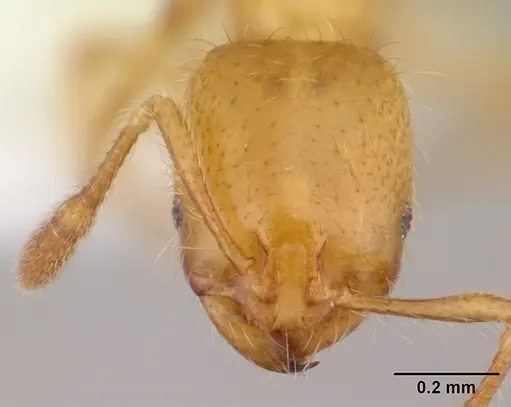
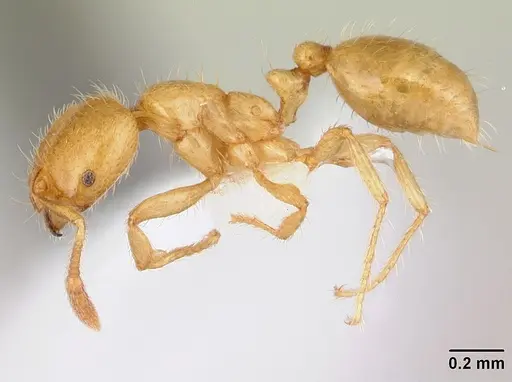
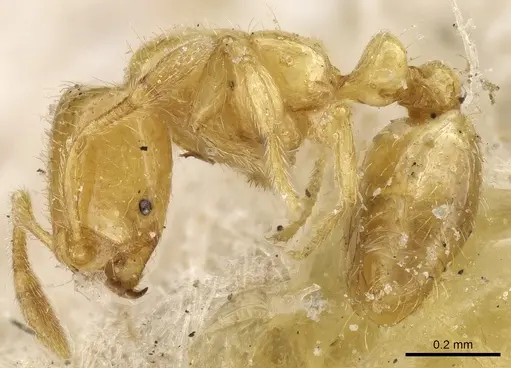
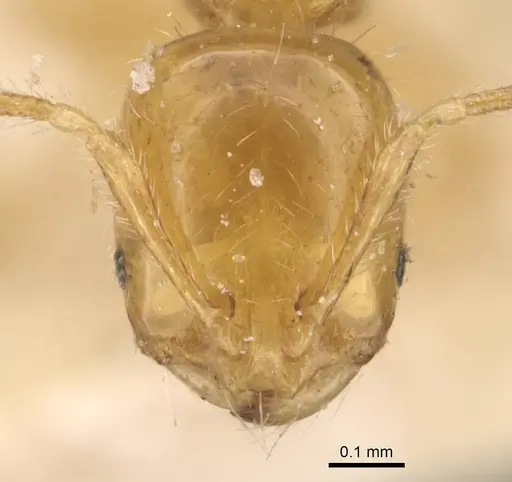
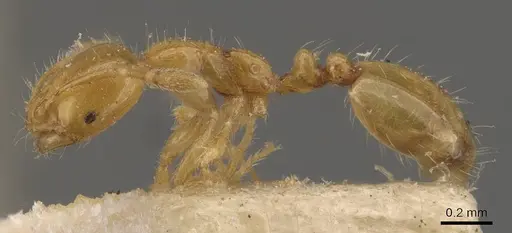
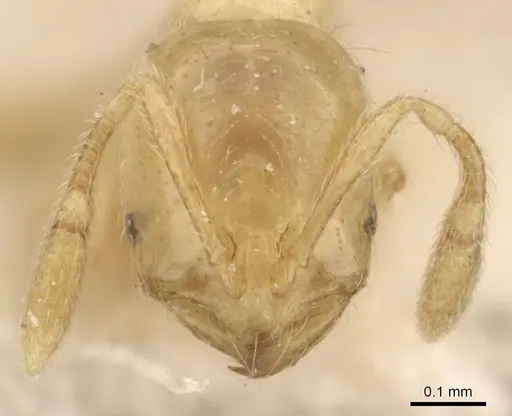
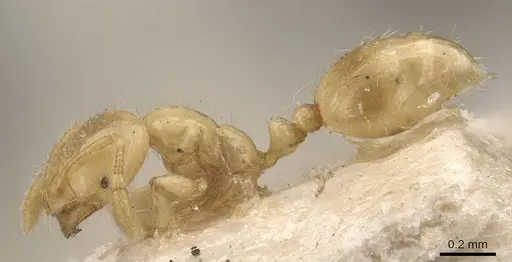
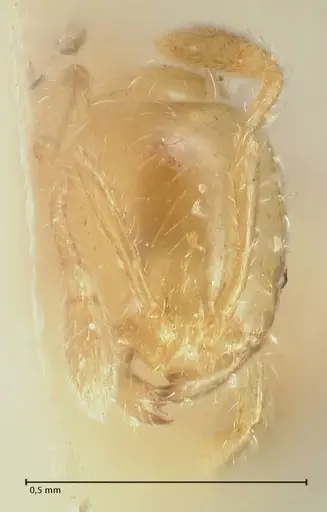
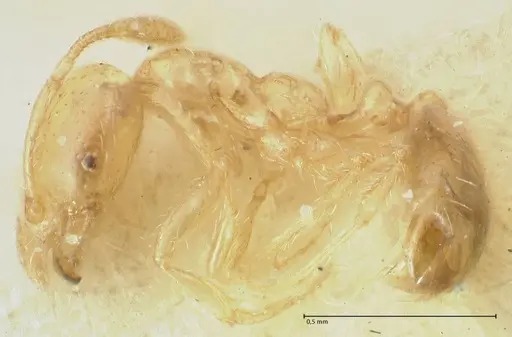
Solenopsis decipiens is a tiny thief ant measuring just 1.44-1.68mm in worker length, with a distinctive concolorous golden yellow coloration and smooth body surface [1]. This species belongs to the Solenopsis molesta species complex, a group of small ants known for their secretive habits and ability to nest in confined spaces [1]. The head is nearly square-shaped, and they have relatively long antennae scapes that extend about three-quarters of the way to the back of the head. Their eyes are small with only about six light-catching units, giving them a slightly kidney-shaped appearance [1]. These ants are found across the Neotropical region, including Argentina, Brazil, Colombia, and Paraguay, typically living in leaf litter and coffee plantations at elevations around 1405m [1][2].
What makes S. decipiens interesting is their foraging strategy. Research has shown these ants use tandem communication, where one ant leads another to food sources, which improves their foraging success in competitive tropical habitats [3]. This is unusual among smaller ant species and suggests they have developed sophisticated ways to compete with larger, more dominant ant species for food resources.
Quick Summary
- Difficulty: Medium
- Origin & Habitat: Neotropical South America, Argentina, Brazil, Colombia, Paraguay. Found in leaf litter and coffee plantations at elevations around 1405m [1][2].
- Colony Type: Colony structure is unconfirmed for this species. Based on genus patterns, likely single-queen colonies but further research needed.
- Size & Growth:
- Queen: Estimated 4-6mm based on genus patterns for Solenopsis species [1]
- Worker: 1.44-1.68mm [1]
- Colony: Unknown, related species in the molesta complex typically reach a few hundred workers
- Growth: Moderate, inferred from small worker size and typical Solenopsis development patterns
- Development: Estimated 6-8 weeks at optimal tropical temperatures (24-28°C) (Based on typical Solenopsis development, small species in this genus tend to develop relatively quickly)
- Antkeeping:
- Temperature: Keep at 24-28°C, these are Neotropical ants from warm, humid environments. A gentle heat gradient allows them to regulate temperature [1].
- Humidity: High humidity preferred (60-80%), they naturally live in leaf litter and shaded coffee plantations where moisture is consistent [1]. Keep the nest substrate moist but not waterlogged.
- Diapause: Unlikely, being from tropical South America, they probably do not require a true hibernation period. However, they may slow down during cooler periods.
- Nesting: Small nest chambers work best, these tiny ants need appropriately scaled spaces. Test tubes with cotton water reservoirs work well, or small acrylic nests with narrow chambers. They do well in naturalistic setups with moist substrate [1].
- Behavior: These ants are relatively non-aggressive and secretive. They use tandem running to communicate about food sources, which is more sophisticated than simple chemical recruitment [3]. They are small but can be competitive at food baits despite their tiny size. Escape prevention is critical due to their very small size, they can squeeze through remarkably small gaps. They are not known for stinging.
- Common Issues: escape prevention is critical, they are tiny and can squeeze through standard barrier setups, small size makes them vulnerable to drowning in water reservoirs, use small test tubes with appropriate cotton setup, wild-caught colonies may carry parasites that can devastate captive colonies, they compete poorly with larger ants in multi-species setups, overheating can kill colonies quickly, avoid temperatures above 32°C
Housing and Nest Setup
Because Solenopsis decipiens workers are only 1.44-1.68mm tall, you need to use appropriately scaled housing. Standard test tubes work well, use small diameter tubes (around 10-12mm) with cotton stoppers and a water reservoir. The tiny workers can navigate standard test tube setups, but ensure the cotton is packed tightly enough that workers cannot squeeze through [1].
For formicariums, choose nests with very narrow chambers and passages. Acrylic nests with chambers sized at 2-3mm height work better than larger commercial formicarium designs meant for bigger ants. You can also use naturalistic setups with a thin layer of moist soil or plaster, these ants naturally live in leaf litter, so they do well in humid, compact spaces [1]. Whatever nest type you choose, ensure excellent escape prevention, these tiny ants are expert escape artists.
Feeding and Diet
As thief ants, Solenopsis decipiens are generalist feeders that will collect various food sources. In captivity, they readily accept small protein foods like fruit flies, pinhead crickets, and mealworm pieces. Due to their tiny size, prey items should be appropriately scaled, small fruit flies and springtails are ideal [3].
These ants also accept sugar sources. Offer small drops of honey water or sugar water, though the tiny workers may have difficulty with large droplets. Replace sugar sources every 2-3 days to prevent mold. For variety, you can occasionally offer tiny pieces of seeds or other organic matter, but protein should form the majority of their diet.
Their sophisticated tandem communication means they effectively recruit nestmates to food sources [3]. Place food in the outworld and watch for recruitment behavior, you may see chains of ants following each other to the food.
Temperature and Seasonal Care
Solenopsis decipiens comes from warm Neotropical regions, so keep your colony at 24-28°C for optimal growth and activity. This matches their natural environment in coffee plantations and leaf litter across Argentina, Brazil, Colombia, and Paraguay [1].
Use a heating cable or mat on one side of the nest to create a gentle temperature gradient. Place the heat source on top of the nest, not underneath, to avoid evaporating moisture too quickly. Monitor with a thermometer, temperatures above 32°C can be fatal, while below 20°C may cause sluggishness and slow brood development.
Unlike temperate species, these ants likely do not require a true diapause period. However, they may naturally slow during cooler seasons in your region. If you notice reduced activity in winter, simply reduce feeding and expect slower growth, do not force hibernation on a tropical species.
Humidity and Water
These ants naturally live in humid leaf litter and coffee plantation environments at elevations around 1405m [1]. Keep the nest substrate consistently moist but never waterlogged. The substrate should feel damp to the touch, with no standing water visible.
For test tube setups, use a water reservoir of appropriate size, too much water can drown these tiny ants. A 5-10cm water reservoir is sufficient. Monitor condensation levels, heavy condensation indicates adequate humidity, while disappearing condensation means you need to add water.
In naturalistic setups, mist the substrate lightly when the surface begins drying. Avoid creating wet spots, aim for even moisture throughout. Good ventilation helps prevent mold while maintaining humidity.
Behavior and Colony Dynamics
Solenopsis decipiens is a relatively peaceful species that avoids conflict with larger ants. However, they make up for their small size with sophisticated communication, they use tandem running where one ant physically leads another to food sources, rather than relying solely on chemical trails [3]. This makes them surprisingly effective at competing for food in competitive environments.
The colony will likely grow to a few hundred workers over time, though exact colony sizes for this specific species are not well documented. Workers are monomorphic (all the same size) and will tend brood, forage, and maintain the nest. The queen is larger than workers and will be the primary egg-layer.
These ants are not aggressive and rarely sting. Their small size means they are more likely to flee than fight when threatened. However, their secretive nature means you may not see much activity outside the nest, they prefer to stay hidden in their chambers.
Escape Prevention
Escape prevention is absolutely critical for this species. At only 1.44-1.68mm, these ants can squeeze through gaps that seem impossible. Standard barrier methods may not work, you need to go beyond basic precautions.
Use fluon (liquid PTFE) on all rim edges of the outworld and nest connections. For test tube setups, ensure cotton stoppers are packed tightly and consider adding a fluon barrier around the tube opening. Some keepers use double-cotton setups where the inner cotton is packed very tightly and the outer cotton serves as a backup.
Check all connection points between the nest and outworld regularly. Inspect for any gaps or cracks in acrylic nests. If using mesh barriers, ensure the mesh is fine enough, standard ant mesh may have gaps too large. These tiny ants will find any weakness in your setup.
Frequently Asked Questions
How long does it take for Solenopsis decipiens to produce first workers?
Based on typical Solenopsis development patterns, expect 6-8 weeks from egg to first worker at optimal temperatures (24-28°C). Small species in this genus tend to develop relatively quickly, but exact timing for S. decipiens has not been directly documented.
Can I keep Solenopsis decipiens in a test tube?
Yes, test tubes work well for this species. Use small diameter tubes (10-12mm) with tightly packed cotton stoppers. Ensure the water reservoir is appropriately sized, too large and tiny workers may drown. Excellent escape prevention is essential due to their very small 1.44-1.68mm size.
What do Solenopsis decipiens eat?
These thief ants are generalists that accept both protein and sugar. Feed small protein sources like fruit flies, pinhead crickets, mealworm pieces, and springtails. They also accept sugar water and honey water in small drops. Replace sugar sources every 2-3 days to prevent mold.
Are Solenopsis decipiens good for beginners?
This species is rated as medium difficulty. While not aggressive, their very small size makes escape prevention challenging. They require careful attention to housing, humidity, and temperature. Beginners may find them more challenging than larger, more resilient species.
How big do Solenopsis decipiens colonies get?
Exact colony sizes are not well documented for this species, but based on related species in the molesta complex, colonies likely reach several hundred workers. Growth rate is moderate, expect gradual expansion over months to years.
Do Solenopsis decipiens need hibernation?
Unlikely, being from tropical South America, they probably do not require a true hibernation period. They may slow down during cooler periods naturally, but you should not force diapause like you would for temperate species.
Why are my Solenopsis decipiens escaping?
Their tiny 1.44-1.68mm size means they can escape through remarkably small gaps. Review all barrier setups, use fluon on rim edges, ensure cotton stoppers are tightly packed, and check all connection points between nest and outworld. Standard barriers are often insufficient for this species.
When should I move Solenopsis decipiens to a formicarium?
Move them when the test tube water reservoir is nearly depleted or the colony has outgrown the tube. For this small species, wait until you have at least 30-50 workers. They do well in small acrylic nests with narrow chambers or naturalistic setups with moist substrate.
What temperature is best for Solenopsis decipiens?
Keep them at 24-28°C, this matches their natural Neotropical environment. Use a gentle heat gradient with a heating cable on top of the nest. Avoid temperatures above 32°C, which can be fatal, and below 20°C, which causes sluggishness.
Can I keep multiple queens together?
Colony structure is unconfirmed for this species. Combining unrelated queens has not been documented and is not recommended. Most Solenopsis species establish single-queen colonies, so it is safest to house one queen per colony.
Is Solenopsis decipiens invasive?
No, this species is native to the Neotropical region (Argentina, Brazil, Colombia, Paraguay). There is no documentation of it being invasive anywhere. However, never release any non-local ant species outside their native range.
References

This caresheet is licensed under CC BY-SA 4.0 .
CASENT0178145
View on AntWeb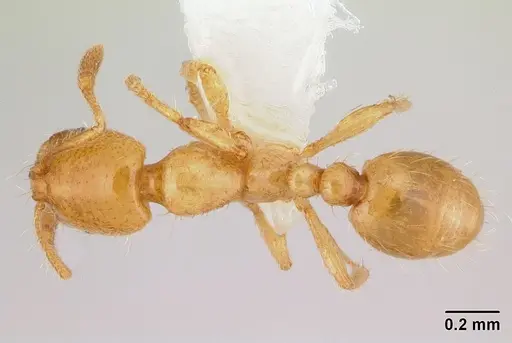
CASENT0904636
View on AntWeb
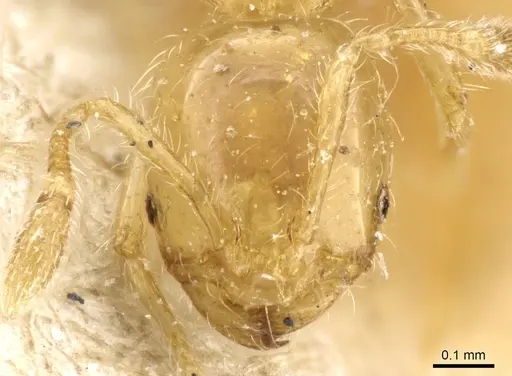
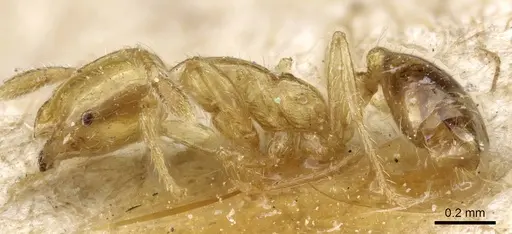
CASENT0904637
View on AntWeb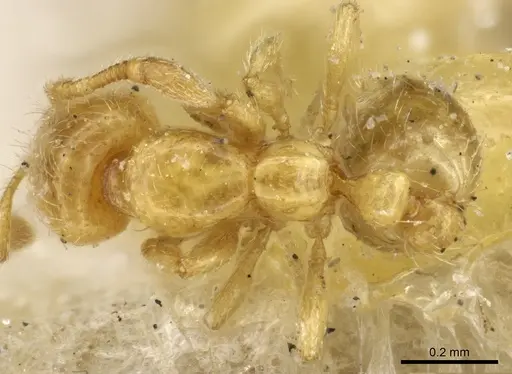
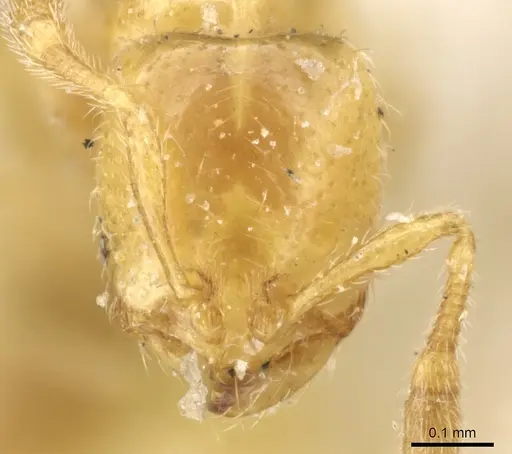
CASENT0908828
View on AntWeb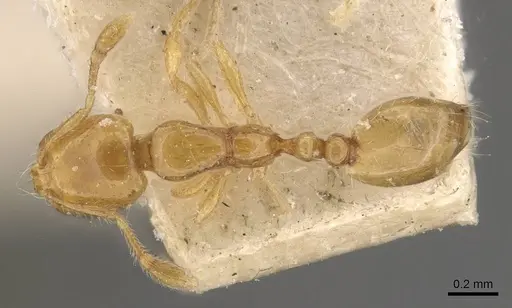
CASENT0908830
View on AntWeb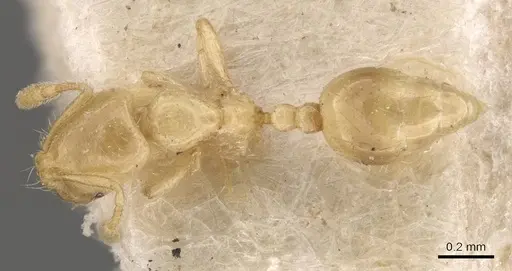
FOCOL1878
View on AntWeb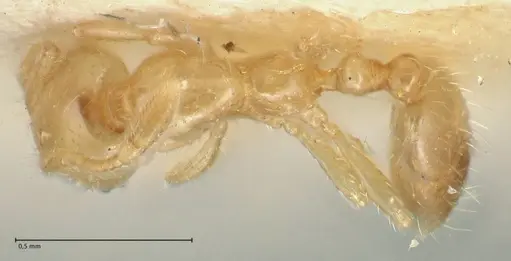
Literature
Loading...Loading products...