

Simopone wilburi
- Scientific Name
- Simopone wilburi
- Subfamily
- Dorylinae
- Author
- Weber, 1949
- Distribution
- Found in 1 countries
Simopone wilburi Overview
Simopone wilburi is an ant species of the genus Simopone. It is primarily documented in 1 countries , including Gabon. Detailed taxonomic data and occurrence records can be further explored via authoritative databases such as AntWeb or the Global Biodiversity Information Facility (GBIF).
Simopone wilburi
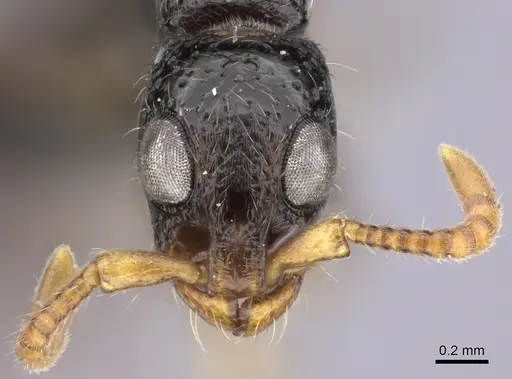
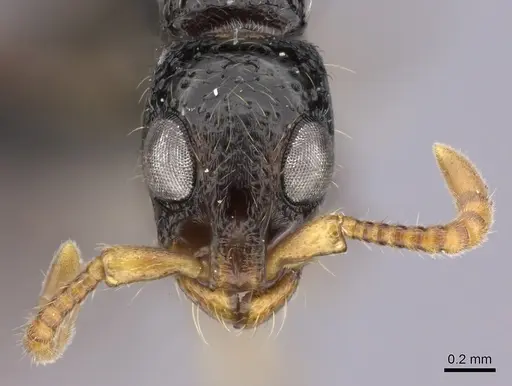
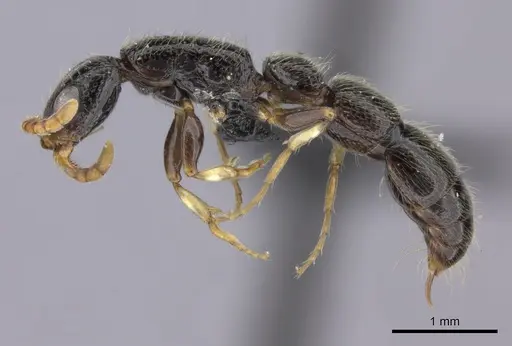
Simopone wilburi is a small, predatory ant belonging to the Dorylinae subfamily, found across Central Africa in Cameroon, the Democratic Republic of Congo, and Gabon [1]. Workers measure 0.94-1.08mm in head length and are distinctively marked with a black body, yellow scapes and funiculi, brown femora, and yellow tibiae and tarsi, giving them a striking appearance with a dark body and bright yellow antennae and legs [1]. The eyes conspicuously project beyond the sides of the head, a key identification feature for this species within the schoutedeni species group [1]. These ants are rainforest dwellers, collected as ground foragers and from low vegetation, suggesting they hunt prey in the leaf litter and understory layers of dense forest habitats [2].
As a member of the Dorylinae subfamily, Simopone wilburi is a predatory species that likely preys on small invertebrates, similar to other army ant relatives. This species shows notable size variation in workers, specimens from the same population can range from HW 0.94 to 1.08mm, which is unusually high intraspecific variation [1]. The species was once considered synonymous with Simopone schoutedeni but was reinstated as distinct based on differences in eye size and abdominal segment shape [1].
Quick Summary
- Difficulty: Expert
- Origin & Habitat: Central African rainforest, Cameroon, Democratic Republic of Congo (Ituri Forest), and Gabon. Collected as ground foragers and on low vegetation in rainforest habitats [2][1].
- Colony Type: Colony structure is unconfirmed. No data on queen number or colony size in the wild. Dorylinae species typically form colonies ranging from hundreds to thousands of workers, but Simopone specifically remains poorly studied.
- Size & Growth:
- Queen: ~1.08mm HL (dealate queen measured) [1]
- Worker: 0.94-1.08mm HL,0.64-0.75mm HW [1]
- Colony: Unknown, no wild colony data available
- Growth: Unknown, no development data available
- Development: Unknown, no direct measurements. Dorylinae typically develop faster than most ants, possibly 4-8 weeks at optimal temperature, but this is an estimate. (No published development data exists for this species. Estimates based on related Dorylinae genera.)
- Antkeeping:
- Temperature: Keep at 24-28°C, mimicking warm rainforest conditions. A gentle gradient allowing warmer and cooler zones is recommended.
- Humidity: High humidity (70-85%) is essential, these are rainforest ants. Keep the nest substrate consistently moist but not waterlogged.
- Diapause: Unknown, no data on overwintering requirements. As a tropical species, they may not require formal diapause but may show reduced activity during cooler periods.
- Nesting: No specific nesting data available. In captivity, a naturalistic setup with moist substrate (like a terrarium-style formicarium) would likely suit them. They likely nest in soil or rotting wood in nature.
- Behavior: Predatory and likely nocturnal or crepuscular, hunting small prey in the leaf litter. No specific temperament data available, but Dorylinae ants are typically aggressive hunters. Their small size and rainforest origin suggest they are sensitive to dry conditions and may be shy foragers. Escape prevention should be excellent given their small size, they can easily escape through tiny gaps.
- Common Issues: no published care data means all recommendations are estimates based on related species, high humidity requirements make mold a constant risk if ventilation is poor, predatory diet requires constant access to live small prey, difficult for beginners, small size makes escape prevention critical, tropical species may not tolerate temperature drops below 20°C, colony size and growth rate are completely unknown, making progress tracking difficult
Housing and Nest Setup
Simopone wilburi is an expert-level species with no established captive care protocols. A naturalistic terrarium-style setup works best for these rainforest ants, use a well-ventilated enclosure with moist substrate (a mix of soil and sand or coco fiber) that stays damp but never waterlogged. Because they forage on the ground and in low vegetation, they don't need vertical space like tree-nesting ants. A test tube setup can work for founding colonies if kept humid, but a naturalistic setup allows for better prey hunting. Escape prevention must be excellent, these tiny ants (workers are under 1.1mm) can squeeze through gaps that seem impossible. Use fine mesh on any ventilation holes and ensure all seams are sealed. Provide some hiding structures like flat stones, cork bark, or leaf litter to make them feel secure. [1][2]
Feeding and Diet
As a Dorylinae ant, Simopone wilburi is predatory and needs a protein-based diet of small live prey. Offer small live insects like fruit flies, pinhead crickets, booklice, springtails, and other tiny arthropods. The frequency depends on colony size, start by offering prey every 2-3 days and adjust based on how quickly it's consumed. Remove uneaten prey to prevent mold. Sugar sources are not typically important for predatory Dorylinae, but you could occasionally offer a drop of diluted honey or sugar water to see if they accept it. Do not rely on sugar as a primary food source, these are active hunters. The yellow antennae and legs may help them locate prey through movement, so live prey is much more successful than pre-killed.
Temperature and Humidity
Keep temperatures in the 24-28°C range, mimicking the warm, stable conditions of Central African rainforests. A slight gradient allowing temperatures from 24°C to 30°C in different areas of the enclosure lets the ants choose their preferred zone. Use a low-wattage heating cable or mat on one side if room temperature is below 24°C. Humidity should be high, aim for 70-85% relative humidity. The substrate should feel consistently moist but you should not see standing water. Mist the enclosure occasionally if humidity drops, but ensure good ventilation to prevent stagnant air and mold. These ants are sensitive to drying out, monitor substrate moisture regularly. [2]
Behavior and Temperament
Simopone wilburi is a predatory ant that hunts small invertebrates in the leaf litter. They are likely nocturnal or crepuscular, becoming more active during darker hours when prey is also active. No specific aggression data exists, but Dorylinae ants are typically bold hunters when pursuing prey. They are small and likely shy, preferring to avoid confrontation with larger ants. Their small size (under 1.1mm) makes them vulnerable and they will likely retreat from threats rather than engage. Provide a dark area for the nest and avoid disturbing the colony frequently. They may establish foraging trails like other Dorylinae, hunting in groups or columns. [1]
Colony Development
The queen measures approximately 1.08mm head length, similar in size to the largest workers [1]. No data exists on founding behavior, colony size, or development timeline. Based on related Dorylinae, expect claustral founding where the queen seals herself in and raises the first brood alone on stored fat reserves. First workers (nanitics) will likely be smaller than normal workers. Growth rate is unknown, monitor your colony's progress and adjust care accordingly. There is no data on nuptial flight timing, but in tropical species, mating flights likely occur during warm, humid seasons. This species is not commonly kept, so every captive colony provides valuable information for the antkeeping community.
Frequently Asked Questions
How long does it take for Simopone wilburi to raise first workers?
The egg-to-worker timeline is unknown, no published development data exists for this species. Based on related Dorylinae, estimate 4-8 weeks at optimal temperature (around 26°C), but this is purely speculative. Be patient with new colonies.
Can I keep Simopone wilburi in a test tube?
Yes, a test tube setup can work for founding colonies if you maintain high humidity. Place a water reservoir tube connected to a cotton plug, keeping the substrate consistently moist but not flooded. Cover the tube with a dark sleeve to reduce stress. However, a naturalistic setup may be better long-term since they are predatory hunters.
What do Simopone wilburi ants eat?
They are predatory and need live small prey. Offer fruit flies, springtails, booklice, tiny crickets, and other small insects. Remove uneaten prey after 24-48 hours. Occasional sugar water or honey may be accepted but should not be the primary food source.
Are Simopone wilburi good for beginners?
No, this is an expert-level species. There is no published captive care information, their humidity and temperature requirements are inferred rather than confirmed, and their predatory diet requires constant access to live prey. They are also extremely small, making escape prevention challenging.
How big do Simopone wilburi colonies get?
Colony size is unknown, no wild colony data exists for this species. Based on related Dorylinae, colonies may reach hundreds to low thousands of workers over several years. Their small size and the lack of data make colony development difficult to predict.
Do Simopone wilburi need hibernation?
Diapause requirements are unknown. As a tropical rainforest species from Central Africa, they likely do not require formal hibernation. They may show reduced activity during cooler periods, but should be kept warm year-round (24-28°C).
Why are my Simopone wilburi dying?
Common causes include: drying out (they need high humidity), temperature too low or fluctuating, mold from poor ventilation, starvation (not enough live prey), or escape (tiny ants easily lost). Review humidity, temperature, and food availability. Without published care data, troubleshooting requires experimentation.
When should I move my colony to a formicarium?
Wait until the colony has at least 20-30 workers and is actively foraging. Moving too early can stress the queen. A naturalistic terrarium-style setup works better than traditional formicaria for this species since they are ground-foraging predators.
Can I keep multiple Simopone wilburi queens together?
No data exists on colony structure or queen behavior. Do not attempt combining unrelated queens, there is no information on whether they are monogyne (single queen) or polygyne (multiple queens). Keep one queen per colony.
References

This caresheet is licensed under CC BY-SA 4.0 .
CASENT0004515
View on AntWeb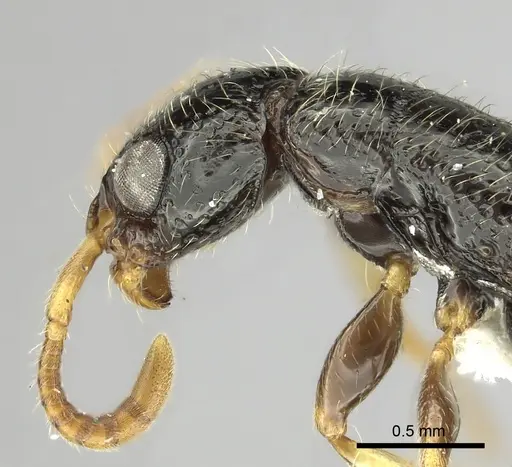
CASENT0004516
View on AntWeb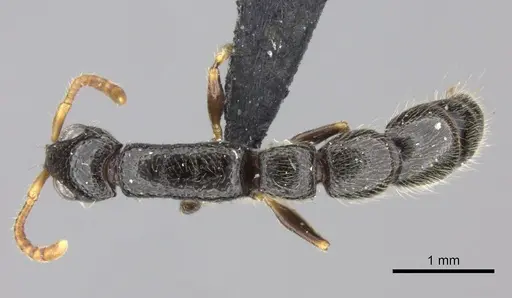
Literature
Loading...Loading products...