

Simopone oculata
- Scientific Name
- Simopone oculata
- Subfamily
- Dorylinae
- Author
- Radchenko, 1993
- Distribution
- Found in 1 countries
Simopone oculata Overview
Simopone oculata is an ant species of the genus Simopone. It is primarily documented in 1 countries , including Thailand. Detailed taxonomic data and occurrence records can be further explored via authoritative databases such as AntWeb or the Global Biodiversity Information Facility (GBIF).
Simopone oculata
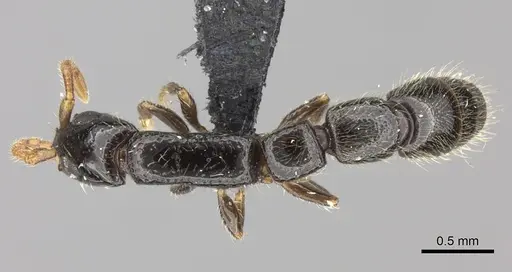
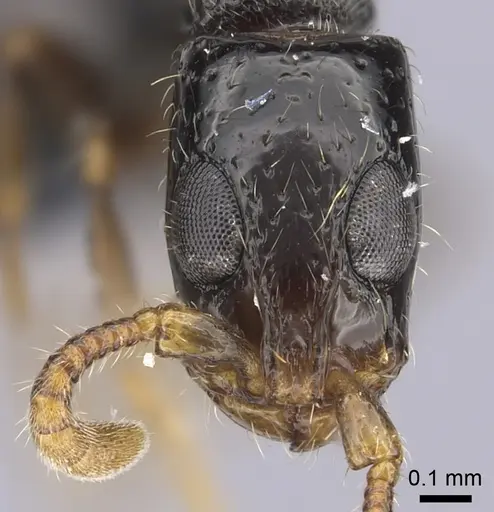
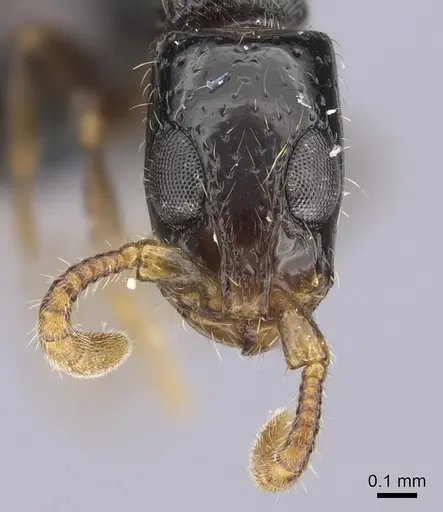
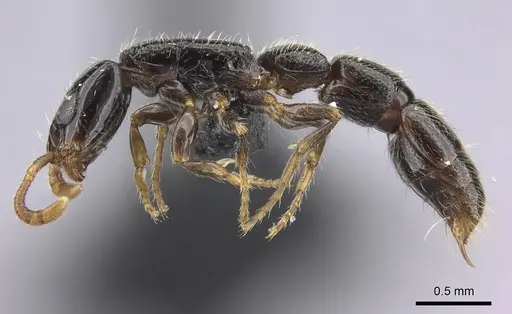
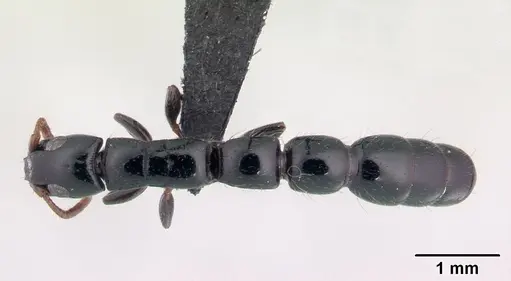
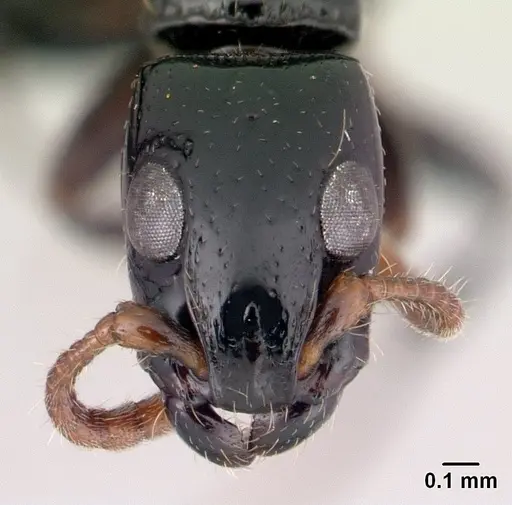
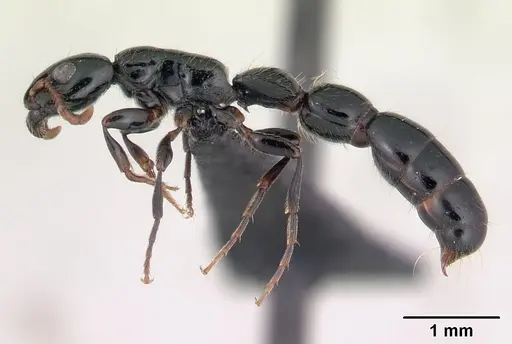
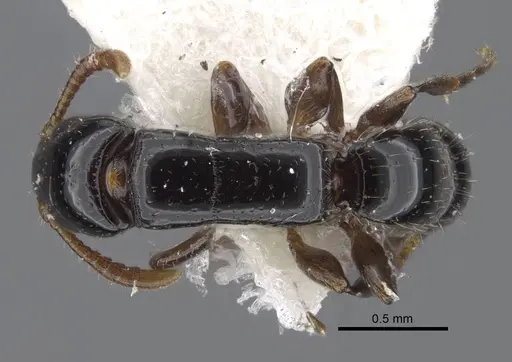
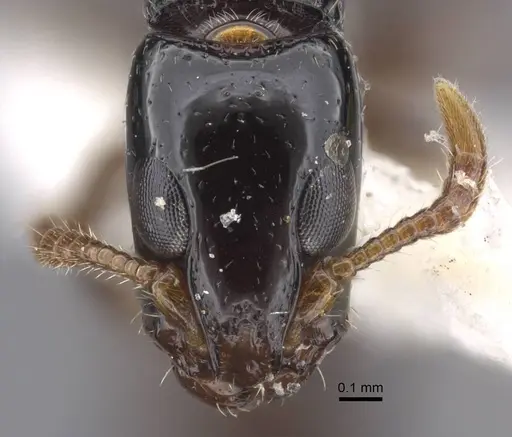
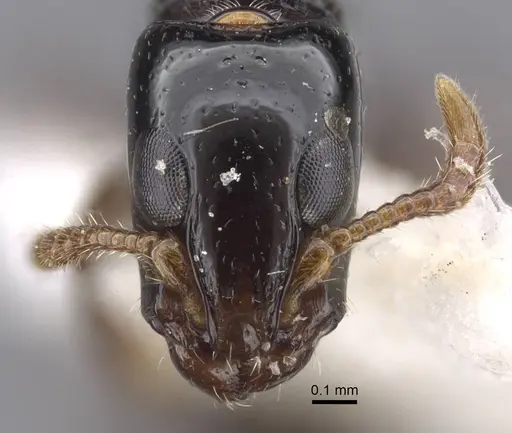
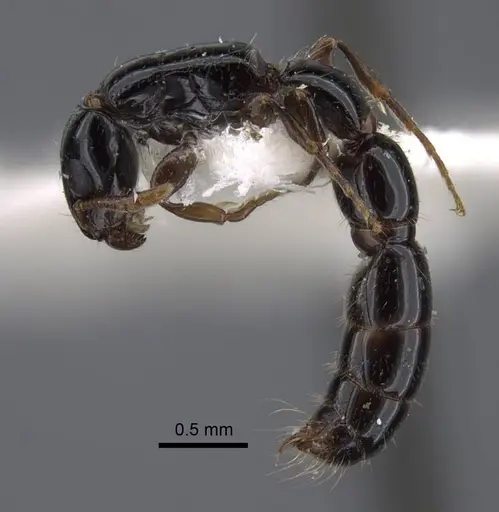
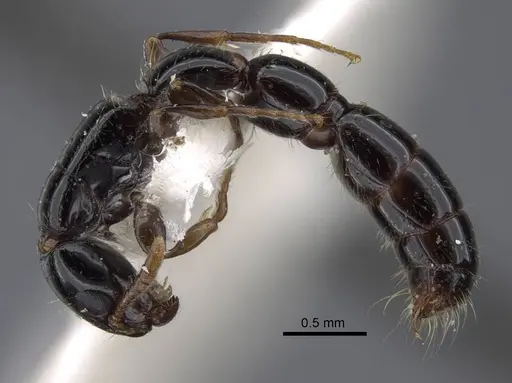
Simopone oculata is a small, slender predatory ant belonging to the Dorylinae subfamily, making it a relative of army ants. Workers measure around 4.5mm in total length, with a distinctive elongated head and notably large eyes that give this species its name (oculata means 'eyed'). The body is dark brown to nearly black, with reddish-brown mandibles, leg tips, and the tip of the abdomen. This species belongs to the grandidieri species group and was originally described from Kondor Island in Vietnam [1][2].
The genus Simopone is largely arboreal and rarely collected, making this species poorly understood in terms of natural history [3]. These ants are predatory, like other Dorylinae, but they appear to be more sedentary than true army ants. In the wild, they nest under wood stumps in secondary tropical forest, suggesting they prefer humid, shaded environments with access to ground-level nesting sites [4].
Quick Summary
- Difficulty: Expert
- Origin & Habitat: Vietnam and Thailand in the Indomalaya region. Found in secondary tropical forest under wood stumps [4].
- Colony Type: Single-queen colonies (monogyne). Colony structure is poorly documented.
- Colony: Monogyne
- Size & Growth:
- Queen: Unconfirmed, no queen measurements available
- Worker: 4.5mm total length, HL 0.84mm, HW 0.55mm [2]
- Colony: Unknown, no colony size data available
- Growth: Unknown
- Development: Unconfirmed, estimated 6-10 weeks based on related Dorylinae patterns (Development timeline has not been directly studied. Estimates based on typical Dorylinae development at tropical temperatures.)
- Antkeeping:
- Temperature: Keep at 24-28°C, warm tropical conditions. A gentle heat gradient allows ants to regulate their temperature.
- Humidity: High humidity required, aim for 70-85%. These ants come from humid tropical forest environments and need consistently moist substrate.
- Diapause: Unlikely, as a tropical species from Vietnam/Thailand, they probably do not require a diapause period. However, a slight cool period during winter months (around 20°C) may be beneficial.
- Nesting: Naturalistic setup with moist substrate works best. They nest under wood stumps in the wild, so a naturalistic terrarium with soil, leaf litter, and small hiding spots mimics their natural environment. Test tubes can work but may limit their predatory behavior.
- Behavior: Simopone oculata is a predatory ant, likely hunting small invertebrates. As a Dorylinae member, they probably forage individually or in small groups rather than forming massive raiding columns like army ants. Their large eyes suggest they may rely more on vision than many ants. They are likely moderately aggressive when defending their colony. Escape prevention should be good, workers at 4.5mm are not tiny, but their slender build means they can slip through gaps if not properly contained.
- Common Issues: very limited species-specific care information makes proper husbandry challenging, predatory diet requirements mean live prey is essential, they likely cannot survive on just sugar water, high humidity needs create mold risk if ventilation is poor, arboreal nature suggests they may be stress-sensitive to nest disturbances, wild-caught colonies may have parasites that are difficult to treat without species-specific knowledge
Housing and Nest Setup
Simopone oculata presents unique housing challenges due to their poorly understood natural history. Based on their wild habitat under wood stumps in secondary tropical forest, a naturalistic terrarium setup works best [4]. Use a moist substrate that holds humidity well, a mix of soil and coco fiber works nicely. Include leaf litter, small pieces of wood, and bark pieces to provide hiding spots and foraging surfaces. Unlike many ants, they don't seem to be true nesters in soil, so provide above-ground structures they can use as shelter.
A test tube setup can work for founding colonies, but these ants may stress more easily than hardy species. If using test tubes, ensure the water reservoir is adequate but not excessive, you want consistent humidity without flooding. For established colonies, a small naturalistic setup with a water reservoir area allows them to regulate moisture themselves. Whatever setup you choose, excellent escape prevention is essential, while not tiny, their slender bodies can slip through small gaps.
Feeding and Diet
As a predatory Dorylinae ant, Simopone oculata requires live prey to thrive. They are likely specialized predators, hunting small invertebrates in the leaf litter and on vegetation. In captivity, offer small live insects appropriate to their size, fruit flies, pinhead crickets, small mealworms, and other tiny arthropods work well. They probably cannot survive on sugar water alone, though you may offer it as a supplementary energy source.
Feed every 2-3 days, adjusting based on colony size and consumption. Remove uneaten prey after 24 hours to prevent mold. A well-fed colony will have glossy, active workers, while hungry colonies may become lethargic or show increased foraging activity. Since this species is poorly documented, acceptance of various prey types may require experimentation. Start with small live prey and observe what they readily accept. [3]
Temperature and Humidity
Simopone oculata comes from tropical Vietnam and Thailand, so warm, humid conditions are essential. Keep temperatures in the range of 24-28°C, with a slight gradient allowing workers to move between warmer and cooler areas if needed. A heating cable or mat on one side of the enclosure can create this gradient, place it on the outside of the container to avoid direct heat on the nest area.
Humidity should be high, around 70-85%. The substrate should feel consistently moist but not waterlogged. Mist the enclosure regularly and monitor for condensation on the sides, this indicates humidity is adequate. However, balance humidity with ventilation to prevent mold growth. A small ventilation hole or mesh top helps while still maintaining moisture. These ants are from humid tropical forest environments, so dry conditions will quickly stress or kill them. [4]
Behavior and Colony Dynamics
The genus Simopone is largely arboreal and rarely collected, suggesting these ants may be more secretive and less aggressive than true army ants [3]. Workers likely forage individually or in small groups rather than forming massive raiding swarms. Their large eyes are notable, this may indicate greater reliance on visual cues compared to many ants that primarily use chemical signals.
Colony size in the wild is unknown, but related Simopone species typically have smaller colonies than true army ants. Founding likely occurs through claustral queens sealing themselves in, though this hasn't been directly documented for S. oculata. Queens are probably solitary founders like most Dorylinae. Workers are moderately sized at 4.5mm and should be handled with care, while not dangerously small, their slender build makes them somewhat fragile.
Seasonal Care and Overwintering
As a tropical species from Vietnam and Thailand, Simopone oculata does not require true hibernation. However, slight temperature reductions during winter months may be appropriate, dropping to around 20-22°C for a few months simulates seasonal changes without inducing cold stress. This cool period should be gradual and monitored.
During any cool period, reduce feeding frequency since metabolic rates slow with temperature. Continue providing moisture, even with reduced temperatures, the substrate should not dry out. If your room temperature naturally stays in the low 20s°C range year-round, no special winter care may be needed. Watch for signs of stress during any temperature changes, and return to normal warm conditions if ants appear sluggish or unwell. [4]
Frequently Asked Questions
How long does it take for Simopopne oculata to raise first workers?
The egg-to-worker timeline is unconfirmed for this species. Based on typical Dorylinae development at tropical temperatures (24-28°C), estimate 6-10 weeks from egg to first worker. However, this is an educated guess, no specific development studies exist for S. oculata. Be patient with founding colonies, as they may take longer than more common species.
Can I keep Simopone oculata in a test tube?
Test tubes can work for founding colonies, but a naturalistic setup is preferable given their arboreal nature and preference for ground-level hiding spots under wood [4]. If using test tubes, ensure adequate moisture and provide space for the colony to expand. Many keepers find that transitioning to a naturalistic setup once the colony grows leads to better results.
What do Simopone oculata eat?
They are predatory ants requiring live prey. Feed small live insects like fruit flies, small crickets, mealworms, and other tiny arthropods. Sugar water may be accepted as supplementary energy, but protein from live prey is essential. This is not a species that can thrive on honey or sugar alone.
Are Simopone oculata good for beginners?
No, this species is rated Expert difficulty. Care information is extremely limited, they require specific humidity and temperature conditions, and their predatory diet makes them more challenging than common ant species. Beginners should start with species like Lasius niger, Camponotus, or Messor before attempting Simopone.
How big do Simopone oculata colonies get?
Colony size is unknown, no published data exists on maximum colony size for this species. Based on related Simopone species, colonies are likely smaller than true army ants, probably under a few hundred workers at most. Their secretive nature and arboreal habits may naturally limit colony size.
Do Simopone oculata need hibernation?
No, as a tropical species from Vietnam and Thailand, they do not require hibernation. A slight cool period (around 20°C) during winter months may be beneficial, but true diapause is not necessary. Keep them warm year-round for best results.
Why is my Simopone oculata colony dying?
Common causes include: low humidity (they need 70-85%), temperatures outside 24-28°C range, lack of live prey, stress from disturbance, or poor initial colony health. Wild-caught colonies may carry parasites. Review all care parameters and ensure you're providing appropriate conditions. Limited species-specific knowledge makes troubleshooting challenging.
Can I keep multiple Simopone oculata queens together?
This species is documented as monogyne (single-queen colonies) [2]. Combining multiple unrelated queens is not recommended and has not been studied. In the wild, colonies appear to have single founding queens. Attempting to introduce additional queens will likely result in aggression.
When should I move Simopone oculata to a formicarium?
Wait until the colony is well-established with at least 10-15 workers and the founding test tube shows signs of stress (poor humidity, too small). A naturalistic setup is generally better than commercial formicariums for this species. Observe your colony's behavior, if workers appear stressed or constantly try to escape, consider upgrading their housing.
References

This caresheet is licensed under CC BY-SA 4.0 .
Literature
Loading...Loading products...